Quick Answer: Is There a Dodge Challenger Electric Vehicle?
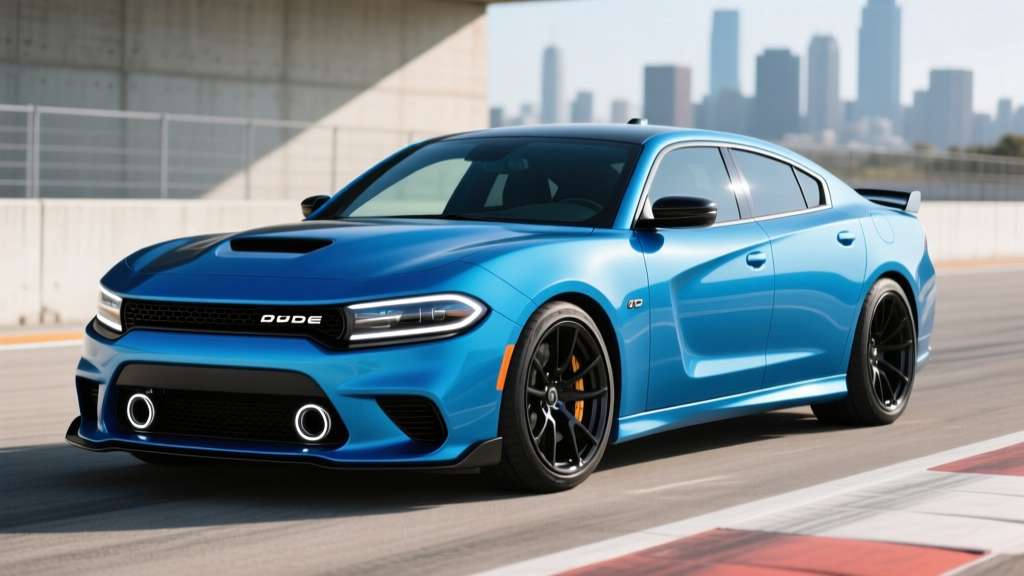
Dodge discontinued the Challenger in 2023. The spiritual successor is the 2026 Dodge Charger Daytona EV, a two-door electric muscle car built on Stellantis' STLA Large platform. The R/T trim starts around $59,990 with an EPA-estimated 317 miles of range, while the Scat Pack produces 670 horsepower with up to 274 miles of range. DC fast charging peaks at roughly 175 kW, adding 10–80% in about 27 minutes. It is the closest thing to a Dodge Challenger electric vehicle you can buy in 2026.
The Challenger Is Gone — Here's What Replaced It
The Dodge Challenger ended production after the 2023 model year as Stellantis pivoted its muscle-car lineup toward electrification. For buyers searching for a "Dodge Challenger electric vehicle," the answer is the Dodge Charger Daytona, which went on sale in late 2024 as a 2025 model and continues into the 2026 model year with minor updates.
Unlike the Challenger's long-hood, short-deck coupe proportions, the Charger Daytona uses a fastback liftback design with a wider, lower stance. It rides on the 800-volt STLA Large architecture — the same bones underpinning the Jeep Wagoneer S and upcoming Alfa Romeo EVs — which enables faster DC charging and dual-motor all-wheel-drive layouts.
Dodge also offers an inline-six turbocharged gas variant (the Charger SIXPACK) for buyers not ready to go electric, but the Daytona EV is the performance flagship and the direct answer to the electric muscle car question.
Range, Battery, and Charging: The Numbers That Matter
The Charger Daytona uses a 100.5 kWh gross battery pack (approximately 92–95 kWh usable) with NMC (nickel-manganese-cobalt) cell chemistry. Here is how the two main trims stack up:
| Spec | R/T (496 hp) | Scat Pack (670 hp) |
|---|---|---|
| EPA Range (est.) | 317 miles | 274 miles |
| Battery (gross / usable) | 100.5 kWh / ~93 kWh | 100.5 kWh / ~93 kWh |
| Chemistry | NMC | NMC |
| Drivetrain | AWD (dual motor) | AWD (dual motor) |
| Horsepower | 496 hp | 670 hp |
| 0–60 mph | 4.7 sec | 3.3 sec |
| Peak DC Fast Charge | ~175 kW | ~175 kW |
| 10–80% DCFC Time | ~27 min | ~27 min |
| Level 2 (240V) Rate | ~11 kW | ~11 kW |
| Base MSRP | $59,990 | $72,590 |
Real-World Range Reality Check
The R/T's 317-mile EPA estimate is a strong figure, but real-world results depend heavily on conditions. Expect roughly 260–280 miles during sustained 75-mph highway driving, and 220–250 miles in freezing temperatures (below 32°F). The Scat Pack's wider tires, higher output, and stickier compound reduce efficiency further — plan on 230–245 miles in mixed driving, less if you use launch control regularly. The Charger Daytona's 800-volt architecture helps with charging speed but does not eliminate cold-weather range loss, which typically runs 20–30% for NMC packs without aggressive preconditioning.
Charging at Home and on the Road
The Charger Daytona's 800V system supports DC fast charging at up to ~175 kW. That is competitive with the Ford Mustang Mach-E GT (~150 kW peak) but below the Hyundai Ioniq 5 N's ~240 kW or Tesla Model S's ~250 kW. On a 350 kW Electrify America or Tesla Supercharger stall (via NACS adapter on 2026 models), you will see the charge curve peak near 175 kW through roughly 40–50% SoC, then taper. The 10–80% session takes about 27 minutes under ideal thermal conditions.
| Charging Level | Power (kW) | Approx. Miles Added per Hour | Typical Use Case |
|---|---|---|---|
| Level 1 (120V) | ~1.4 kW | ~4–5 mi/hr | Emergency / trickle |
| Level 2 (240V, 48A) | ~11 kW | ~35–38 mi/hr | Home overnight (full charge ~9 hrs) |
| DC Fast Charge | Up to ~175 kW | ~600+ mi/hr (peak) | Road trips, 10–80% in ~27 min |
Home charging setup: A 48-amp Level 2 wallbox on a 60-amp circuit will fully recharge the 100.5 kWh pack overnight in roughly 9–10 hours. Installation costs typically range from $800 to $2,500 depending on panel proximity and whether your home's 200-amp service can handle the additional load. Homes with older 100-amp panels may need a $2,000–$4,000 electrical service upgrade — consult a licensed electrician before purchasing equipment.
EV vs. Gas Muscle Car: The Cost and Experience Comparison
The last V8 Dodge Challenger R/T (2023) started at roughly $43,000 with a 5.7L Hemi producing 375 hp and an EPA combined 19 MPG. Here is how a five-year ownership comparison looks between that gas Challenger and the 2026 Charger Daytona R/T EV:
| Cost Factor (5 Years / 75,000 mi) | 2023 Challenger R/T (Gas) | 2026 Charger Daytona R/T (EV) |
|---|---|---|
| Purchase Price (MSRP) | $43,000 | $59,990 |
| Federal Tax Credit (§30D) | $0 | Up to $7,500* |
| Fuel / Electricity | ~$11,800 (19 MPG, $3.00/gal) | ~$3,750 ($0.15/kWh avg, 350 Wh/mi) |
| Maintenance | ~$3,200 (oil, brakes, belts) | ~$900 (cabin filter, tires, fluid top-offs) |
| Insurance (est. annual avg.) | ~$2,100/yr ($10,500 total) | ~$2,600/yr ($13,000 total) |
| Estimated 5-Year Total | ~$68,500 | ~$79,140 (or ~$71,640 after credit) |
*§30D federal EV tax credit eligibility depends on adjusted gross income limits ($150K single / $300K joint), MSRP caps ($55K sedans — the Daytona may exceed this cap depending on IRS vehicle classification), and battery critical-mineral sourcing requirements. The credit can be transferred to the dealer as a point-of-sale discount. Verify current eligibility at IRS.gov before purchasing.
The EV is more expensive upfront but saves roughly $8,000–$10,500 in fuel and maintenance over five years. Insurance is typically 15–25% higher for EVs due to repair costs and battery replacement risk. If you have home charging and drive under 300 miles daily, the Charger Daytona's operating cost advantage is significant. If you rely exclusively on public DC fast charging at $0.35–$0.50/kWh, your fuel savings narrow to roughly $4,000–$5,000 over five years.
Performance: Electric Muscle Car vs. V8 Heritage
The Scat Pack's 3.3-second 0–60 mph time demolishes the old Challenger SRT Hellcat's ~3.6-second mark, and the instant torque delivery is something no supercharged V8 can match off the line. However, the Charger Daytona weighs approximately 5,800–5,900 lbs — roughly 1,500 lbs more than a Challenger R/T — and that mass is noticeable in cornering transitions and braking distances.
Dodge includes a "Fratzonic" exhaust sound system that pipes synthetic V8-style audio through external and internal speakers. It is configurable and can be turned off entirely. Whether you consider this a feature or a gimmick depends on your attachment to muscle-car theater.
| Performance Metric | Charger Daytona Scat Pack (EV) | 2023 Challenger SRT Hellcat (Gas) |
|---|---|---|
| Horsepower | 670 hp | 717 hp |
| 0–60 mph | 3.3 sec | ~3.6 sec |
| Curb Weight | ~5,850 lbs | ~4,450 lbs |
| EPA Range / Fuel Economy | 274 mi (87 MPGe est.) | 16 MPG combined |
| Top Speed | ~130 mph (governed) | ~195 mph |
| Towing | Not rated | Not rated |
Battery Warranty, Degradation, and Long-Term Ownership
Stellantis provides a 8-year / 100,000-mile high-voltage battery warranty on the Charger Daytona, covering defects and capacity loss below 70% of original capacity. This is the industry-standard powertrain warranty for EVs sold in the US, matching Ford, Hyundai, and Tesla's coverage periods.
NMC chemistry typically degrades 10–15% over 150,000 miles under normal use. Real-world data from similar Stellantis NMC packs suggests you can expect roughly 85–90% state of health (SoH) at 100,000 miles if you avoid habitual DC fast charging above 90% SoC and minimize prolonged storage at 100% charge. For maximum longevity, daily charging to 80% and using Level 2 rather than DCFC for routine sessions is recommended.
A full battery pack replacement outside warranty is estimated at $15,000–$22,000 based on current NMC pack pricing for 100 kWh-class systems, though this cost is expected to decline as cell prices continue falling.
Common Misconceptions About the Electric Charger
| Myth | Fact |
|---|---|
| "It's just a rebadged Charger sedan." | The Daytona is a two-door fastback on the dedicated STLA Large 800V platform — no shared body panels with the outgoing gas Charger sedan. |
| "Electric muscle cars have no soul." | Subjective, but the 3.3-sec Scat Pack 0–60 and configurable Fratzonic audio are performance figures no V8 Challenger matched from the factory. |
| "The battery will need replacing in 5 years." | NMC packs in modern thermal-managed systems routinely exceed 150,000 miles with <15% degradation. The 8-year/100,000-mile warranty backs this. |
| "I'll get the full $7,500 tax credit." | §30D eligibility depends on your income, the vehicle's MSRP classification, and battery sourcing. Many buyers will qualify for a partial credit or none at all. Check IRS guidelines. |
| "It can charge on Tesla Superchargers natively." | 2026 models are expected to include a native NACS port; 2025 models may require a CCS-to-NACS adapter. Confirm with your dealer. |
Decision Framework: Is the Charger Daytona Right for You?
Choose the Charger Daytona R/T ($59,990) if:
- You want maximum range (317 mi EPA) and daily drivability over peak performance
- Your commute is under 150 miles round-trip and you have Level 2 home charging
- You want an electric muscle car aesthetic without Scat Pack pricing
- You value lower operating costs over 0–60 bragging rights
Choose the Charger Daytona Scat Pack ($72,590) if:
- 3.3-second 0–60 and 670 hp are the primary purchase drivers
- You accept the ~43-mile range penalty (274 mi) for performance hardware
- You plan to use Track Mode and launch control regularly
- You previously owned or cross-shopped a Challenger Hellcat or Redeye
Consider a different vehicle if:
- You lack reliable home or workplace Level 2 charging and your area has limited DCFC infrastructure
- You regularly drive more than 250 miles in a single day in cold climates
- You need rear-seat space or cargo volume beyond what a two-door fastback offers
- Your budget is under $55,000 — consider a used Tesla Model 3 Performance or Ford Mustang Mach-E GT instead
Frequently Asked Questions
Is Dodge making an electric Challenger?
Dodge discontinued the Challenger nameplate after 2023. The 2026 Charger Daytona EV is the brand's electric muscle car successor, offered as a two-door fastback — not under the Challenger name, but filling the same market segment.
How much does the Dodge electric muscle car cost?
The 2026 Charger Daytona R/T starts at $59,990 and the Scat Pack at $72,590, before destination charges and any applicable incentives. Options like the Track Package, Sun/Sound Group, and ADAS bundles can add $5,000–$10,000.
What is the real-world range of the Charger Daytona EV?
The R/T is EPA-rated at 317 miles; expect 260–280 miles on the highway and 220–250 in freezing weather. The Scat Pack is rated at 274 miles; expect 230–245 in mixed real-world driving.
Does the Charger Daytona qualify for the $7,500 federal tax credit?
Eligibility under IRS §30D depends on the buyer's income (under $150K single / $300K joint), the vehicle's MSRP relative to IRS classification caps, and battery critical-mineral and component sourcing. Rules change frequently — verify at irs.gov or with a tax professional before purchase.
How fast does the Charger Daytona charge?
On a DC fast charger, it peaks at approximately 175 kW and charges from 10–80% in about 27 minutes under ideal conditions. At home on a 48-amp Level 2 charger (~11 kW), a full charge takes roughly 9–10 hours.
Is the Charger Daytona all-wheel drive?
Yes. Both the R/T and Scat Pack use a dual-motor AWD configuration. There is no rear-wheel-drive-only EV variant currently offered, though the gas SIXPACK model offers RWD.
How does insurance cost compare to a gas Challenger?
Expect insurance premiums 15–25% higher than an equivalent gas Challenger, primarily due to higher repair costs, battery replacement risk, and the vehicle's MSRP. Get quotes from your insurer before committing to the purchase.