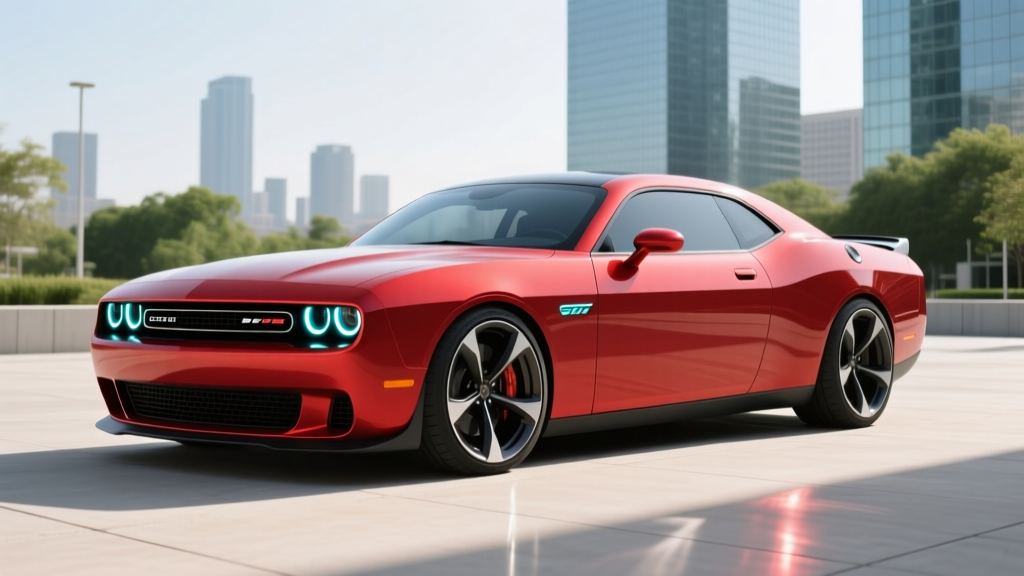
Quick Answer: The Dodge Challenger electric is officially the Dodge Charger Daytona EV (Dodge retired the "Challenger" nameplate after 2023, consolidating its two-door muscle lineup under the Charger badge). The 2026 Dodge Charger Daytona EV is built on Stellantis' STLA Large platform with an estimated 800-volt architecture, targeting up to ~670 horsepower (R/T trim) and ~310 miles of EPA-estimated range. Pricing is expected to start near $55,000 before incentives. As of early 2026, Dodge has begun limited production, with broader dealer availability expected mid-2026. Final EPA certification and IRS §30D tax credit eligibility remain pending.
What Is the Dodge Challenger Electric? The Nameplate Explained
If you're searching for a "Dodge Challenger electric," you're looking for the Dodge Charger Daytona EV. When Stellantis discontinued the Challenger and previous-generation Charger after the 2023 model year, it confirmed that its next-generation electric muscle car would carry the Charger Daytona name. The two-door coupe and four-door sedan variants both fall under this umbrella.
The Daytona EV is not a retrofit or compliance car. It rides on the dedicated STLA Large BEV platform, features an 800V electrical architecture for faster DC charging, and includes Dodge's trademark "Fratzonic" exhaust-sound system — a synthetic V8 rumble piped through exterior and cabin speakers to preserve muscle-car theater without an engine.
Range, Battery, and Charging: The Numbers That Matter
Dodge has published preliminary specifications for the 2026 Charger Daytona. Below is the best available data as of early 2026. Final EPA certification figures may shift slightly.
| Specification | R/T (Base EV) | Scat Pack (Performance) |
|---|---|---|
| Battery Capacity (usable) | ~92 kWh (NMC) | ~100 kWh (NMC) |
| EPA Range (est.) | ~310 mi | ~260 mi |
| Peak DC Fast Charge Rate | ~270 kW | ~270 kW |
| 10–80% DC Charge Time | ~24 min | ~27 min |
| Level 2 Charging (AC) | 11 kW (~30 mi/hr) | 11 kW (~30 mi/hr) |
| 0–60 mph | ~4.7 sec | ~3.3 sec |
| Horsepower | ~496 hp | ~670 hp |
| Drivetrain | AWD (dual motor) | AWD (dual motor) |
| Estimated Base MSRP | ~$55,000 | ~$73,000 |
Real-World Range Reality: The R/T's ~310-mile EPA estimate is competitive, but expect ~240–260 miles in sustained 75+ mph highway driving, and potentially ~200–220 miles in sub-30°F winter conditions. The Scat Pack's larger battery and higher output sacrifice range for performance — plan for roughly 200 miles highway in real-world use. Dodge's 800V system helps recover miles quickly: at a 350 kW-capable station, a 10-minute stop can add ~120–140 miles.
Dodge Challenger Electric vs. Gas Hellcat: Cost and Performance Comparison
For buyers cross-shopping the last-generation 2023 Challenger SRT Hellcat against the 2026 Daytona EV, here's how the economics and performance stack up over five years of ownership (15,000 miles/year).
| Metric | 2026 Daytona R/T (EV) | 2023 Challenger Hellcat (Gas) |
|---|---|---|
| Purchase Price (MSRP) | ~$55,000 | ~$70,000 |
| Federal Tax Credit (§30D) | Up to $7,500 (if eligible) | $0 |
| Effective Purchase Price | ~$47,500 | ~$70,000 |
| Fuel/Energy Cost (5 yrs) | ~$4,200 (home charging, $0.14/kWh) | ~$18,750 (premium, $4.50/gal, 15 MPG) |
| Maintenance (5 yrs) | ~$1,800 | ~$5,500 |
| Insurance (5 yrs est.) | ~$14,000 | ~$13,500 |
| 5-Year Total Cost of Ownership | ~$67,500 | ~$107,750 |
| 0–60 mph | 4.7 sec | 3.6 sec |
| Quarter Mile | ~12.8 sec | ~11.2 sec |
Key takeaway: The EV wins decisively on total cost — saving roughly $40,000 over five years — but the Hellcat still holds a straight-line performance edge. If drag-strip times matter more than your wallet, gas wins. For daily driving and real-world ownership costs, the electric Daytona is the rational choice.
Tax Credit Eligibility: What §30D Means for the Daytona EV
The federal IRS §30D clean vehicle credit offers up to $7,500, but eligibility is not guaranteed. Here's what you need to know:
- MSRP Cap: Sedans must be under $55,000; SUVs/trucks/vans under $80,000. The Daytona R/T (~$55,000) sits right at the sedan cap — trim options or dealer add-ons could push it over. The four-door variant may qualify under the higher SUV cap if classified accordingly.
- Buyer Income Limits: AGI must not exceed $150,000 (single), $225,000 (head of household), or $300,000 (joint).
- Battery Sourcing: The $7,500 credit splits into $3,750 for critical-mineral sourcing and $3,750 for battery-component assembly (North America requirements). Stellantis has not confirmed full compliance for all Daytona trims.
- Point-of-Sale Transfer: Eligible buyers can apply the credit as an upfront price reduction at the dealer rather than waiting for a tax refund.
Check the fueleconomy.gov tax credit database once the Daytona receives final EPA certification to confirm eligibility for your specific VIN.
Real-World Ownership: Charging, Climate, and Daily Driving
Home Charging Access
A Level 2 home charger (240V, 40–48A) is essential for daily convenience. Expect $800–$2,500 for equipment and electrician installation, depending on panel capacity and run length. The Daytona's 11 kW onboard charger adds roughly 30 miles per hour of charging — a full overnight session easily replenishes a day's driving.
Cold-Weather Range Loss
NMC batteries in cold climates lose 20–35% of rated range in sustained sub-freezing temperatures. Dodge has confirmed the Daytona includes a heat pump and battery preconditioning system, which mitigates (but doesn't eliminate) this loss. If you live in Minnesota or Maine, budget for ~200 effective winter miles on the R/T.
Public Charging Network
The Daytona uses the NACS (Tesla-style) connector, granting access to Tesla Superchargers via Dodge's adapter agreement, plus Electrify America, EVgo, and other networks. The 800V architecture means peak charging speeds at 350 kW stations, though sustained rates taper above 80% SoC — expect the 80–100% top-off to add another 25–30 minutes.
Common Misconceptions: Myth vs. Fact
| Myth | Fact |
|---|---|
| "The electric Challenger is just a concept." | The Charger Daytona EV entered limited production in late 2025, with deliveries expanding in 2026. |
| "EVs can't sound like muscle cars." | Dodge's Fratzonic system generates a synthetic V8 exhaust note up to 126 dB — louder than a Hellcat at full throttle. |
| "I'll save $7,500 no matter what." | Tax credit depends on income, MSRP, battery sourcing, and tax liability. Many buyers will qualify for $3,750 or $0. |
| "Electric means no maintenance." | Tires, cabin filters, brake fluid, and wipers still need service. Budget ~$350–$500/year. |
| "The Scat Pack has the same range as the R/T." | Higher output and heavier battery reduce Scat Pack range by ~50 miles EPA. |
Decision Framework: Should You Buy the Dodge Challenger Electric?
Choose the Dodge Charger Daytona EV if:
- You want muscle-car styling with daily-driver practicality and lower running costs
- You have Level 2 home charging access (garage or driveway with 240V outlet)
- Your typical daily commute is under 100 miles round-trip
- You value instant torque and all-weather AWD traction over quarter-mile records
- You qualify for at least partial §30D tax credit based on income and sourcing
Stick with gas (or wait) if:
- You regularly drive 400+ miles between stops in rural areas with sparse DC charging
- You need sub-11-second quarter-mile times for track events
- You live in an apartment without any charging access and your workplace doesn't offer it
- You want to wait for final EPA/IRS confirmation before committing to a new-platform vehicle
Frequently Asked Questions
Is there an electric Dodge Challenger for 2026?
Dodge retired the "Challenger" nameplate after 2023. The electric successor is the Dodge Charger Daytona EV, available in two-door coupe and four-door sedan body styles. It serves the same muscle-car market segment the Challenger occupied.
How much will the Dodge Charger Daytona EV cost?
The R/T trim is expected to start around $55,000, with the Scat Pack near $73,000. Final pricing depends on options, destination charges, and dealer markups. The four-door sedan variant may have a slightly different MSRP structure.
Can I charge the Daytona at Tesla Superchargers?
Yes. The Daytona uses the NACS connector natively, granting direct access to Tesla's Supercharger network — the largest and most reliable DC fast-charging network in the U.S. No adapter is required.
What's the real-world range in winter?
Expect a 20–35% range reduction in sustained sub-freezing temperatures. For the R/T, that means roughly 200–250 effective miles instead of the 310 EPA estimate. The onboard heat pump and battery preconditioning help, but cold weather remains a real limitation for all NMC-based EVs.
Will the Daytona EV qualify for the $7,500 tax credit?
It depends. The §30D credit requires compliance with MSRP caps, buyer income limits, and battery-sourcing rules. Stellantis has not confirmed full critical-mineral compliance for all trims. Check fueleconomy.gov and consult a tax professional before assuming the full $7,500.
How does the Daytona compare to a Tesla Model S or Ford Mustang Mach-E?
The Daytona prioritizes muscle-car styling, synthetic exhaust sound, and straight-line acceleration over efficiency. The Model S offers more range (~400 mi) and cargo space; the Mach-E GT is cheaper (~$55,000) with similar performance. The Daytona's differentiator is brand identity and the Fratzonic sound experience — it's a lifestyle purchase as much as a transportation one.