Quick Answer: Do You Have to Pay to Charge an Electric Car?
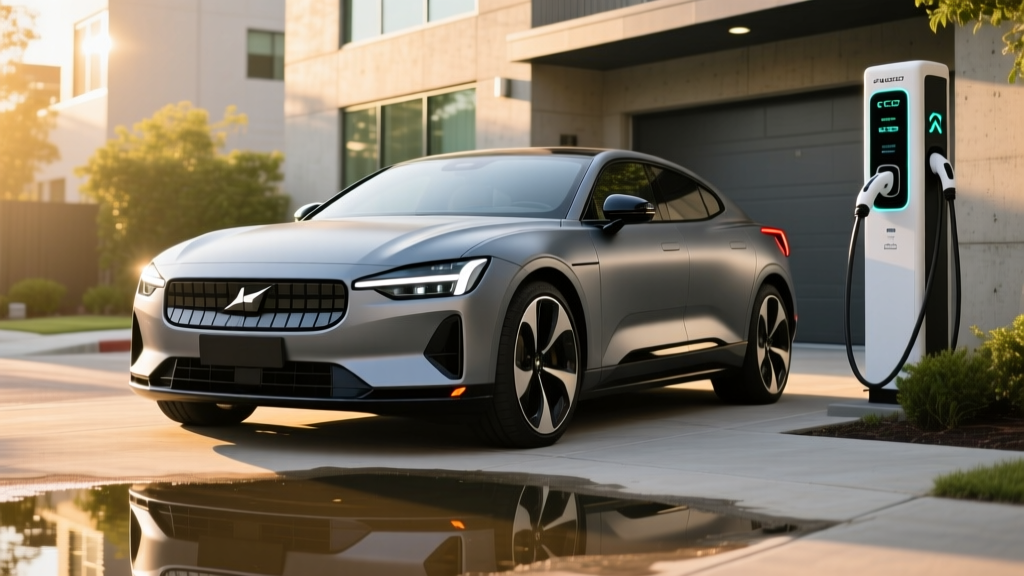
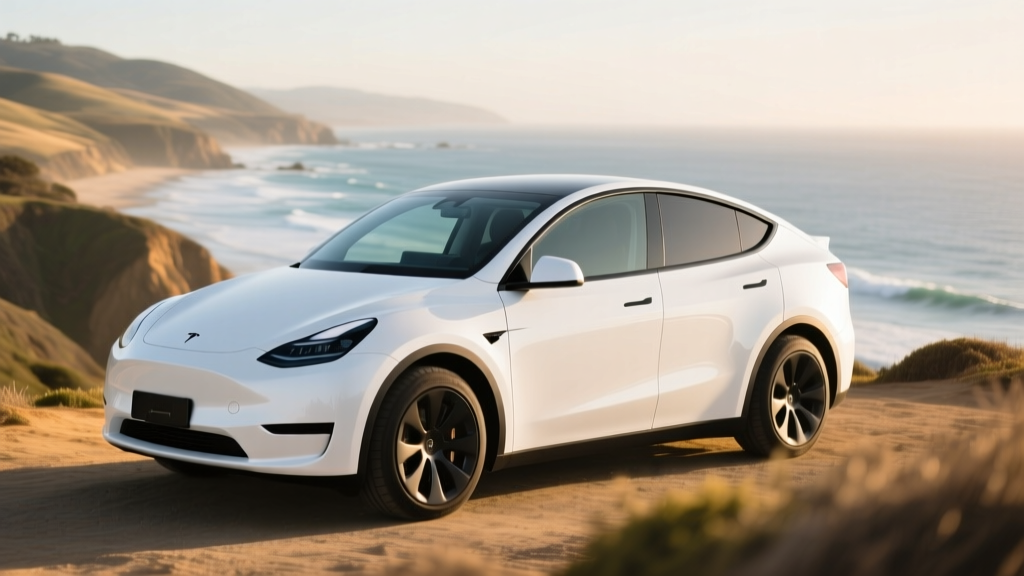
Yes, you pay for the electricity to charge an EV — but how much depends entirely on where you charge. Home charging on a residential utility rate averages $0.16 per kWh nationally in 2026, meaning a full charge of a 75 kWh battery (like the Tesla Model Y Long Range) costs roughly $12 for ~300 miles of range. Public DC fast charging averages $0.35–$0.55 per kWh, pushing that same fill-up to $26–$41. Some workplaces, apartments, and retail destinations still offer free Level 2 charging as an amenity, but those are shrinking as networks monetize.
The short answer to "do you have to pay to charge an electric car" is almost always yes — electricity isn't free the way some early-EV promotional charging was. But the real question buyers should be asking is: how much will I actually spend per mile compared to gas? That answer varies dramatically based on your charging habits, utility rate, and vehicle efficiency.
Where You Charge Determines What You Pay
Not all electrons cost the same. The three main charging environments have wildly different economics, and most EV owners split their charging across two or more of them.
| Charging Location | Avg Cost per kWh (2026) | Cost for 75 kWh Fill | Typical Speed | Share of Owner Charging |
|---|---|---|---|---|
| Home Level 1 (120V outlet) | $0.13–$0.18 | $9.75–$13.50 | 1.4 kW (~4 mi/hr) | ~15% |
| Home Level 2 (240V) | $0.13–$0.18 | $9.75–$13.50 | 7.7–11.5 kW (~25–38 mi/hr) | ~60% |
| Workplace / Free L2 | $0.00 | $0.00 | 6.6–7.7 kW (~22–25 mi/hr) | ~10% |
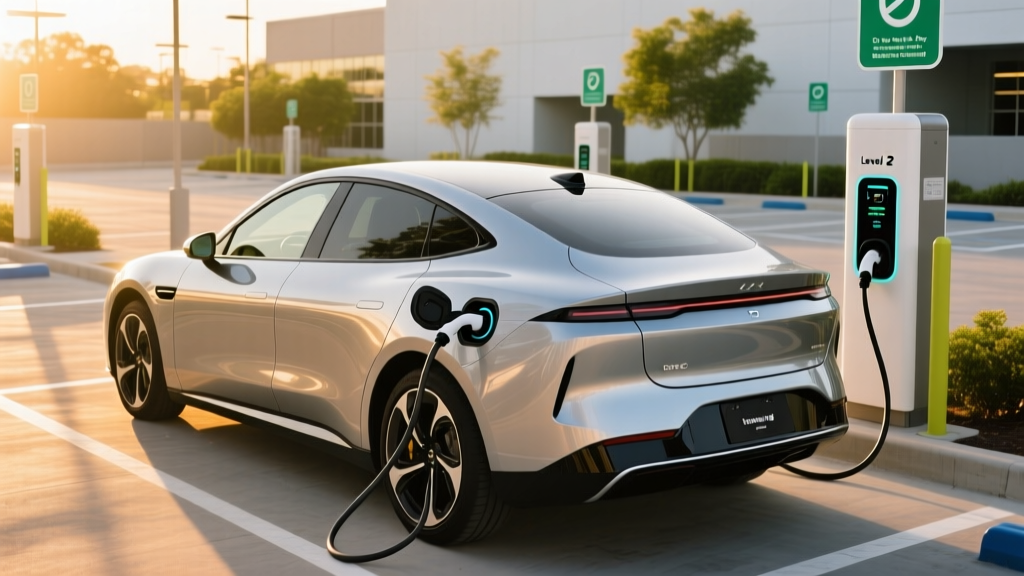
| Public Level 2 (ChargePoint, etc.) | $0.20–$0.35 | $15.00–$26.25 | 6.6–19.2 kW | ~5% |
| Public DC Fast Charging | $0.35–$0.55 | $26.25–$41.25 | 50–350 kW | ~10% |
The data is clear: home charging is where the savings live. An EV owner who charges 80% at home and 20% on DC fast chargers for road trips will see an effective blended rate around $0.18–$0.22/kWh. An apartment dweller forced to rely entirely on public chargers could see $0.35–$0.45/kWh — still often cheaper than gas per mile, but the gap narrows significantly.
EV Charging Cost vs. Gas: The Per-Mile Showdown
To compare apples to apples, we need to look at cost per mile, not cost per fill-up. The EPA provides efficiency data in MPGe and kWh/100mi at fueleconomy.gov, which lets us calculate real operating cost.
Let's use two popular 2026 vehicles as our baseline: the Tesla Model Y Long Range AWD (EPA 320 miles, 28 kWh/100mi, $48,990 MSRP) and the Toyota RAV4 AWD gas model (EPA 30 MPG combined, ~$32,000 MSRP).
| Metric | Tesla Model Y LR (EV) | Toyota RAV4 AWD (Gas) |
|---|---|---|
| EPA Efficiency | 28 kWh/100mi | 30 MPG combined |
| Fuel/Energy Cost (Home @ $0.16/kWh) | $0.045/mi | — |
| Fuel/Energy Cost (Gas @ $3.40/gal) | — | $0.113/mi |
| Fuel/Energy Cost (Public DCFC @ $0.45/kWh) | $0.126/mi | — |
| Annual Fuel Cost (12,000 mi) | $540 (home) / $1,512 (DCFC) | $1,356 |
| 5-Year Fuel Cost | $2,700–$7,560 | $6,780 |
At home rates, the Model Y costs 60% less per mile to "fuel" than the RAV4. Even on expensive public DC fast chargers, the EV roughly matches gas costs — and that's before considering EVs have no oil changes, no spark plugs, far less brake wear (thanks to regenerative braking), and typically lower maintenance spend over five years.
But here's the nuance most cost calculators miss: your local electricity rate and gas price matter enormously. In California, residential rates can exceed $0.30/kWh, which pushes home charging to $0.084/mi for the Model Y — still below gas at $4.50/gal, but the margin shrinks. In Louisiana or Washington state, where residential electricity runs $0.10–$0.12/kWh, EVs are absurdly cheap to run.
Real-World Ownership Costs: Beyond the Charger
Charging cost is just one line item. A first-time EV buyer needs to see the full picture before deciding.
| Cost Category | EV (Model Y LR Example) | Gas (RAV4 AWD Example) | Notes |
|---|---|---|---|
| Purchase Price (MSRP) | $48,990 | $32,000 | EV premium still real |
| Federal Tax Credit (§30D) | Up to $7,500* | $0 | Income/MSRP/sourcing limits apply |
| Effective Purchase Price | ~$41,490* | $32,000 | Point-of-sale transfer available |
| Home Charger Install (L2) | $800–$2,500 | $0 | 240V/50A circuit; panel upgrade may add $1,500–$3,000 |
| 5-Year Fuel/Energy | $2,700–$7,560 | $6,780 | Depends on home vs. public mix |
| 5-Year Maintenance | ~$1,800 | ~$3,500 | No oil, fewer brake pads, cabin air filter only |
| 5-Year Insurance | ~$9,500 | ~$7,200 | EV premiums run 15–30% higher on average |
| Depreciation (5-yr) | ~$22,000 | ~$14,000 | EV depreciation has improved but still steeper |
| 5-Year Total Cost of Ownership | ~$75,290–$82,850* | ~$63,480 | *After tax credit |
The honest takeaway: EVs save on fuel and maintenance but cost more upfront, insure higher, and depreciate faster. The break-even point typically arrives around year 6–8 for home chargers, or may never arrive for exclusive public-charging users. Current IRS §30D rules allow up to $7,500 in federal tax credits — but eligibility depends on buyer income caps ($150K single / $300K joint), vehicle MSRP caps ($55K sedans / $80K SUVs/trucks), and battery critical-mineral sourcing requirements. Always verify with a tax professional.
Common EV Charging Misconceptions — Busted
First-time EV buyers encounter a lot of bad information. Let's correct the record with data.
| Myth | Fact |
|---|---|
| "Charging an EV is free at most places." | Free chargers still exist at some workplaces, malls, and hotels, but the majority of public chargers in 2026 are pay-per-use. Networks like Electrify America, EVgo, and Tesla Superchargers all charge per kWh or per minute. |
| "Public charging costs more than gas." | On a per-mile basis, even expensive DC fast charging ($0.50/kWh) costs roughly the same as gas for an efficient EV. At $0.45/kWh, the Model Y costs $0.126/mi vs. the RAV4's $0.113/mi — nearly identical. Home charging is dramatically cheaper. |
| "You need a special charger at home." | Every EV comes with a Level 1 (120V) charging cable that plugs into a standard household outlet. It's slow (~4 miles of range per hour), but sufficient for drivers under 40 miles/day. A Level 2 (240V) home station is a worthwhile upgrade for most owners. |
| "EV batteries need replacing every few years." | Modern NMC and LFP batteries routinely last 150,000–200,000+ miles with 10–15% degradation. Federal law mandates battery warranties of at least 8 years/100,000 miles. Most 2026 EVs warranty to 70% capacity retention at that threshold. |
| "Cold weather makes EVs useless." | Cold weather reduces range 20–35% due to battery chemistry and cabin heating demands. A 320-mile Model Y may deliver ~220–250 miles at 20°F. Preconditioning and heat pumps (standard on most 2026 EVs) mitigate this significantly. |
Do Free EV Chargers Still Exist in 2026?
Yes, but they're a shrinking slice of the charging landscape. Here's where you can still find complimentary electrons:
- Workplace charging: Some employers offer free Level 2 charging as an employee benefit. This is most common at tech companies, universities, and government facilities. Availability is declining as companies install metered stations.
- Retail/hospitality amenities: Hotels, shopping centers, and restaurants sometimes offer free L2 charging to attract customers. Expect 6.6 kW speeds and time limits (2–4 hours).
- Apartment/condo included charging: A growing number of new multi-family developments include EV charging in rent or HOA fees — effectively "free" at point of use but baked into housing cost.
- Promotional network credits: Manufacturers occasionally bundle free charging. For example, some 2026 models include 1–2 years of complimentary charging on partner networks (typically 1,000–2,500 kWh worth).
- Municipal/utility programs: A handful of cities and utilities offer free or heavily discounted off-peak charging at public stations to encourage adoption.
The trend is clear: as EV adoption scales past 12% of new car sales, free charging is being replaced by paid infrastructure. Plan your ownership around paid charging and treat free sessions as a bonus.
Decision Framework: Should You Buy an EV Based on Charging Costs?
Choose an EV if:
- You have access to home or workplace charging (Level 2 preferred) — this is where 70–80% of your charging will happen at the lowest cost.
- Your daily commute is under 80 miles round-trip, meaning a single overnight charge covers multiple days.
- Your local electricity rate is below $0.20/kWh, making home charging roughly $0.05–$0.06 per mile.
- You drive 12,000+ miles per year, amplifying fuel savings enough to offset the higher purchase price within 5–7 years.
- You qualify for the federal §30D tax credit (check IRS eligibility requirements for income, MSRP, and sourcing rules) or your state offers additional rebates.
Consider a Hybrid (HEV/PHEV) Instead if:
- You live in an apartment or street-park with no access to home charging — relying solely on public DCFC erodes most cost advantages.
- You regularly drive 300+ miles in rural areas with sparse charging infrastructure (the "charging desert" problem is real in parts of the Mountain West and rural South).
- You face extreme cold (regularly below 10°F) and cannot garage your vehicle — range loss compounds with battery heating demands.
- Your budget is under $30,000 and you need maximum vehicle for the dollar — a Toyota Prius (57 MPG combined, ~$29,000) or RAV4 Hybrid (40 MPG, ~$33,000) may deliver better total economics without the charging logistics.
A Plug-in Hybrid (PHEV) is the bridge if:
- You want electric-only commuting (25–45 miles on models like the Toyota RAV4 Prime or Chrysler Pacifica PHEV) but need gas-engine range flexibility for road trips.
- You have basic 120V outlet access — PHEV batteries (15–20 kWh) charge fully overnight on Level 1, eliminating the need for a 240V installation.
Frequently Asked Questions
How much does it cost to charge an EV at home per month?
For a driver covering 1,000 miles/month in an efficient EV (30 kWh/100mi) on a $0.16/kWh utility rate, expect roughly $48/month in added electricity cost. That compares to ~$113/month in gas for a 30 MPG vehicle at $3.40/gallon.
Do Tesla Superchargers cost money?
Yes. Tesla Superchargers in 2026 average $0.30–$0.50/kWh depending on location and time of day (many stations have peak/off-peak pricing). Non-Tesla EVs with NACS connectors can access Superchargers via the Tesla app at similar rates. Some older Teslas have legacy free Supercharging, but this is not transferable to new purchases.
Can I charge my EV for free at a regular outlet?
You can charge at a standard 120V household outlet (Level 1), but you still pay for the electricity on your utility bill. Level 1 delivers about 1.4 kW — roughly 4 miles of range per hour of charging. It's adequate for low-mileage drivers but too slow for anyone driving 50+ miles daily.
Is public EV charging more expensive than gas?
Rarely. At $0.45/kWh (a typical DCFC rate), an efficient EV like the Hyundai Ioniq 6 (27 kWh/100mi) costs $0.12/mi — comparable to a 28 MPG gas car at $3.40/gallon. Only at the most expensive urban chargers ($0.55+/kWh) does EV public charging exceed gas on a per-mile basis.
Do I need to install a home charger before buying an EV?
No, but it's strongly recommended. Every EV ships with a Level 1 cord for standard 120V outlets. However, a Level 2 (240V) home charger — typically $500–$800 for the unit plus $500–$2,000 for electrician installation — transforms daily ownership. You wake up to a full battery every morning, which eliminates most range concerns and public-charging dependence.
Does charging an EV increase my electric bill significantly?
Yes, but less than you'd spend on gas. Adding 12,000 miles of EV driving at $0.16/kWh adds roughly $576/year to your electric bill. The same miles in a 30 MPG gas car at $3.40/gallon cost $1,360. Net savings: ~$784/year in fuel, though actual savings depend on your specific rates and vehicle efficiency.