The Short Answer: Yes, You Usually Pay — But It's Complicated
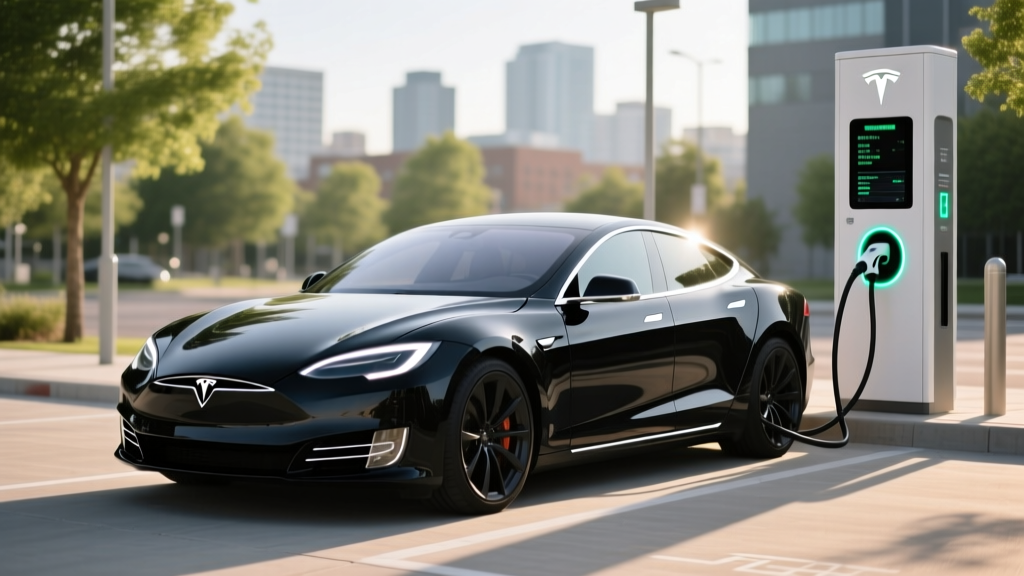
If you're shopping for a Tesla in 2026 and wondering, do you have to pay to charge a Tesla? The straightforward answer is yes — the majority of Tesla owners pay for electricity, whether at home or on the road. The era of unlimited free Supercharging ended years ago. But the full picture involves a patchwork of pricing tiers, free-charging exceptions, and home-energy economics that can dramatically change your cost-per-mile.
This guide dissects exactly what Tesla charging costs in 2026 across every scenario — Superchargers, home Level 2, Destination Chargers, and third-party networks — and puts those numbers in context with real ownership data. We'll also profile the current Tesla lineup's charging specs so you know exactly what you're plugging into.
How Tesla Charging Costs Work in 2026
Supercharger Network: Per-kWh or Per-Minute Pricing
Tesla's Supercharger network now spans over 6,000 stations and 60,000+ stalls across North America. Pricing varies by location, time of day, and whether you drive a Tesla or a non-Tesla EV (the network opened to CCS-equipped vehicles via a built-in adapter in 2024).
- Typical Supercharger cost: $0.25–$0.50 per kWh, depending on region and time-of-use tiers
- Peak-hour pricing: Major metro areas (Los Angeles, San Francisco, New York) can hit $0.48–$0.58/kWh during 4–9 PM demand windows
- Off-peak rates: Rural and overnight rates can dip to $0.22–$0.30/kWh
- Idle fees: $0.50/minute if your car remains plugged in after reaching its charge limit (doubles to $1.00/minute when the station is at 100% occupancy)
For a Tesla Model Y Long Range with a ~75 kWh usable battery, a 10–80% charge (roughly 52.5 kWh) at the national average of $0.36/kWh costs about $18.90. That adds approximately 210 miles of range — or roughly $0.09 per mile.
Home Charging: Where Most Owners Save
According to the U.S. Department of Energy, roughly 80% of EV charging happens at home. If you have access to a Level 2 home charger, your cost per mile drops significantly.
- National average residential electricity: ~$0.16/kWh (varies from $0.10/kWh in Louisiana to $0.42/kWh in Hawaii)
- Home cost per mile (Model Y LR): ~$0.04–$0.05 based on 3.5 miles/kWh efficiency
- Time-of-use plans: Many utilities offer overnight EV rates as low as $0.06–$0.09/kWh, slashing costs further
A full home charge for a Model Y Long Range costs roughly $12.00 at the national average — about 37% less than the same charge at a Supercharger.
Tesla Destination Chargers and Level 1
Tesla Destination Chargers — the Wall Connectors found at hotels, restaurants, and shopping centers — are a mixed bag. Many are free for customers (the business absorbs the cost), but an increasing number charge $0.10–$0.25/kWh or enforce a time limit. Level 1 charging from a standard 120V outlet is essentially free if you're at home, but it adds only 3–5 miles per hour — viable only for overnight top-ups on low-mileage days.
Are There Still Free-Charging Options?
A handful of exceptions remain:
- Referral credits: Tesla periodically offers Supercharging credits (typically 5,000–10,000 miles) through referral programs — check current promotions on Tesla's site
- Used Tesla transfers: Some older Model S/X vehicles carry transferable free Supercharging, but this is increasingly rare on the used market
- Hotel and workplace chargers: Many Destination Chargers and workplace Level 2 stations remain complimentary
- Utility promotions: Some electric utilities offer free or discounted public charging credits for new EV buyers
Charging Cost Comparison: Tesla vs. Gas vs. Public Networks
To put Tesla charging costs in perspective, here's a per-mile breakdown comparing home charging, Supercharging, third-party DC fast networks, and a comparable gasoline vehicle:
| Charging/Fuel Method | Cost per kWh / Gallon | Cost per Mile | Notes |
|---|---|---|---|
| Home Level 2 (nat'l avg) | $0.16/kWh | $0.046 | Based on 3.5 mi/kWh |
| Home Level 2 (TOU off-peak) | $0.08/kWh | $0.023 | Overnight utility rate |
| Tesla Supercharger (avg) | $0.36/kWh | $0.103 | Varies by location/time |
| Electrify America / EVgo | $0.43–$0.56/kWh | $0.12–$0.16 | Non-Tesla DCFC networks |
| Gas (28 MPG avg sedan) | $3.40/gal | $0.121 | EIA 2026 avg gasoline price |
The takeaway: even at Supercharger rates, Tesla charging generally undercuts gasoline on a per-mile basis. At home, the savings are dramatic — often 60–70% less than fueling a gas car. Data sourced from the U.S. Energy Information Administration and fueleconomy.gov.
Tesla Lineup Charging Specs at a Glance (2026 Models)
Charging costs only matter in context of how fast and efficiently each Tesla model consumes electrons. Here's the 2026 lineup with key specs:
| Spec | Model 3 LR AWD | Model Y LR AWD | Model S LR | Model X LR | Cybertruck AWD |
|---|---|---|---|---|---|
| EPA Range | 341 mi | 320 mi | 402 mi | 335 mi | 340 mi |
| Battery (usable, kWh) | ~75 kWh (NMC) | ~75 kWh (NMC) | ~95 kWh (NMC) | ~95 kWh (NMC) | ~123 kWh (NMC) |
| Max DC Fast Charge | 250 kW | 250 kW | 250 kW | 250 kW | 350 kW (est.) |
| 10–80% DCFC Time | ~25 min | ~25 min | ~30 min | ~31 min | ~20 min |
| Level 2 Home Rate | 11.5 kW (~44 mi/hr) | 11.5 kW (~44 mi/hr) | 11.5 kW (~44 mi/hr) | 11.5 kW (~44 mi/hr) | 11.5 kW (~44 mi/hr) |
| Efficiency (MPGe) | 131 MPGe | 122 MPGe | 124 MPGe | 105 MPGe | ~100 MPGe (est.) |
| kWh/100 mi | 26 | 28 | 28 | 33 | ~38 |
| 0–60 mph | 4.2 sec | 4.8 sec | 3.1 sec | 3.8 sec | 3.9 sec |
| Horsepower | 346 hp | 384 hp | 670 hp | 670 hp | 600 hp |
| Drivetrain | Dual-Motor AWD | Dual-Motor AWD | Dual-Motor AWD | Dual-Motor AWD | Tri-Motor AWD |
| Base MSRP | $47,740 | $48,990 | $79,990 | $84,990 | $79,990 |
Home Charging Setup: What You'll Actually Spend
If you're going to pay to charge a Tesla, doing it at home is the cheapest option by far. Here's what a typical Level 2 installation looks like:
| Component | Cost Range | Notes |
|---|---|---|
| Tesla Wall Connector (hardware) | $420–$475 | 48-amp, Wi-Fi-enabled, 24-ft cable |
| Electrician labor (240V/60A circuit) | $600–$2,000 | Depends on panel proximity, conduit run |
| Electrical panel upgrade (if needed) | $1,500–$3,500 | Required if existing panel is 100A or maxed out |
| Permit & inspection | $50–$300 | Varies by municipality |
| Total (no panel upgrade) | $1,070–$2,775 | Most common scenario |
| Total (with panel upgrade) | $2,570–$6,275 | Older homes with 100A service |
Always consult a licensed electrician for a site-specific quote. The IRS Residential Clean Energy Credit (25C) may cover 30% of charger hardware and installation costs, up to $1,000 — confirm current-year eligibility with a tax professional.
Tesla Pricing and Federal Tax Credit Eligibility
Whether a Tesla qualifies for the federal §30D EV tax credit (up to $7,500) depends on a web of requirements that shift frequently. As of 2026, here's where the lineup stands:
| Model / Trim | Base MSRP | §30D Eligible? | Est. After-Credit Price | Key Caveat |
|---|---|---|---|---|
| Model 3 RWD | $38,990 | Partial ($3,750) | ~$35,240 | Meets critical minerals req; battery sourcing may limit full credit |
| Model 3 Long Range AWD | $47,740 | Partial ($3,750) | ~$43,990 | Same sourcing limitation |
| Model 3 Performance | $52,990 | Partial ($3,750) | ~$49,240 | Under $55K MSRP cap for sedans |
| Model Y LR AWD | $48,990 | Partial ($3,750) | ~$45,240 | Under $80K SUV cap; sourcing-dependent |
| Model Y Performance | $52,490 | Partial ($3,750) | ~$48,740 | Same as above |
| Model S Long Range | $79,990 | No | $79,990 | Exceeds $55K sedan MSRP cap |
| Model X Long Range | $84,990 | No | $84,990 | Exceeds $80K SUV cap |
| Cybertruck AWD | $79,990 | TBD (sourcing) | ~$76,240 (if eligible) | Under $80K truck cap; battery sourcing uncertain |
- MSRP caps: Sedans ≤ $55,000 | SUVs, vans, trucks ≤ $80,000
- Buyer income caps: AGI ≤ $150K (single) / $225K (head of household) / $300K (joint)
- Battery sourcing: Critical minerals and battery component requirements phase in annually — check IRS.gov for current-year sourcing lists
- Point-of-sale transfer: Eligible buyers can transfer the credit to the dealer at purchase for an upfront price reduction (rather than waiting for tax filing)
- Final assembly: Must occur in North America (all U.S.-sold Teslas are assembled in Austin, TX or Fremont, CA — this requirement is met)
Who Should Buy a Tesla — And Who Shouldn't
Understanding whether you have to pay to charge a Tesla is just one part of the ownership equation. Here's how the lineup maps to real use cases:
Best For
- Home-charging commuters: If you can install a Level 2 charger, Tesla's per-mile cost crushes gasoline — and the Supercharger network handles road trips seamlessly
- Tech-forward buyers: Tesla's software, OTA updates, and Autopilot/FSD (Supervised) ecosystem remain the industry benchmark for feature iteration
- Family road trippers (Model Y/X): The Supercharger network's reliability and density make 500+ mile trips genuinely stress-free with 20–25 minute stops
- Performance enthusiasts: Model S Plaid and Model 3 Performance deliver supercar-rivaling acceleration at a fraction of the price
Consider Alternatives If
- No home-charging access: Relying solely on Superchargers raises your cost per mile to ~$0.10, narrowing the gap with gasoline and adding weekly time cost
- You need full $7,500 tax credit: Battery-sourcing limitations currently restrict most Teslas to a partial $3,750 credit — competitors like the Hyundai Ioniq 5 and Chevy Equinox EV may qualify for the full amount
- Build quality is a priority: Tesla's panel gaps and interior materials have improved but still trail legacy automakers like BMW and Mercedes at similar price points
- You want dealership service: Tesla's direct-to-consumer model means service centers (not dealerships), and wait times can stretch weeks in some markets
Frequently Asked Questions
Do Teslas ever come with free Supercharging?
As a standard offering, no. Tesla discontinued unlimited free Supercharging for new purchases in 2019. Occasional promotional credits (typically 5,000–10,000 miles) are offered through referral programs or end-of-quarter sales events, but these are temporary and not guaranteed. Some used Model S and Model X vehicles from 2017–2019 carry transferable free Supercharging — verify this in the Tesla app before buying used.
How much does a full Tesla charge cost at home vs. a Supercharger?
For a Model Y Long Range (~75 kWh usable battery): a full home charge at the national average electricity rate ($0.16/kWh) costs roughly $12.00. The same charge at an average Supercharger ($0.36/kWh) costs about $27.00. A 10–80% Supercharger session — the practical road-trip standard — runs about $18–$19.
Can I charge a Tesla at non-Tesla charging stations?
Yes. All new Teslas sold in North America come equipped with the NACS (North American Charging Standard) connector, which is now the de facto standard adopted by Ford, GM, Rivian, Hyundai, and most major automakers. For legacy CCS stations, Tesla sells a CCS adapter (~$250) that unlocks Electrify America, EVgo, and other networks. You can also use J1772 Level 2 adapters for public destination chargers.
Is Tesla Autopilot or FSD actually self-driving?
No. Tesla's Autopilot and Full Self-Driving (Supervised) are SAE Level 2 driver-assistance systems. They require continuous driver supervision — hands on or near the wheel, eyes on the road. The system can manage steering, acceleration, and braking on highways and in traffic, but it does not handle all driving scenarios, construction zones, or adverse weather reliably. Only Level 4 services like Waymo operate without a human driver in geofenced areas. Per NHTSA guidelines, the driver remains legally responsible at all times.
What's the real-world range of a Tesla Model Y?
The 2026 Model Y Long Range AWD carries an EPA-estimated 320 miles. In real-world highway driving at 70–75 mph, expect approximately 270–285 miles before needing to charge. In winter conditions (below 30°F) with cabin heating, plan for 225–255 miles. Tesla's built-in trip planner and battery preconditioning (which warms the battery before you arrive at a Supercharger) help optimize range and charging speed.
How long does a Tesla battery last, and what does replacement cost?
Tesla warranties its battery packs for 8 years / 100,000–150,000 miles (depending on model) with a guaranteed minimum 70% capacity retention. Real-world degradation data from fleet studies shows most Tesla batteries retain 85–90% capacity at 100,000 miles. Out-of-warranty replacement costs range from $12,000–$20,000 depending on the model and pack size, though most owners never need a replacement within typical ownership periods.
Do I have to pay to charge a Tesla at hotels or workplaces?
It depends on the location. Many Tesla Destination Chargers at hotels, restaurants, and shopping centers are free for patrons — the business pays for the electricity. However, an increasing number of destinations have begun charging per-kWh fees ($0.10–$0.25/kWh) or limiting sessions to 2–4 hours. Workplace charging policies vary by employer; some offer it as a free perk, others pass through the cost. Always check the charger's status in the Tesla app or on-site signage before plugging in.