Do Volvo Own Polestar? The Corporate Relationship Explained
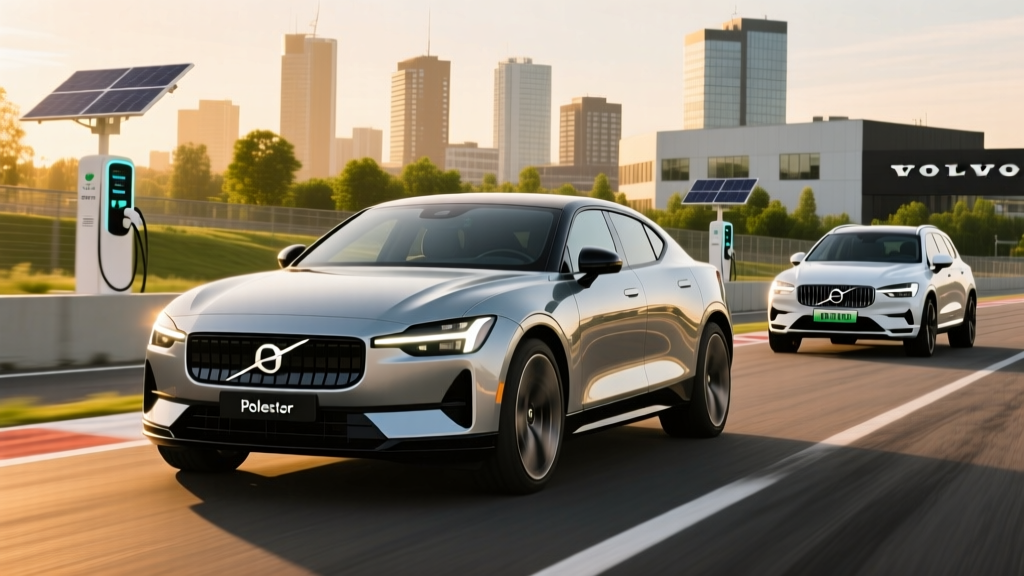
If you've been shopping premium electric SUVs, you've likely asked: do Volvo own Polestar? The short answer is no — not anymore. As of 2026, Polestar operates as an independent, publicly traded company (NASDAQ: PSNY) after its 2022 SPAC merger. However, the relationship between the two brands remains deeply intertwined through their shared parent: Zhejiang Geely Holding Group, the Chinese automotive conglomerate that also owns Lotus and Zeekr.
Volvo Cars (also majority-owned by Geely) originally co-founded Polestar as a performance sub-brand in 2017 before spinning it into a standalone EV maker. Today, Polestar and Volvo share vehicle architectures — notably the Sustainable Experience Architecture (SEA) and the earlier SPA2 platform — as well as supply chains, software tooling, and in some markets, service networks. But Polestar designs, engineers, prices, and markets its vehicles independently, positioning itself as a performance-oriented, design-forward alternative to Volvo's safety-and-comfort identity.
Understanding this corporate structure matters for buyers: it means Polestar vehicles benefit from Volvo's engineering depth and Geely's manufacturing scale, while carrying their own warranty terms, software ecosystem, and tax-credit eligibility. Below, we break down what this means in practice through a full profile of the 2026 Polestar 4, the brand's volume-play electric SUV-coupé.
2026 Polestar 4: Quick Verdict
The 2026 Polestar 4 is a midsize luxury electric crossover that slots between the Polestar 2 sedan and the larger Polestar 3 SUV. It replaces the traditional rear window with a camera-based digital rearview system — a bold design choice that improves aerodynamics and enables a sloping roofline, but polarizes buyers. With up to 315 miles of EPA-estimated range, a 200 kW peak DC fast-charge rate, and a starting MSRP around $54,900, the Polestar 4 targets Tesla Model Y Performance and BMW iX3 buyers who want Scandinavian minimalism with genuine straight-line speed.
| Spec | Long Range Single Motor | Long Range Dual Motor |
|---|---|---|
| EPA Range | 315 mi | 285 mi |
| Battery (usable) | 94 kWh (NMC) | 94 kWh (NMC) |
| Horsepower | 272 hp | 544 hp |
| 0–60 mph | 7.1 sec | 3.8 sec |
| Drivetrain | RWD | AWD (dual motor) |
| Peak DC Charge Rate | 200 kW | 200 kW |
| 10–80% DC Time | ~28 min | ~28 min |
| Level 2 Rate | 11 kW (~35 mi/hr) | 11 kW (~35 mi/hr) |
| MPGe (combined) | 108 MPGe | 96 MPGe |
| Efficiency | 31 kWh/100 mi | 35 kWh/100 mi |
| Cargo (rear seats up) | 18.3 cu ft | 18.3 cu ft |
| Cargo (seats folded) | 50.7 cu ft | 50.7 cu ft |
| Base MSRP | $54,900 | $61,400 |
Range, Battery, and Real-World Efficiency
The Polestar 4 uses a 94 kWh usable (100 kWh gross) nickel-manganese-cobalt (NMC) lithium-ion battery pack supplied by CATL. NMC chemistry offers higher energy density than LFP (lithium iron phosphate), which is why Polestar can pack meaningful range into a relatively compact crossover footprint. The trade-off is that NMC cells degrade slightly faster over time and prefer not to sit at 100% state of charge for extended periods — Polestar recommends daily charging to 80–90% for longevity.
EPA sticker: 315 miles (LR Single Motor) / 285 miles (LR Dual Motor)
Real-world highway (70–80 mph, moderate climate): Expect ~265–285 miles for the single-motor variant and ~240–260 miles for the dual-motor. At sustained highway speeds, aerodynamic drag reduces efficiency by roughly 10–15% versus the EPA combined cycle.
Cold-weather (below 32°F / 0°C): Plan for a 20–30% range reduction, bringing the single-motor down to ~220–250 miles. The Polestar 4 includes a heat pump as standard equipment, which mitigates cabin-heating energy draw but cannot fully offset cold-induced battery resistance.
Charge-curve reality: The 200 kW peak rate holds roughly from 10–40% SoC, then tapers progressively. Your 10–80% time of ~28 minutes assumes a preconditioned battery and a functioning 350 kW-class charger. On a 150 kW unit, expect 10–80% in ~38–42 minutes.
Efficiency-wise, the single-motor Polestar 4 achieves an EPA-rated 108 MPGe combined (31 kWh per 100 miles), which is competitive with the Tesla Model Y Long Range (117 MPGe) but trails the Hyundai Ioniq 5's class-leading 114 MPGe. The dual-motor version drops to 96 MPGe (35 kWh/100 mi), a reasonable penalty for 544 horsepower and all-wheel drive.
Charging Speed: DC Fast, Level 2, and Home Setup
Polestar equips the 4 with a CCS1 charge port (NACS adapter available for Tesla Supercharger access). The 200 kW peak DC rate is mid-pack for 2026 — the Hyundai Ioniq 5 peaks at 240 kW and the Lucid Gravity at 300 kW — but it's sufficient for practical road-trip charging when paired with proper battery preconditioning.
| Charging Level | Power | Speed | Typical Use Case |
|---|---|---|---|
| Level 1 (120V household) | ~1.4 kW | ~4 mi/hr | Emergency / overnight trickle |
| Level 2 (240V, 48A home) | 11 kW (vehicle-limited) | ~35 mi/hr | Daily home charging; 0–100% in ~9.5 hr |
| DC Fast (peak) | 200 kW | ~10–80% in 28 min | Road trips; requires 350 kW-class station |
| DC Fast (typical 150 kW station) | ~150 kW sustained avg | ~10–80% in 38–42 min | Most public fast-charger reality |
For home charging, the Polestar 4's 11 kW onboard charger means you'll need a 48-amp, 240-volt Level 2 circuit (hardwired, 60-amp breaker) to achieve the full ~35 miles of range per hour of charging. A typical overnight session (8 hours) adds roughly 280 miles — more than enough to replenish a full day's driving. Installation costs for a dedicated 60A circuit typically range from $800 to $2,500 depending on panel proximity and local permitting, according to Energy.gov home charging guidance. If your home has a 100-amp electrical panel, budget an additional $1,500–$3,000 for a panel upgrade — a common gotcha for new EV owners.
Polestar's navigation system includes route-based battery preconditioning: when you navigate to a DC fast charger, the thermal management system warms the battery to its optimal charging temperature (~35°C), enabling the car to hit peak kW sooner. This feature is critical in cold weather and meaningfully reduces real-world charge times.
Performance, Driving Dynamics, and Tech
The dual-motor Polestar 4's 544 horsepower and 3.8-second 0–60 mph time place it firmly in performance-SUV territory, rivaling the Porsche Macan Electric and well ahead of the base Tesla Model Y. The single-motor variant, at 272 hp and 7.1 seconds, is adequate for commuting but won't excite enthusiasts. Both versions feature Polestar-tuned Öhlins dampers (on the Performance Pack trim) that deliver a firm but controlled ride — this is a brand that prioritizes handling precision over plush compliance.
The most talked-about tech feature is the digital rearview mirror. The Polestar 4 has no physical rear window; instead, a roof-mounted camera feeds a high-resolution display where you'd expect a mirror. The system offers a wider field of view than a traditional mirror and eliminates rear-pillar blind spots, but it takes acclimation. Some drivers report eye-strain on long trips from focusing on a screen at a different focal distance than a real mirror. A camera-based system also means a dead screen in a total 12V-electrical failure — though the same risk applies to most modern vehicles with electronic displays.
The infotainment system runs Polestar's Android Automotive OS with built-in Google Maps, Google Assistant, and access to the Google Play Store for in-car apps. The 15.4-inch landscape touchscreen is responsive, and the UI is among the cleanest in the luxury EV segment. Wireless Apple CarPlay is standard for iPhone users who prefer their native ecosystem.
Driver assistance is handled by Polestar's Pilot Pack, which includes adaptive cruise control with stop-and-go, lane-centering steering assist, and blind-spot intervention. This is a SAE Level 2 system — it does not drive itself. The driver must keep hands on the wheel and eyes on the road at all times. It's competent for highway cruising but doesn't offer the hands-free capability of GM's Super Cruise or Ford's BlueCruise on mapped highways.
Pricing, Trims, and Federal Tax Credit Eligibility
The 2026 Polestar 4 launches in two primary configurations:
| Trim | Base MSRP | As-Tested (typical options) | Est. Federal Credit (§30D) | Effective Price |
|---|---|---|---|---|
| Long Range Single Motor | $54,900 | $58,200 (Plus Pack) | Up to $7,500* | ~$47,400–$50,700 |
| Long Range Dual Motor | $61,400 | $66,800 (Performance Pack) | Up to $7,500* | ~$53,900–$59,300 |
*Federal tax credit eligibility under IRS §30D depends on buyer income, battery critical-mineral sourcing, and MSRP caps. See IRS.gov clean vehicle credit rules. Consult a tax professional before purchase.
Critical tax-credit considerations for the Polestar 4:
- MSRP cap: SUVs must be under $80,000 MSRP to qualify. Both Polestar 4 trims fall well under this threshold.
- Buyer income cap: Modified adjusted gross income must not exceed $150,000 (single), $225,000 (head of household), or $300,000 (joint filing).
- Battery sourcing: The §30D credit is split into two $3,750 halves — one for critical-minerals sourcing and one for battery-component assembly. Polestar's CATL-supplied NMC cells have faced scrutiny under the battery-component requirement due to Chinese manufacturing. Verify current-year sourcing compliance on fueleconomy.gov before relying on the full $7,500.
- Point-of-sale transfer: As of 2024, eligible buyers can transfer the credit to the dealer at purchase, reducing the out-of-pocket price immediately rather than waiting for a tax refund. Polestar dealers should support this, but confirm at the time of order.
Interior Space, Cargo, and Practicality
The Polestar 4 is classified as a midsize crossover, but its coupé roofline sacrifices some rear headroom compared to boxier competitors. Rear legroom measures 38.4 inches — adequate for adults on shorter trips but tighter than the Tesla Model Y's 41.6 inches. The flat floor (no transmission tunnel) helps middle-seat comfort.
Cargo volume is 18.3 cubic feet behind the second row and 50.7 cubic feet with the 60/40 split rear seats folded. There is no front trunk (frunk) — the space is occupied by HVAC and power-electronics hardware. For context, the Tesla Model Y offers 30.2 cu ft behind the rear seats and 76.2 cu ft total, making it substantially more practical for families who haul gear regularly. The Polestar 4's cargo area is better suited to a couple or small family than to frequent IKEA runs.
Warranty, Ownership Costs, and Long-Term Outlook
Polestar provides the following warranty coverage on the 2026 Polestar 4:
- Basic vehicle warranty: 4 years / 50,000 miles
- Battery & powertrain warranty: 8 years / 100,000 miles (covers defects and capacity loss below 70% state of health)
- Corrosion warranty: 12 years / unlimited miles
- Roadside assistance: 4 years / unlimited miles
The 70% battery-health threshold over 8 years is industry-standard, matching Tesla, Hyundai, and Ford. Real-world NMC degradation data from similar Geely-platform vehicles suggests most owners will retain 85–90% capacity at the 100,000-mile mark under normal charging habits (avoiding frequent 100% charges and deep discharges below 10%).
Insurance costs for the Polestar 4 run higher than segment average. Early 2026 data suggests annual premiums of $2,200–$2,800 for a 40-year-old driver with a clean record, driven partly by the vehicle's repair costs (proprietary body panels, camera systems, and limited independent body-shop familiarity). Get quotes from multiple carriers before committing.
Maintenance is minimal: no oil changes, no transmission fluid, and regenerative braking extends pad life to 80,000+ miles in typical driving. Polestar recommends cabin-air-filter replacement every 2 years and brake-fluid checks every 2 years. Expect annual maintenance costs of $150–$300.
Pros, Cons, and Who Should Buy the Polestar 4
Pros
- Striking design with genuine road presence — stands out in a sea of Model Ys
- 544 hp dual-motor variant delivers sports-car acceleration in an SUV body
- Google Automotive OS is the best native infotainment in the luxury EV segment
- Heat pump standard on all trims — improves cold-weather range and cabin comfort
- Öhlins-tuned suspension (Performance Pack) offers genuine handling engagement
- Under $80K MSRP on all trims — keeps §30D tax credit within reach
Cons
- No rear window — digital mirror takes acclimation and concerns some drivers
- Cargo space (18.3 cu ft) trails the Model Y (30.2 cu ft) significantly
- 200 kW peak DC charge rate is mid-pack; competitors hit 240–350 kW
- No hands-free Level 2+ driving system — Pilot Pack requires hands on wheel
- Limited service-center footprint vs. Tesla or BMW — check proximity before buying
- Battery sourcing may limit §30D credit to $3,750 instead of full $7,500 — verify before purchase
Who Should Buy the 2026 Polestar 4?
Choose the Polestar 4 if: You want a design-distinctive luxury EV that isn't a Tesla, prioritize driving dynamics over cargo space, commute 40–80 miles daily with home charging, and value Google-native infotainment.
Look elsewhere if: You need maximum cargo versatility (Model Y or Kia EV9), want hands-free highway driving (BMW iX with Highway Assistant or GM vehicles with Super Cruise), or depend on the full $7,500 tax credit and cannot verify Polestar's battery-sourcing compliance for your purchase year.
Frequently Asked Questions
Do Volvo own Polestar in 2026?
No. Polestar is an independent, publicly traded company (NASDAQ: PSNY). Both Polestar and Volvo Cars are majority-owned by Geely Holding Group, and the two brands share vehicle platforms and some supply-chain resources, but they operate as separate companies with distinct product strategies, pricing, and brand identities.
What is the real-world range of the 2026 Polestar 4?
The EPA rates the Long Range Single Motor at 315 miles and the Dual Motor at 285 miles. In real-world highway driving at 70–80 mph, expect roughly 265–285 miles (single motor) or 240–260 miles (dual motor). In freezing temperatures, subtract an additional 20–30%. The standard heat pump helps, but cold weather remains the biggest range variable for any EV.
How fast does the Polestar 4 charge at home and on the road?
At home on a 240V Level 2 charger (48A), the Polestar 4 charges at 11 kW, adding roughly 35 miles of range per hour — a full 0–100% takes about 9.5 hours. On a DC fast charger rated at 350 kW, the car peaks at 200 kW and charges from 10–80% in approximately 28 minutes with a preconditioned battery. On more common 150 kW public chargers, plan for 38–42 minutes for the same 10–80% session.
Does the 2026 Polestar 4 qualify for the federal EV tax credit?
It may qualify for up to $7,500 under IRS §30D, but eligibility depends on three factors: (1) your income must be below the cap ($150K single / $300K joint), (2) the vehicle MSRP must be under $80,000 (both trims qualify), and (3) battery critical-mineral and component sourcing must meet current-year thresholds. Because Polestar uses CATL-supplied cells manufactured in China, the battery-component half of the credit ($3,750) may not apply in all model years. Check fueleconomy.gov and consult a tax professional before purchase.
Is the Polestar 4 worth buying vs. the Tesla Model Y or BMW iX?
It depends on your priorities. The Model Y offers more cargo space, a larger Supercharger network, and lower starting prices — but it's ubiquitous and its interior feels dated. The BMW iX provides a more luxurious cabin, available hands-free driving, and faster charging, but starts above $75,000. The Polestar 4 occupies a niche: distinctive Scandinavian design, strong performance, and Google-native tech at a mid-$50K starting point. If design differentiation and driving engagement matter more than cargo volume, the Polestar 4 earns its place on your shortlist.
Can I service a Polestar at a Volvo dealership?
In some markets, yes — Polestar leverages Volvo's service network for warranty and recall work where dedicated Polestar service centers are unavailable. However, not all Volvo dealers are authorized for Polestar-specific diagnostics and software updates. Confirm your nearest authorized service point on Polestar's website before purchasing, especially if you live in a rural or low-density area.