The Short Answer: Most EVs Don't Have a Traditional Transmission
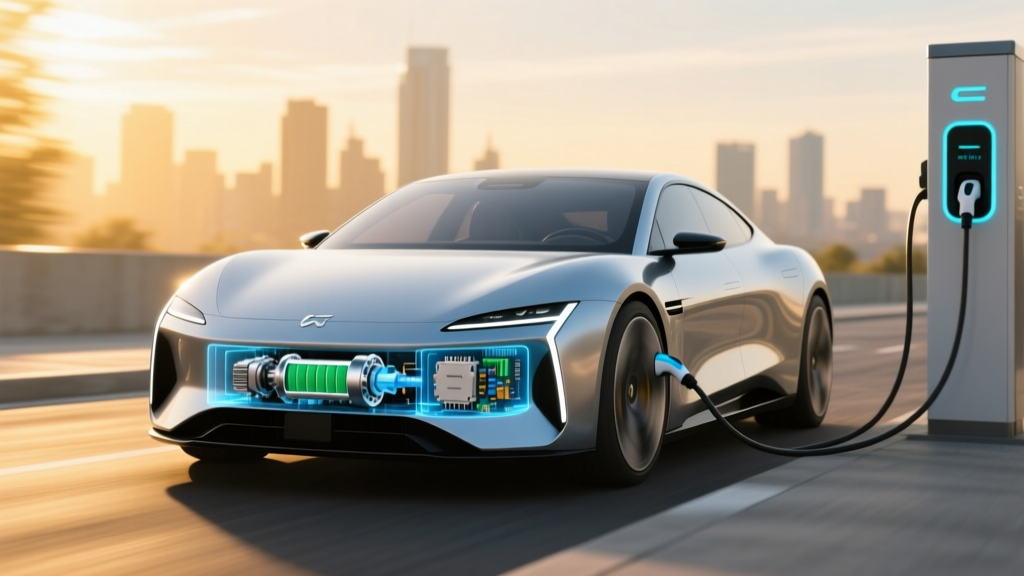
No, the vast majority of electric vehicles do not have a multi-speed transmission like a gas-powered car. Instead, most EVs use a single-speed reduction gear (sometimes called a single-speed transaxle) that transfers torque from the electric motor to the wheels. Because electric motors produce maximum torque instantly from 0 RPM and can spin at speeds exceeding 15,000–20,000 RPM, they don't need multiple gears to stay in an efficient power band the way internal combustion engines do.
A few exceptions exist — the Porsche Taycan and Audi e-tron GT use a two-speed transmission on the rear axle to optimize both launch acceleration and high-speed efficiency — but these are outliers, not the norm.
Why Gas Cars Need Multi-Speed Transmissions and EVs Don't
Internal combustion engines (ICE) have a narrow RPM range where they produce usable power and efficiency — typically between 1,500 and 5,000 RPM for most road-going engines. Below that range, they stall. Above it, they hit a rev limiter. A 6-, 8-, or even 10-speed automatic transmission exists to keep the engine in that narrow sweet spot as vehicle speed changes.
Electric motors operate on fundamentally different physics:
- Torque delivery: Maximum torque is available from 0 RPM. There's no need to "rev up" to access power.
- RPM range: Most EV traction motors spin from 0 to 15,000+ RPM, covering the entire speed range of the vehicle without shifting.
- Efficiency curve: Electric motors maintain 85–95% efficiency across a broad RPM band, unlike ICE engines that peak around 25–40% thermal efficiency in a narrow window.
The single-speed reduction gear typically has a ratio between 8:1 and 10:1. For example, the Tesla Model 3 uses a reduction ratio of approximately 9:1. This means the motor spins about 9 times for every single rotation of the wheels — multiplying torque while allowing the motor to operate at its efficient high-RPM range even at low vehicle speeds.
Exceptions: EVs That Do Use Multi-Speed Gearboxes
A handful of performance-oriented EVs employ a two-speed transmission, usually on the rear axle only:
- Porsche Taycan (all model years): A two-speed rear transaxle with a short first gear for aggressive 0-60 launches (2.4 seconds on the Turbo S) and a tall second gear for efficient highway cruising and a top speed of 161 mph.
- Audi e-tron GT / RS e-tron GT: Shares the J1 platform with the Taycan and uses the same two-speed rear unit.
Why bother? In high-performance applications, a two-speed setup can improve 0-60 times by roughly 0.2–0.4 seconds and extend top speed by 10–15 mph compared to a single-speed equivalent with the same motor. For the other 95%+ of EVs on the road, the added cost, weight (approximately 30–50 lbs extra), and mechanical complexity don't justify the marginal gains.
EV vs. Gas Drivetrain: What This Means for Maintenance and Cost
The absence of a multi-speed transmission is one of the most consequential ownership differences between EVs and gas cars. Here's a side-by-side look:
| Factor | Typical Gas Car (8-Speed Auto) | Typical EV (Single-Speed) |
|---|---|---|
| Transmission fluid changes | Every 30,000–60,000 mi ($150–$350) | Reduction gear fluid: every ~60,000–100,000 mi ($80–$150) |
| Moving parts in drivetrain | Hundreds (clutches, bands, torque converter, planetary gears) | ~10–20 (motor rotor, reduction gear set, differential) |
| Transmission replacement cost | $3,500–$7,000 (out of warranty) | Reduction gear replacement: $1,000–$2,500 (rare) |
| Oil changes | Every 5,000–10,000 mi ($40–$100) | None |
| Estimated 5-year drivetrain maintenance | $800–$1,800 | $150–$400 |
Data from fueleconomy.gov and the U.S. Department of Energy consistently show EVs have lower scheduled maintenance costs — typically $0.061 per mile vs. $0.101 per mile for gas vehicles. The simpler drivetrain is a primary reason.
How the Single-Speed Design Affects Real-World Driving
If you're coming from a gas car, the single-speed drivetrain changes the driving experience in several ways that matter for daily ownership:
Instant acceleration, no shift lag
Press the accelerator and torque arrives immediately — no downshift delay, no turbo spool-up, no torque-converter slip. A base Tesla Model 3 RWD (283 HP, EPA 272 miles) hits 0-60 in about 5.8 seconds, but the feel of initial throttle response is quicker than many gas cars with higher 0-60 times because there's zero drivetrain lag.
Regenerative braking replaces engine braking
When you lift off the accelerator, the motor reverses its function and becomes a generator, sending energy back into the battery. This slows the car noticeably — often enough to avoid using the friction brakes in normal traffic. This is the basis of one-pedal driving, available on most modern EVs (Tesla, Hyundai/Kia, Ford, Rivian, BMW iX, and others).
Highway efficiency tradeoff
Here's where the single-speed design has a real limitation: electric motors become less efficient at sustained high RPM. At 80 mph, the motor in a typical EV is spinning at 12,000–14,000 RPM, and efficiency drops compared to 45–55 mph cruising. This is why EPA highway range estimates for EVs are often 10–20% lower than city estimates — the opposite of gas cars, which are more efficient on the highway.
For example, the 2026 Hyundai Ioniq 6 SE Long Range (77.4 kWh NMC battery, EPA 361 miles combined) achieves an EPA-estimated 140 MPGe city but 120 MPGe highway, according to fueleconomy.gov. At a sustained 75 mph in cold weather (below 30°F), expect real-world range to drop to approximately 260–290 miles before needing to charge.
Real Costs: EV Drivetrain Ownership Over 5 Years
The simpler drivetrain translates directly into dollars. Here's a realistic 5-year / 75,000-mile cost comparison for a mainstream EV versus a comparable gas sedan:
| Cost Category (5 yr / 75,000 mi) | EV (e.g., Tesla Model 3 RWD) | Gas (e.g., Toyota Camry LE) |
|---|---|---|
| Purchase price (MSRP) | $38,990 | $28,990 |
| Federal tax credit (§30D, if eligible) | −$3,750 to $7,500* | $0 |
| Fuel / electricity | $2,800–$4,200 (home charging dominant) | $7,500–$9,400 (at $3.20–$4.00/gal, 32 MPG avg) |
| Drivetrain maintenance | $200–$400 | $1,200–$1,800 |
| Brake pad replacement | $0–$200 (regen saves pads) | $400–$800 |
| Oil changes | $0 | $450–$750 |
| Insurance (avg) | $8,500–$11,000 | $6,500–$8,500 |
| 5-year total (approx.) | $46,500–$54,000 | $45,000–$50,200 |
*Federal §30D tax credit eligibility depends on MSRP caps ($55,000 for sedans), buyer income limits ($150K single / $300K joint), battery critical-mineral and component sourcing rules, and is subject to change. Verify current-year rules at IRS.gov. Point-of-sale transfer is available at participating dealers.
The EV's drivetrain simplicity saves roughly $1,000–$2,000 over 5 years in maintenance alone. Combined with fuel savings of $3,300–$6,600, the higher purchase price can be offset — especially with the tax credit — but insurance premiums tend to run 15–30% higher for EVs, which narrows the gap. Your mileage (literally) will vary based on local electricity rates, gas prices, and driving patterns.
Common Misconceptions About EV Transmissions
| Myth | Fact |
|---|---|
| "EVs have no gears at all." | Most EVs have a single-speed reduction gear with a fixed ratio (typically 8:1 to 10:1). It's a gear — just not a shifting gearbox. |
| "EVs need transmission fluid changes like gas cars." | The reduction gear uses a small amount of lubricant, but service intervals are far longer (60K–100K miles) and the cost is lower ($80–$150). Many owners never need one during ownership. |
| "Without a transmission, EVs can't go fast." | The Lucid Air Sapphire (1,234 HP, 3 motors) hits 0-60 in under 2.0 seconds and reaches 200+ mph — all with single-speed reduction gears on each axle. |
| "The single-speed design means EVs are inefficient at highway speed." | There is a relative efficiency drop at high speed, but EVs still convert 85–90% of battery energy to motion at 70 mph. Gas engines at highway speed are only ~25–30% thermally efficient. |
| "EV drivetrains wear out faster." | Electric motors have one moving part (the rotor) and routinely last 300,000+ miles. Most manufacturers warranty the motor and battery for 8 years / 100,000 miles; Hyundai/Kia covers 10 years / 100,000 miles. |
Decision Framework: Does the EV Drivetrain Make Sense for You?
Choose an EV (single-speed drivetrain) if:
- You want minimal drivetrain maintenance. No transmission fluid flushes, no clutch wear, no torque-converter shudder. Budget $200–$400 over 5 years for drivetrain-related service.
- You prioritize instant throttle response. City and suburban driving feel effortless — no hunting for the right gear in stop-and-go traffic.
- You have access to home Level 2 charging. A 240V home charger (7.2–11.5 kW) adds 25–44 miles of range per hour of charging, and the simpler drivetrain means you spend less time and money at service centers.
- Your daily commute is under 200 miles round-trip. A single-speed EV with 250–350 miles of EPA range handles this easily, with real-world highway/cold-weather losses factored in.
Consider a hybrid/PHEV instead if:
- You regularly drive 300+ miles between charging opportunities. The multi-speed transmission in a gas or hybrid powertrain is more efficient for sustained high-speed, long-distance driving where EV range drops significantly.
- You live in an apartment or lack home charging access. Relying exclusively on public DC fast charging adds cost ($0.30–$0.48/kWh typical in 2026) and time. A hybrid eliminates this friction.
- You tow heavy loads frequently. Towing 3,000+ lbs at highway speed can cut EV range by 40–50%. Hybrids and PHEVs handle towing with less range penalty.
What First-Time EV Buyers Should Know About the Drivetrain
If you've driven automatic-transmission gas cars your whole life, the EV single-speed experience requires almost no adjustment — it feels like the smoothest automatic you've ever driven, with no shift shocks, no gear hunting on inclines, and no engine noise. Here's what to expect in your first weeks:
- Regen braking takes 2–3 days to learn. Start with the lowest regen setting and gradually increase it. Within a week, most drivers prefer maximum regen and rarely touch the brake pedal in normal traffic.
- Tire wear increases 15–30%. Instant torque and the vehicle's additional weight (EVs are typically 500–1,000 lbs heavier than gas equivalents) wear front tires faster. Budget for tire rotation every 5,000–7,500 miles and replacement around 30,000–40,000 miles.
- Cold weather reduces range 20–40%. Below 20°F, battery chemistry slows and cabin heating draws 2–5 kW continuously. A 300-mile EPA EV may deliver only 180–220 real-world miles in a January Midwest commute. Preconditioning the battery while plugged in mitigates this.
- The drivetrain is essentially maintenance-free. Your main scheduled items are cabin air filter ($30–$60, DIY), windshield washer fluid, brake fluid check every 2 years, and tire rotations. That's it.
Frequently Asked Questions
Do Teslas have a transmission?
No Tesla model (Model 3, Model Y, Model S, Model X, or Cybertruck) uses a multi-speed transmission. All use a single-speed reduction gear. The original 2008 Tesla Roadster initially shipped with a two-speed gearbox but was quickly revised to a single-speed unit due to reliability issues. Every Tesla since has used a single-speed design.
Will EVs ever have multi-speed transmissions?
For mainstream models, it's unlikely. Motor efficiency, power density, and RPM range have improved to the point where a single-speed design covers all practical driving needs. Multi-speed gearboxes may remain in ultra-high-performance EVs (like the Porsche Taycan) where marginal gains in 0-60 time and top speed justify the complexity, but mass-market EVs will almost certainly stay single-speed.
Does the single-speed gear need any maintenance?
Yes, but minimal. The reduction gear contains lubricating fluid that most manufacturers recommend inspecting or replacing between 60,000 and 100,000 miles. The service typically costs $80–$150 at a dealer and takes under an hour. Some manufacturers (like Tesla) do not specify a mandatory replacement interval, instead recommending inspection during routine service.
Can an EV's single-speed design handle towing?
It can, but with significant range tradeoffs. The Ford F-150 Lightning (extended-range, EPA 320 miles) is rated to tow 10,000 lbs, but real-world towing at highway speed reduces range to approximately 150–180 miles. The single-speed gear itself handles the load fine — it's the energy demand of moving that mass at speed that limits range, not the drivetrain.
How does the EV drivetrain warranty compare to a gas car's transmission warranty?
Federal law mandates that EV battery and motor components carry a minimum warranty of 8 years / 100,000 miles (10 years / 150,000 miles in California and states that follow CARB standards). Many gas-car powertrain warranties cover 5 years / 60,000 miles. The EV drivetrain warranty is typically stronger and longer by a significant margin. Check NHTSA.gov and your manufacturer's warranty booklet for exact terms.