Quick Answer: Do Electric Vehicles Use Oil?
No, battery-electric vehicles (BEVs) do not use motor oil. EVs have no internal combustion engine, so there's no engine oil to change, no oil filter to replace, and no oil pan to worry about. However, EVs aren't entirely fluid-free. Most use reduction-gear lubricant (sometimes called gearbox oil), brake fluid, coolant for the battery thermal management system, and windshield washer fluid. These require far less frequent attention than the oil changes gas-car owners endure every 5,000–7,500 miles.
What Fluids Does an EV Actually Need?
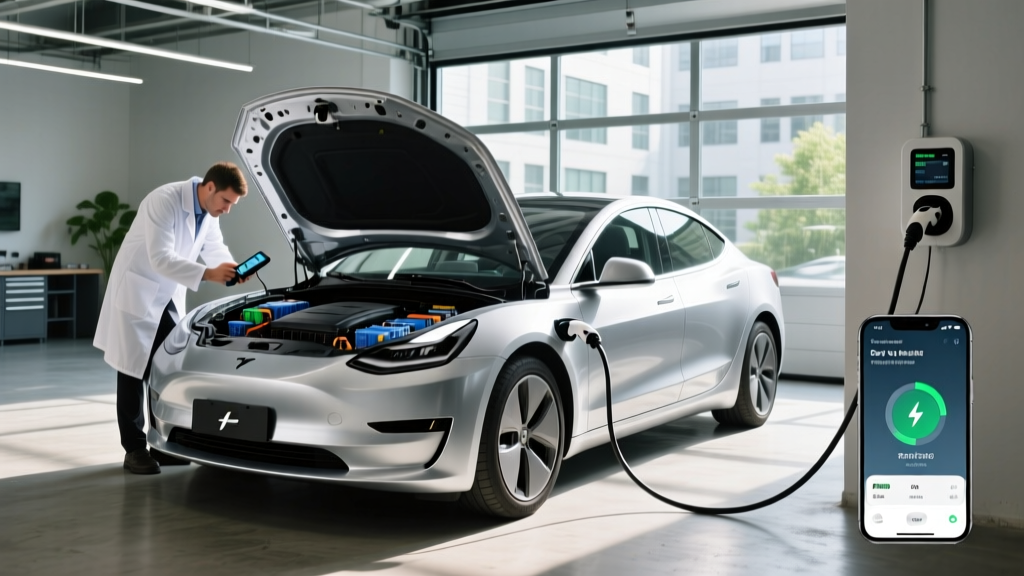
The simplicity of an electric powertrain is one of the biggest ownership advantages, but "no oil changes" doesn't mean "zero maintenance." Here's what a typical 2025–2026 BEV like the Tesla Model Y, Hyundai IONIQ 5, or Ford Mustang Mach-E requires:
| Fluid | Purpose | Typical Service Interval | Estimated Cost |
|---|---|---|---|
| Reduction-gear lubricant | Lubricates single-speed gearbox | Inspect at 15,000 mi; replace ~60,000–100,000 mi | $80–$150 |
| Brake fluid | Hydraulic brake system | Every 2 years or 30,000 mi | $80–$120 |
| Battery/motor coolant | Thermal management for pack and drive unit | Inspect annually; replace ~100,000–150,000 mi | $150–$300 |
| Windshield washer fluid | Visibility | Top up as needed | $5–$10 |
| Cabin air filter | HVAC filtration (not a fluid, but regular service) | Every 15,000–20,000 mi | $30–$70 |
Compare that to a typical gas vehicle: engine oil and filter every 5,000–7,500 miles ($40–$80 per visit), transmission fluid, spark plugs, timing belts, fuel filters, and emissions system components. The U.S. Department of Energy's EV maintenance guidance confirms that BEVs have significantly fewer scheduled service items than internal combustion vehicles.
EV vs Gas Car: Maintenance Cost Breakdown
The oil-change question is really a proxy for a bigger concern: "Will an EV actually save me money?" Let's look at concrete numbers over a 5-year / 75,000-mile ownership period.
| Category | Battery EV (e.g., IONIQ 5) | Gas Car (e.g., Toyota RAV4) | Difference |
|---|---|---|---|
| Engine oil changes | $0 | $600–$1,000 (10–15 changes) | EV saves $600–$1,000 |
| Other fluid services | $300–$500 | $600–$1,200 (trans, coolant, brake) | EV saves $300–$700 |
| Brake pads | $0–$200 (regen saves pads) | $400–$800 (2–3 replacements) | EV saves $200–$800 |
| Air/cabin filters | $150–$250 | $200–$400 | EV saves $50–$150 |
| Spark plugs, belts, exhaust | $0 | $300–$700 | EV saves $300–$700 |
| Fuel / Electricity | $2,200–$3,500 (home charging) | $7,500–$9,000 ($3.40/gal, 28 MPG) | EV saves $4,000–$6,800 |
| Total 5-Year | $2,650–$4,450 | $9,600–$13,100 | EV saves $5,150–$10,650 |
The maintenance savings are real but modest compared to fuel savings. A 2024 study by Consumer Reports estimated that EV owners save an average of $4,600 in repair and maintenance costs over the life of the vehicle compared to gas-car owners. Combined with fuel savings, the economics tilt heavily toward electric — but only if your electricity rates and driving patterns align.
What About Hybrids and Plug-In Hybrids?
This is where the oil question gets nuanced. Hybrid electric vehicles (HEVs) and plug-in hybrid electric vehicles (PHEVs) do use engine oil because they still have an internal combustion engine onboard.
| Powertrain | Has Gas Engine? | Needs Oil Changes? | Oil Change Interval | Examples |
|---|---|---|---|---|
| BEV (Battery EV) | No | No | N/A | Tesla Model Y, IONIQ 5, Rivian R1S |
| PHEV (Plug-In Hybrid) | Yes | Yes | Every 5,000–10,000 mi (less if mostly on electric) | Toyota RAV4 Prime, Jeep Wrangler 4xe |
| HEV (Hybrid) | Yes | Yes | Every 5,000–10,000 mi | Toyota Prius, Honda CR-V Hybrid |
| EREV (Range Extender) | Yes (generator only) | Yes | Every 5,000–10,000 mi | Ramcharger (upcoming) |
PHEV owners sometimes discover a subtle issue: if you drive almost entirely on electric and rarely engage the gas engine, the oil can degrade from condensation and short run cycles. Some manufacturers (like Toyota for the RAV4 Prime) recommend running the engine periodically or following a time-based oil change interval (typically 12 months) even if mileage is low.
Common Myths About EV Oil and Maintenance
| Myth | Fact |
|---|---|
| "EVs need zero maintenance" | EVs need less maintenance, not zero. Tires, wipers, cabin filters, brake fluid, coolant, and gearbox lubricant still require service. |
| "EV brakes wear out faster because of the extra weight" | Regenerative braking handles most deceleration, so brake pads often last 100,000+ miles. Weight increases tire wear, not brake wear. |
| "The battery will need replacing and cost $20,000" | Modern NMC and LFP batteries are designed to last 150,000–200,000+ miles with 70–80% capacity retention. Federal law mandates an 8-year/100,000-mile battery warranty (10 years/150,000 mi in CARB states). Full replacements are rare and declining in cost. |
| "EVs are worse in cold weather because the battery dies" | Cold weather reduces range by 15–30% depending on temperature and whether you precondition. An EV with a heat pump (standard on most 2025–2026 models) recovers significant efficiency. You still won't strand yourself if you plan accordingly. |
| "EVs cost more to insure" | Often true — premiums run 10–25% higher on average due to higher repair costs and vehicle prices. Shop quotes before buying. |
Real-World Ownership: What First-Time EV Buyers Should Know
The maintenance story is compelling, but the decision to go electric involves more than skipping oil changes. Here are the practical factors that determine whether an EV works for your life:
Home Charging Access Is the Biggest Variable
EV ownership is dramatically easier and cheaper when you can charge at home. A Level 2 home charger (240V, typically 7.7–11.5 kW) adds roughly 25–44 miles of range per hour of charging — more than enough to refill overnight. Installation costs range from $500–$2,500 depending on your electrical panel's capacity and the distance from panel to charger location. If you need a panel upgrade from 100A to 200A, add $1,500–$3,000.
If you live in an apartment or lack dedicated parking, public charging becomes your lifeline. DC fast charging (50–350 kW) can add 100–200+ miles in 15–25 minutes, but costs $0.30–$0.55/kWh at networks like Electrify America or EVgo — roughly double the cost of home charging at the national average of $0.16/kWh.
Tires: The Hidden EV Cost
EVs are 15–25% heavier than comparable gas vehicles, and instant torque accelerates tread wear. Expect to replace tires every 25,000–40,000 miles instead of the 40,000–60,000 miles typical for gas cars. Budget $800–$1,500 for a set of EV-optimized tires (like the Michelin Pilot Sport EV or Hankook iON). This partially offsets your maintenance savings.
Insurance Premiums Run Higher
Data from multiple insurers shows EV premiums averaging 10–25% higher than equivalent gas models. A Tesla Model Y might cost $2,400–$3,200/year to insure versus $1,800–$2,400 for a gas RAV4, depending on your state, driving record, and coverage. Get quotes before committing.
The Federal Tax Credit: What It Means for Your Wallet
The IRS §30D Clean Vehicle Credit can offset an EV's higher purchase price by up to $7,500, but eligibility is far from universal. Key 2025–2026 requirements:
- MSRP caps: Vans/SUVs/pickups must be under $80,000; sedans under $55,000
- Income caps: Modified AGI under $150,000 (single), $225,000 (head of household), $300,000 (joint)
- Battery sourcing: Increasingly strict critical-mineral and battery-component requirements phase in annually — many popular models lose partial or full eligibility year to year
- Point-of-sale transfer: Since Jan 1, 2024, you can transfer the credit to the dealer for an immediate price reduction rather than waiting until tax filing
- Final assembly: Vehicle must be assembled in North America
Always verify current eligibility on the IRS website and fueleconomy.gov before purchasing — the list of qualifying models changes frequently as manufacturers adjust supply chains.
Decision Framework: Is an EV Right for You?
Choose a Battery EV (BEV) If:
- You have access to home or workplace Level 2 charging
- Your daily driving is under 250 miles (covers 95%+ of American drivers)
- You want to eliminate oil changes, spark plugs, and emissions testing permanently
- You qualify for the §30D tax credit, bringing effective purchase price closer to a gas equivalent
- You live in a region with moderate winters or can precondition while plugged in
Choose a PHEV If:
- You want electric-only commuting (25–45 miles) but need gas-engine range for road trips
- You lack reliable home charging but can plug in occasionally
- You're not ready to depend on public DC fast-charging infrastructure
- You still want reduced (not eliminated) oil changes and fuel consumption
Stick With Gas (for Now) If:
- You have no access to home or workplace charging and live in a charging-desert region
- You regularly tow heavy loads over long distances (towing cuts EV range 30–50%)
- Your budget can't accommodate higher upfront cost even after incentives
- You drive more than 400 miles daily in areas with sparse charging infrastructure
Frequently Asked Questions
Do Tesla vehicles need oil changes?
No. Teslas are pure battery-electric vehicles with no internal combustion engine. They do use a small amount of gearbox lubricant in the drive unit, but this is typically a lifetime fill or requires replacement only at very high mileage (100,000+ miles).
Do electric cars need transmission fluid?
Most EVs use a single-speed reduction gear rather than a multi-speed transmission. This gear unit contains lubricant that may need inspection or replacement at 60,000–100,000 miles, but it's far simpler and cheaper than automatic transmission fluid service on a gas car.
How long do EV brakes last?
Thanks to regenerative braking, which uses the electric motor to slow the vehicle and recapture energy, EV brake pads routinely last 100,000–150,000 miles. Some owners have reported original brake pads beyond 200,000 miles. Brake fluid still needs replacement every 2–3 years regardless of pad wear.
Are EVs really cheaper to maintain long-term?
Yes. The U.S. Department of Energy and multiple independent studies (Consumer Reports, Argonne National Laboratory) confirm that BEV maintenance costs are roughly 40–50% lower than gas vehicles over the vehicle's life. Combined with fuel savings of $4,000–$7,000 over five years, the total cost of ownership advantage is significant — though partially offset by higher tire costs and insurance premiums.
What happens if my EV battery degrades?
All EVs sold in the U.S. carry a minimum 8-year/100,000-mile battery warranty (10 years/150,000 miles in California and states adopting CARB standards) that guarantees at least 70% capacity retention. Real-world data from fleets and high-mileage owners shows most modern NMC and LFP packs retain 80–90% capacity at 100,000 miles. Complete battery failure is rare, and replacement costs are declining — currently $5,000–$15,000 depending on the model, down significantly from earlier years.