The Short Answer
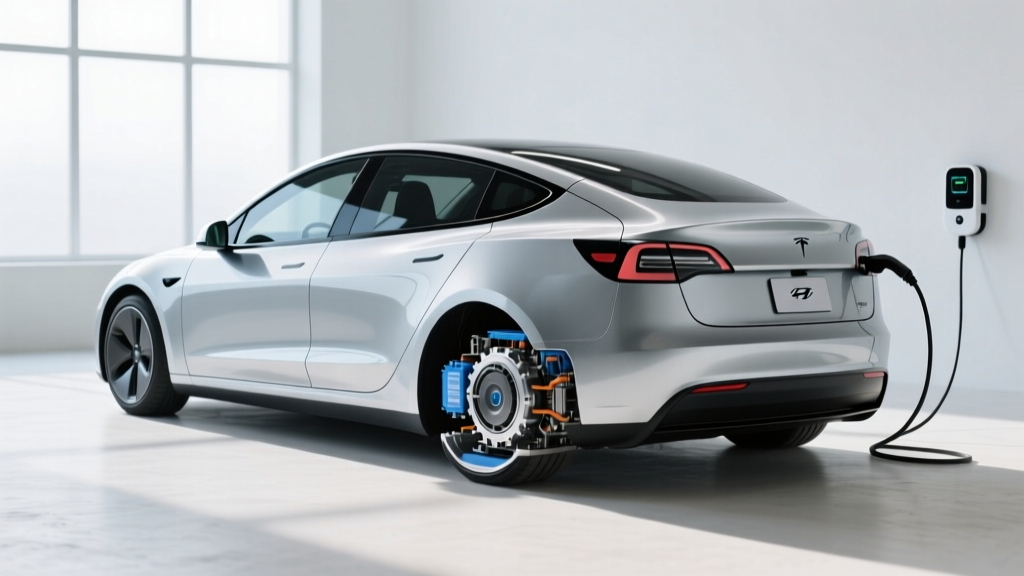
No. Battery-electric vehicles (BEVs) do not have catalytic converters. A catalytic converter is an exhaust-emissions device that scrubs harmful gases (carbon monoxide, nitrogen oxides, unburned hydrocarbons) from an internal-combustion engine's exhaust stream. Because a BEV has no engine, no exhaust system, and no tailpipe, there is nothing to scrub — and therefore no catalytic converter to buy, maintain, or have stolen.
Plug-in hybrids (PHEVs) and conventional hybrids (HEVs), however, do have catalytic converters because they still burn gasoline. We'll break down exactly what this means for your ownership costs below.
Why Gas Cars Need Catalytic Converters — and EVs Don't
A catalytic converter uses precious metals (platinum, palladium, rhodium) as catalysts to convert toxic combustion byproducts into less harmful gases before they exit the tailpipe. Federal emissions law has required them on gasoline vehicles in the US since 1975, and they remain standard on every new internal-combustion car sold today.
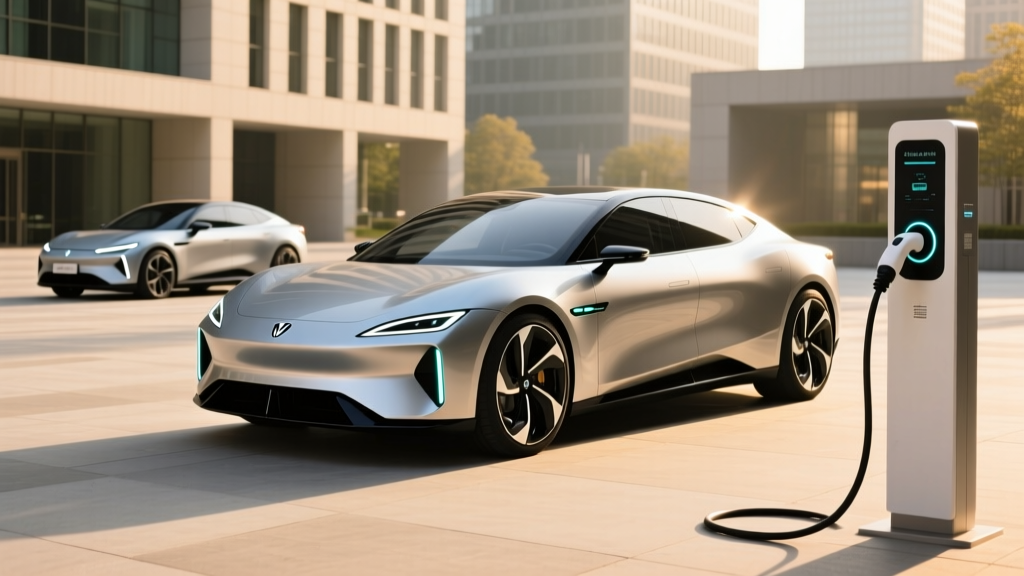
A battery-electric vehicle — whether it's a Tesla Model Y, Hyundai Ioniq 5, Ford F-150 Lightning, or Chevrolet Equinox EV — propels itself entirely with an electric motor drawing energy from a lithium-based traction battery. The drivetrain produces zero tailpipe emissions. No combustion means no exhaust, and no exhaust means no catalytic converter.
This distinction matters for three practical reasons: replacement cost avoidance, theft risk elimination, and emissions-inspection simplification. Let's quantify each.
The Real Cost of Catalytic Converters on Gas and Hybrid Cars
Catalytic converters are expensive components, and they're a frequent target for thieves because of the precious metals inside. Here's what gas-car and hybrid owners face that BEV owners simply do not:
| Cost Factor | Gas / Hybrid Vehicle | Battery-Electric Vehicle |
|---|---|---|
| Catalytic converter replacement (OEM) | $1,500 – $3,800+ | $0 — not equipped |
| Catalytic converter theft repair (avg.) | $1,000 – $3,000 (cat + exhaust + labor) | $0 — not a target |
| Exhaust system maintenance (muffler, pipes, O₂ sensors) | $200 – $1,200 over 150k miles | $0 — no exhaust system |
| Emissions inspection fees (where required) | $15 – $50 per test; potential repair costs if failed | $0 – exempt in most jurisdictions |
| Precious-metal theft deterrent (shield, cage, etching) | $150 – $500 aftermarket | $0 — unnecessary |
According to the National Insurance Crime Bureau (NICB), catalytic converter thefts surged dramatically between 2020 and 2023, with over 64,000 reported thefts in a single peak year. While theft rates have declined since, replacement costs remain steep — especially for hybrids like the Toyota Prius, whose catalytic converters are particularly rich in precious metals due to the engine's lean-burn cycle. A Prius cat replacement can exceed $2,500 at a dealership.
For a BEV owner, this entire cost category is permanently zero.
EV vs. Gas vs. Hybrid: Full Maintenance Cost Comparison
The absence of a catalytic converter is just one line item in a broader maintenance-cost advantage that BEVs hold. Without an internal-combustion engine, a BEV also eliminates oil changes, spark plugs, timing belts, fuel injectors, oxygen sensors, and the entire exhaust system.
| Maintenance Item | Gas Car (150,000 mi) | Hybrid / PHEV (150,000 mi) | BEV (150,000 mi) |
|---|---|---|---|
| Oil changes ($40–$80 × ~30) | $1,200 – $2,400 | $800 – $1,600 (less frequent) | $0 |
| Spark plugs / ignition coils | $300 – $800 | $200 – $600 | $0 |
| Exhaust system (cat, muffler, pipes) | $500 – $4,000 | $500 – $3,500 | $0 |
| Transmission fluid / service | $300 – $800 | $300 – $800 | $0 – $200 (most BEVs use single-speed reduction gear) |
| Brake pads (regenerative braking extends life) | $600 – $1,500 | $400 – $1,000 | $200 – $600 |
| Coolant flush | $200 – $400 | $200 – $400 | $100 – $300 |
| Estimated Total | $3,100 – $9,900 | $2,400 – $7,900 | $500 – $1,700 |
The US Department of Energy estimates that BEV maintenance costs average roughly $0.061 per mile compared to $0.101 per mile for a gasoline vehicle — a savings of about $6,000 over 150,000 miles. The missing catalytic converter and exhaust system contribute meaningfully to that gap.
What About Hybrids and Plug-In Hybrids?
This is where the distinction gets important for buyers cross-shopping powertrains.
Hybrid electric vehicles (HEVs) — like the Toyota Prius, Honda CR-V Hybrid, or Toyota RAV4 Hybrid — pair a gasoline engine with an electric motor. The engine runs frequently, so these vehicles have a full exhaust system including a catalytic converter. In fact, hybrid cats often run hotter and contain higher precious-metal loads, making them more attractive to thieves and more expensive to replace.
Plug-in hybrid electric vehicles (PHEVs) — like the Toyota RAV4 Prime, Jeep Wrangler 4xe, or Chrysler Pacifica Hybrid — also retain a gasoline engine and catalytic converter. Even though a PHEV might drive 25–42 miles on electricity alone, the engine still starts for longer trips, cold weather, or high-speed driving. The cat must be present and functional whenever the engine runs.
Battery-electric vehicles (BEVs) — the Tesla Model 3, Hyundai Ioniq 5, Ford Mustang Mach-E, BMW i4, and similar — have no engine, no fuel tank, no exhaust, and no catalytic converter. Zero.
Common Misconceptions — Corrected
| Myth | Fact |
|---|---|
| "All electrified vehicles skip the catalytic converter." | Only pure BEVs do. HEVs and PHEVs still have gasoline engines and require catalytic converters. |
| "EVs still produce emissions, so they must have exhaust systems." | BEVs produce zero tailpipe emissions. Upstream emissions from electricity generation exist but are addressed at the power-plant level, not the vehicle level. |
| "An EV needs an emissions inspection." | In most US states, BEVs are exempt from tailpipe emissions testing. Some states still require a safety inspection, but there's no exhaust to test. |
| "If an EV doesn't have a cat, it can't be smog-legal." | BEVs are classified as Zero Emission Vehicles (ZEVs) by the EPA and CARB. They exceed every tailpipe standard by producing nothing. |
| "Hydrogen fuel-cell EVs don't have catalytic converters either." | Incorrect. Fuel-cell electric vehicles (FCEVs) like the Toyota Mirai use catalytic-converter-like components in their fuel-cell stack and exhaust pathway to manage trace emissions. |
Total Ownership Cost: What a First-Time EV Buyer Should Budget
The catalytic-converter savings are real, but they're one piece of a larger ownership picture. Here's what a realistic five-year budget looks like for a mainstream BEV compared to a comparable gas car, based on 15,000 miles driven per year.
| Cost Category (5 Years / 75,000 Miles) | 2026 Gas Sedan (e.g., Honda Civic) | 2026 BEV (e.g., Tesla Model 3 RWD) |
|---|---|---|
| Purchase price (MSRP, base) | $28,000 | $38,990 |
| Federal tax credit (§30D, if eligible) | $0 | Up to $7,500 (see IRS rules for income, MSRP, and battery-sourcing requirements) |
| Effective purchase price | $28,000 | $31,490 |
| Fuel / electricity (75,000 mi) | $8,100 (28 MPG avg, $3.02/gal) | $2,925 (26 ¢/kWh avg, 4 mi/kWh) |
| Maintenance | $3,750 ($0.05/mi avg) | $1,125 ($0.015/mi avg) |
| Insurance (avg.) | $7,500 | $9,000 (BEV premiums run ~15–20% higher) |
| 5-Year Total Cost | $47,350 | $44,540 |
Key caveats: Electricity costs vary enormously — home charging at $0.13/kWh in the Midwest might cut BEV fueling to ~$1,500 over five years, while exclusive DC fast charging at $0.48/kWh could push it above $5,500. Insurance premiums for BEVs are higher on average due to repair complexity and battery replacement costs. Federal tax credit eligibility under IRS §30D depends on your modified adjusted gross income, the vehicle's MSRP (capped at $55,000 for sedans, $80,000 for SUVs/trucks), and battery critical-mineral and component sourcing requirements. As of 2026, the credit can be transferred at the point of sale, reducing your out-of-pocket cost at the dealer. Consult a tax professional to confirm your eligibility.
Do You Lose Anything by Not Having a Catalytic Converter?
Functionally, no. A catalytic converter is a compliance device — it exists solely to clean exhaust gases. Removing it from a gas car is illegal under the Clean Air Act and will trigger an OBD-II fault code, a check-engine light, and a failed emissions inspection. On a BEV, the absence is by design, not by deletion.
Some buyers wonder whether the lack of a catalytic converter affects resale value, registration, or interstate travel. It does not. BEVs are registered, titled, and inspected (where required) without any exhaust-emissions check. States like California, New York, and Colorado that have strict emissions programs explicitly exempt BEVs.
One real-world consideration: if you live in an area where catalytic converter theft is common, owning a BEV eliminates a recurring anxiety that plagues hybrid and gas-car owners — particularly those who park on the street or in unsecured lots. A Prius owner in an urban area might spend $250–$400 on a catalytic-converter shield; a BEV owner spends nothing.
Decision Framework: Which Powertrain Fits Your Situation?
Choose a BEV (no catalytic converter) if:
- You have access to home Level 2 charging (240V, 7–11 kW) or reliable workplace charging
- Your daily driving is under 250 miles and you take road trips fewer than 6 times per year
- You want to eliminate exhaust-system maintenance and catalytic-converter theft risk entirely
- You qualify for the federal §30D tax credit or state EV incentives, narrowing the upfront price gap
- You live in a region with moderate winters, or you're willing to accept 20–30% cold-weather range loss
Choose a PHEV (has catalytic converter) if:
- You can charge at home but frequently drive 300+ miles in a day where DC fast-charging infrastructure is sparse
- You want 25–42 miles of electric-only commuting with a gas backup for road trips
- You live in a cold climate where BEV range loss is a consistent concern
Choose a gas car or HEV (has catalytic converter) if:
- You have no access to home or workplace charging and public charging in your area is unreliable
- Your budget is strictly under $28,000 and you need the lowest possible upfront cost
- You regularly tow heavy loads in remote areas with no charging infrastructure
What Else Do EVs Skip That Gas Cars Require?
The catalytic converter is just the most recognizable component a BEV eliminates. Here's a quick summary of other gas-car hardware that simply doesn't exist on a battery-electric vehicle:
- Muffler and resonator — no exhaust noise to dampen
- Oxygen (O₂) sensors — no exhaust gas to monitor
- Exhaust gas recirculation (EGR) valve — no combustion gases to recirculate
- Diesel particulate filter (DPF) — relevant only to diesel; BEVs have none
- Fuel injectors, fuel pump, fuel tank — no liquid fuel
- Alternator — the DC-DC converter handles 12V battery charging from the traction pack
- Starter motor — electric motors don't need cranking
- Multi-speed transmission — most BEVs use a single-speed reduction gear
Each of these represents a potential failure point, a maintenance interval, and a cost that BEV owners never encounter.
Can an electric vehicle fail an emissions test?
No. BEVs produce zero tailpipe emissions and are exempt from tailpipe emissions testing in virtually all US jurisdictions. Some states require a safety inspection (brakes, lights, tires), but there is no exhaust to sample.
Do Tesla vehicles have catalytic converters?
No. All Tesla models — Model 3, Model Y, Model S, Model X, and Cybertruck — are battery-electric vehicles with no internal-combustion engine, no exhaust system, and no catalytic converter.
Does a Toyota Prius have a catalytic converter?
Yes. The Prius is a hybrid (HEV) with a gasoline engine. It has a catalytic converter, and it is one of the most frequently targeted vehicles for catalytic-converter theft due to the high precious-metal content in its cat.
Does a plug-in hybrid like the RAV4 Prime have a catalytic converter?
Yes. The RAV4 Prime is a PHEV — it has a 2.5-liter gasoline engine that engages beyond the ~42-mile electric-only range. That engine requires a catalytic converter and full exhaust system.
Are there any "electric" vehicles that do have catalytic converters?
Yes — any vehicle that burns fuel on board. This includes HEVs, PHEVs, range-extended EVs (EREVs) like the BMW i3 REx, and hydrogen fuel-cell vehicles (FCEVs) like the Toyota Mirai, which use catalyst elements in their fuel-cell and exhaust systems. Only pure battery-electric vehicles (BEVs) are entirely cat-free.
Will I save money on insurance by not having a catalytic converter?
Not directly. BEV insurance premiums tend to run 15–20% higher than comparable gas cars due to higher repair costs, specialized labor, and expensive battery packs. The absence of a catalytic converter removes one theft-risk variable, but it doesn't offset the broader premium difference. Shop quotes from multiple insurers — some now offer EV-specific policies.