The Short Answer: Yes — Expect 20-30% Faster Wear
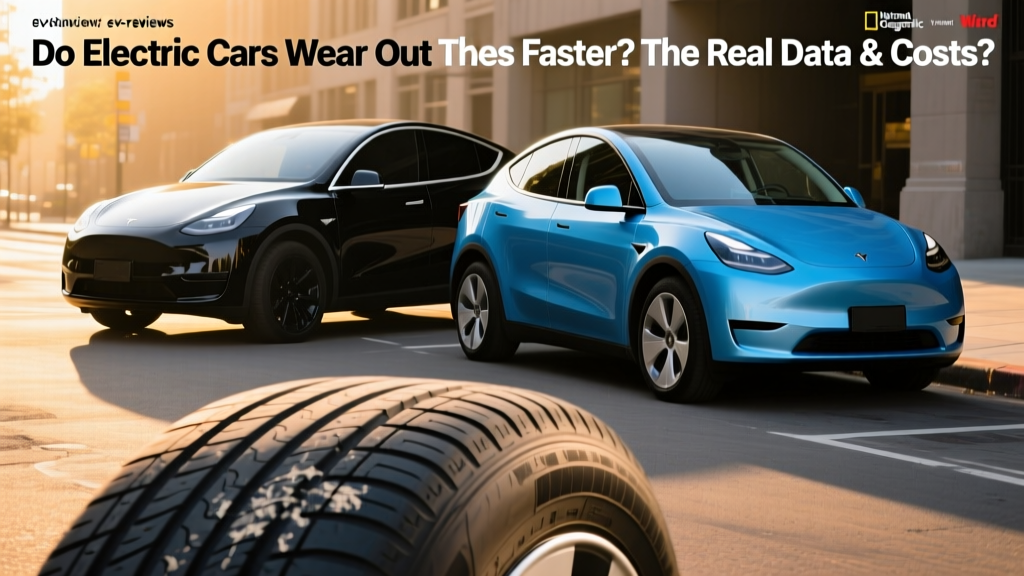
Electric cars do wear out tires faster than comparable gas-powered vehicles, typically by 20% to 30%. The primary reasons are the additional weight of battery packs (often 500-1,000 lbs more than a gas equivalent) and the instant torque delivered to the wheels from a standstill. A set of tires that might last 50,000 miles on a gas sedan could need replacement at 35,000–40,000 miles on an EV. However, this cost is partially offset by dramatically lower fueling and drivetrain maintenance expenses.
If you're shopping for your first electric vehicle, the sticker price, EPA range, and charging speed usually dominate your research. But one ownership cost catches many new EV buyers off guard at the 30,000-mile mark: tire replacement. Across the EV community and in testing by tire manufacturers, electric vehicles consistently burn through rubber faster than internal combustion engine (ICE) vehicles of similar size.
Understanding why this happens — and what you can do about it — is essential for accurately projecting your total cost of ownership. Let's examine the physics, the numbers, and the real-world strategies EV owners use to keep tire costs manageable.
Why EVs Are Harder on Tires: The Physics
Three main forces combine to accelerate tire wear on electric vehicles:
1. Battery Weight
EV battery packs are heavy. A 2025 Tesla Model Y Long Range carries an 82 kWh (usable) NMC battery pack and tips the scales at roughly 4,400 lbs. A comparably sized gas-powered Toyota RAV4 weighs about 3,600 lbs. That's an 800-lb difference pressing down on four contact patches every mile. More weight means more friction, more heat buildup in the tire carcass, and faster tread wear — particularly during cornering and braking.
2. Instant Torque
Electric motors deliver maximum torque at 0 RPM. There's no ramp-up like a gas engine climbing through its power band. When you accelerate from a stoplight, an EV applies peak twisting force to the tires immediately. Even moderate acceleration in a 350+ hp EV generates micro-slip at the contact patch — invisible to the driver but measurable in tread depth loss over thousands of miles. Performance EVs like the Tesla Model 3 Performance (0-60 in 3.1 seconds, 510 hp) amplify this effect significantly.
3. Regenerative Braking
Regen is one of the best features of EV ownership — it recaptures kinetic energy and extends range. But aggressive regen settings also place additional longitudinal force on tires during deceleration. The combined effect of strong acceleration torque and strong deceleration regen means EV tires experience higher cyclic loading than gas-car tires, which mostly coast or use friction brakes (acting on rotors, not tire tread) to slow down.
EV Tire Wear vs. Gas Cars: The Numbers
| Vehicle Pair | Curb Weight | Typical Tire Life | Tire Replacement Cost (Set of 4) |
|---|---|---|---|
| Tesla Model Y LR (EV) | 4,400 lbs | 30,000–40,000 mi | $1,000–$1,400 |
| Toyota RAV4 (Gas) | 3,600 lbs | 45,000–55,000 mi | $700–$1,000 |
| Ford F-150 Lightning (EV) | 6,200 lbs | 25,000–35,000 mi | $1,200–$1,800 |
| Ford F-150 (Gas V6) | 4,700 lbs | 40,000–50,000 mi | $900–$1,300 |
| Hyundai Ioniq 5 (EV) | 4,400 lbs | 30,000–40,000 mi | $900–$1,300 |
| Hyundai Tucson (Gas) | 3,500 lbs | 45,000–55,000 mi | $700–$950 |
Data from tire manufacturers including Michelin and independent testing by organizations like Consumer Reports consistently show EV tires wearing 20-30% faster. Heavier EVs like the F-150 Lightning and Rivian R1T (curb weight over 6,000 lbs) see even more aggressive wear, sometimes reaching replacement at 25,000 miles with OE performance tires.
The Real Cost Impact: Where Tires Fit in EV Ownership
Before tire wear sends you back to a gas car, consider the full ownership picture. EVs eliminate oil changes, transmission fluid, spark plugs, timing belts, and exhaust system maintenance. They also dramatically reduce brake wear thanks to regenerative braking — many EV owners report original brake pads at 80,000+ miles.
| Cost Category | EV (e.g., Tesla Model 3 RWD) | Gas (e.g., Toyota Camry LE) |
|---|---|---|
| Purchase Price (after §30D credit) | $31,490 (est.) | $28,500 |
| Fuel / Electricity | $2,625 (home charging at $0.14/kWh) | $7,500 (gas at $3.50/gal, 32 MPG) |
| Tire Replacement (5 yrs) | $2,400 (2 sets) | $1,400 (1.5 sets) |
| Drivetrain Maintenance | $300 (cabin filter, wiper fluid) | $2,200 (oil, filters, spark plugs) |
| Brake Service | $200 (fluid flush) | $800 (pad replacement) |
| Insurance (avg.) | $9,500 | $7,200 |
| Total 5-Year Cost | $46,515 | $47,600 |
The extra $1,000 in tire costs over five years is more than offset by $4,875 in fuel savings and $2,500 in maintenance savings. EVs still come out ahead on total cost of ownership for most drivers — but only if you have access to affordable home charging. Public DC fast charging at $0.35-$0.50/kWh can erase the fuel advantage quickly.
Note: Federal §30D tax credit eligibility for 2026 depends on MSRP caps ($55,000 for sedans, $80,000 for SUVs/trucks), buyer income limits ($150K single / $300K joint), and battery critical-mineral sourcing requirements. Check current rules at IRS.gov and consult a tax professional.
EV-Specific Tires: What's Different and Are They Worth It?
Tire manufacturers have responded to the EV wear problem with purpose-built EV tires. Brands like Michelin (e-Tire lineup), Hankook (iON), Pirelli (Elect), and Continental (EcoContact EV) engineer tires specifically for electric vehicles. Here's what sets them apart:
- Higher load ratings (XL/HL): Reinforced sidewalls handle the extra weight without excess flex and heat buildup.
- Low rolling resistance compounds: Specialized rubber formulations reduce energy loss, preserving range — typically a 3-5% efficiency gain over standard tires.
- Foam noise-dampening inserts: Without an engine masking road noise, EV cabin quiet makes tire noise more noticeable. Many EV tires include polyurethane foam liners that reduce cavity noise by 3-5 dB.
- Optimized tread patterns: Designed to handle the unique torque delivery and regen loading cycles of electric drivetrains.
The trade-off? EV-specific tires typically cost 15-25% more than standard all-season tires. A set of Michelin Pilot Sport EV tires for a Model Y might run $1,300-$1,400 versus $950-$1,100 for a conventional all-season. However, they often last longer on an EV and preserve more range, making the math work in many cases.
| Myth | Fact |
|---|---|
| "I can use any tire on my EV." | You can, but standard tires wear faster and may reduce range by 3-8%. EV-rated tires (HL load rating, low RR) are strongly recommended. |
| "EV tire wear is only about weight." | Weight is a factor, but instant torque and regen braking contribute equally. Driving style matters enormously. |
| "Rotating tires won't help on an EV." | Rotation is even MORE critical on EVs due to uneven torque distribution (especially RWD/AWD). Every 5,000–6,000 miles is ideal. |
| "All EVs destroy tires equally." | Lighter EVs (Chevy Bolt at 3,500 lbs) wear tires much closer to gas-car rates. Heavy trucks (F-150 Lightning, Hummer EV) are hardest on rubber. |
| "EV tires void the warranty if not OE." | Aftermarket EV-rated tires from major brands do not void vehicle warranties. Match the OE size, load rating, and speed rating. |
How to Maximize Tire Life on Your EV
You can't change the physics, but you can significantly slow the wear rate. Here are the highest-impact strategies based on real-world EV ownership experience:
Drive Smoothly
The single biggest variable in EV tire wear is your right foot. Launching from stops with full torque might be fun, but it scrubs rubber with every hard acceleration. Moderate your takeoffs and anticipate stops to rely more on regen and less on friction brakes. Drivers who adopt a smooth style report 25-40% longer tire life versus aggressive driving.
Rotate Every 5,000–6,000 Miles
This is non-negotiable on an EV. The driven wheels (rear on RWD, all on AWD) wear faster. Without regular rotation, you'll see inner-shoulder wear and cupping that ruins tires prematurely. Many EV owners pair rotation with a tire balance check at the same interval.
Maintain Proper Tire Pressure
EVs run higher tire pressures than gas cars — often 42-45 PSI cold. Check monthly with a quality gauge. Underinflation by even 3-4 PSI increases sidewall flex, generates excess heat, and accelerates wear while also reducing range by 2-4%. Your door jamb sticker lists the correct cold pressure — follow it exactly.
Use Chill Mode / Power Limiting
Tesla's Chill Mode and similar power-limiting settings in other EVs cap peak torque delivery. This is one of the easiest ways to extend tire life without meaningfully changing your driving experience — you'll rarely notice the difference in daily driving, but your tires will.
Alignment Checks
The extra weight of an EV stresses suspension components and can knock alignment out of spec more easily. Get an alignment check annually or whenever you notice pulling, uneven wear, or after hitting a significant pothole. A $100 alignment can save $400+ in premature tire replacement.
First-Time EV Buyer Decision Framework
Should tire wear concerns change your EV buying decision?
- Choose an EV if: You have home charging access (essential for cost savings), your daily commute is under 80 miles, you want lower ongoing maintenance, and you're willing to budget an extra $200-$300/year for tires versus a gas car.
- Choose a lighter EV if tire cost is a priority: Vehicles under 4,000 lbs (Chevy Bolt EV/EUV, base Tesla Model 3 RWD at ~3,860 lbs, Hyundai Kona Electric) wear tires at rates much closer to gas cars. Heavy EVs (6,000+ lbs) will demand premium tire budgets.
- Choose a PHEV if: You want some electric driving but lower vehicle weight. The Toyota RAV4 Prime (4,200 lbs) wears tires closer to a standard RAV4 while still offering 42 miles of electric-only range.
- Avoid EVs if: You lack reliable home or workplace charging AND regularly drive over 250 miles/day. The tire cost concern becomes secondary to the charging logistics challenge.
Frequently Asked Questions
How much extra will I spend on tires for an EV vs. a gas car?
Over five years and 75,000 miles, expect to spend roughly $800–$1,200 more on tires for an EV. That's approximately $15-$20/month — meaningful but modest compared to fuel savings of $4,000-$6,000+ over the same period (assuming home charging).
Do I need special EV tires, or can I buy regular tires?
You can install conventional tires, but EV-specific tires with high-load (HL) ratings, low rolling resistance compounds, and noise-dampening technology will last longer, preserve more range, and keep the cabin quieter. The 15-25% price premium typically pays for itself in longevity and efficiency.
Which EVs are easiest on tires?
Lighter EVs wear tires at rates closest to gas cars. The Chevrolet Bolt EV (3,560 lbs), base Tesla Model 3 RWD (3,862 lbs), and Hyundai Kona Electric (3,700 lbs) are among the most tire-friendly EVs. Heavy EVs like the GMC Hummer EV (9,000+ lbs) and F-150 Lightning (6,200+ lbs) are the hardest on rubber.
Does regenerative braking wear out tires?
Regen contributes to tire wear, but less than acceleration torque. Strong regen settings apply deceleration force through the tire contact patch, adding cyclic loading. Dialing regen back to a moderate setting can marginally extend tire life, though the range trade-off usually isn't worth it.
How often should I rotate EV tires?
Every 5,000 to 6,000 miles — more frequently than many gas-car recommendations. The combination of weight and torque makes even wear more difficult on EVs, and regular rotation is the single cheapest intervention to extend tire life. Pair it with a balance check and visual inspection for uneven wear.
Will my EV's tire pressure monitoring system (TPMS) tell me when pressure is low?
Yes, but TPMS typically only alerts you when pressure drops 25% below spec — far too late to prevent wear damage. Check pressure manually with a gauge at least monthly, and always when tires are cold (before driving or 3+ hours after). EV-specific pressures are often 42-45 PSI, higher than most gas cars.
The bottom line: EV tire wear is a real, measurable cost of electric ownership — but it's a manageable one. Budget an extra $200-$300 per year, invest in EV-rated tires, rotate religiously, and drive with moderate acceleration. The fuel and maintenance savings of going electric still outweigh the rubber premium for the vast majority of drivers. Factor it into your purchase math, but don't let it keep you plugged in to the gas pump.