If you've ever wondered whether you'll still need to schedule oil changes after switching to an electric vehicle, the short answer is reassuring — but not quite as simple as "nothing to maintain."
Quick Answer: Do Electric Cars Have Oil?
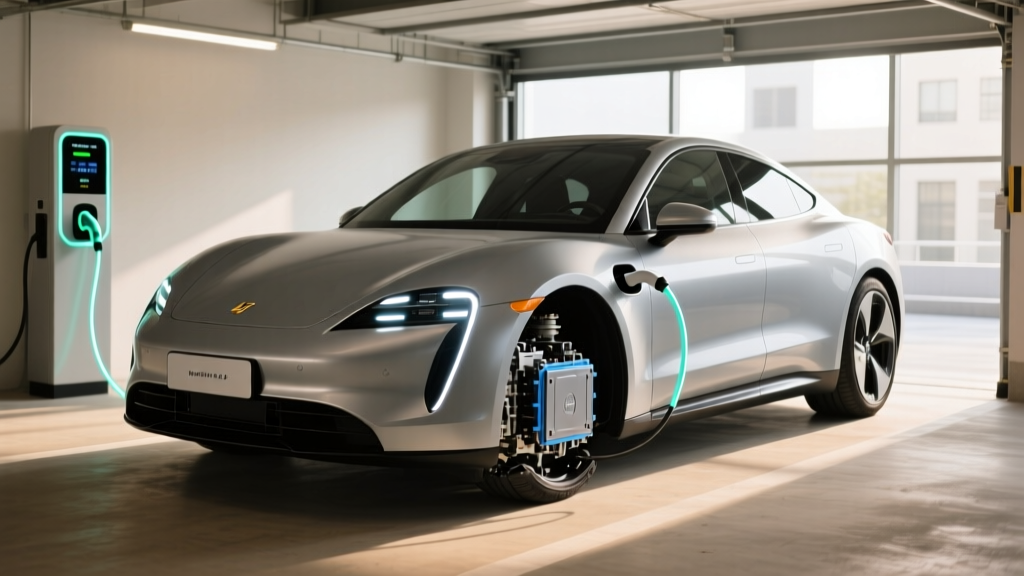
No, battery-electric vehicles (BEVs) do not have engine oil because they don't have an internal combustion engine. There's no crankshaft, no pistons, and no valvetrain to lubricate. However, EVs do use reduction-gear oil (a lubricant for the single-speed gearbox that transfers torque from the electric motor to the wheels), plus brake fluid, coolant for the battery thermal-management system, and windshield washer fluid. Plug-in hybrids (PHEVs) and conventional hybrids (HEVs) do still require engine oil because they retain a gasoline engine.
That distinction matters for your wallet and your calendar. Let's walk through exactly what an EV needs, what it doesn't, and how the real-world numbers stack up against a gas car in 2026.
What Fluids Does an Electric Car Actually Use?
A BEV like the 2026 Tesla Model Y, Hyundai Ioniq 5, or Ford Mustang Mach-E has a far simpler drivetrain than any gas car, but "simpler" doesn't mean "zero fluids." Here's what's under the hood (or more accurately, under the frunk):
- Reduction-gear oil: Most EVs use a single-speed reduction gear between the motor and the axle. This gear oil is typically filled for life or specified for replacement only at high-mileage intervals (often 100,000+ miles, depending on the manufacturer). It's not the same as engine oil and is not something you'll change every 5,000 miles.
- Battery coolant: Lithium-ion batteries generate heat during charging and discharging. A liquid cooling loop (using a glycol-based coolant) keeps the pack in its optimal temperature range, typically 20–40°C. Coolant flush intervals vary but are generally every 5 years or 60,000–100,000 miles.
- Brake fluid: EVs use standard hydraulic brake systems and require brake fluid flushes roughly every 2–3 years, just like a gas car. Regenerative braking reduces wear on the friction pads, but the fluid itself still absorbs moisture over time.
- Windshield washer fluid: Self-explanatory and still a regular top-up.
- Heat pump refrigerant (where equipped): Many modern EVs, including the 2026 Model Y and Ioniq 5, use a heat pump for efficient cabin heating. The refrigerant circuit is sealed and rarely needs service unless there's a leak.
What's conspicuously absent: no engine oil, no transmission fluid (in the traditional multi-gear sense), no power-steering fluid (EVs use electric power steering), and no exhaust-related consumables.
EV vs Gas Car Maintenance: The Real Cost Breakdown
The U.S. Department of Energy and independent studies have consistently found that EVs cost significantly less to maintain than internal-combustion vehicles. Here's a side-by-side look at typical annual maintenance spending based on 15,000 miles driven per year:
| Maintenance Item | Gas Car (Annual Cost) | BEV (Annual Cost) |
|---|---|---|
| Engine oil changes (2–3×/yr) | $120–$240 | $0 |
| Oil filter, air filter, fuel filter | $60–$120 | $0 |
| Transmission fluid | $30–$60 (amortized) | $0 (reduction gear is sealed/lifetime) |
| Brake pads & rotors | $150–$300 (amortized) | $30–$80 (amortized; regen extends life 2–3×) |
| Coolant flush | $20–$40 (amortized) | $15–$30 (amortized) |
| Spark plugs, ignition coils | $40–$80 (amortized) | $0 |
| Brake fluid flush | $25–$40 (amortized) | $25–$40 (amortized) |
| Tire rotation & replacement | $80–$160 (amortized) | $100–$200 (amortized; EVs are heavier, tires wear faster) |
| Total estimated annual maintenance | $525–$1,040 | $170–$350 |
The U.S. Department of Energy's fueleconomy.gov notes that EV maintenance costs average roughly $0.061 per mile compared to $0.101 per mile for a gasoline vehicle — a savings of about $600 per year at 15,000 miles.
One important caveat: tires. EVs are typically 500–1,000 lbs heavier than comparable gas cars due to the battery pack, and instant torque accelerates tread wear. Expect to replace tires every 25,000–40,000 miles rather than the 40,000–60,000 miles you might get on a gas car. Budget for EV-specific tires (like the Michelin e·Primacy or Hankook iON) which are optimized for lower rolling resistance and noise but cost $200–$350 per corner.
Do Hybrids and Plug-In Hybrids Need Oil?
Yes. Both conventional hybrids (HEVs like the Toyota Prius) and plug-in hybrids (PHEVs like the Toyota RAV4 Prime or Jeep Wrangler 4xe) retain an internal combustion engine. That engine requires regular oil changes, typically every 5,000–10,000 miles depending on the manufacturer's specification and whether you use conventional or synthetic oil.
The difference is frequency. Because the electric motor shares propulsion duties, the gas engine in a hybrid runs fewer miles than it would in a pure ICE vehicle. Some Prius owners find their oil stays cleaner longer, but you still need to follow the manufacturer's interval — oil degrades with time as well as mileage.
| Vehicle Type | Engine Oil Needed? | Typical Oil-Change Interval | Est. Annual Oil Cost |
|---|---|---|---|
| Battery-Electric (BEV) | No | N/A | $0 |
| Plug-in Hybrid (PHEV) | Yes | 5,000–10,000 mi | $80–$180 |
| Hybrid (HEV) | Yes | 5,000–10,000 mi | $100–$200 |
| Gas-only (ICE) | Yes | 5,000–7,500 mi | $120–$240 |
Total Cost of Ownership: EV vs Gas in 2026
Maintenance savings are just one piece. Here's a realistic 5-year / 75,000-mile ownership comparison for a midsize crossover BEV (think 2026 Hyundai Ioniq 5 SEL, MSRP ~$44,000) versus a comparable gas crossover (think 2026 Toyota RAV4 XLE, MSRP ~$33,000). Numbers are approximate national averages.
| Cost Category (5 yr / 75k mi) | BEV (Ioniq 5 SEL) | Gas Crossover (RAV4 XLE) |
|---|---|---|
| Purchase price (MSRP) | $44,000 | $33,000 |
| Federal tax credit (§30D, if eligible) | –$3,750 to –$7,500* | $0 |
| Fuel / electricity | $3,200 (home charging avg $0.16/kWh) | $7,500 (28 MPG combined, $3.50/gal) |
| Maintenance | $1,200 | $3,500 |
| Insurance | $8,500 (avg ~$1,700/yr) | $6,800 (avg ~$1,360/yr) |
| Depreciation (est.) | $18,000 | $13,500 |
| Total 5-year cost | ~$35,150–$38,900 | ~$64,300 |
*The IRS §30D clean vehicle credit for 2026 has income caps ($150K single / $300K joint), MSRP caps ($55K cars / $80K SUVs/trucks), and battery-sourcing requirements that vary by model and production date. The credit can now be transferred to the dealer at point of sale. Confirm eligibility on irs.gov or with a tax professional before purchasing.
The BEV wins on fuel and maintenance by a combined ~$6,600 over five years, but loses ground on insurance (~$1,700 more) and depreciation (~$4,500 more). The tax credit, if you qualify, is the swing factor that can make the EV cheaper to own from day one.
Common EV Maintenance Myths — Fact-Checked
| Myth | Fact |
|---|---|
| "EVs never need any maintenance." | False. Tires, brake fluid, cabin air filters, coolant, and wiper blades still need attention. Budget ~$200–$350/year. |
| "EV batteries need to be replaced every few years." | False. Modern NMC and LFP packs are warrantied for 8 years / 100,000 miles (10 years / 150,000 mi in California and CARB states). Real-world data shows 10–15% degradation at 150,000 miles for liquid-cooled packs. |
| "EVs need oil changes just like gas cars." | False for BEVs. There is no engine oil. Reduction-gear oil is typically a lifetime fill or 100,000+ mile interval. |
| "Brakes last forever on an EV." | Partially true. Regenerative braking handles most deceleration, so friction pads can last 80,000–100,000+ miles. But brake fluid still needs flushing every 2–3 years, and rotors can corrode from underuse in humid climates. |
| "EVs are cheaper to insure." | Usually false. Higher repair costs, specialized parts, and battery-replacement risk mean EV insurance premiums run 15–25% higher than comparable gas vehicles, per IIHS and industry data. |
What First-Time EV Buyers Should Know Before Switching
Eliminating oil changes is a genuine perk, but the ownership experience hinges on a few practical factors that catch new EV owners off guard:
Home Charging Is the Make-or-Break Factor
Over 80% of EV charging happens at home. If you can install a Level 2 charger (240V, 32–48 amps, delivering 7.7–11.5 kW), you'll wake up every morning with a "full tank." Installation costs range from $500–$1,500 if your electrical panel has capacity, up to $3,000–$5,000 if you need a panel upgrade from 100A to 200A service. Without home charging, you'll rely on public DC fast chargers, which cost $0.30–$0.60/kWh (roughly double home rates) and add wear to the battery if used exclusively.
Cold Weather Cuts Range — Plan for It
At 20°F, expect a 20–35% reduction in range compared to the EPA sticker. A 2026 Ioniq 5 with an EPA-estimated 310 miles of range may deliver only 200–250 miles in sustained sub-freezing highway driving. Heat pumps (standard on most 2026 models) mitigate this but don't eliminate it. If you live in the upper Midwest or Northeast, size your battery for your worst-case winter commute, not your July road trip.
Charging Speed Matters More Than You Think
Not all EVs charge at the same rate. The 2026 Ioniq 5 peaks at ~240 kW on a DC fast charger, going from 10–80% in roughly 18 minutes. A Chevrolet Equinox EV peaks around 150 kW, taking about 25–30 minutes for the same 10–80% session. And remember: charge curves taper significantly above 80% SoC — that last 20% can take as long as the first 80%. Plan road-trip stops around the 10–80% window for efficiency.
Decision Framework: Is an EV Right for Your Situation?
If / Then: Should You Go Electric?
- IF you have access to home or workplace Level 2 charging AND your daily commute is under 80 miles round-trip → THEN a BEV is an excellent fit. You'll save $500–$700/year on maintenance and $800–$1,200/year on fuel.
- IF you live in an apartment without charging access AND public chargers are sparse in your area → THEN a PHEV (like the 2026 Toyota RAV4 Prime, 42 miles electric-only range) gives you electric daily driving with gas flexibility for longer trips.
- IF you frequently drive 300+ mile highway trips in cold weather → THEN consider a BEV with 300+ EPA miles of range and 200+ kW DC fast charging, or choose a PHEV to avoid winter range loss and charging-stop delays.
- IF your household income is under $150K (single) or $300K (joint) AND the EV you want meets §30D battery-sourcing and MSRP requirements → THEN the $3,750–$7,500 federal tax credit can close the upfront price gap significantly. Check the latest eligible vehicle list on irs.gov.
- IF you want the lowest possible maintenance burden and never want to visit a gas station again → THEN a BEV eliminates oil changes, fuel filters, spark plugs, and exhaust repairs — just budget for tires and the occasional coolant/brake-fluid service.
Frequently Asked Questions
Do Tesla vehicles need oil changes?
No. Tesla's Model 3, Model Y, Model S, and Model X are fully electric and have no engine oil. The drive unit contains lubricant for the reduction gear, but Tesla does not specify a regular replacement interval under normal use.
What about the oil in an EV's reduction gearbox — does it ever need changing?
Most manufacturers consider reduction-gear oil a "lifetime" fill, meaning it's designed to last the expected life of the vehicle. Some specify inspection or replacement at 100,000–150,000 miles. Check your owner's manual for the exact interval; it's nothing like the 5,000-mile engine-oil cycle you're used to.
Do electric cars need coolant?
Yes. Battery thermal management systems use a glycol-based liquid coolant to keep cells within their optimal operating temperature. Coolant flush intervals are typically 5 years or 60,000–100,000 miles — check your specific model's maintenance schedule.
Why do EV tires wear out faster?
Two reasons: weight and torque. EV battery packs add 500–1,000+ lbs compared to an equivalent gas car, increasing the load on tires. Electric motors also deliver maximum torque from 0 RPM, which scrubs tread during acceleration. Expect 25,000–40,000 miles from a set of tires, and consider EV-optimized compounds for longer life and lower road noise.
Is it true that EVs are basically maintenance-free?
Not quite. EVs have far fewer moving parts — no engine, no multi-speed transmission, no exhaust system — which eliminates the biggest maintenance expenses (oil, filters, spark plugs, timing belts). But you still need tire rotations, brake fluid flushes, cabin air filter replacements, wiper blades, and eventual tire replacement. Plan on $200–$350 per year, not $0.
How does the §30D federal tax credit work in 2026?
The clean vehicle credit offers up to $7,500 for qualifying new BEVs and PHEVs, but eligibility depends on: (1) your modified adjusted gross income (≤$150K single, ≤$225K head of household, ≤$300K joint), (2) vehicle MSRP (≤$55,000 for cars, ≤$80,000 for SUVs/pickups/vans), and (3) battery component and critical-mineral sourcing requirements that tighten each year. The credit can be transferred to the dealer at point of sale as a discount. Always verify current eligibility on irs.gov and consult a tax professional.