Quick Answer: Do Electric Cars Need Oil Changes?
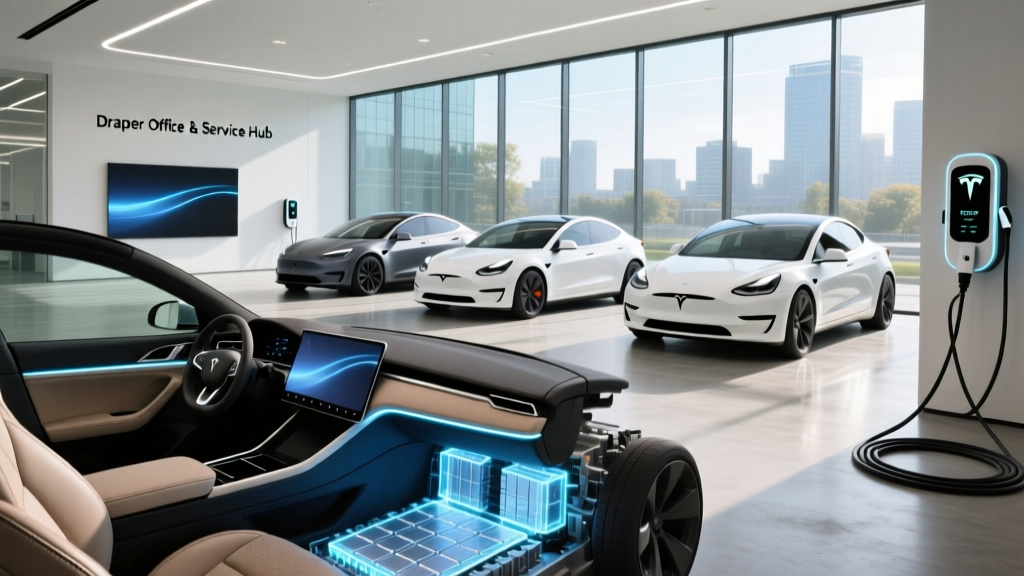
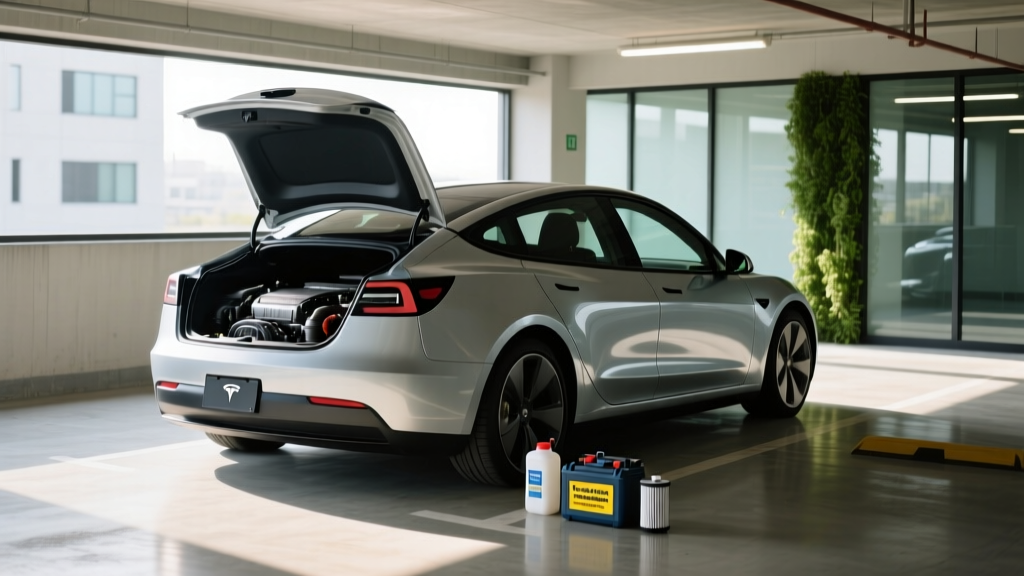
No. Battery electric vehicles (BEVs) do not need oil changes. EVs have no internal combustion engine, which means no engine oil, no oil filter, no spark plugs, no timing belts, and no exhaust system. The electric motor that drives the wheels requires zero lubrication maintenance from the owner.
However, EVs are not maintenance-free. You'll still need tire rotations, cabin air filter replacements, brake fluid checks, windshield washer fluid, and — in most models — a gearbox reduction fluid check or replacement at high mileage intervals (typically 60,000–100,000 miles, depending on the manufacturer). Plug-in hybrids (PHEVs) do still require oil changes because they retain a gasoline engine.
The Mechanical Reason EVs Skip Oil Changes
A gasoline engine contains hundreds of moving parts — pistons, crankshafts, camshafts, valves — all operating under extreme heat and friction. Engine oil lubricates these components and must be replaced every 5,000–10,000 miles as it degrades. The U.S. Department of Energy confirms that this entire system is eliminated in a battery-electric powertrain.
An EV's electric motor has essentially one moving part: the rotor spinning inside the stator. There is no combustion, no friction between metal surfaces requiring lubrication, and no byproducts contaminating a fluid. The single-speed reduction gearbox (which replaces a multi-gear transmission) contains a small amount of gear oil sealed at the factory. Some manufacturers, like Tesla, initially claimed this fluid never needs replacement; current guidance for most models recommends inspection at 100,000 miles and replacement if degraded.
EV vs Gas Car Maintenance: What You Actually Maintain
The maintenance gap between an EV and a gas car is substantial, but it isn't infinite. Here's a component-by-component breakdown:
| Maintenance Item | Gas Car | Battery EV | PHEV |
|---|---|---|---|
| Engine oil change | Every 5K–10K mi ($40–$90) | Not required | Every 5K–10K mi |
| Oil filter | With every oil change | Not required | With every oil change |
| Spark plugs | Every 30K–100K mi | Not required | Every 30K–100K mi |
| Transmission fluid | Every 30K–60K mi | Reduction gearbox: inspect at 100K mi | Every 30K–60K mi |
| Brake pads | Every 25K–70K mi | 60K–150K+ mi (regen braking saves pads) | Every 30K–80K mi |
| Engine air filter | Every 15K–30K mi | Not required | Every 15K–30K mi |
| Cabin air filter | Every 15K–20K mi ($20–$50) | Every 15K–20K mi ($20–$50) | Every 15K–20K mi |
| Coolant | Every 30K–60K mi | Every 50K–100K mi (battery thermal mgmt) | Every 30K–60K mi |
| Brake fluid | Every 20K–40K mi | Every 20K–40K mi (or every 2–3 years) | Every 20K–40K mi |
| Tire rotation | Every 5K–8K mi | Every 5K–8K mi (EVs wear tires faster) | Every 5K–8K mi |
| Exhaust system | Repairs over lifetime ($200–$1,500+) | Not required | Repairs over lifetime |
| Timing belt/chain | $500–$1,200 at 60K–100K mi | Not required | $500–$1,200 at interval |
Real Maintenance Costs: EV vs Gas Over 5 Years
The DOE's Alternative Fuels Data Center and multiple industry analyses estimate that EV owners spend roughly $0.061 per mile on maintenance compared to $0.101 per mile for gas vehicles — a savings of approximately $0.04 per mile. Over 75,000 miles of driving (the average 5-year distance), that's roughly $3,000 in maintenance savings.
| Cost Category (5 yr / 75K mi) | Gas Car (e.g., Toyota RAV4) | BEV (e.g., Tesla Model Y) | PHEV (e.g., Toyota RAV4 Prime) |
|---|---|---|---|
| Oil changes | $450–$900 | $0 | $350–$700 |
| Brake pads/rotors | $400–$900 | $0–$300 (regen extends life) | $300–$700 |
| Tires (incl. rotations) | $800–$1,400 | $1,000–$1,800 (heavier vehicle, instant torque) | $900–$1,500 |
| Transmission/service | $200–$500 | $0–$150 (gearbox inspection) | $200–$500 |
| Air filters, spark plugs, belts | $300–$700 | $50–$100 (cabin filter only) | $250–$600 |
| Coolant, brake fluid, misc. | $250–$500 | $200–$400 | $250–$500 |
| Total estimated maintenance | $2,400–$4,900 | $1,250–$2,750 | $2,250–$4,500 |
Important caveat on tires: EVs are typically 500–1,000 lbs heavier than equivalent gas cars due to the battery pack, and electric motors deliver instant torque from 0 RPM. This combination accelerates tire wear. Budget-conscious EV owners should plan for tire replacement every 30,000–45,000 miles rather than the 50,000–60,000 miles common with gas cars. EV-specific tire compounds (like Michelin's EV-tuned Pilot Sport or Hankook's iON line) can help extend tire life and reduce road noise.
Common EV Maintenance Myths — Fact-Checked
| Myth | Fact |
|---|---|
| "EVs are completely maintenance-free." | EVs eliminate ~70% of gas-car maintenance items, but tires, brakes, cabin filters, coolant, brake fluid, washer fluid, and wiper blades still need attention. Expect 1–2 service visits per year. |
| "EV batteries need regular fluid top-offs." | Modern EV battery packs (LFP or NMC chemistry) are sealed liquid-cooled systems. The coolant loop is serviced at long intervals (50K–100K mi). Owners never interact with battery chemistry directly. |
| "I'll save $5,000+ on maintenance in 5 years." | Realistic savings are $1,500–$3,000 over 5 years. Higher tire costs on EVs partially offset the oil/engine savings. Don't overestimate — use $0.04/mi savings as a planning figure. |
| "No oil means no fluids to worry about." | Battery EVs still use brake fluid, windshield washer fluid, gearbox reduction fluid, and battery thermal management coolant. These require less frequent attention but aren't zero-maintenance. |
| "PHEVs don't need oil changes either." | Plug-in hybrids like the RAV4 Prime or Jeep Wrangler 4xe retain a gasoline engine and do require oil changes on the same schedule as gas cars — even if you drive mostly on electric. |
The Hidden Maintenance Factor: Where EV Costs Can Surprise You
While the elimination of oil changes is genuinely the single biggest maintenance savings in EV ownership, a few costs catch first-time buyers off guard:
Tire Expense
A set of four EV-rated tires for a mid-size SUV like the Hyundai Ioniq 5 or Tesla Model Y runs $800–$1,400 installed. If you're replacing them every 35,000 miles instead of 55,000, that's roughly $400–$600 more per year than your gas car. Factor this into your total cost of ownership.
Windshield and Wiper Wear
This sounds trivial, but heavier EVs with higher low-end torque can stress wiper assemblies and chip windshields at similar rates to gas cars. Some owners report higher glass replacement frequency due to the vehicle's weight carrying more momentum into road debris impacts. Budget $200–$600 for windshield replacement if you commute on gravel-prone highways.
Brake Caliper Maintenance
Regenerative braking extends pad life dramatically — many EV owners report original brake pads at 80,000+ miles. However, because the friction brakes are used less often, calipers can seize or rotors can develop surface rust. Tesla and other manufacturers recommend periodically applying the brakes firmly to keep components free. Some owners need caliper service at 60,000–80,000 miles ($150–$400 per axle) even though pads are still thick.
Battery Degradation (Not Maintenance, but Ownership Cost)
EV batteries degrade over time and miles. Most 2026 models use either NMC (nickel manganese cobalt) or LFP (lithium iron phosphate) chemistry. LFP batteries, found in standard-range Tesla Model 3/Y and some BYD models, tolerate daily 100% charging and generally show slower degradation. NMC batteries offer higher energy density but prefer staying between 20–80% for daily use.
Typical degradation: expect 5–10% capacity loss over 100,000 miles. A vehicle with an EPA range of 310 miles may deliver 280–295 miles when new and 265–280 miles at 100K. Federal warranty requirements mandate that the battery retains at least 70% capacity for 8 years / 100,000 miles (California-emissions-state vehicles: 10 years / 150,000 miles). Full battery replacement outside warranty currently costs $8,000–$18,000 depending on the model and pack size, though this figure continues to decline.
Total Cost of Ownership: The Full Picture
Maintenance is just one column. Here's how the EV savings stack up when you include fuel, purchase price, and the federal §30D clean vehicle tax credit:
| 5-Year Cost Factor | Gas (RAV4 AWD, ~$33K) | BEV (Model Y LR, ~$45K) | Notes |
|---|---|---|---|
| Purchase price (after credit) | $33,000 | $37,500 (if eligible for $7,500 §30D credit) | Credit subject to MSRP, income, and battery-sourcing limits per IRS rules |
| Fuel / electricity (75K mi) | $7,500–$9,400 (gas at $3.50–$4.40/gal, 28 MPG) | $2,250–$3,750 (home charging at $0.12–$0.20/kWh, 3.5 mi/kWh) | Public DC fast charging costs more: $0.35–$0.55/kWh |
| Maintenance | $2,400–$4,900 | $1,250–$2,750 | See detailed breakdown above |
| Insurance (5 years) | $6,000–$8,500 | $7,000–$10,500 | EV premiums average 15–25% higher due to repair costs |
| Depreciation (est.) | $12,000–$15,000 | $14,000–$19,000 | EV depreciation has been volatile; Tesla price cuts impacted residuals |
| Estimated 5-yr total | $60,900–$70,800 | $62,000–$74,000 | Break-even depends on fuel savings, credit eligibility, and home charging |
The takeaway: maintenance savings alone don't make an EV cheaper to own. The real savings come from the combination of lower fuel costs + maintenance savings + tax credit eligibility. If you can charge at home on a Level 2 charger (240V, typically 7–11.5 kW, adding 25–44 miles of range per hour) at residential electricity rates, the fuel savings are substantial. If you rely exclusively on public DC fast charging at $0.45/kWh, the fuel advantage narrows significantly.
Decision Framework: Is an EV Right for Your Maintenance Budget?
Choose a BEV (full electric) if:
- You have access to home or workplace Level 2 charging (eliminates 80%+ of public charging costs)
- You drive 10,000–15,000 miles/year (fuel savings scale with mileage)
- You want to eliminate oil changes, spark plugs, and exhaust repairs permanently
- You qualify for the §30D credit (income under $150K single / $300K joint, vehicle MSRP under $55K cars / $80K SUVs/trucks, and the specific vehicle meets battery-sourcing requirements)
- You live in a moderate or warm climate (cold weather reduces range 20–30% at highway speeds)
Choose a PHEV (plug-in hybrid) if:
- You can't reliably charge at home but want some electric driving (25–42 miles electric-only on models like the RAV4 Prime or Chrysler Pacifica Hybrid)
- You take frequent road trips exceeding 300+ miles and don't want to plan around DC fast-charger locations
- You accept oil changes as a trade-off for zero range anxiety
- Your household has one vehicle that must handle all use cases
Stick with gas for now if:
- You park on the street with no charging access and your workplace doesn't offer charging
- You regularly tow heavy loads (towing cuts EV range 40–55%)
- Your annual mileage is under 6,000 miles (fuel savings won't offset the higher purchase price within a reasonable timeframe)
- You live in an area with extreme cold (below 0°F regularly) and no garage — range loss and charging speed reduction are significant
What a First-Time EV Buyer Should Know About Maintenance
If you're transitioning from a gas car, recalibrate your maintenance expectations:
- There's no "oil change reminder" rhythm. You'll rotate tires every 5,000–8,000 miles and replace the cabin filter every 15,000–20,000 miles. Many owners handle cabin filters themselves — it's a 5-minute job on most models costing $15–$30 for the filter.
- Use the manufacturer's app. Tesla, Hyundai, Ford, and others push maintenance reminders through the vehicle's connected app. Follow them — especially brake fluid intervals, which are time-based (every 2–3 years) regardless of mileage.
- Find an EV-aware tire shop. Not all tire shops understand EV weight distribution and torque characteristics. EV-specific tire lines (marked with EV or HL — high load — ratings) are worth the premium for longevity and noise reduction.
- Don't skip the cabin filter. EVs recirculate cabin air heavily, especially when preconditioning. A clogged cabin filter reduces HVAC efficiency, which directly reduces range.
- Plan for the 100,000-mile inflection point. This is when gearbox fluid inspection, coolant flush, and potentially brake caliper service converge. Budget $500–$1,000 for this milestone service.
Frequently Asked Questions
Do Teslas need oil changes?
No. Teslas are battery electric vehicles with no internal combustion engine. There is no engine oil to change. The drive unit reduction gearbox contains sealed lubricant that Tesla recommends inspecting (not necessarily replacing) at 100,000 miles.
Do hybrids need oil changes?
Yes. Standard hybrids (HEVs like the Toyota Prius) and plug-in hybrids (PHEVs like the Prius Prime) both have gasoline engines that require oil changes on the manufacturer's schedule — typically every 5,000–10,000 miles. The electric motor in a hybrid does not require separate lubrication.
How much do I really save by not changing oil?
If you drive 15,000 miles per year and your gas car needs synthetic oil changes every 7,500 miles at $60 each, that's $120/year or $600 over 5 years. Add oil filters and you're at roughly $700–$800 over 5 years. Meaningful, but not transformative on its own — the bigger savings come from reduced brake wear, eliminated spark plugs and belts, and lower fuel costs.
What fluids does an EV actually use?
A battery electric vehicle uses: brake fluid (replace every 2–3 years), windshield washer fluid (top off as needed), battery thermal management coolant (service at 50K–100K mi), and reduction gearbox lubricant (inspect at 100K mi). That's it — no engine oil, no power steering fluid (EVs use electric power steering), and no transmission fluid in the traditional sense.
Will my EV warranty cover maintenance?
No. The federal battery warranty (8 years / 100,000 miles minimum, covering defects and capacity loss below ~70%) does not cover routine maintenance items like tires, wiper blades, cabin filters, or brake pads. Some manufacturers include complimentary scheduled maintenance for the first 1–3 years — check your specific brand's program.
Are EV maintenance costs really lower long-term?
Yes, but the margin is smaller than marketing suggests. The DOE estimates roughly 40% lower maintenance costs for EVs versus gas cars. Over 10 years and 150,000 miles, that translates to approximately $4,000–$6,000 in cumulative savings — but offset partially by higher tire costs and potentially higher insurance premiums. The maintenance advantage is real; just don't expect it to single-handedly justify the purchase price difference.