Quick Answer: Do Electric Cars Have Transmissions?
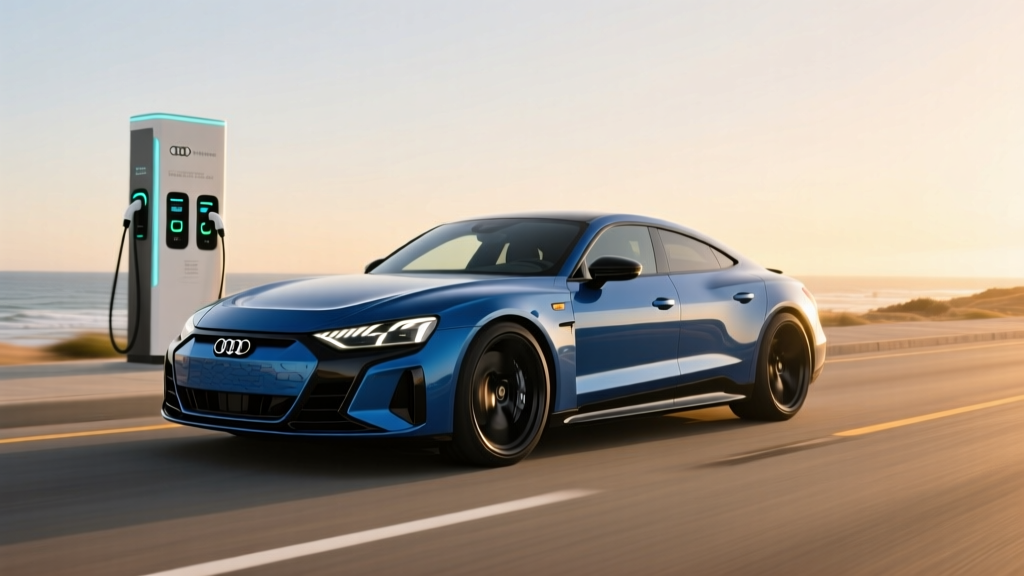
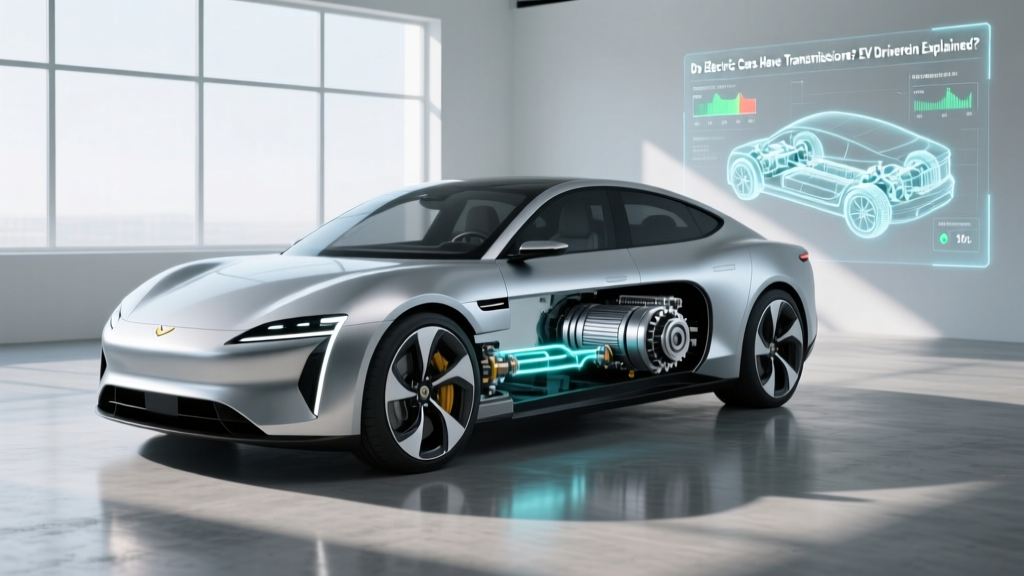
Most electric vehicles use a single-speed reduction gear — not a multi-gear transmission like a gas car. The electric motor delivers peak torque from 0 RPM, eliminating the need for multiple gears. A few exceptions exist: the Porsche Taycan and Audi e-tron GT use a two-speed gearbox on the rear axle to optimize both launch acceleration and high-speed efficiency. Either way, there's no clutch, no torque converter, and no transmission fluid to change on a schedule comparable to an internal combustion engine.
Why Most EVs Don't Need a Multi-Speed Transmission
The reason is rooted in how electric motors produce power. A typical gas engine generates usable torque in a narrow RPM band — say, 1,500 to 5,000 RPM — and redlines around 6,500 to 7,000 RPM. A multi-speed transmission exists to keep the engine in that sweet spot as vehicle speed changes.
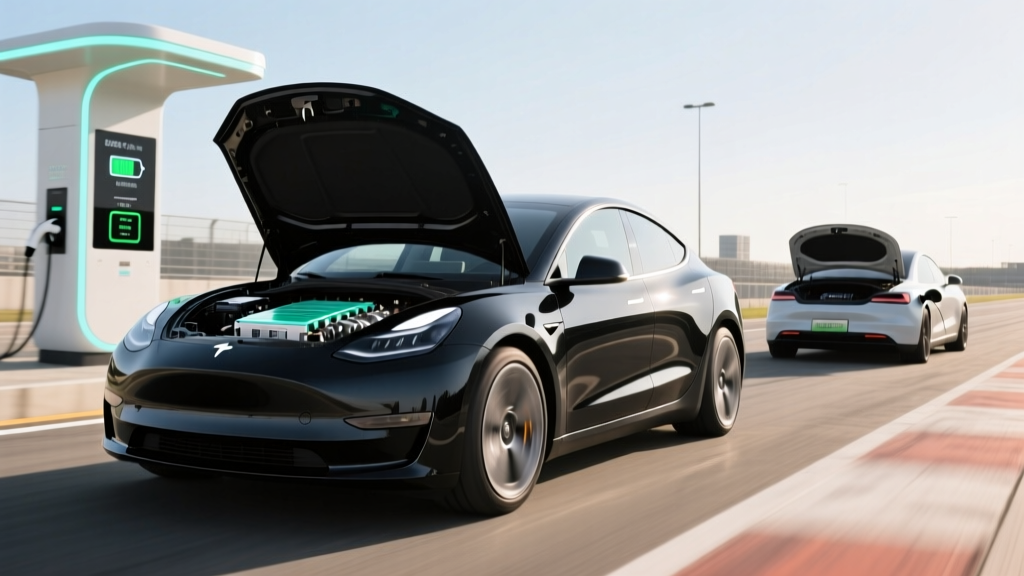
An electric motor, by contrast, produces maximum torque at 0 RPM and can spin to 15,000–20,000 RPM or higher. That enormous operating range means a single fixed gear ratio (typically between 8:1 and 10:1) can handle everything from a standing start to highway cruising. The Tesla Model Y, for example, uses a single-speed reduction gear with a ratio of approximately 9.73:1 on its rear motor, delivering a 0-60 mph time of 4.8 seconds in the Long Range AWD trim without ever shifting.
This design choice carries major implications for ownership: fewer moving parts, less drivetrain friction, and virtually zero scheduled transmission maintenance over the vehicle's life.
EV Drivetrain vs. Gas Car Transmission: By the Numbers
To understand the practical difference, here's a direct comparison of drivetrain complexity between a mainstream EV and its gas-powered equivalent.
| Attribute | Tesla Model Y LR AWD | Toyota RAV4 AWD (Gas) |
|---|---|---|
| Transmission Type | Single-speed reduction gear | 8-speed automatic |
| Moving Drivetrain Parts | ~20 (motors, gears, half-shafts) | ~200+ (engine, torque converter, planetary gearsets, clutch packs) |
| Transmission Fluid Change Interval | No scheduled change | Every 60,000–100,000 miles |
| Transmission Replacement Cost (out of warranty) | $3,000–$5,000 (drive unit) | $4,000–$8,000 |
| 0-60 mph | 4.8 seconds | 8.0 seconds |
| EPA Combined Efficiency | 111 MPGe (30 kWh/100 mi) | 28 MPG combined |
| Energy/Fuel Cost per Mile | ~$0.045 (at $0.15/kWh) | ~$0.125 (at $3.50/gal) |
The energy cost difference alone — roughly $0.08 per mile — adds up to approximately $960 in annual savings for a driver covering 12,000 miles per year, based on national average electricity and fuel prices reported by the U.S. Department of Energy's fueleconomy.gov.
The Exceptions: EVs That Do Use Multi-Speed Gearboxes
A small number of performance EVs employ two-speed transmissions to solve a specific engineering challenge: electric motors lose efficiency at very high RPM. At sustained speeds above 100 mph, a single-ratio gearbox forces the motor to spin near its upper limit, where torque drops and heat increases.
The Porsche Taycan and its platform-mate, the Audi e-tron GT, use a ZF-designed two-speed automatic on the rear axle. First gear provides a short, aggressive ratio for brutal launches (the Taycan Turbo S hits 0-60 in 2.4 seconds). Second gear engages around 55–65 mph for quieter, more efficient highway cruising. The front axle retains a single-speed unit.
The original first-generation Tesla Roadster (2008) also used a two-speed gearbox, though this was an early engineering compromise rather than a performance optimization. Tesla abandoned the approach for the Model S and all subsequent vehicles.
For 2026 model-year buyers, the Taycan and e-tron GT remain the only mainstream EVs with a true multi-speed transmission. If you're cross-shopping these against single-speed competitors like the Lucid Air or Tesla Model S, the multi-gear design offers a measurable high-speed efficiency advantage — roughly 3–5% better range at 80 mph — at the cost of added mechanical complexity and a potential future maintenance item the single-speed EVs simply don't have.
How the Single-Speed Design Affects Real-World Driving
The absence of gear shifts fundamentally changes the driving experience in ways that matter for daily ownership:
- Seamless acceleration: There are no shift pauses. Power delivery is linear and uninterrupted from a stop to top speed, which is why even a 300-hp EV like the Hyundai Ioniq 6 SE (0-60 in 6.9 seconds) feels quicker in stop-and-go traffic than its horsepower figure suggests.
- Regenerative braking: The same motor that drives the wheels reverses function to slow the car and recapture energy. This works precisely because there's no transmission to disengage. Most EVs offer adjustable regen levels, and some — like the Nissan Ariya and BMW iX — enable true one-pedal driving where the car comes to a complete stop without touching the brake pedal.
- Highway efficiency trade-off: The fixed gear ratio is optimized for a broad speed range, but it isn't perfect at any single point. At 80 mph, most EVs consume 15–25% more energy per mile than at 55 mph. This is why real-world highway range falls short of the EPA combined estimate. The EPA rates the 2026 Chevrolet Equinox EV 3RS at 315 miles; expect closer to 260–280 miles at sustained 75 mph in moderate temperatures.
- Cold-weather impact: Battery chemistry slows in cold temperatures, reducing both available energy and charge acceptance. At 20°F, expect 20–30% range reduction regardless of drivetrain design. The single-speed gearbox itself is unaffected — it has no fluid to warm up and no clutch to slip.
Maintenance Cost Implications: What You'll Actually Save
The simplified drivetrain is one of the strongest economic arguments for EV ownership, but the savings are often overstated. Here's a realistic 5-year maintenance comparison.
| Service Item | Gas Car (AWD) | Battery Electric Vehicle (AWD) |
|---|---|---|
| Transmission Fluid | $250–$400 (1–2 changes) | $0 (no scheduled change) |
| Engine Oil Changes | $300–$500 (8–10 changes) | $0 |
| Spark Plugs | $200–$400 | $0 |
| Timing Belt/Chain Inspection | $0–$800 (if replacement needed) | $0 |
| Brake Pads (front) | $300–$500 | $0–$200 (regen reduces wear significantly) |
| Drive Unit / Gearbox Fluid | N/A (included above) | $0–$150 (some OEMs recommend inspection at 100K mi) |
| Coolant Flush | $150–$250 | $150–$250 (battery thermal loop) |
| Total Estimated | $1,200–$2,850 | $150–$600 |
Net drivetrain maintenance savings over five years: roughly $1,050–$2,250. This doesn't account for the higher upfront purchase price of most EVs, insurance premiums that run 10–20% higher on average, or the cost of home charger installation ($500–$2,000 for a Level 2 setup, potentially more if your electrical panel needs a 200-amp upgrade).
The federal IRS §30D clean vehicle credit can offset up to $7,500 of the purchase price, but eligibility depends on MSRP caps ($55,000 for sedans, $80,000 for SUVs/pickups), buyer income limits ($150K single / $300K joint), and battery critical-mineral sourcing requirements that shift annually. Always verify current-year rules before purchasing.
Common Misconceptions About EV Drivetrains
| Myth | Fact |
|---|---|
| "EVs have no gears at all." | Every EV has at least one gear — a fixed-ratio reduction gear between the motor and the axle. It simply doesn't shift. |
| "No transmission means no maintenance ever." | Tires, cabin air filters, brake fluid, wiper fluid, and coolant still require attention. Suspension components wear normally. |
| "The gearbox will need expensive replacement." | Single-speed reduction gears are among the most durable components in an EV. Failures are rare; the drive motor itself is more likely to need service than the gear set. |
| "EVs can't tow because they lack a low-range gear." | Electric motors produce peak torque at 0 RPM — ideal for towing. The Ford F-150 Lightning tows up to 10,000 lbs, and the Rivian R1T tows 11,000 lbs, both with single-speed drivetrains. Range drops 30–50% while towing, however. |
| "Regenerative braking wears out the drivetrain." | Regen places loads on the motor and gears in reverse, but these components are engineered for bidirectional torque. Regen actually reduces wear on the friction brakes. |
Decision Framework: Should Drivetrain Design Factor Into Your EV Purchase?
If-This-Then-That for EV Drivetrain Choice
- If you prioritize low maintenance and daily commuting: Choose a single-speed EV (the vast majority on the market). You'll never think about the drivetrain after purchase. Models like the Tesla Model Y, Hyundai Ioniq 5, and Chevrolet Equinox EV all fit this profile.
- If you frequently drive at sustained speeds above 80 mph (e.g., German autobahn-style roads or track days): Consider the Porsche Taycan or Audi e-tron GT, where the two-speed rear gearbox preserves efficiency and reduces motor heat at high velocity.
- If you tow regularly: The single-speed drivetrain is not a limitation for towing capacity, but range loss is severe. Prioritize a large battery pack (100+ kWh usable) like the F-150 Lightning Extended Range or Rivian R1T Max Pack. The gearbox itself will handle the load without issue.
- If you're comparing a PHEV to a BEV: Plug-in hybrids like the Toyota RAV4 Prime still use a conventional transmission (eCVT in Toyota's case) because they pair a gas engine with electric motors. The drivetrain is more complex and maintenance-intensive than a pure BEV, but you gain unlimited range via the gas engine for road trips through charging deserts.
- If you live in an area with extreme cold (below 0°F regularly): The drivetrain type doesn't change cold-weather range loss. Prioritize an EV with a heat pump (standard on most 2026 models from Hyundai, Kia, Tesla, and Volkswagen) to reduce cabin-heating energy draw, which is the real range killer in winter.
Frequently Asked Questions
Do Teslas have transmissions?
All current Tesla models — Model 3, Model Y, Model S, and Model X — use single-speed reduction gears. There is no multi-speed transmission in any Tesla vehicle sold today. The drive unit (motor + gearbox assembly) is sealed and requires no scheduled fluid service.
Do hybrid cars have transmissions?
Yes. Conventional hybrids (HEVs) and plug-in hybrids (PHEVs) use transmissions because they incorporate a gas engine. Toyota's hybrids use an eCVT (planetary gearset), while Hyundai/Kia PHEVs use traditional 6-speed automatics. The transmission is necessary to manage power delivery from both the engine and the electric motor(s).
Will EV transmissions become more common?
Unlikely for mainstream vehicles. As battery energy density improves and motor efficiency increases across a wider RPM range, the engineering case for a single-speed design only strengthens. Multi-speed gearboxes will likely remain confined to high-performance applications where the marginal efficiency gain at top speed justifies the added weight and complexity.
What about the electric motor itself — does it need maintenance?
EV traction motors are brushless, liquid-cooled units with very few wear items. The bearings and coolant seals are the primary service points, and failures before 150,000 miles are uncommon. Federal law mandates that the battery and drive unit carry a minimum warranty of 8 years / 100,000 miles (10 years / 150,000 miles in California and states that follow CARB standards), per NHTSA and EPA guidelines.
Do EVs have a clutch?
No. Without a multi-speed transmission or an engine that can stall, there's no need for a clutch. The motor controller manages power delivery electronically, and the car can come to a complete stop with the motor still "engaged" — it simply stops spinning.