The Short Answer: Most EVs Do Not Include Spare Tires
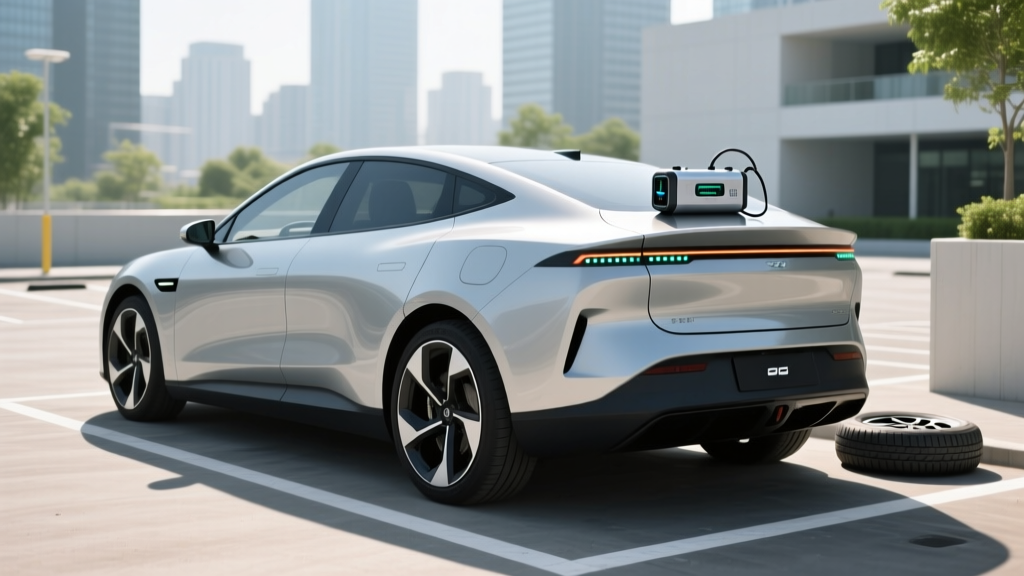
The majority of electric vehicles sold in 2026 — including the Tesla Model Y, Hyundai Ioniq 5, Ford Mustang Mach-E, and Chevrolet Equinox EV — do not come with a spare tire. Automakers omit spares to reduce vehicle weight (a full-size spare and jack add 40–60 lbs), reclaim cargo space for battery packaging, and improve EPA range estimates by 2–4%. Instead, EVs ship with either a tire inflator kit (sealant + 12V compressor), run-flat tires, or rely on roadside assistance programs. A handful of trucks and larger SUVs, such as the Ford F-150 Lightning and Rivian R1S, still offer a spare or provide one as an option.
Why Automakers Ditch the Spare Tire in EVs
The decision to eliminate spare tires in electric vehicles isn't arbitrary — it's a calculated engineering tradeoff driven by three factors:
1. Weight Reduction for Range
Every pound matters in an EV. A full-size spare tire, jack, and tools weigh between 40 and 60 lbs. At highway speeds, that mass reduces efficiency by approximately 1–2%, which translates to 3–6 miles of lost EPA range on a 300-mile vehicle. With the EPA and consumers scrutinizing range numbers, automakers recapture every advantage they can. On a vehicle like the Hyundai Ioniq 5 (84 kWh usable battery, 305-mile EPA range), removing the spare helps preserve the efficiency needed to hit that target.
2. Battery Packaging Constraints
EV battery packs sit beneath the floor, occupying the space where a traditional spare tire well would exist in a gas car. The under-floor area is already packed with battery modules, cooling lines, and structural cross-members. There's simply no room for a recessed spare without raising the cargo floor or reducing battery capacity.
3. Run-Flat and Inflator Kit Alternatives
Manufacturers provide alternatives that take up a fraction of the space. A tire inflator kit (typically a sealant canister and small 12V air compressor) weighs 4–8 lbs and fits under the cargo floor. Run-flat tires, used on some BMW iX and Mercedes EQS models, allow you to drive up to 50 miles at reduced speed after a puncture — no spare needed.
Which 2026 EVs Still Offer Spare Tires?
Not every EV skips the spare. Here's a breakdown of what's available across popular 2026 models:
| Vehicle | Spare Tire | What You Get Instead | EPA Range | Base MSRP |
|---|---|---|---|---|
| Tesla Model Y | No | Inflator kit (aftermarket spare available ~$450) | 320 mi | $44,990 |
| Hyundai Ioniq 5 | No | Tire sealant + compressor kit | 305 mi | $42,600 |
| Ford Mustang Mach-E | No | Inflator kit | 320 mi | $42,995 |
| Chevrolet Equinox EV | No | Inflator kit | 319 mi | $33,600 |
| Ford F-150 Lightning | Yes (full-size) | Standard spare under bed | 320 mi | $54,995 |
| Rivian R1S | Optional | Inflator kit standard; spare available via gear tunnel | 352 mi | $75,900 |
| BMW iX | No | Run-flat tires + inflator kit | 324 mi | $87,250 |
| Toyota bZ4X | No | Inflator kit + roadside assistance | 252 mi | $43,070 |
Trucks and large SUVs are the exception. The F-150 Lightning includes a full-size spare under the bed because truck buyers expect one and the vehicle's platform accommodates it. Rivian offers a spare as an accessory that mounts in the gear tunnel. Most sedans and crossovers, however, rely entirely on inflator kits or run-flats.
EV Tire Costs: What You'll Actually Pay
EV tires cost more and wear faster than gas-car tires — a reality every first-time EV buyer should understand before purchase.
| Factor | Typical EV (e.g., Model Y, Ioniq 5) | Typical Gas Crossover (e.g., RAV4, CR-V) |
|---|---|---|
| Tire size | 235/55R19 – 255/45R20 | 225/65R17 – 235/55R18 |
| Cost per tire (premium all-season) | $220–$340 | $140–$210 |
| Full set replacement (4 tires) | $880–$1,360 | $560–$840 |
| Average tire lifespan | 25,000–40,000 mi | 40,000–60,000 mi |
| Cost per 1,000 miles driven | $5.50–$8.80 | $2.80–$4.20 |
| Noise-reducing foam liner | Common (adds $30–$50/tire) | Rare |
Why EV Tires Wear Faster
Two physics factors drive accelerated wear:
- Weight: EVs are 500–1,000 lbs heavier than comparable gas cars due to battery mass. A Model Y Long Range weighs ~4,400 lbs vs a gas RAV4 at ~3,600 lbs. That extra weight pushes harder on tire contact patches during cornering and braking.
- Instant torque: Electric motors deliver peak torque at 0 RPM. Aggressive launches from a stoplight scrub rubber faster than a gas engine's gradual torque curve. Drivers who frequently use full acceleration will see tire life drop toward the 25,000-mile end of the range.
Many EV-specific tires (Michelin Pilot Sport EV, Hankook iON evo, Pirelli Elect) include a polyurethane foam liner bonded inside the tire to reduce road noise — important since EVs lack engine noise to mask tire sounds. These foam-lined tires cost $30–$50 more per tire and cannot be easily repaired with a standard plug if the puncture is in the foam zone.
Flat Tire Solutions: What to Do Without a Spare
If your EV doesn't have a spare tire, here are your real-world options ranked by practicality:
Option 1: Tire Inflator Kit (Included with Most EVs)
The sealant-and-compressor kit works for small punctures (up to ~6mm) in the tread area. You attach the hose to the valve stem, activate the compressor, and the sealant coats the inside of the tire as it inflates. It's a temporary fix — you still need to drive to a tire shop within 50–100 miles and at reduced speed (typically under 50 mph). Limitation: Sealant kits do not work on sidewall damage, blowouts, or large gashes. If the tire is shredded, you're calling a tow truck.
Option 2: Roadside Assistance
Most new EVs include complimentary roadside assistance for 3–5 years. Tesla offers 4 years/50,000 miles of roadside support. Hyundai provides 5 years/unlimited miles. They'll dispatch a flatbed tow truck to carry your EV to the nearest tire shop. Limitation: In rural areas or during peak travel times, wait times can stretch to 2–4 hours. You're stranded until help arrives.
Option 3: Aftermarket Spare Tire Kit
Companies like Modern Spare and eTrailer sell compact spare tire kits designed for specific EV models. A Model Y compact spare kit costs $350–$500 and includes a lightweight alloy wheel with a compact tire, a scissor jack, and a carrying case that fits in the frunk or under the cargo floor. Advantage: You can swap the tire yourself in 15 minutes and drive to a shop at normal speeds. Tradeoff: Adds 25–35 lbs, slightly reduces cargo space, and costs upfront.
Option 4: Run-Flat Tires
If your EV came with run-flats (BMW iX, some Mercedes EQ models), you can continue driving up to 50 miles at speeds under 50 mph after a puncture. The reinforced sidewalls support the vehicle's weight without air pressure. Limitation: Run-flats are stiffer, transmit more road harshness, cost 20–30% more to replace, and many tire shops won't repair a run-flat after it's been driven flat — they'll only replace it.
| Myth | Fact |
|---|---|
| "EVs are more prone to flat tires" | False. EVs get flats at the same rate as gas cars — nails and road debris don't discriminate. However, EVs are harder to tow (flatbed only, never dolly-tow an AWD EV) and tire changes require care with the battery pack. |
| "Inflator kits fix any flat" | False. Sealant kits only work on small tread punctures. Sidewall damage, blowouts, and bead leaks require a tow or spare. |
| "You can't put a spare on an EV" | False. Aftermarket compact spares exist for most popular EVs. They mount using the factory lug pattern and fit in the frunk or cargo area. |
| "EV tires are the same as gas car tires" | False. EV tires have higher load ratings (XL/Extra Load), low-rolling-resistance compounds, and often foam noise liners. Using a standard gas-car tire on an EV reduces range and increases noise. |
The Real Cost of EV Tire Ownership (5-Year Projection)
Let's put the tire cost question in context with a 5-year ownership comparison. This assumes 15,000 miles/year (75,000 total), a mid-range EV like the Hyundai Ioniq 5 vs a gas Toyota RAV4:
| Cost Category | Hyundai Ioniq 5 (EV) | Toyota RAV4 (Gas) |
|---|---|---|
| First tire set replacement (at ~30,000 mi) | $1,100 | $680 |
| Second tire set replacement (at ~60,000 mi) | $1,100 | $680 |
| Flat tire incidents (avg 1 per 5 years) | $0 (inflator kit) to $300 (tow + new tire) | $0 (spare swap) to $180 (new tire) |
| Aftermarket spare kit (one-time, EV only) | $400 | $0 (included) |
| Total 5-year tire cost | $2,200–$2,900 | $1,360–$1,540 |
EV tire costs run $800–$1,400 more over five years. However, this is partially offset by EV fuel savings: at $0.13/kWh national average electricity cost and 3.5 miles/kWh efficiency, the Ioniq 5 costs ~$2,785 to "fuel" for 75,000 miles vs ~$6,430 for the RAV4 at $3.50/gallon and 30 MPG combined. The fuel savings of ~$3,645 more than cover the higher tire costs.
Practical Tips for EV Owners Dealing with Flats
Whether you're a first-time EV buyer or a seasoned owner, these steps reduce flat-tire risk and prepare you for the worst:
- Check your inflator kit before you need it. Sealant canisters expire (typically 4–5 year shelf life). Verify yours hasn't expired and that the compressor powers on. Replace the sealant canister for ~$15–$25 if expired.
- Carry a portable tire pressure gauge. EVs are heavy — under-inflated tires wear faster and reduce range. Check pressure monthly and keep tires at the door-jamb sticker spec (usually 38–42 PSI for EVs, higher than gas cars).
- Consider an aftermarket spare if you drive rural routes. If your commute or road trips take you through areas with 60+ minute tow-truck wait times, a $400 compact spare kit is cheap insurance.
- Know your EV's jacking points. EVs have specific reinforced jacking points to avoid crushing the battery pack. Consult your owner's manual — jacking on the wrong point can cause $5,000+ in battery damage.
- Rotate tires every 5,000–7,500 miles. EVs' weight and torque accelerate uneven wear. Regular rotation extends tire life by 20–30%.
- Save your roadside assistance number in your phone. Don't wait until you're stranded on the shoulder to find the number. Tesla: 1-877-798-3754. Hyundai: 1-800-242-0229. Ford: 1-800-241-3673.
Decision Framework: Do You Need an Aftermarket Spare?
Buy an aftermarket spare tire kit ($350–$500) if:
- You regularly drive in rural areas or regions with sparse cell coverage
- Your daily route is more than 50 miles from a tire shop
- You take road trips through remote areas (national parks, mountain passes)
- You travel with children or passengers who can't safely wait roadside for hours
- You prefer self-reliance over depending on roadside assistance
Stick with the factory inflator kit + roadside assistance if:
- You drive primarily in urban or suburban areas with nearby tire shops
- Your EV includes 3+ years of complimentary roadside assistance
- You have reliable cell service on your typical routes
- You want to maximize cargo space and minimize vehicle weight
- You're comfortable waiting 30–90 minutes for a tow in the rare event of a flat
Frequently Asked Questions
Does the Tesla Model Y come with a spare tire?
No. The 2026 Tesla Model Y does not include a spare tire. Tesla provides a tire inflator kit in the cargo area. Aftermarket compact spare kits are available from third-party suppliers for $350–$500 and fit in the frunk or under the rear cargo floor.
Can I install a spare tire on my EV myself?
If you purchase an aftermarket spare kit, yes — the process is identical to changing a tire on a gas car: loosen lug nuts, jack the vehicle at the designated jacking point, swap the wheel, and tighten. The critical difference is ensuring you jack at the EV's reinforced lift points (marked in the owner's manual) to avoid damaging the battery enclosure.
Are EV tires more expensive than gas car tires?
Yes. EV-specific tires typically cost $220–$340 per tire vs $140–$210 for equivalent gas-car tires. The premium reflects higher load ratings (XL), low-rolling-resistance compounds, and often integrated foam noise liners. A full set of four EV tires runs $880–$1,360 installed.
Why do EV tires wear out faster?
Two factors: (1) EVs weigh 500–1,000 lbs more than comparable gas cars due to battery mass, increasing contact-patch pressure. (2) Electric motors deliver instant peak torque at 0 RPM, causing more tire scrub during acceleration. Expect 25,000–40,000 miles from a set of EV tires vs 40,000–60,000 from gas-car tires, depending on driving habits.
Does AAA tow electric cars?
Yes. AAA will tow EVs using flatbed trucks (required for AWD EVs and to protect the battery). If you're a AAA member, your EV is covered under your existing membership. Non-members can also call AAA for a fee-based tow or use the EV manufacturer's included roadside assistance program.
Can I use a tire plug or patch on an EV tire with foam lining?
It depends on the puncture location. If the nail or screw is in the central tread area and hasn't damaged the foam liner, a standard plug-patch repair works. If the puncture tears through the foam layer or is in the shoulder/sidewall, most tire shops will refuse to repair it and will recommend replacement. Foam-lined tires are more difficult to repair than standard tires.
Do hybrid cars have spare tires?
Many hybrids do include spare tires, especially non-plug-in hybrids like the Toyota RAV4 Hybrid and Honda CR-V Hybrid, which use compact "donut" spares under the cargo floor. Plug-in hybrids (PHEVs) are more mixed — some omit the spare to make room for the larger battery. The Toyota RAV4 Prime PHEV, for example, deletes the spare and uses an inflator kit instead.