Quick Answer: Do Electric Cars Have Radiators?
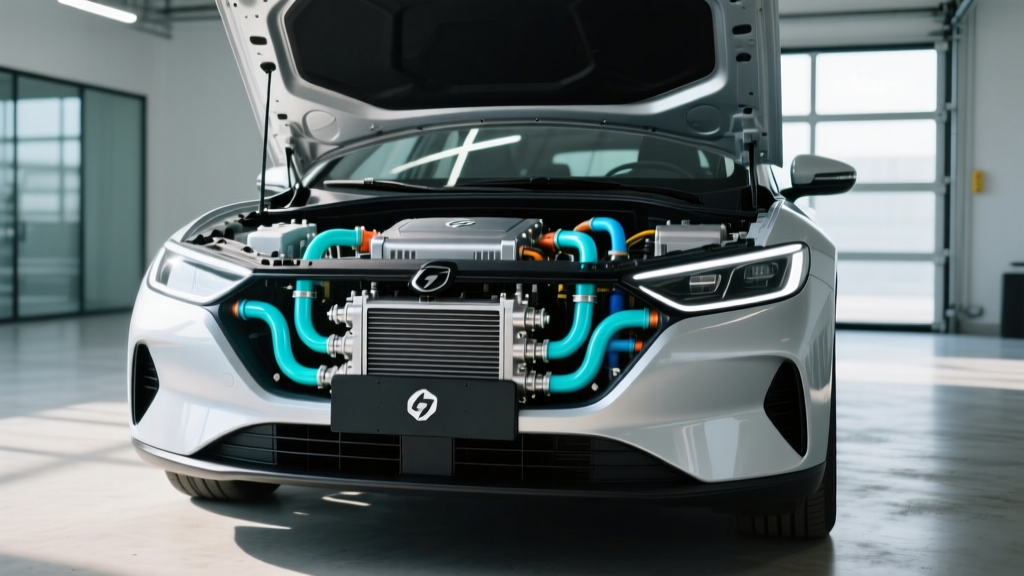
Yes, most electric cars have radiators — but not for the reason you might think. EVs don't have internal combustion engines that generate massive waste heat, so they don't need a traditional engine-cooling radiator. Instead, EVs use liquid-cooling systems with radiators to manage battery pack temperature, power electronics (inverter, onboard charger), and sometimes the electric motor. The radiator in an EV is typically smaller and operates at lower temperatures than a gas-car radiator, but it serves a critical role in battery longevity and fast-charging performance.
How EV Cooling Systems Actually Work
In a gasoline car, the radiator's primary job is dissipating the enormous heat generated by combustion — an ICE engine converts only about 20-30% of fuel energy into motion, dumping the rest as heat. The radiator circulates coolant through the engine block and releases that heat to ambient air.
An electric vehicle is fundamentally different. The electric motor converts roughly 85-95% of electrical energy into motion, meaning far less waste heat. But what heat does exist — and the heat generated by the battery pack during charging and discharging — must be managed precisely. Lithium-ion batteries (both NMC and LFP chemistries) perform best and degrade slowest when held between roughly 20°C and 40°C (68°F–104°F).
Here's what an EV thermal management system typically cools:
- Battery pack: Coolant circulates through channels or cold plates bonded to the battery modules. This is the highest-priority cooling loop.
- Power electronics: The inverter (which converts DC battery power to AC for the motor) and DC-DC converter generate meaningful heat, especially during hard acceleration or DC fast charging.
- Electric motor: Some EVs use liquid cooling for the motor stator; others rely on oil cooling or air cooling.
- Onboard charger: Converts AC from your Level 2 home charger to DC for the battery, generating heat in the process.
Many modern EVs — including the Tesla Model Y, Hyundai Ioniq 5, and Ford Mustang Mach-E — use multiple cooling loops with a shared radiator or a dedicated low-temperature radiator. Tesla's "Octovalve" system in the Model Y, for example, integrates up to eight coolant flow paths into a single manifold, routing heat between the battery, motors, cabin HVAC, and ambient radiators to maximize efficiency. In cold weather, this system can even scavenge waste heat from the powertrain to warm the battery and cabin, reducing the energy penalty of heating.
EV Radiator vs. Gas Car Radiator: Key Differences
| Feature | Gas Car Radiator | EV Radiator |
|---|---|---|
| Primary purpose | Cool combustion engine (90°C–105°C / 194°F–221°F) | Cool battery & electronics (20°C–40°C / 68°F–104°F target) |
| Operating temperature | High (~200°F+) | Low to moderate (~77°F–140°F) |
| Size | Large (must reject 70%+ of fuel energy as heat) | Smaller (less total waste heat to reject) |
| Coolant type | Ethylene glycol/water mix | Propylene glycol or ethylene glycol/water (EV-specific formulations) |
| Failure consequence | Engine overheat, seized engine | Battery thermal throttling, reduced charge speed, potential long-term degradation |
| Maintenance interval | Flush every 30,000–60,000 miles | Typically longer intervals; check owner's manual (often 60,000–100,000+ mi) |
| Number of radiators | Usually 1 main + heater core | Often 1–2 (main + low-temp loop), plus cabin condenser for heat pump |
The lower operating temperature of an EV radiator means it's under less thermal stress, which generally translates to a longer service life. However, EV cooling systems are more complex in terms of plumbing — multiple loops, electronically controlled valves, and integrated heat pump systems mean there are more components that could potentially require service.
What Happens When EV Cooling Fails?
Unlike a gas car that will overheat and potentially destroy its engine within minutes of cooling failure, an EV's response to thermal management issues is more graceful — but still serious:
- Thermal throttling: The vehicle's battery management system (BMS) will reduce power output and limit DC fast charging speed to protect the battery. You might see your 250 kW peak charge rate drop to 50 kW or less if the battery exceeds safe temperature thresholds.
- Range loss: An overheated battery has higher internal resistance, reducing usable capacity and efficiency. Expect 5–15% range reduction under thermal stress.
- Accelerated degradation: Repeated exposure to high temperatures (above 45°C / 113°F) accelerates lithium-ion cell degradation. A study published in the Journal of Energy Storage found that sustained high-temperature operation can reduce battery cycle life by 20–40% compared to optimal thermal management.
- Safety cutoff: In extreme cases, the BMS will shut down the battery entirely to prevent thermal runaway. This is rare but is the fail-safe of last resort.
The good news? Cooling system failures in modern EVs are uncommon. The NHTSA recall database shows far fewer cooling-related recalls for EVs than head-gasket or water-pump recalls for ICE vehicles. That said, Tesla issued service bulletins in earlier Model S/X years regarding coolant leaks at battery pack connections — something to check on used examples.
Real Costs: EV Cooling Maintenance vs. Gas Car
| Maintenance Item | Gas Car (Typical) | EV (Typical) | 5-Year Savings (EV) |
|---|---|---|---|
| Coolant flush/service | $100–$200 every 30K–60K mi | $100–$175 every 60K–100K mi | ~$150–$300 |
| Radiator replacement | $400–$900 | $500–$1,200 (less common failure) | N/A (lower failure rate) |
| Water pump | $300–$750 (belt or electric) | $200–$500 (electric pump, longer life) | ~$100–$300 |
| Thermostat | $150–$350 | N/A (electronically controlled valves) | $150–$350 |
| Engine oil changes | $200–$400/year (4–6 changes) | $0 | $1,000–$2,000 |
| Total cooling-related 5-yr cost | ~$600–$1,500 | ~$200–$500 | $400–$1,000 |
EVs eliminate the most failure-prone components of a gas-car cooling system: the thermostat (replaced by electronic valves), the belt-driven water pump (replaced by electric pumps with no belt wear), and the high-temperature stress that degrades hoses and gaskets. The result is lower routine maintenance cost and fewer surprise repair bills.
However, if an EV's battery cooling plate or integrated manifold (like Tesla's Octovalve) does fail out of warranty, the repair can be more expensive than a conventional radiator swap because of the labor involved in accessing components integrated into the battery pack structure. Battery-pack-related cooling repairs can run $1,500–$3,000+ at a dealer.
Do All EVs Use Liquid Cooling?
No. While the vast majority of modern EVs with meaningful range (200+ miles) use liquid cooling, some exceptions exist:
- Nissan Leaf (all years): Uses passive air cooling for the battery pack. This is a well-documented limitation — the Leaf is notorious for "Rapidgate," where consecutive DC fast charges cause battery temperatures to spike, triggering severe charge-speed throttling. In hot climates, Leaf batteries also degrade faster than liquid-cooled competitors. The Leaf's EPA range of up to 212 miles (2025 model, 60 kWh pack) is respectable, but real-world fast-charging usability is significantly compromised by the lack of active thermal management.
- Early/low-range EVs: Some older or very short-range EVs used air cooling. These are largely off the new-car market now.
- PHEVs: Many plug-in hybrids use liquid cooling for their smaller battery packs, though some use air cooling given the smaller battery size and lower charge/discharge rates.
For any EV you'd consider buying new in 2026, liquid cooling is essentially standard on all models with DC fast charging capability above 50 kW. It's a non-negotiable feature for battery longevity and charge-speed consistency.
Myths vs. Facts About EV Cooling
| Myth | Fact |
|---|---|
| "EVs don't have radiators at all" | Most EVs have at least one radiator for the liquid cooling loop. It's smaller and runs cooler, but it exists. |
| "EV cooling systems never need maintenance" | Coolant still degrades over time and needs periodic replacement. Check your owner's manual — intervals are longer than gas cars but not infinite. |
| "If the radiator fails, the battery will catch fire" | The BMS monitors cell temperatures continuously and will throttle power or shut down the pack before dangerous temperatures are reached. Thermal runaway from cooling failure alone is extremely rare. |
| "EVs overheat in hot climates" | Liquid-cooled EVs handle hot climates well. The system actively cools the battery. However, extreme heat (110°F+) combined with repeated DC fast charging can trigger temporary throttling. |
| "Cold weather doesn't affect EV cooling" | Cold weather flips the challenge: the system must heat the battery for optimal performance. EVs with heat pumps (Tesla, Hyundai/Kia, Ford) do this more efficiently than resistive heaters, using less battery energy. |
Preconditioning: The Hidden Benefit of EV Thermal Management
One of the most practical features enabled by an EV's liquid cooling system is battery preconditioning. When you set a DC fast charger as your navigation destination, the car's thermal management system begins warming (or cooling) the battery to its optimal charging temperature — typically around 25°C–35°C (77°F–95°F) — before you arrive.
Why this matters with real numbers:
- Without preconditioning (cold battery, 32°F): A 250 kW-capable EV like the Hyundai Ioniq 5 might accept only 80–120 kW at the start of a charge session, taking 30–35 minutes for a 10–80% charge.
- With preconditioning (battery at optimal temp): The same Ioniq 5 hits its 240 kW peak within minutes and completes 10–80% in approximately 18 minutes.
This is a direct benefit of the sophisticated liquid cooling/heating system that the radiator supports. Gas cars have no equivalent — you never need to "precondition" a fuel tank before filling up.
What This Means for Your EV Buying Decision
Decision Framework: EV Cooling & Ownership
- If you live in a hot climate (AZ, TX, FL): Choose an EV with liquid cooling and a heat pump. Avoid any air-cooled EV (Nissan Leaf). The thermal management system will protect your battery's long-term health and maintain fast-charging speeds in summer heat.
- If you live in a cold climate (MN, ME, CO): Prioritize EVs with heat pumps and robust preconditioning. Tesla, Hyundai/Kia E-GMP vehicles, and Ford's EVs handle cold well. Expect 20–30% EPA range loss in sub-freezing temps — this is physics, not a defect.
- If you plan to DC fast charge frequently (road trips, no home charging): Liquid cooling is essential. Vehicles like the Ioniq 5 (240 kW peak, 10–80% in ~18 min) and Tesla Model Y (250 kW peak, 10–80% in ~15–20 min) sustain higher charge rates thanks to active thermal management.
- If you charge exclusively at home (Level 2, overnight): Thermal management matters less day-to-day, but still protects long-term battery health. Any modern liquid-cooled EV will serve you well.
- If you're buying used: Check the cooling system service history. Ask about coolant flushes and inspect for leaks around the battery pack area. On older Teslas, check for coolant leak service bulletins.
Frequently Asked Questions
Do electric cars need coolant?
Yes. Most EVs use a glycol-water coolant mixture in their liquid cooling loops, just like gas cars. The coolant circulates through the battery pack cooling channels, inverter, and radiator. EV coolant formulations are often specific to the manufacturer and should not be mixed with generic automotive antifreeze. Check your owner's manual for the correct specification — using the wrong coolant can damage seals or reduce heat transfer efficiency.
How often should EV coolant be changed?
Intervals vary by manufacturer. Tesla has historically recommended coolant replacement at roughly 4-year or 50,000-mile intervals for earlier models, with some newer models extending this. Hyundai/Kia typically specifies inspection at regular service intervals with replacement around 60,000–120,000 miles. Always follow the specific schedule in your owner's manual. The cost is typically $100–$175 at a dealer — far less than the cost of replacing a degraded battery.
Can I check my EV's coolant level myself?
Most EVs have a translucent coolant reservoir under the hood (yes, EVs still have hoods and "frunks") with min/max markings. You can visually check the level, but topping off should be done with the manufacturer-specified coolant only. If you notice the level dropping significantly, have the system inspected for leaks — a slow leak in the battery cooling loop can be an expensive repair if ignored.
Does the radiator affect my EV's range?
Indirectly, yes. The cooling system's electric water pumps and fans draw power from the high-voltage battery, but this consumption is small — typically under 1% of total energy use. More significantly, an efficient thermal management system keeps the battery in its optimal temperature range, which improves charging efficiency and reduces energy lost to internal resistance. EVs with heat pumps (which use the same refrigerant/coolant loops for cabin heating) can save 10–30% of battery energy in cold weather compared to resistive heating, directly extending real-world range.
Do hybrids have radiators?
Yes — and they often have two radiators or cooling loops: one for the internal combustion engine (operating at traditional high temperatures) and one for the hybrid battery pack and power electronics (operating at lower temperatures). This dual-loop complexity is one reason PHEVs have more maintenance items than pure BEVs. According to fueleconomy.gov, PHEVs carry both ICE maintenance (oil changes, spark plugs, engine coolant) and EV-adjacent maintenance (battery cooling loop, inverter coolant).
Is EV radiator replacement expensive?
The radiator itself is usually $150–$400 for the part, with labor adding $300–$800 depending on accessibility. Total cost of $500–$1,200 is typical. This is comparable to a gas-car radiator replacement. However, radiator failures in EVs are less common because the system operates at lower temperatures and pressures. The more expensive scenario is if a leak damages the battery pack or if the cooling plate integrated into the battery structure needs replacement — that can cost $2,000–$5,000+ and is why catching coolant leaks early matters.