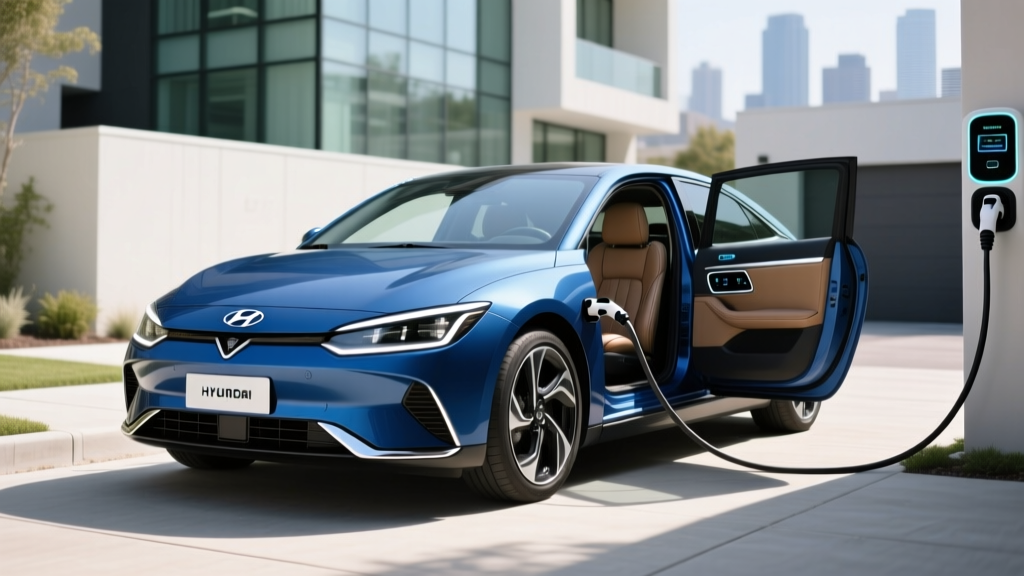
The Quick Answer: Can You Do It Yourself on an Electric Vehicle?
Yes — but the scope is narrower than with a gas car. On a modern EV, DIY-friendly tasks include cabin air filter replacement, tire rotation, brake fluid checks, 12V auxiliary battery maintenance, wiper blades, and software updates. You will not be doing oil changes, spark plugs, timing belts, or transmission fluid swaps, because EVs don't have those components. What you cannot safely DIY is anything involving the high-voltage traction battery (typically 400V–800V), the inverter, or the electric drive unit — these require certified high-voltage technicians and carry lethal shock risk if mishandled.
The upside: EV maintenance costs run roughly $0.061 per mile over five years according to fueleconomy.gov, compared to $0.112 per mile for a comparable gasoline vehicle. That's approximately $2,550 less in maintenance over 60,000 miles.
What DIY Maintenance Actually Looks Like on an EV
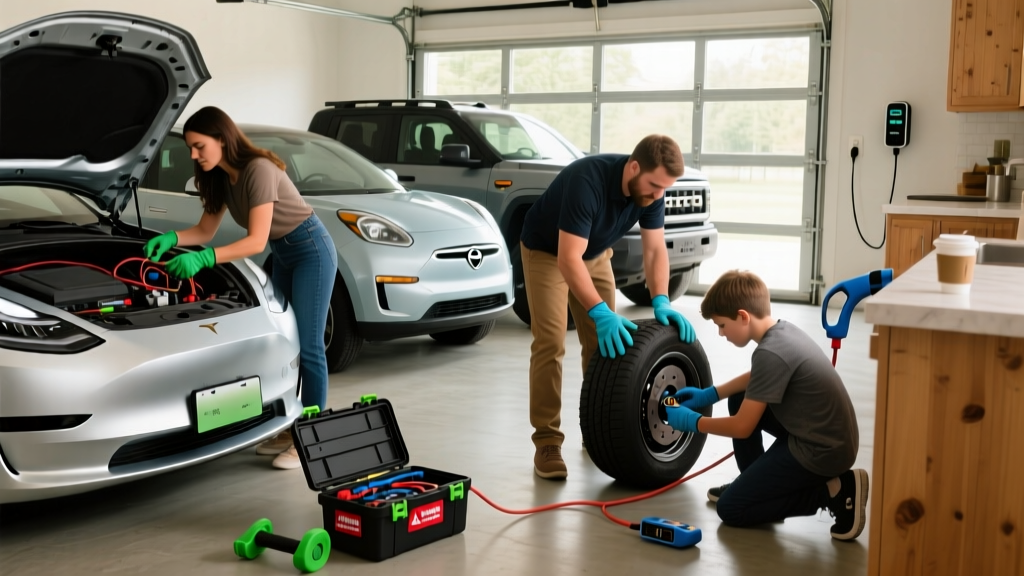
The "do it yourself electric vehicle" concept isn't about rebuilding a powertrain in your garage — it's about recognizing which maintenance items remain in owner hands and which have been engineered out entirely. Here's the realistic breakdown for a 2026 EV owner.
Tasks You Can Handle at Home
- Cabin air filter replacement: Most EVs use a standard HEPA or activated-carbon cabin filter. On a Tesla Model Y or Hyundai Ioniq 5, this is a 15-minute job behind the glovebox. Filter cost: $15–$35 aftermarket.
- Tire rotation and inspection: EVs wear tires 20–30% faster than gas cars due to instant torque and heavier curb weight (a Model Y Long Range weighs 4,398 lbs). Rotate every 6,250 miles. You'll need a jack rated for the vehicle's weight and torque-spec lug nuts (typically 129 lb-ft on Tesla, 100 lb-ft on Hyundai/Kia EVs).
- Wiper blade replacement: Identical to gas vehicles. Standard hook-arm or proprietary-fit blades, $20–$45 per pair.
- Brake fluid flush: EVs use regenerative braking heavily, so friction brakes last 100,000+ miles. But brake fluid absorbs moisture and should be flushed every 2 years. A DIY flush kit costs $30–$50; DOT 4 fluid runs $8–$12.
- 12V auxiliary battery check/replacement: Every EV still has a 12V lead-acid or lithium-iron-phosphate (LiFePO4) battery that powers electronics. These fail every 3–5 years. Replacement cost: $150–$300. Many owners upgrade to a lithium 12V for longer life.
- Coolant level inspection: EVs use glycol-based coolant loops for battery thermal management. Check reservoir levels quarterly; top off with manufacturer-specified coolant only (e.g., Tesla uses a specific HOAT formulation).
- Washer fluid: Self-explanatory. Use a formula rated for your climate's lowest temperature.
Tasks That Require a Certified EV Technician
- Traction battery diagnostics or repair: High-voltage systems (400V on most EVs, 800V on Hyundai/Kia E-GMP and Porsche Taycan platforms) can be lethal. Only certified HV technicians should open the battery enclosure.
- Drive unit (motor) service: Sealed units with no owner-serviceable parts.
- Onboard charger or DC-DC converter replacement: High-voltage components requiring proprietary diagnostic tools.
- Heat pump or HVAC compressor service: Refrigerant handling requires EPA Section 608 certification, and EV heat pump systems are complex integrated loops.
- ADAS calibration: After windshield replacement or suspension work, cameras and radar sensors need dealer-grade calibration equipment.
EV vs. Gas: The Real Maintenance Cost Comparison
The strongest argument for the DIY-inclined EV owner isn't that you'll wrench more — it's that you'll wrench less and spend less when you do. Here's a data-driven comparison over 5 years / 75,000 miles.
| Maintenance Item | Gas Vehicle (5-yr Cost) | EV (5-yr Cost) | Notes |
|---|---|---|---|
| Oil changes | $600–$900 | $0 | EVs have no engine oil |
| Tires (replacement sets) | $800–$1,200 | $1,000–$1,600 | EVs wear tires faster; budget for 2 sets |
| Brake pads/rotors | $600–$1,200 | $0–$200 | Regen braking preserves friction brakes |
| Transmission fluid | $150–$400 | $0 | Most EVs use a sealed single-speed reduction gear |
| Cabin air filter | $80–$150 | $80–$150 | Identical interval and cost |
| Coolant flush | $200–$350 | $150–$250 | EVs have battery thermal management loops |
| Spark plugs / ignition | $200–$500 | $0 | No combustion = no ignition system |
| Wiper blades / misc. | $100–$200 | $100–$200 | Identical |
| Total estimated | $2,730–$4,900 | $1,330–$2,400 | EV saves $1,400–$2,500 over 5 years |
The gap widens further when you factor in fuel. At $3.40/gallon and 28 MPG combined, a gas vehicle costs roughly $9,107 to fuel over 75,000 miles. An EV averaging 3.5 miles/kWh at $0.16/kWh (national residential average) costs $3,750 — a savings of over $5,300. Combined fuel and maintenance savings push the 5-year EV advantage past $7,000 for many buyers.
Real-World Ownership Considerations Before Going DIY
Before you commit to an EV and a DIY maintenance approach, honestly assess your situation across these dimensions.
Home Charging Access
DIY EV ownership works best when you can charge at home. A Level 2 home charger (240V, 32A–48A) adds 25–44 miles of range per hour of charging and costs $500–$1,500 installed depending on whether your electrical panel needs an upgrade. If you live in an apartment without charging access or park on-street, public DC fast charging will cost $0.30–$0.48/kWh — roughly double the home rate — and sustained DCFC use accelerates battery degradation by an estimated 2–5% over 100,000 miles compared to predominantly Level 2 charging.
Climate and Range Reality
An EV rated at 310 miles EPA will deliver roughly 220–250 miles in sustained sub-25°F weather due to battery internal resistance and cabin heating load. EVs with a heat pump (standard on 2026 Hyundai Ioniq 5, Tesla Model Y, BMW iX) lose roughly 15–20% range in cold; those with resistive PTC heaters can lose 30–40%. Plan your battery size accordingly if you live in the northern tier.
Driving Patterns
If your daily round trip is under 80 miles and you can charge overnight, even a base-trim EV with 240–270 miles of EPA range will work comfortably. If you regularly drive 300+ miles between charging stops, prioritize vehicles with 300+ EPA miles and 200+ kW DC fast-charging capability (e.g., Hyundai/Kia E-GMP platform at 238 kW peak, or Tesla at 250 kW on V3 Superchargers).
Common EV DIY Misconceptions — Fact vs. Fiction
| Myth | Fact |
|---|---|
| "EV batteries need replacing every 5 years" | Modern NMC and LFP traction batteries are warranted for 8 years/100,000 miles at 70% capacity retention. Real-world data from Recurrent shows most EV batteries retain 88–93% capacity at 100,000 miles. Full replacement costs $8,000–$20,000 but is rarely needed within typical ownership. |
| "You can't work on an EV yourself at all" | Everything outside the high-voltage system (12V battery, cabin filter, tires, wipers, brake fluid, washer fluid, coolant top-off) is owner-serviceable. The HV system is sealed and doesn't need routine maintenance. |
| "EVs don't need tire rotations" | EVs actually need more diligent tire care. Heavier weight (a Ford F-150 Lightning weighs 6,500+ lbs) and instant torque accelerate tread wear. Rotate every 6,250 miles or per manufacturer spec. |
| "Regenerative braking means you never replace brake pads" | Friction brakes last much longer (often 100,000+ miles), but they still need periodic inspection. Seized calipers from disuse are a known issue in mild-climate EVs that rarely use friction brakes. |
| "All EVs qualify for the $7,500 federal tax credit" | Under IRS §30D rules, eligibility depends on MSRP caps ($55,000 for sedans, $80,000 for SUVs/trucks), buyer income limits ($150K single / $300K joint), and critical-mineral/battery-component sourcing requirements that tighten annually. Always verify current-year eligibility on irs.gov before purchasing. |
Your DIY EV Ownership Decision Framework
Should You Buy an EV and Maintain It Yourself?
Choose an EV and DIY maintenance if:
- You have access to Level 1 (120V) or Level 2 (240V) charging at home or work
- Your daily driving is under 100 miles round-trip (covers ~90% of US commuters)
- You want to minimize routine maintenance visits and costs
- You're comfortable with basic tasks like tire rotation, filter swaps, and fluid top-offs
- You live in a region with moderate winters, or you choose an EV with a heat pump and 300+ mile EPA range
Consider a PHEV (plug-in hybrid) instead if:
- You lack reliable home charging and your area has sparse DC fast-charging infrastructure
- You frequently tow or drive 400+ miles between stops in rural areas
- You want some electric-only commuting (25–45 miles) without range anxiety on road trips
Wait or reconsider if:
- You park on-street with zero charging access and no workplace charging
- Your budget is under $28,000 and you cannot access the used-EV tax credit (up to $4,000 or 30% of sale price for qualifying pre-owned EVs)
- You live in an extreme-cold climate and cannot install a Level 2 charger with preconditioning capability
Essential Tools and Supplies for the DIY EV Owner
You don't need a full shop, but a focused toolkit makes EV ownership maintenance straightforward:
- Floor jack rated for your EV's curb weight: Many EVs exceed 4,500 lbs. A 3-ton jack with EV-specific lift-point pucks (to avoid damaging the battery enclosure) costs $120–$250.
- Torque wrench (½-inch drive): Lug nuts must be torqued to spec — over-torquing on an EV can damage the hub or warp rotors you'll rarely use.
- OBD2 scanner with EV capability: Standard OBD2 readers don't access EV-specific modules. Look for EV-compatible scanners (e.g., OBDLink SX with EV apps, or brand-specific tools like Tesla's Toolbox for advanced diagnostics).
- Tire pressure gauge and inflator: EVs are sensitive to tire pressure for range. Running 2–3 PSI below spec can cost 3–5% range. Check monthly.
- Manufacturer-specified coolant: Never mix coolant types. Tesla, Hyundai, and BMW each specify different formulations for battery thermal loops.
The Bottom Line on DIY EV Ownership Costs
Over five years and 75,000 miles, a DIY-minded EV owner can expect to spend roughly $1,300–$2,400 on maintenance — and handle the majority of those tasks at home with basic tools. Compare that to $2,700–$4,900 for a gas vehicle, with more frequent dealer visits for oil changes, spark plugs, and transmission service you simply can't skip.
The trade-off is real: you give up the ability to work on the powertrain (there's no timing belt to change, no oil to drain), and any high-voltage issue means a dealer or certified EV shop. But the powertrain items that EVs eliminated were the most expensive and time-consuming parts of gas-car maintenance to begin with. For the DIY owner, an EV trades complexity for simplicity — fewer service items, longer intervals, and lower total cost.
Can I change the traction battery on my EV myself?
No. The high-voltage traction battery operates at 400V–800V and can deliver a lethal shock. Battery service requires certified high-voltage technicians, insulated tools, and manufacturer-specific procedures. This is not a DIY task under any circumstances.
How often do EVs actually need dealer service?
Most EVs need a dealer or shop visit only for tire replacement (every 30,000–45,000 miles depending on driving style), brake fluid flushes (every 2 years), coolant service (every 5 years on most models), and cabin filter replacement (which you can DIY). That's typically 1–2 visits per year, compared to 3–4 for a gas vehicle requiring oil changes every 5,000–7,500 miles.
Do EVs need alignment checks?
Yes. EVs are heavier and produce instant torque, both of which stress suspension components. Check alignment annually or if you notice uneven tire wear or pulling. A 4-wheel alignment costs $100–$200 and protects your tire investment.
What happens if my 12V battery dies in an EV?
A dead 12V battery can prevent the vehicle from "starting" even though the traction battery is fully charged — the 12V system powers the computers and contactors that connect the high-voltage system. Most 2025–2026 EVs include a 12V jump-start procedure in the owner's manual, and some newer models (Tesla Model 3 Highland, Hyundai Ioniq 5 refresh) use a lithium-iron-phosphate 12V battery that lasts 8+ years and is less prone to failure.
Does DIY maintenance void my EV warranty?
Under the Magnuson-Moss Warranty Act, performing your own maintenance does not void your warranty as long as you use correct parts and fluids and can document the work. Keep receipts for filters, fluids, and tires. However, if a DIY error damages a covered component (e.g., using wrong coolant in the battery loop), that specific damage may not be covered.