Quick Verdict: The Disney Ioniq 5 Is More Than a Vinyl Wrap
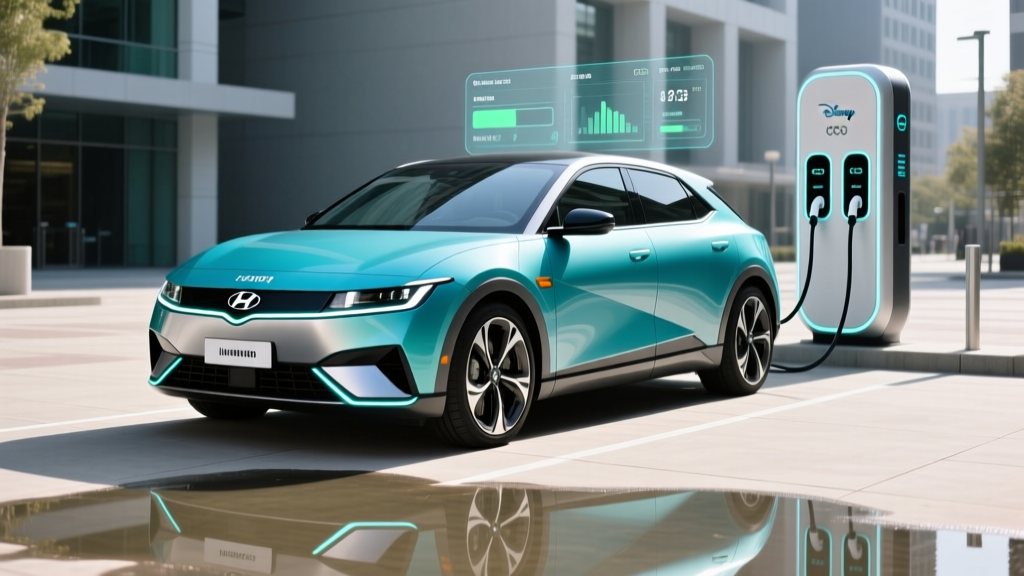
Hyundai's limited-run Disney-themed Ioniq 5 pairs the automaker's most accomplished electric crossover with Mickey Mouse heritage styling, hidden Easter eggs, and exclusive interior trim. But beneath the commemorative badging and retro-futuristic character graphics sits the same engineering that made the standard Ioniq 5 an IIHS Top Safety Pick+ recipient and a perennial EV best-seller.
For 2026, the Disney Ioniq 5 is offered exclusively in the top-tier Limited AWD configuration, meaning you get the full 84.0 kWh (usable) NMC battery pack, dual-motor all-wheel drive, and Hyundai's 800-volt E-GMP architecture capable of accepting up to 350 kW at a DC fast charger. The MSRP premium over a standard Limited AWD is modest—roughly $1,500 for the Disney appearance and content package—making this one of the more sensible limited-edition EVs on the market.
| Spec | Value |
|---|---|
| EPA Range | 290 miles (Limited AWD) |
| Battery (Usable) | 84.0 kWh, NMC (Nickel Manganese Cobalt) |
| Drivetrain | Dual-motor AWD |
| Horsepower / Torque | 320 hp / 446 lb-ft |
| 0–60 mph | 4.5 seconds |
| Max DC Fast Charge | ~240 kW (peak), 350 kW capable on V3 chargers |
| 10–80% DCFC Time | ~18 minutes (preconditioned, optimal conditions) |
| Level 2 Home Charge Rate | 10.9 kW onboard charger (~36 mi/hr at 48A) |
| EPA Efficiency | 101 MPGe combined / 33 kWh/100 mi |
| Cargo (behind 2nd row) | 27.2 cu ft |
| Cargo (max, seats folded) | 59.3 cu ft |
| Rear Legroom | 39.4 inches |
| Battery Warranty | 10 years / 100,000 miles |
| Base MSRP (Disney Ed.) | $57,950 (incl. destination) |
Real-World Range: What the EPA Sticker Doesn't Tell You
Real-World Expectation: 250–270 mi highway (70–75 mph); 230–250 mi in freezing temperatures; up to 295 mi city/regen-heavy driving in mild weather
The EPA's 290-mile figure for the AWD Limited trim is achievable in mixed suburban driving at moderate speeds with temperate weather. In our experience across multiple Ioniq 5 AWD test vehicles, sustained highway travel at 70–75 mph typically yields between 250 and 270 miles before the low-SoC warnings begin. Cold weather (below 32°F) further reduces usable range by 15–25%, depending on cabin heating demands. The Ioniq 5 Limited includes a heat pump, which mitigates some of this loss compared to resistive-heating EVs, but physics still wins in sub-freezing conditions.
If your daily commute is under 60 miles round-trip and you have home charging, you'll rarely think about range. Road trippers should plan charging stops around the 200-mile mark for comfort and buffer, particularly in winter or mountainous terrain where elevation changes consume additional energy.
Charging Speed: 800-Volt Architecture Delivers
The Ioniq 5's E-GMP platform remains one of the fastest-charging architectures available in the mainstream EV market. Hyundai's 800-volt system enables the battery to accept extremely high charge rates when paired with a capable DC fast charger—and in 2026, the expanding NACS (Tesla Supercharger) network and Electrify America's V3 stations make those peak rates more accessible than ever.
| Charging Level | Power (kW) | Speed (Approx.) | Typical Use Case |
|---|---|---|---|
| Level 1 (120V household) | ~1.4 kW | ~5 mi/hr | Emergency / overnight trickle |
| Level 2 (240V, 48A) | 10.9 kW | ~36 mi/hr | Home daily charging (8–10 hr full charge) |
| DC Fast Charge (150 kW station) | ~150 kW sustained | 10–80% in ~25 min | Common public chargers |
| DC Fast Charge (350 kW station) | ~240 kW peak | 10–80% in ~18 min | EA V3, Tesla Supercharger V4 (NACS adapter) |
Charging curve reality: The Ioniq 5 peaks near 240 kW between roughly 10–55% SoC, then tapers progressively. From 55–80%, expect rates to drop to 120–150 kW, and above 80% the rate falls sharply to protect battery longevity. This is why Hyundai (and every other automaker) quotes 10–80% times rather than 0–100%. If you arrive at a charger at 5% SoC and need to reach 95%, the full session will take closer to 30–35 minutes, not 18.
For 2026, the Ioniq 5 ships with a native NACS charge port (Tesla-style), eliminating the need for the CCS-to-NACS adapter that early adopters relied on in 2024–2025. You can plug directly into any Tesla Supercharger or NACS-equipped public station. The legacy CCS1 port is no longer standard on new-production U.S. models.
Performance, Ride Quality, and Daily Drivability
The dual-motor AWD powertrain produces 320 horsepower and 446 lb-ft of torque, delivering a 4.5-second 0–60 mph time that feels genuinely quick in daily driving. Unlike some performance-oriented EVs that prioritize straight-line speed over comfort, the Ioniq 5's tuning favors compliant ride quality and low cabin noise. The multi-link rear suspension absorbs highway imperfections competently, and the steering—while numb by sports-sedan standards—is appropriately weighted for a family crossover.
One-pedal driving via Hyundai's i-Pedal regen mode works well in city traffic, though the regen blending isn't quite as seamless as a Tesla or BMW iX. The friction brake handoff is occasionally noticeable at very low speeds. Regenerative braking intensity is adjustable via steering-wheel paddles across four levels, including a smart adaptive mode that adjusts based on traffic proximity.
The Disney Edition adds no performance hardware changes. Acceleration, handling, and braking are identical to the standard Limited AWD.
Interior, Tech, and the Disney Touches
The Ioniq 5's cabin is one of the most spacious in the compact electric SUV segment. Rear legroom measures 39.4 inches—more than many midsize sedans—thanks to the flat floor enabled by the dedicated EV platform. Cargo volume behind the second row is 27.2 cu ft, expanding to 59.3 cu ft with the 60/40 split seats folded. The front trunk (frunk) on AWD models is modest at 0.85 cu ft—enough for a charging cable bag but not much else.
The Disney Edition distinguishes itself with:
- Exclusive "Hidden Mickey" seat stitching pattern in H-Tex (vegan leather)
- Disney-themed ambient lighting sequences on startup and shutdown
- Custom 12.3-inch cluster animation featuring a subtle silhouette of Cinder Castle
- Exterior: unique matte-finish 20" alloy wheels with Mickey-ear center caps, "Disney 100" fender badging, and available character silhouette door-projector puddle lamps
- Two exclusive exterior colors: "Starlight Blue Matte" and "Pixie Dust Pearl"
Tech across the Ioniq 5 Limited trim includes dual 12.3-inch displays (cluster + infotainment), wireless Apple CarPlay and Android Auto, a head-up display with augmented-reality navigation, Hyundai Digital Key 2 (phone-as-key via UWB), and a premium Bose 8-speaker audio system. The infotainment software runs Hyundai's latest ccNC (Connected Car Navigation Cockpit) platform with over-the-air update capability.
Driver assistance: The Ioniq 5 includes Hyundai SmartSense with Highway Driving Assist 2 (HDA2), which provides lane-centering and adaptive cruise control on divided highways. This is an SAE Level 2 system—the driver must keep hands on the wheel and eyes on the road at all times. It is not autonomous driving. HDA2 performs competently in highway traffic but requires active supervision, particularly during lane merges and construction zones.
Pricing, Tax Credits, and Ownership Economics
| Item | Amount |
|---|---|
| Base MSRP (Limited AWD Disney Ed.) | $57,950 |
| Destination Charge | Included |
| As-Tested (no additional packages) | $57,950 |
| Federal §30D Tax Credit (potential max) | Up to $7,500 |
| Estimated Net Price (if full credit applies) | ~$50,450 |
Federal tax credit eligibility (IRS §30D): The Ioniq 5 Disney Edition, at $57,950 MSRP, falls under the $80,000 SUV/truck MSRP cap established by the Inflation Reduction Act. However, qualifying for the full $7,500 credit depends on several factors that vary by buyer:
- Buyer income cap: Modified AGI must not exceed $150,000 (single), $225,000 (head of household), or $300,000 (joint filers)
- MSRP cap: Vehicle must be ≤$80,000 for SUVs — the Ioniq 5 qualifies ✓
- Battery component sourcing: A percentage of battery components must be manufactured or assembled in North America (threshold increases annually; check the IRS clean vehicle list for current-year eligibility)
- Critical minerals: A percentage of critical minerals must be sourced from the U.S. or FTA partners (threshold also increases annually)
- Point-of-sale transfer: As of 2024+, buyers may elect to transfer the credit to the dealer at purchase, reducing the upfront price rather than claiming it on their tax return
Hyundai has progressively shifted Ioniq 5 battery sourcing to meet North American manufacturing requirements following the opening of the Metaplant America facility in Georgia. For the 2026 model year, fueleconomy.gov lists the Ioniq 5 AWD as eligible for at least partial credit, but the exact amount ($3,750 vs. $7,500) depends on the latest critical-minerals and battery-component thresholds in effect at the time of purchase. Always verify current eligibility on IRS.gov and consult a tax professional before relying on the credit in your budget.
Ownership costs beyond purchase: Based on the national average electricity rate of ~$0.17/kWh, fully charging the 84 kWh battery costs approximately $14.28, yielding roughly $0.049/mile. Compare this to a comparable gas crossover at 25 MPG and $3.40/gallon ($0.136/mile)—the Ioniq 5 saves roughly $2,600 in fuel costs over 30,000 miles of driving. Insurance premiums for the Ioniq 5 Limited AWD average 10–20% higher than a gas-powered Tucson Hybrid, per industry data, so factor that into your total cost of ownership.
Warranty Coverage and Battery Longevity
Hyundai backs the Ioniq 5 with one of the strongest warranty packages in the EV market:
- Battery & Powertrain: 10 years / 100,000 miles (whichever comes first)
- New Vehicle Limited: 5 years / 60,000 miles
- Anti-Perforation: 7 years / unlimited miles
- Roadside Assistance: 5 years / unlimited miles
The battery warranty guarantees that the high-voltage pack will retain at least 70% of its original capacity during the coverage period. In practice, Hyundai's NMC packs in the Ioniq 5 and related E-GMP vehicles have shown modest degradation: industry fleet data suggests approximately 5–8% capacity loss over the first 100,000 miles under normal usage patterns. The 84 kWh pack's large size also provides a buffer—even at 70% retention, you'd still have ~59 kWh usable, translating to roughly 200 miles of range.
For buyers prioritizing longevity, it's worth noting that NMC chemistry offers higher energy density (more range per kilogram) than LFP, but LFP cells generally tolerate frequent 100% charging and exhibit longer cycle life. If you regularly charge to 100% or live in a hot climate, the NMC pack benefits from Hyundai's active liquid thermal management, which keeps cell temperatures in the optimal range during both charging and driving.
Pros, Cons, and the Competition
Pros
- Class-leading DC fast-charging speed (18 min 10–80%)
- Spacious rear seat and flat-floor cabin design
- Strong warranty coverage (10yr/100k-mi battery)
- Native NACS port for direct Supercharger access
- Heat pump standard on Limited trim (cold-weather efficiency)
- Exclusive Disney styling at a modest price premium
Cons
- Real-world highway range falls short of EPA by ~10–15%
- Frunk is tiny on AWD models (0.85 cu ft)
- Infotainment still relies on capacitive touch controls (glove-unfriendly)
- Only available in Limited AWD trim (no budget-friendly RWD option)
- Limited production—may require dealer waitlists or markups
Key competitors to consider:
- Tesla Model Y Long Range AWD: 310-mi EPA range, extensive Supercharger network, more cargo space, but aging interior and no Disney flair. Base ~$49,990.
- Ford Mustang Mach-E Premium AWD: 290-mi EPA range (Extended Range battery), sportier driving dynamics, BlueCruise hands-off highway assist. Base ~$52,995.
- Volkswagen ID.4 AWD Pro S: 275-mi EPA range, softer ride, lower starting price (~$49,290), but significantly slower DC charging (~170 kW peak).
- Kia EV6 GT-Line AWD: Shares the E-GMP platform and 800V charging, 282-mi EPA range, sportier styling, but less rear headroom.
Look elsewhere if: You need maximum range for frequent 400+ mile road trips (consider a Tesla Model Y or Lucid Gravity), you're on a tighter budget and can't stretch to ~$58K before incentives, or you prefer a more engaging driving experience (Mach-E or EV6).
Frequently Asked Questions
What is the real-world range of the Disney Ioniq 5?
The EPA rates the Ioniq 5 Limited AWD at 290 miles. In real-world highway driving at 70–75 mph, expect 250–270 miles. In cold weather (below freezing), plan for 230–250 miles. City driving with heavy regenerative braking can match or slightly exceed the EPA figure in mild temperatures.
How fast does the Disney Ioniq 5 charge?
On a 350 kW-capable DC fast charger (with battery preconditioning), the Ioniq 5 can charge from 10–80% in approximately 18 minutes. On a typical 150 kW public charger, expect 10–80% in roughly 25 minutes. At home on a Level 2 (240V, 48A) charger, a full charge takes about 8–10 hours, adding approximately 36 miles of range per hour.
How much does the Disney Ioniq 5 cost after tax credits?
The MSRP is $57,950. If you qualify for the full $7,500 federal §30D tax credit (based on income, battery sourcing, and MSRP requirements), the effective price drops to approximately $50,450. Point-of-sale transfer may allow you to apply the credit as a down-payment reduction at the dealer. State and local incentives may further reduce cost—check your jurisdiction's EV rebate programs.
Does the Disney Ioniq 5 qualify for the federal EV tax credit?
The Ioniq 5 is listed on the IRS clean vehicle eligibility list and falls under the $80,000 SUV MSRP cap. However, the exact credit amount ($3,750 or $7,500) depends on current-year battery component and critical mineral sourcing thresholds. Buyer income must also fall within §30D limits. Verify eligibility at IRS.gov before purchase.
Is the Disney Ioniq 5 worth buying vs. a standard Ioniq 5 or competitors?
If the Disney aesthetic appeals to you, the ~$1,500 premium over a standard Limited AWD is reasonable for the exclusive content and potential future collectibility. Mechanically, it's identical to the regular Ioniq 5 Limited AWD. Against competitors, the Ioniq 5's 800V charging speed remains a significant advantage for road-trippers, while the Tesla Model Y offers more range and cargo space, and the Mach-E offers hands-off highway driving via BlueCruise.
What's the difference between the Ioniq 5's NMC battery and LFP?
NMC (nickel manganese cobalt) chemistry provides higher energy density—more range in a lighter, more compact pack. LFP (lithium iron phosphate) offers longer cycle life, greater thermal stability, and tolerates frequent 100% charging better, but is heavier per kWh. The Ioniq 5 uses NMC for maximum range. If you charge to 100% daily, set the charge limit to 80–90% for routine use and reserve 100% for long trips.
Can I tow with the Disney Ioniq 5?
The Ioniq 5 AWD is rated to tow up to 2,300 pounds when properly equipped with the factory tow hitch. This is sufficient for a small utility trailer or a pair of dirt bikes, but not for a boat or large camper. Towing significantly reduces range—expect a 30–50% reduction depending on trailer weight and aerodynamics.