Quick Verdict: Which Tesla Is Right for You?
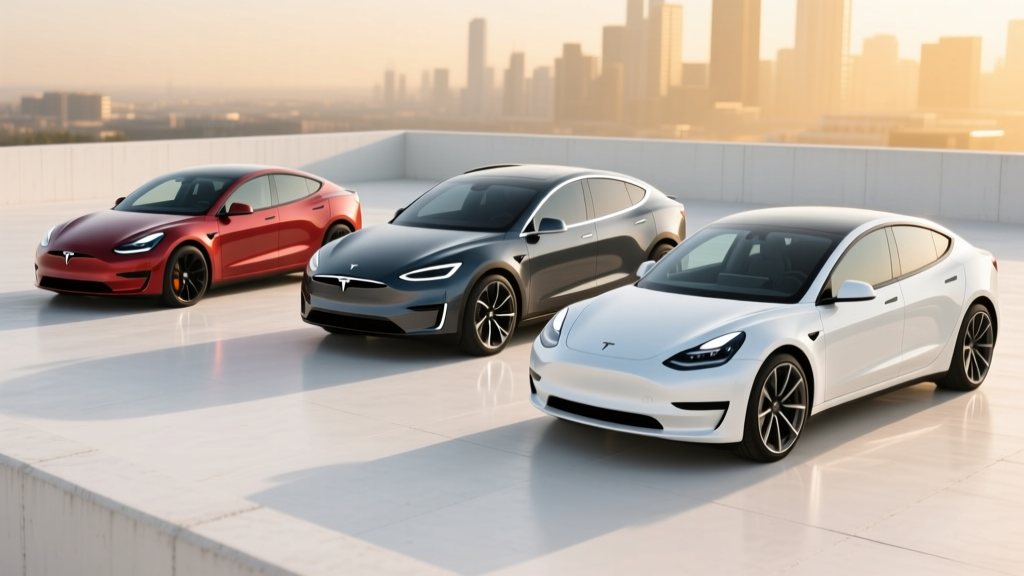
Tesla's 2026 lineup spans five distinct vehicles, from the $38,990 Model 3 rear-wheel-drive sedan to the $99,990 Cybertruck Cyberbeast. Each serves a different use case, and the differences go far beyond size. Battery chemistry, charging architecture, efficiency, and federal tax credit eligibility all vary meaningfully across the range. This guide breaks down every current model with exact numbers so you can match a Tesla to your actual driving needs — not a marketing brochure.
Choose Model 3 if you want the most affordable entry point, best efficiency (up to 132 MPGe), and don't need cargo space.
Choose Model Y if you need a compact SUV with family-friendly cargo room and access to the full Supercharger network.
Choose Model S if you prioritize highway passing power, premium ride quality, and 400+ mile range.
Choose Model X if you need three rows, falcon-wing doors, and maximum passenger versatility.
Choose Cybertruck if you need a truck bed, towing capability, and off-road ground clearance.
2026 Tesla Model Lineup: Core Specifications at a Glance
Before we dig into real-world nuances, here is the full spec matrix for every Tesla currently available for purchase in the United States. All range figures are EPA-estimated; real-world expectations follow in the next section.
| Spec | Model 3 RWD | Model 3 Long Range AWD | Model Y Long Range AWD | Model S Long Range | Model X Long Range | Cybertruck AWD |
|---|---|---|---|---|---|---|
| EPA Range | 272 mi | 363 mi | 320 mi | 402 mi | 335 mi | 340 mi |
| Battery (usable kWh) | ~60 kWh (LFP) | ~82 kWh (NMC) | ~82 kWh (NMC) | ~100 kWh (NMC) | ~100 kWh (NMC) | ~123 kWh (NMC) |
| Peak DC Charge Rate | 170 kW | 250 kW | 250 kW | 250 kW | 250 kW | 250 kW |
| 10–80% DC Time | ~30 min | ~25 min | ~25 min | ~27 min | ~30 min | ~35 min |
| Level 2 Home Rate | 7.6 kW / ~30 mi/hr | 11.5 kW / ~44 mi/hr | 11.5 kW / ~44 mi/hr | 11.5 kW / ~38 mi/hr | 11.5 kW / ~34 mi/hr | 11.5 kW / ~30 mi/hr |
| 0–60 mph | 5.8 sec | 4.2 sec | 4.8 sec | 3.1 sec | 3.8 sec | 3.9 sec (AWD) |
| Horsepower | 271 hp | 384 hp | 384 hp | 670 hp | 670 hp | 600 hp (AWD) |
| Drivetrain | RWD | Dual-Motor AWD | Dual-Motor AWD | Dual-Motor AWD | Dual-Motor AWD | Dual-Motor AWD |
| MPGe (combined) | 132 MPGe | 125 MPGe | 117 MPGe | 120 MPGe | 102 MPGe | 70 MPGe (est.) |
| Base MSRP | $38,990 | $45,990 | $47,990 | $79,990 | $84,990 | $79,990 |
| Battery Warranty | 8 yr / 100k mi | 8 yr / 120k mi | 8 yr / 120k mi | 8 yr / 150k mi | 8 yr / 150k mi | 8 yr / 120k mi |
Sources: fueleconomy.gov, Tesla official specs. Pricing reflects base MSRP before destination fees and options.
Real-World Range: What the EPA Sticker Doesn't Tell You
EPA vs. Reality — The Honest Numbers
- Model 3 RWD (EPA 272 mi): Expect ~230–250 mi on a highway road trip at 70 mph. In sub-30°F winter conditions, plan for 190–210 mi between charges.
- Model 3 Long Range (EPA 363 mi): Real-world highway driving yields ~300–320 mi. Cold weather drops this to ~250–275 mi.
- Model Y Long Range (EPA 320 mi): Highway trips net ~265–285 mi. Winter range: ~220–245 mi.
- Model S Long Range (EPA 402 mi): The efficiency leader in Tesla's premium tier. Highway: ~340–360 mi. Cold weather: ~280–310 mi.
- Model X Long Range (EPA 335 mi): Heavier and less aero-efficient. Highway: ~275–300 mi. Winter: ~230–255 mi.
- Cybertruck AWD (EPA 340 mi): The stainless-steel exoskeleton creates real drag. Highway at 70 mph: ~260–285 mi. Towing a 5,000-lb trailer: expect ~160–190 mi.
All Teslas use a heat pump (standard since 2021), which reduces cold-weather range loss compared to resistive heating. However, battery chemistry matters: the LFP pack in the Model 3 RWD is more tolerant of daily 100% charges but slightly less energy-dense than the NMC packs in Long Range variants.
Charging Speed and Infrastructure: What Each Model Actually Delivers
Charging speed is where kW (power — the rate of energy transfer) and kWh (energy — the battery's total capacity) diverge, and understanding both is critical for trip planning.
| Charging Level | Power (kW) | Approx. Miles Added per Hour | Best For |
|---|---|---|---|
| Level 1 (120V household) | ~1.4 kW | 3–5 mi/hr | Overnight trickle, emergency top-off |
| Level 2 (240V home) | 7.6–11.5 kW | 30–44 mi/hr | Daily home charging |
| DC Fast (Tesla Supercharger V3) | Up to 250 kW | Up to 1,000 mi/hr (peak) | Road trips |
| DC Fast (Tesla Supercharger V4) | Up to 350 kW (announced) | Faster peak rates | Next-gen infrastructure rollout |
Charge curve reality check: Tesla's advertised 250 kW peak rate applies only at low state of charge (SoC) — typically between 5–30%. Above 50% SoC, the rate tapers significantly. On a Model 3 Long Range, you might see 250 kW at 10% SoC, dropping to ~150 kW by 50%, and ~60 kW by 80%. This is why the 10–80% time (~25 minutes) is the meaningful metric, not peak kW alone.
Home charging setup: All Teslas except the Model 3 RWD support 11.5 kW on a Level 2 Wall Connector (48-amp circuit, requiring a 60-amp breaker). The Model 3 RWD is limited to 7.6 kW (32-amp circuit, 40-amp breaker). A full home installation with a Tesla Wall Connector typically costs $800–$2,500 depending on panel capacity and conduit run — factor this into your purchase budget.
Pricing, Trims, and Federal Tax Credit Eligibility
Tesla's pricing has shifted frequently. As of early 2026, here is where each model stands, including the critical IRS §30D federal tax credit eligibility.
| Model & Trim | Base MSRP | Federal Tax Credit (§30D) | Effective Price (est.) | Credit Eligibility Notes |
|---|---|---|---|---|
| Model 3 RWD | $38,990 | Up to $7,500 | ~$31,490 | Eligible — meets MSRP cap (<$55k sedan), subject to income and battery-sourcing rules |
| Model 3 Long Range AWD | $45,990 | Up to $7,500 | ~$38,490 | Eligible — under $55k sedan cap |
| Model Y Long Range AWD | $47,990 | Up to $7,500 | ~$40,490 | Eligible — under $80k SUV cap |
| Model S Long Range | $79,990 | $0 | $79,990 | Not eligible — exceeds $55k sedan MSRP cap |
| Model X Long Range | $84,990 | $0 | $84,990 | Not eligible — exceeds $80k SUV MSRP cap |
| Cybertruck AWD | $79,990 | $0 | $79,990 | Not eligible — exceeds $80k truck MSRP cap |
- MSRP caps: Sedans must be ≤$55,000; SUVs and trucks ≤$80,000. Only the Model 3 and Model Y qualify in Tesla's current lineup.
- Buyer income caps: Modified AGI must not exceed $150,000 (single), $225,000 (head of household), or $300,000 (joint filers).
- Battery sourcing: The credit splits into two halves — $3,750 for critical-minerals sourcing and $3,750 for battery-component manufacturing. Eligibility percentages shift annually; verify current-year rules on IRS.gov or with a tax professional.
- Point-of-sale transfer: Since 2024, buyers can transfer the credit to the dealer at purchase, reducing the upfront price rather than waiting for a tax refund.
Interior Space, Cargo, and Practicality by Model
Passenger and cargo dimensions determine daily livability. Here is how Tesla's lineup compares on paper and in practice.
| Model | Front Legroom | Rear Legroom | Cargo (rear seats up) | Cargo (rear seats folded) | Frunk |
|---|---|---|---|---|---|
| Model 3 | 42.7 in | 35.2 in | 23 cu ft | ~56 cu ft | 3.1 cu ft |
| Model Y | 41.8 in | 41.6 in | 30 cu ft | ~72 cu ft | 4.1 cu ft |
| Model S | 42.7 in | 35.4 in | 28 cu ft | ~65 cu ft | 5.3 cu ft |
| Model X | 41.2 in | 38.4 in (2nd row) | ~15 cu ft (behind 3rd row) | ~82 cu ft (all folded) | 6.6 cu ft |
| Cybertruck | 41.5 in (est.) | ~38 in (est.) | Bed: 6.5 ft × 4 ft | N/A (truck bed) | Front trunk: ~7 cu ft |
The Model Y wins the practicality contest for families. Its hatchback design swallows bulky items that the Model 3's sedan trunk cannot, and rear legroom is genuinely generous. The Model X offers an optional third row (seats 6 or 7), but third-row space is tight — best for children on short trips. The Cybertruck has a 6.5-foot bed with a motorized tonneau cover and a 11,000-lb max towing capacity, but its angular design and polarizing styling won't fit every driveway or HOA.
Technology, Driver Assistance, and What Tesla Still Doesn't Offer
SAE Automation Level: Level 2
Tesla's Autopilot and Full Self-Driving (Supervised) are Level 2 driver-assistance systems. The driver must remain fully engaged — hands on or near the wheel, eyes on the road — at all times. Tesla's FSD is not "self-driving" in any legal or technical sense. Only Level 4 services (e.g., Waymo robotaxis operating in geofenced areas) qualify as driverless.
Infotainment: Every Tesla runs a proprietary 15.4-inch (Model 3/Y) or 17-inch (Model S/X/Cybertruck) touchscreen with no Apple CarPlay or Android Auto. Tesla's native navigation is strong, and the Supercharger network integration is seamless — the car routes you through chargers and preconditions the battery automatically. However, the lack of smartphone mirroring remains a dealbreaker for some buyers.
Key limitations across the Tesla lineup:
- No Apple CarPlay or Android Auto on any model
- No physical instrument cluster — all info is on the center screen (Model 3/Y) or a small secondary display (Model S/X rear)
- FSD (Supervised) costs $8,000 extra or $99/month and does not replace attentive driving
- Build quality has improved since 2023 but still trails legacy luxury brands in panel-gap consistency
- No Android Auto, no physical buttons for climate/media — everything is touchscreen-mediated
Standout tech: Tesla's over-the-air (OTA) update cadence is unmatched. Features like Sentry Mode (360° parking surveillance), Dog Mode (climate-controlled cabin for pets), and the integrated dashcam system are genuinely useful. The Supercharger network — now open to non-Tesla EVs via NACS adapters — remains the most reliable DC fast-charging ecosystem in North America, with over 6,000 V3/V4 stalls across the US.
Pros and Cons: The Honest Summary
Pros (across the lineup)
- Best-in-class Supercharger network integration
- Industry-leading OTA software updates
- Strong efficiency (kWh/100mi) across sedan models
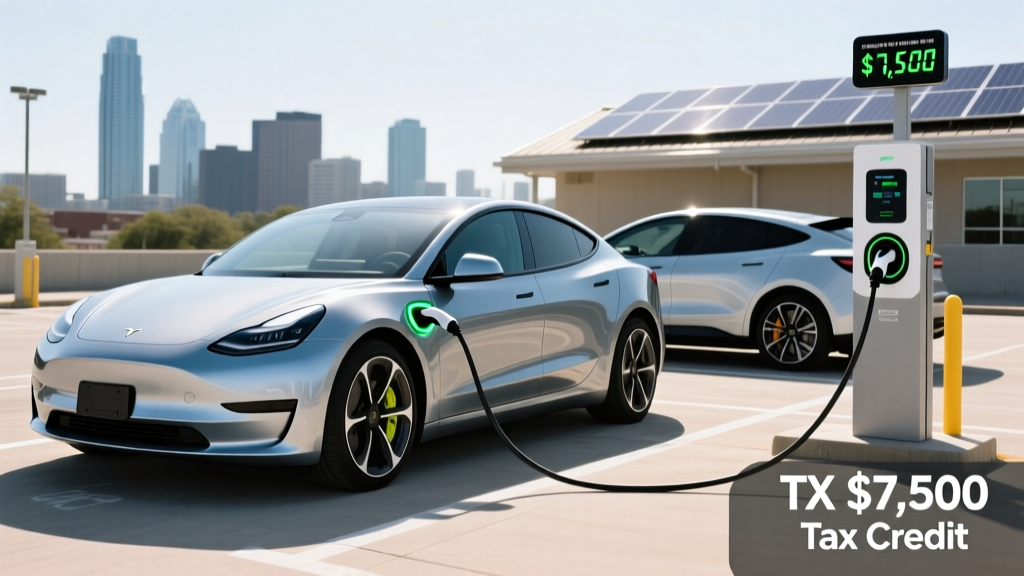
- Model 3 and Model Y qualify for up to $7,500 federal tax credit
- Heat pump standard on all models (better cold-weather range)
- Minimal maintenance costs — no oil changes, fewer brake replacements due to regen
Cons (across the lineup)
- No Apple CarPlay or Android Auto
- Model S, Model X, and Cybertruck exceed MSRP caps — no federal tax credit
- FSD (Supervised) is expensive and still requires full driver attention
- Cybertruck efficiency is poor — ~70 MPGe equivalent, high kWh/mile consumption
- Insurance premiums tend to be higher than segment averages
- Service center availability varies by region — some areas face multi-week wait times
Who Should Buy Which Tesla?
The commuter on a budget: Model 3 RWD at ~$31,490 after the federal credit is arguably the best value in the EV market. At 132 MPGe combined and a real-world 230+ mile range, it handles virtually any commute with room to spare.
The growing family: Model Y Long Range AWD offers the best blend of range (320 mi EPA), cargo space (72 cu ft folded), and tax-credit-adjusted pricing (~$40,490). It is the best-selling vehicle in the world for good reason.
The road warrior: Model S Long Range, with 402 miles of EPA range and 250 kW Supercharger capability, minimizes stops on long highway runs. At $79,990 with no federal credit, it is a premium purchase — but the range and ride quality justify it for high-mileage drivers.
The three-row family hauler: Model X is the only Tesla offering an optional third row. At $84,990 and 335 miles of range, it competes with the Rivian R1S and Kia EV9, though neither matches Tesla's Supercharger integration.
The truck buyer: Cybertruck is a conversation piece with genuine utility — 11,000-lb towing, a 6.5-foot bed, and armored stainless-steel panels. But at $79,990 with poor efficiency and no tax credit, buyers should cross-shop the Ford F-150 Lightning and Rivian R1T seriously.
Frequently Asked Questions
What is the real-world range of the different models of Tesla?
Real-world range depends heavily on speed, temperature, and terrain. As a rule of thumb, expect 85–90% of EPA range in mixed city/highway driving in moderate weather. Highway-only driving at 75+ mph drops that to ~75–85%. In sub-freezing temperatures, plan for 65–80% of the EPA figure. The Model S Long Range delivers the most real-world miles (~340–360 highway), while the Cybertruck delivers the fewest relative to its sticker (~260–285 highway).
How fast do Teslas charge on DC fast chargers and at home?
On a Tesla V3 Supercharger (250 kW), most Long Range models go from 10–80% in roughly 25–30 minutes. The Model 3 RWD (LFP battery, 170 kW peak) takes about 30 minutes. At home on a Level 2 Tesla Wall Connector (11.5 kW), Long Range models add ~38–44 miles of range per hour, meaning a full overnight charge from 20% to 100% takes 7–9 hours. The Model 3 RWD charges at 7.6 kW on Level 2, adding ~30 miles per hour.
How much do the different models of Tesla cost after tax credits?
Only the Model 3 and Model Y qualify for the federal §30D tax credit (up to $7,500), bringing the Model 3 RWD to approximately $31,490 and the Model Y Long Range to approximately $40,490 — assuming you meet income caps ($150k single / $300k joint) and the vehicle meets current-year battery-sourcing requirements. The Model S ($79,990), Model X ($84,990), and Cybertruck ($79,990) all exceed MSRP caps and receive no federal credit.
Is Tesla worth buying vs. competitors like Hyundai, Ford, or Rivian?
Tesla's primary advantage is the Supercharger network and software ecosystem. If road-trip charging reliability is your top priority, Tesla still leads. However, the Hyundai Ioniq 5 and Ioniq 6 offer 800V architecture with faster peak charging (350 kW-capable), and the Ford F-150 Lightning and Rivian R1T are more conventional truck alternatives to the Cybertruck. For luxury sedans, the BMW i5 and Lucid Air compete directly with the Model S on build quality and ride refinement.
Does every Tesla qualify for the federal EV tax credit?
No. Under current IRS §30D rules, only vehicles under the MSRP cap ($55,000 for sedans, $80,000 for SUVs/trucks) are eligible. This limits the credit to the Model 3 and Model Y in Tesla's lineup. Additionally, buyer income must be below $150,000 (single) or $300,000 (joint), and the vehicle must meet evolving critical-mineral and battery-component sourcing thresholds. Always verify eligibility at IRS.gov before purchasing.
What is Tesla's battery warranty coverage?
Tesla covers the battery and drive unit for 8 years. Mileage limits vary: 100,000 miles on the Model 3 RWD, 120,000 miles on the Model 3 Long Range, Model Y, and Cybertruck, and 150,000 miles on the Model S and Model X. The warranty guarantees at least 70% battery capacity retention over the warranty period. In practice, Tesla's NMC packs have shown ~10–15% degradation at 100,000 miles based on fleet data, while LFP packs in the Model 3 RWD tend to degrade more slowly but start with lower energy density.
Can I charge a non-Tesla EV at a Tesla Supercharger?
Yes — Tesla has opened select Supercharger stations to non-Tesla EVs equipped with NACS connectors or CCS-to-NACS adapters. This expansion is ongoing, and availability varies by station. Tesla owners retain priority access and integrated navigation routing that non-Tesla vehicles do not receive.