The Short Answer on Diesel-Electric Trucks
A true "diesel-electric truck" — pairing a diesel engine with an electric drivetrain — does not exist as a mass-market light-duty pickup in the U.S. for 2026. What buyers actually find are three distinct paths: full battery-electric (BEV) pickups like the Ford F-150 Lightning and Rivian R1T, conventional diesel trucks (Ram 1500 EcoDiesel, Chevy Silverado Duramax), and extended-range electric vehicles (EREVs) like the Ram 1500 REV with its gasoline range-extender. Medium-duty commercial fleets do use diesel-electric hybrid systems, but these aren't sold to retail consumers. If you want electric torque with long-distance towing insurance, a BEV pickup or a gas-electric EREV is your closest match to the diesel-electric concept.
Why "Diesel-Electric Truck" Is Trending — And Misunderstood
Search interest in diesel-electric trucks spiked as automakers announced electrified pickups and buyers searched for a bridge technology: electric efficiency around town with diesel-grade range and towing on the highway. The problem is that no automaker has put a diesel-electric hybrid powertrain into a consumer half-ton or three-quarter-ton truck. The physics and economics don't align for light-duty use:
- Diesel engines are heavy and expensive to certify for emissions, adding cost to an already pricey electric drivetrain.
- Diesel exhaust fluid (DEF) systems, particulate filters, and SCR catalysts add complexity that conflicts with packaging large battery packs.
- Light-duty diesel adoption has been declining — Ford dropped the Power Stroke from the F-150 after 2021, and Ram discontinued the EcoDiesel V6 in the 1500 after the 2022 model year.
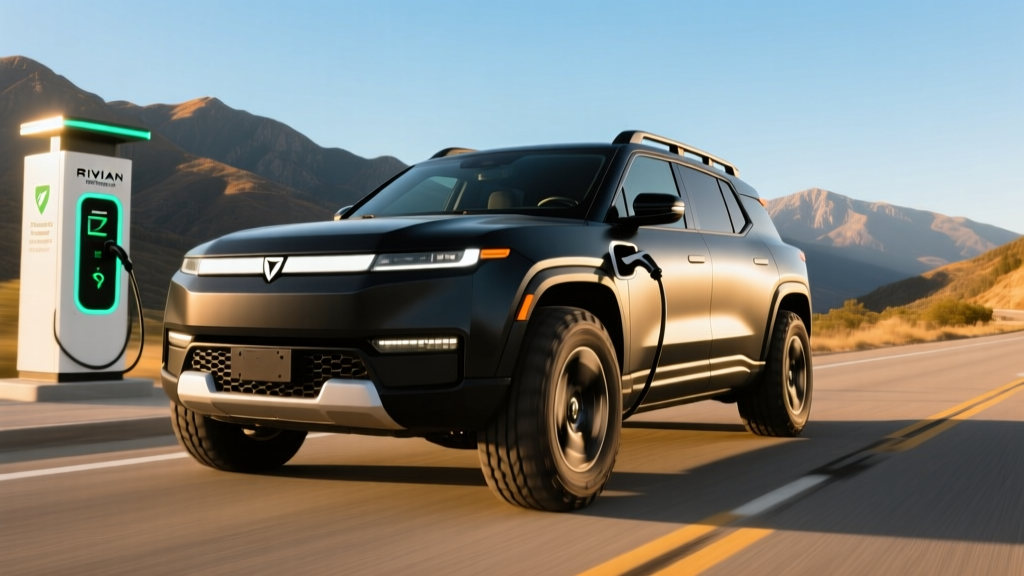
What exists instead are battery-electric trucks that deliver diesel-rivaling torque (the F-150 Lightning produces 580 lb-ft from its dual motors) and EREVs that use a small gasoline generator to extend range. Let's break down what's actually available and how the numbers compare.
What's Actually Available: BEV Pickups vs. Diesel vs. EREV
| Spec | Ford F-150 Lightning (BEV) | Rivian R1T Dual-Motor (BEV) | Ram 1500 REV (EREV, announced) | Chevy Silverado 2500HD Duramax (Diesel) |
|---|---|---|---|---|
| Powertrain | Dual-motor BEV | Dual-motor BEV | BEV + gas range-extender | 6.6L turbodiesel V8 |
| Horsepower | 580 hp | 665 hp | ~654 hp (est.) | 470 hp |
| Torque | 775 lb-ft | 829 lb-ft | ~800 lb-ft (est.) | 975 lb-ft |
| EPA Range / Tank Range | 320 mi (extended battery) | 420 mi (Max Pack) | ~350 mi electric + extender (est.) | ~550 mi (36-gal tank) |
| Max Towing | 10,000 lbs | 11,000 lbs | ~14,000 lbs (target) | 20,000 lbs |
| Battery / Tank | 131 kWh usable (NMC) | 149 kWh usable (NMC) | ~175 kWh + gas tank | 36-gal diesel |
| Peak DC Charge Rate | 150 kW | 220 kW | TBD | N/A |
| 10–80% Charge Time | ~41 min | ~30 min | TBD | ~8 min refuel |
| Base MSRP | ~$55,000 | ~$79,900 | ~$65,000 (est.) | ~$54,000 |
Sources: fueleconomy.gov, Ford Motor Company, Rivian. Ram 1500 REV specs are preliminary estimates based on manufacturer announcements; final EPA figures pending.
Real-World Range Reality
The F-150 Lightning's EPA rating of 320 miles assumes mixed driving at moderate temperatures. In real-world highway towing at 70 mph, expect range to drop to 120–170 miles depending on trailer weight and aerodynamics. Cold weather (below 30°F) reduces range by 20–35% even without a trailer. The Rivian R1T Max Pack fares better unloaded (~350 real-world highway miles) but still suffers significantly under tow. Diesel trucks maintain consistent range regardless of temperature and lose proportionally less under load.
The Cost Breakdown: Electric Truck vs. Diesel Truck Ownership
Upfront price is only part of the equation. Here's a 5-year total cost of ownership (TCO) comparison assuming 15,000 miles/year, national-average electricity and diesel prices, and typical insurance premiums.
| Cost Category (5-Year) | F-150 Lightning (BEV) | Silverado 2500HD Duramax (Diesel) |
|---|---|---|
| Purchase Price (base) | $55,000 | $54,000 |
| Federal Tax Credit (§30D) | Up to $7,500* | $0 |
| Fuel/Energy (75,000 mi) | ~$4,875 (home L2, $0.13/kWh) | ~$18,750 (14 MPG, $5.00/gal diesel) |
| Maintenance | ~$1,500 | ~$4,500 (DEF, oil, filters, emissions) |
| Insurance (avg) | ~$12,500 | ~$9,500 |
| Estimated Depreciation | ~$22,000 | ~$18,000 |
| 5-Year Total | ~$93,875 | ~$86,750 |
*The IRS §30D clean vehicle credit provides up to $7,500, but eligibility depends on MSRP caps (trucks: $80,000), buyer income limits ($150K single / $300K joint AGI), battery critical-mineral sourcing, and North American assembly. Rules are subject to change — consult a tax professional and check current IRS guidance before purchasing. The credit can now be transferred to the dealer at point of sale, reducing your out-of-pocket cost immediately.
The BEV truck closes the gap significantly on fuel and maintenance, but higher insurance premiums (driven by repair costs and battery replacement exposure) and steeper depreciation eat into savings. If you tow frequently, the diesel's range and towing advantage become more valuable — and the BEV's energy cost under heavy load rises dramatically (towing can push consumption to 2.5–3.0 kWh/mile, effectively tripling your per-mile cost).
Charging Logistics: The Dealbreaker Many Buyers Overlook
Owning an electric truck is fundamentally a charging-access question before it's a vehicle question.
Home Charging (Where 80%+ of Charging Happens)
- Level 2 (240V, 48A / 11.5 kW): Adds roughly 25–30 miles of range per hour. A full charge of the F-150 Lightning's 131 kWh pack takes ~12 hours. Installation runs $800–$2,500 depending on panel capacity and conduit distance — a 200A panel upgrade can add $1,500–$3,000.
- Level 1 (120V, 12A / 1.4 kW): Adds ~3–4 miles per hour. Impractical as a primary charging solution for a truck with a 130+ kWh battery — a full charge would take over 90 hours.
Public DC Fast Charging
| Charging Level | Power | Miles Added per Hour | Best For |
|---|---|---|---|
| Level 1 (120V) | 1.4 kW | 3–4 mi/hr | Emergency / trickle |
| Level 2 (240V) | 7.7–11.5 kW | 20–30 mi/hr | Daily home charging |
| DC Fast (50–150 kW) | 50–150 kW | 150–350 mi/hr | Road trips |
| DC Ultra-Fast (250–350 kW) | 250–350 kW | 500+ mi/hr (peak) | Road trips (if truck supports it) |
Critical caveat: the F-150 Lightning peaks at 150 kW and tapers significantly above 80% State of Charge (SoC). Even at a 350 kW Electrify America station, you'll see ~150 kW at best, dropping to ~40 kW above 80%. Plan road trips around 10–80% charges (~41 minutes for the Lightning) and accept that the last 20% is painfully slow. For towing-heavy users, this means 30–45 minute charging stops every 120–150 miles on the highway — a stark contrast to a diesel's 8-minute refuel and 400+ mile range.
Common Misconceptions — Myth vs. Fact
| Myth | Fact |
|---|---|
| "There's a diesel-electric F-150 or Silverado I can buy." | No light-duty diesel-electric hybrid truck is sold in the U.S. retail market. The Ram 1500 REV uses a gasoline range-extender, not diesel. |
| "Electric trucks can't tow." | They can tow — the Lightning is rated for 10,000 lbs — but range drops 50–65% under load. Plan accordingly. |
| "BEV trucks are cheaper to own, period." | Fuel and maintenance savings are real, but insurance, depreciation, and potential battery replacement costs narrow the gap. Towing-heavy users may spend more on electricity than they would on diesel. |
| "I can charge at any public station." | Connector compatibility matters. Tesla Superchargers (NACS) are opening to other brands via adapter, but CCS stations (Electrify America, EVgo) remain widespread. Verify your truck's connector and the station's plug type before traveling. |
| "The battery will need replacing in 5 years." | Modern NMC packs are warrantied for 8 years/100,000 miles at 70% capacity retention (minimum). Real-world degradation data from Tesla, Ford, and Rivian shows most packs retain 85–90% after 100,000 miles. Replacement, if needed, runs $15,000–$25,000 out of warranty. |
Decision Framework: Which Truck Type Is Right for You?
If/Then Truck Buyer Guide
- If you commute under 80 miles daily, rarely tow over 5,000 lbs, and have home Level 2 charging access → Choose a BEV truck (F-150 Lightning, Rivian R1T). You'll save $10,000–$14,000 on fuel and maintenance over 5 years.
- If you tow 8,000+ lbs regularly, drive rural routes with sparse charging, or operate in extreme cold → Stick with a diesel truck (Silverado HD Duramax, Ram 2500 Cummins). The range consistency and refueling speed are irreplaceable for heavy-duty work.
- If you want electric daily driving with occasional long-distance flexibility and don't need maximum towing → Watch for the Ram 1500 REV or similar EREV. A gasoline range-extender eliminates range anxiety while delivering electric torque for most daily use.
- If you're a commercial fleet operator with depot-based charging and predictable routes → Investigate medium-duty diesel-electric hybrids from manufacturers like PACCAR or Volvo — these exist but aren't consumer products.
What First-Time EV Truck Buyers Must Know
- Home charging is non-negotiable for satisfaction. Without Level 2 home access, a BEV truck becomes a daily logistics problem. Budget $1,000–$3,500 for charger installation including potential panel upgrades. Confirm with a licensed electrician before purchasing.
- EPA range is a best-case scenario. Subtract 15–25% for highway driving, another 20–35% for cold weather, and 50–65% when towing. A 320-mile Lightning realistically delivers 150 miles of highway towing range in winter.
- Tax credits are not guaranteed. The §30D credit has MSRP caps ($80,000 for trucks/vans), income limits, battery sourcing requirements, and North American assembly rules. Check IRS.gov for current eligibility before counting on $7,500 off.
- Insurance will be higher. EV truck premiums run 20–40% above comparable gas/diesel trucks due to repair complexity, battery costs, and limited body-shop expertise. Get quotes before committing.
- Preconditioning matters. Use your truck's battery preconditioning feature before DC fast charging — it warms the battery to optimal temperature and can cut 10–80% charge times by 15–25%, especially in cold weather.
- kW ≠ kWh. Kilowatts (kW) measure power — how fast you can charge. Kilowatt-hours (kWh) measure energy — how big the battery is. A 131 kWh battery charging at 150 kW peak will not fill in 52 minutes because the charge rate tapers as the battery fills (the charge curve). Plan around 10–80% times, not theoretical math.
Frequently Asked Questions
Will any automaker release a true diesel-electric hybrid truck?
No major automaker has announced a consumer diesel-electric light-duty truck for the U.S. market. The trend is moving toward BEV and gas-electric EREV architectures. Diesel's declining market share in light-duty, combined with emissions certification costs and packaging challenges alongside large battery packs, makes a diesel-electric hybrid unlikely for retail buyers.
Can I use a diesel-electric generator to charge an EV truck off-grid?
Technically, yes — portable generators with 240V output can provide Level 1 or low Level 2 charging in emergencies. However, this is extremely slow (1–3 kW from most portable units) and inefficient. You'd burn significant diesel to add 5–10 miles of range per hour. It's an emergency backup, not a practical strategy.
How does the F-150 Lightning compare to a diesel F-250 for daily commuting?
For commuting under 100 miles round-trip without heavy towing, the Lightning wins decisively on cost: ~$0.04/mile (electricity) vs. ~$0.35/mile (diesel at 14 MPG and $5/gal). The Lightning's instant torque, lower maintenance (no oil changes, no DEF, no emissions systems), and home charging convenience make it a superior commuter. For frequent heavy towing, the F-250 diesel remains the practical choice.
What happens to an electric truck's battery after 100,000 miles?
Data from fueleconomy.gov and manufacturer warranty programs show most modern NMC battery packs retain 85–92% of original capacity at 100,000 miles. Federal law requires EV battery warranties of at least 8 years/100,000 miles with a minimum 70% capacity retention threshold. Many packs outlast the vehicle itself. Out-of-warranty replacement runs $15,000–$25,000 depending on the model, though prices continue to decline.
Is the Ram 1500 REV a diesel-electric truck?
No. The Ram 1500 REV is an extended-range electric vehicle (EREV) with a gasoline engine as a range-extender — it does not use diesel. The gas engine generates electricity to charge the battery when it depletes; it does not drive the wheels directly. This is closer to the diesel-electric concept than a pure BEV, but the fuel source is gasoline, not diesel.