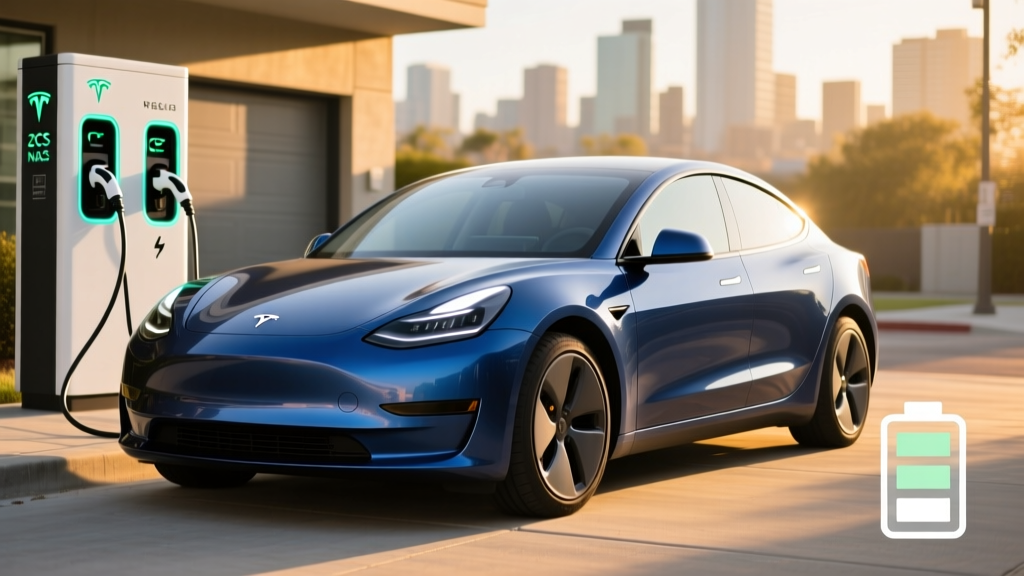
If you've seen headlines asking did Trump ban Tesla, the short answer is no. No executive order, piece of legislation, or regulatory action during Donald Trump's second term has banned Tesla, its vehicles, or its charging network. Tesla continues to manufacture, sell, and service vehicles in the United States, and the Supercharger network remains the largest DC fast-charging ecosystem in North America.
What has changed significantly by 2026 is the policy environment surrounding Tesla and every other automaker selling electric vehicles. Federal EV incentives, emissions regulations, and tariff structures have shifted — and those shifts have real consequences for what Tesla models cost, where they qualify for tax credits, and how competitive they are against a growing field of rivals. This article separates the internet rumors from the regulatory reality, then delivers a complete, data-driven review of Tesla's highest-volume vehicle: the 2026 Tesla Model Y.
The Policy Reality: What Actually Changed for Tesla in 2025–2026
The rumor that Trump "banned" Tesla appears to stem from conflating several real policy actions with a fictional prohibition. Here is what actually happened:
- Federal EV tax credit restructuring: The second Trump administration moved to phase down the §30D new clean vehicle credit, tightening battery-sourcing and critical-mineral requirements that affect every automaker, including Tesla. As of early 2026, the credit remains available but with stricter eligibility rules than in 2023–2024.
- Emissions standard rollbacks: EPA tailpipe standards were relaxed, reducing the regulatory pressure that pushed legacy automakers toward electrification. This indirectly helps Tesla by slowing competitor EV launches.
- Tariff adjustments: Tariffs on imported battery cells and critical minerals (particularly from China) increased costs for all EV manufacturers. Tesla's vertically integrated supply chain and LFP battery partnerships were not immune.
- No ban, no sales restriction, no manufacturing prohibition: Tesla's Fremont, Austin, and Nevada facilities operate normally. Tesla vehicles remain legal to purchase, register, and drive in all 50 states.
The practical takeaway: Tesla isn't banned, but the financial tailwinds that made EVs cheaper for buyers have weakened. That makes understanding the actual cost, range, and value of a Tesla more important than ever — which brings us to the 2026 Model Y.
2026 Tesla Model Y: Quick Verdict
The refreshed Model Y (internally dubbed "Juniper") carries over the platform Tesla introduced in early 2025, with incremental software and efficiency updates for the 2026 model year. It remains the best-selling EV in the United States and one of the best-selling vehicles of any powertrain globally. The Long Range AWD variant is the volume trim and the one most buyers should consider. The Performance trim adds meaningful acceleration but sacrifices some range and ride comfort.
| Spec | Model Y Long Range AWD | Model Y Performance |
|---|---|---|
| EPA Range | 320 miles | 295 miles |
| Battery (usable) | 78.1 kWh, NMC | 78.1 kWh, NMC |
| Drivetrain | Dual-motor AWD | Dual-motor AWD |
| Horsepower | 384 hp | 456 hp |
| 0–60 mph | 4.8 sec | 3.5 sec |
| Peak DC Charge Rate | 250 kW | 250 kW |
| 10–80% DC Fast Charge | ~25 min | ~25 min |
| Level 2 Home Charging | 11.5 kW (~44 mi/hr) | 11.5 kW (~44 mi/hr) |
| MPGe (combined) | 122 MPGe | 111 MPGe |
| Efficiency | 27 kWh/100 mi | 30 kWh/100 mi |
| Base MSRP | $47,990 | $52,490 |
| Battery Warranty | 8 yr / 120,000 mi | 8 yr / 120,000 mi |
Source: fueleconomy.gov and Tesla's 2026 specifications.
Real-World Range: What the EPA Number Doesn't Tell You
EPA Estimated: 320 miles (Long Range AWD) / 295 miles (Performance)
Real-World Expectation: 260–290 miles at sustained highway speeds (70–80 mph); 220–250 miles in freezing temperatures with cabin heat; 300+ miles in mild city/suburban driving with regen braking.
Tesla's EPA range figures are among the more achievable in the industry — the company's thermal management system and heat pump give it an advantage over competitors that still rely on resistive cabin heating. But physics is physics: at 75 mph on a flat interstate in 40°F weather, expect roughly 250–265 miles before you need to stop. In the upper Midwest or Mountain West during January, plan for 30–40% range reduction from the EPA sticker, especially on trips that start with a cold-soaked battery.
The Model Y's onboard navigation accounts for elevation, temperature, and traffic when estimating arrival state-of-charge (SoC), and in our experience it is accurate within 2–3 percentage points on trips over 100 miles. This is one of Tesla's enduring software advantages over legacy OEMs whose range estimators are less dynamic.
Charging Speed: DC Fast Charging and Home Setup
Charging remains one of Tesla's strongest competitive moats. The Supercharger network exceeds 6,500 stations and 65,000 individual stalls in North America as of 2026, and with NACS becoming the industry standard connector, non-Tesla EVs now share the network — which in some high-traffic corridors has increased wait times.
| Charging Level | Power | Rate | Miles Added |
|---|---|---|---|
| Level 1 (120V household) | ~1.4 kW | Very slow | ~4–5 mi/hr |
| Level 2 (240V, 48A Wall Connector) | 11.5 kW | Standard home | ~44 mi/hr |
| DC Fast (V3 Supercharger) | Peak 250 kW | 10–80% in ~25 min | ~170 mi in 15 min |
| DC Fast (V4 Supercharger) | Peak 250 kW* | Similar curve | ~170 mi in 15 min |
*V4 Supercharger cabinets can deliver up to 350 kW to compatible vehicles, but the 2026 Model Y's architecture caps at 250 kW.
Charging curve reality: The Model Y peaks at 250 kW only between roughly 10–25% SoC. From 25–50%, expect 150–175 kW; from 50–80%, roughly 90–120 kW. Above 80%, charging slows dramatically to protect the NMC cells — a 10–90% charge takes approximately 40 minutes, not much less than a 10–80% charge. For road trips, plan stops around the 10–80% window to minimize time at the stall.
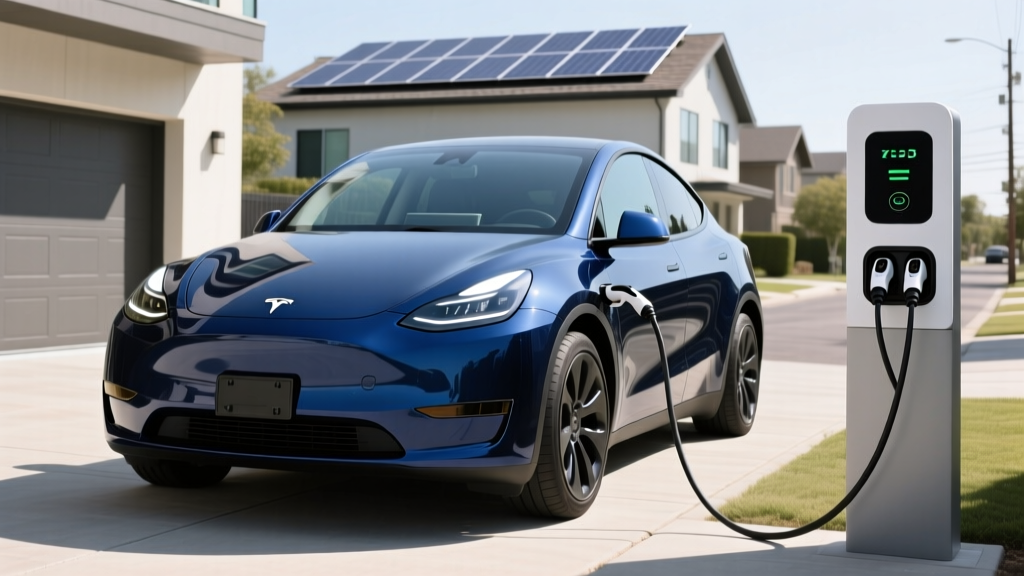
Home charging: A Tesla Wall Connector on a 60A circuit (48A continuous) delivers the full 11.5 kW the Model Y can accept. Expect to pay $800–$2,000 for professional installation depending on panel proximity and whether your home needs a service upgrade from 100A to 200A. A full overnight charge from 20% to 100% takes roughly 7–8 hours.
Performance, Ride, and Daily Drivability
The Long Range AWD's 4.8-second 0–60 time is brisk by any standard and more than sufficient for highway merging, passing, and the occasional on-ramp sprint. The Performance trim's 3.5-second run is genuinely quick, rivaling sports sedans at twice the price. Both trims use Tesla's dual-motor setup with independent front and rear motors for torque vectoring and all-weather traction.
The Juniper refresh significantly improved ride quality over the pre-2025 Model Y. Revised damping, acoustic glass, and additional insulation reduce road noise and harshness to levels competitive with the Hyundai Ioniq 5 and BMW iX3. The steering remains quick but somewhat numb — a characteristic Tesla trait that driving enthusiasts may find less engaging than a Porsche Macan Electric or even a Ford Mustang Mach-E GT.
Cargo and passenger space:
- Rear cargo (seats up): 30.2 cu ft
- Rear cargo (seats folded): 72.1 cu ft
- Front trunk (frunk): 4.1 cu ft
- Rear legroom: 41.6 inches
- Front headroom: 41.0 inches
These dimensions comfortably accommodate two adults and two children on long trips with luggage, or a week's groceries for a family of four. The flat load floor and power liftgate make the cargo area highly practical.
Pricing, Trims, and Federal Tax Credit Eligibility
| Trim | Base MSRP | Destination | As-Tested Typical |
|---|---|---|---|
| Long Range AWD | $47,990 | $1,390 | $49,380 |
| Performance | $52,490 | $1,390 | $54,880 |
Does the 2026 Model Y qualify for the §30D federal EV tax credit? This is where the 2025–2026 policy shifts matter most. Under current IRS rules, the §30D credit offers up to $7,500, split into two halves:
- $3,750 if the battery meets critical-mineral sourcing requirements
- $3,750 if the battery meets battery-component manufacturing requirements
As of the 2026 model year, the Model Long Range AWD with its NMC battery sourced through Tesla's supply chain qualifies for $3,750 (the critical-minerals half). The battery-component half is affected by the foreign entity of concern (FEOC) restrictions that tightened in 2025. Combined with the point-of-sale transfer option, a qualified buyer can reduce the effective purchase price to approximately $45,630 for the Long Range AWD.
Eligibility requirements (IRS §30D):
- Buyer AGI must not exceed $150,000 (single), $225,000 (head of household), or $300,000 (joint)
- Vehicle MSRP must not exceed $80,000 for SUVs/trucks (Model Y qualifies)
- Battery sourcing and FEOC compliance (partial credit currently for Model Y)
- Vehicle must be new, placed in service for personal use, and used predominantly in the U.S.
Tax rules change frequently. Confirm your eligibility at irs.gov or consult a tax professional before purchasing.
Tech, Driver Assistance, and Standout Features
The Model Y's 15.4-inch center touchscreen remains the primary interface for virtually all vehicle functions — climate, navigation, media, vehicle settings, and even the glovebox release. There is no instrument cluster; speed and navigation info appear in the upper corner of the main display. This minimalist approach continues to polarize: tech-forward buyers love it, while traditionalists find it distracting.
Standard driver assistance (Tesla Autopilot): Includes Traffic-Aware Cruise Control and Autosteer (lane centering) on highways. This is a Level 2 SAE system — the driver must keep hands on the wheel and eyes on the road at all times. It is not self-driving.
Full Self-Driving (Supervised): Available as a $8,000 one-time purchase or $99/month subscription. FSD adds automated lane changes, traffic light/stop sign recognition, and city-street navigation. Despite the name, it remains a Level 2 system requiring continuous driver supervision. Tesla's FSD v13 software shows meaningful improvement in urban scenarios, but disengagements still occur and the driver bears full legal responsibility.
Notable tech highlights:
- Over-the-air (OTA) updates that add features and refine performance post-purchase
- Sentry Mode dashcam recording with cloud alerts
- Dog Mode, Camp Mode, and Theater Mode for lifestyle flexibility
- Integrated trip planner with real-time Supercharger availability
Notable drawbacks:
- No physical buttons for climate or volume — everything routes through the screen
- Turn-signal stalks removed in the Juniper refresh; signals are now on the steering wheel (controversial)
- Build quality, while improved, still shows occasional panel-gap inconsistency
- Insurance costs tend to run 15–25% higher than comparable non-Tesla SUVs
Pros and Cons at a Glance
Pros
- Access to the Supercharger network — still the most reliable DC fast-charging ecosystem
- Class-leading efficiency (27 kWh/100 mi) means lower electricity cost per mile
- OTA updates continuously improve the vehicle
- Strong resale value relative to most EV competitors
- Spacious cargo area and practical family layout
- Heat pump standard — excellent cold-weather range retention
Cons
- Partial §30D tax credit ($3,750 vs. full $7,500) due to battery sourcing rules
- Screen-centric controls polarize and can distract
- Steering-wheel turn signals take significant adaptation
- Insurance premiums above segment average
- Increasing competition from Hyundai, Kia, Ford, and BMW in key markets
- NACS network opening to other brands increases Supercharger congestion in some corridors
Who Should Buy the 2026 Tesla Model Y?
Best for: Commuters with home charging access, tech-savvy families who road-trip 2–4 times per year, and buyers who value the Supercharger network's reliability above all else. The Long Range AWD trim hits the sweet spot of range, price, and practicality.
Consider alternatives if: You want physical controls and a traditional instrument cluster (look at the Hyundai Ioniq 5 or Kia EV6), you need full $7,500 tax credit eligibility (check the Ford Mustang Mach-E or Chevrolet Equinox EV), or you prioritize ride luxury over software sophistication (the BMW iX3 or Genesis GV70 Electrified may suit better).
Bottom line: Trump did not ban Tesla. The 2026 Model Y remains a highly capable, efficient, and practical electric SUV. The policy environment has shifted — particularly around tax credits and tariffs — but the vehicle itself has only gotten better with the Juniper refresh. If you have reliable home charging and your income falls within §30D limits, the Model Y Long Range AWD at roughly $45,600 after the partial credit is a compelling package that's hard to beat on total cost of ownership.
Frequently Asked Questions
Did Trump ban Tesla or make it illegal to buy?
No. No ban on Tesla exists. Tesla continues to manufacture and sell vehicles in the United States. Policy changes under the second Trump administration have affected EV tax credits, emissions regulations, and tariffs, but none of these constitute a ban on the company or its products.
What is the real-world range of the 2026 Tesla Model Y?
The EPA rates the Long Range AWD at 320 miles. In real-world highway driving at 70–80 mph, expect 260–290 miles. In freezing temperatures, expect 220–250 miles. City driving with regenerative braking can exceed 300 miles.
How fast does the Model Y charge at home and on the road?
On a Level 2 home charger (11.5 kW), the Model Y adds approximately 44 miles of range per hour, or a full charge in about 7–8 hours. On a V3 Supercharger at 250 kW peak, a 10–80% charge takes roughly 25 minutes.
Does the 2026 Model Y qualify for the federal EV tax credit?
It qualifies for a partial credit of $3,750 under current §30D rules (the critical-minerals half). The battery-component half is affected by FEOC sourcing restrictions. Buyer income caps and MSRP limits also apply. Verify at irs.gov before purchasing.
Is the Tesla Model Y worth buying over the Hyundai Ioniq 5 or Ford Mach-E?
The Model Y wins on efficiency, Supercharger access, and software integration. The Ioniq 5 offers faster 800V charging (10–80% in ~18 minutes), physical controls, and potentially full tax credit eligibility. The Mach-E offers a more traditional driving experience. Test-drive all three before deciding.
What is the biggest risk of buying a Tesla in 2026?
The primary risks are reduced tax credit availability (lowering the effective discount versus competitors), rising insurance costs, and increasing Supercharger congestion as non-Tesla EVs join the NACS network. Tesla's long-term software support and resale value remain strong mitigators.