Tesla remains the most recognizable electric-vehicle brand in America, but the people buying Teslas in 2026 look different from the early-adopter crowd of 2018. As the lineup has matured around the Model Y crossover and the refreshed Model 3 sedan — and as competitors from Hyundai, Ford, BMW, and Rivian have flooded the market — Tesla's buyer base has broadened, shifted, and in some ways surprised even industry analysts. This profile digs into the demographics of Tesla owners today, anchored by the hard vehicle specs that drive purchase decisions: range, charging speed, pricing, and tax-credit eligibility.
The 2026 Tesla Lineup at a Glance
Before mapping who buys Teslas, it helps to see what they're buying. Tesla's 2026 consumer lineup centers on two high-volume vehicles, with the Cybertruck and Model S/X occupying niche roles.
| Spec | Model 3 Long Range AWD | Model Y Long Range AWD | Model Y (RWD base) |
|---|---|---|---|
| EPA Range | 341 mi | 320 mi | 260 mi |
| Battery (usable) | ~75 kWh (NMC) | ~75 kWh (NMC) | ~60 kWh (LFP) |
| Drivetrain | Dual-motor AWD | Dual-motor AWD | Single-motor RWD |
| 0–60 mph | 4.2 sec | 4.8 sec | 6.6 sec |
| Horsepower | 346 hp | 384 hp | 295 hp |
| Max DC Fast Charge | 250 kW | 250 kW | 170 kW |
| 10–80% DCFC Time | ~25 min | ~25 min | ~30 min |
| Level 2 Home Charge | 11.5 kW (~44 mi/hr) | 11.5 kW (~44 mi/hr) | 7.7 kW (~30 mi/hr) |
| MPGe (combined) | 132 MPGe | 122 MPGe | 130 MPGe |
| Efficiency | 26 kWh/100 mi | 28 kWh/100 mi | 26 kWh/100 mi |
| Cargo Volume | 23 cu ft (rear) / 65 cu ft (folded) | 30 cu ft (rear) / 76 cu ft (folded) | 30 cu ft / 76 cu ft |
| Rear Legroom | 35.2 in | 36.0 in | 36.0 in |
| Base MSRP | $47,740 | $48,990 | $42,990 |
| Battery Warranty | 8 yr / 120,000 mi | 8 yr / 120,000 mi | 8 yr / 100,000 mi |
Source: fueleconomy.gov and Tesla.com official specifications.
Who Is Buying Teslas in 2026? The Data
Multiple data points — from registration records analyzed by firms like S&P Global Mobility, to survey data from Edmunds and Experian Automotive — paint a consistent picture of the demographics of Tesla owners in the United States.
Income and Affordability
The median household income of a new Tesla buyer has trended downward from roughly $175,000 in 2020 to approximately $120,000–$135,000 in 2025–2026. This reflects price cuts Tesla enacted across 2023–2025, the introduction of the base RWD Model Y, and the impact of the federal §30D tax credit (up to $7,500 at point of sale) making the effective entry price closer to $35,500 for a base Model Y RWD. Still, Tesla buyers earn well above the U.S. median household income of ~$80,000. The brand has moved from "luxury-only" to "upper-middle-class accessible," but it has not yet become a mass-market budget option.
Age and Household Composition
The average Tesla buyer age sits in the low-to-mid 40s — younger than traditional luxury-brand buyers (BMW and Mercedes-Benz average closer to 50–55) but older than the stereotypical "20-something tech bro" image. The largest buyer cohort is 35–49, typically dual-income households with children. The Model Y's 30 cu ft of rear cargo space and available 7-seat configuration (for smaller children) make it a practical family hauler, which is a primary reason it has been the best-selling vehicle — not just EV — in several U.S. metro markets.
Geography: Where Tesla Owners Live
California still leads in Tesla registrations by a wide margin, followed by Texas, Florida, New York, and Washington. However, the fastest growth in Tesla ownership from 2023–2026 has occurred in Sun Belt suburbs (Austin, Phoenix, Nashville, Charlotte) and in states with expanding Supercharger infrastructure. Rural Tesla ownership remains low — the demographics of Tesla owners skew heavily suburban and urban, where home Level 2 charging is feasible and daily commutes align with the Model 3/Y's range envelope.
Political and Psychographic Shifts
Perhaps the most discussed demographic shift involves political affiliation and brand perception. Historically, Tesla buyers skewed progressive and coastal. Since 2024, brand sentiment surveys (from Morning Consult and others) have shown a widening gap: conservative-leaning buyers report lower purchase intent for Tesla, while the core buyer base remains moderate-to-liberal, tech-forward, and environmentally motivated. Whether this translates to long-term market-share erosion or stabilizes is an open question for 2026–2027.
Real-World Range: What Tesla Owners Actually Experience
EPA sticker: 320 miles. In real-world highway driving at 70–75 mph in moderate temperatures (60–80°F), expect 270–290 miles. In cold weather (below 32°F), range drops to approximately 230–260 miles due to cabin heating demands and reduced battery efficiency. City driving with regenerative braking can match or slightly exceed the EPA figure at 310–330 miles.
Tesla's range estimates are among the most accurate in the industry — the company tends not to over-promise — but physics still applies. The NMC chemistry in the Long Range models delivers strong energy density but is more temperature-sensitive than LFP. Owners in northern climates routinely report 15–25% range reduction in winter, a pattern consistent across all NMC-based EVs. The LFP-equipped base Model Y RWD suffers slightly less cold-weather degradation (~10–18% loss) but starts with a lower EPA ceiling of 260 miles.
For context, the EPA's official Model Y page lists combined efficiency at 28 kWh/100 mi for the Long Range AWD — one of the most efficient figures in the mid-size electric crossover segment, rivaling the Hyundai Ioniq 5 and beating the Ford Mustang Mach-E.
Charging Speed and Infrastructure: A Core Tesla Advantage
| Level | Power / Rate | Miles Added | Use Case |
|---|---|---|---|
| Level 1 (120V household) | ~1.4 kW | ~3–4 mi/hr | Overnight trickle; emergency |
| Level 2 (240V home, 48A) | 11.5 kW | ~44 mi/hr | Daily home charging (Long Range) |
| Level 2 (240V home, 32A) | 7.7 kW | ~30 mi/hr | Daily home charging (RWD base) |
| DC Fast Charge (Supercharger V3) | 250 kW peak | ~200 mi in 15 min | Road trips; 10–80% in ~25 min |
| DC Fast Charge (RWD base) | 170 kW peak | ~150 mi in 15 min | 10–80% in ~30 min |
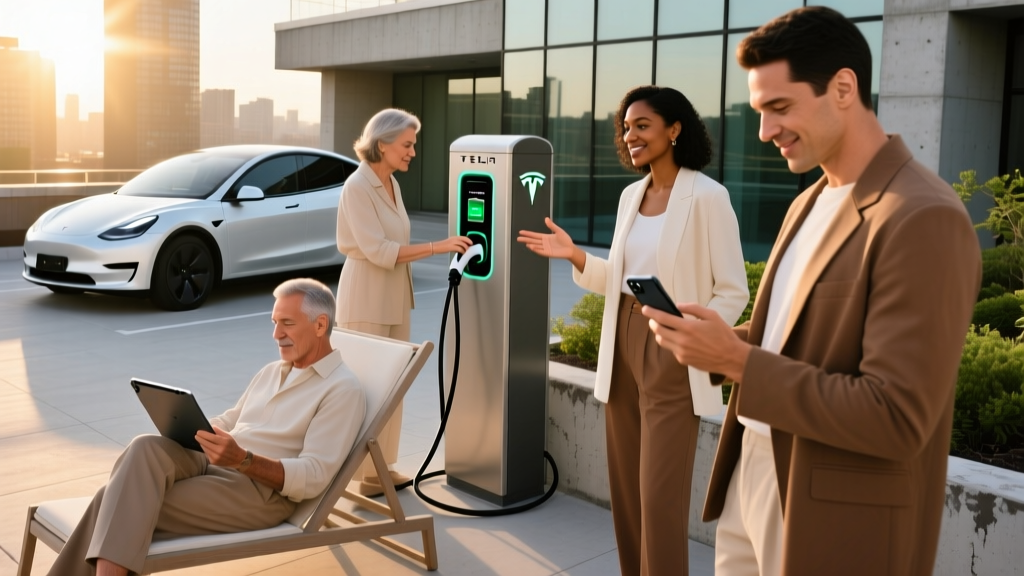
One of the defining reasons Tesla dominates EV ownership demographics is the Supercharger network. With over 25,000 Supercharger stalls in North America — and an increasing number open to NACS-equipped non-Tesla EVs — Tesla owners enjoy the most reliable DC fast-charging experience in the industry. The 250 kW peak rate on Long Range models is not sustained across the entire charge session; like all EVs, Teslas taper charging speed above ~60% SoC and more aggressively above 80%. A typical 10–80% session takes roughly 25 minutes at a V3 Supercharger, but pulling into a stall at 5% SoC and charging to 90% will take closer to 40–45 minutes due to the taper curve.
For home charging, Tesla's Wall Connector ($420) is a strong Level 2 option, but any J3472/NACS-compatible Level 2 station at 48 amps will deliver the same 11.5 kW rate. Home installation costs range from $500 (simple 240V outlet near the panel) to $2,500+ if a panel upgrade to 200A service is needed.
Pricing, Tax Credits, and True Cost of Ownership
| Trim | Base MSRP | Est. §30D Credit | Effective Price |
|---|---|---|---|
| Model Y RWD | $42,990 | Up to $7,500* | ~$35,490 |
| Model Y Long Range AWD | $48,990 | Up to $7,500* | ~$41,490 |
| Model 3 Long Range AWD | $47,740 | Up to $7,500* | ~$40,240 |
| Model 3 Performance | $54,990 | Up to $7,500* | ~$47,490 |
*Federal §30D tax credit eligibility is not automatic. Per IRS rules, buyers must meet income caps ($150,000 single / $300,000 joint modified AGI), the vehicle must stay under MSRP caps ($55,000 for sedans like the Model 3; $80,000 for SUVs like the Model Y), and battery components and critical minerals must meet domestic-sourcing thresholds that tighten annually. As of 2026, both the Model 3 and Model Y are assembled in the U.S. (Fremont, CA, and Austin, TX), which helps with domestic-content requirements, but critical-mineral sourcing rules may limit the full $7,500 for some configurations. The credit can be transferred to the dealer at point of sale, reducing the purchase price directly. Always verify eligibility with a tax professional before purchasing.
5-Year Ownership Cost Snapshot
Beyond the sticker price, Tesla ownership costs are shaped by:
- Electricity vs. fuel: At the U.S. average of $0.16/kWh and 28 kWh/100 mi (Model Y LR), fueling costs ~$4.48 per 100 miles — roughly 60% less than a comparable gas crossover at $11–13 per 100 miles.
- Insurance: Tesla insurance premiums run 15–30% higher than segment averages. Tesla's own insurance product (available in most states) uses real-time driving data and can be competitive for clean-record drivers.
- Maintenance: No oil changes, no transmission fluid, minimal brake wear (regen braking). Tesla recommends cabin air filter replacement every 2–3 years and brake fluid checks every 2 years. Annual maintenance costs average $200–$400.
- Depreciation: Tesla resale values have softened since 2023 due to price cuts on new models flooding the used market. Expect ~45–55% value retention at 5 years, below the historical EV average but improving as the market stabilizes.
Tech, Driver Assistance, and the Interior Experience
Tesla's interior philosophy remains minimalist: a single 15.4-inch center touchscreen handles navigation, media, climate, vehicle settings, and even the glovebox release. There is no instrument cluster — speed and navigation appear on the left third of the main screen. The refreshed Model 3 ("Highland") and Model Y ("Juniper") added ventilated front seats, ambient lighting, a rear passenger screen, and improved noise insulation, addressing long-standing comfort complaints.
Autopilot and Full Self-Driving (Supervised)
Tesla Autopilot and Full Self-Driving (Supervised) are Level 2 driver-assistance systems. They can steer, accelerate, and brake within lanes and can navigate highway on-ramps and interchanges. However, the driver must remain fully engaged — hands on the wheel (or torque-applied), eyes on the road. Tesla monitors attention via a cabin camera. This is not self-driving. Only Level 4 services like Waymo operate without a human driver.
FSD (Supervised) costs $8,000 as a one-time purchase or $99/month as a subscription (2026 pricing). It adds automated lane changes, traffic-light and stop-sign recognition, and city-street navigation. Real-world performance has improved substantially through 2025 neural-network updates, but it still requires active supervision, particularly in construction zones, unmapped areas, and inclement weather. Most Tesla owners use basic Autopilot (included free) for highway cruising and leave FSD to the tech-enthusiast minority.
- Drive without a licensed, attentive driver in the seat
- Handle all weather conditions (heavy rain, snow, fog impair cameras)
- Replace driver judgment at complex intersections or construction zones
- Eliminate liability — the driver remains legally responsible for the vehicle
Pros, Cons, and Who Should Buy a Tesla
Pros
- Best-in-class Supercharger network reliability and coverage
- Industry-leading efficiency (kWh/100 mi) in both Model 3 and Model Y
- Over-the-air updates continuously add features post-purchase
- Strong performance even in base trims (0–60 in 4.8 sec for Model Y LR)
- Class-leading cargo space in Model Y (76 cu ft with seats folded)
- Point-of-sale §30D credit reduces effective price to ~$35K–$41K
Cons
- Minimalist interior not to everyone's taste; no physical buttons or stalks (turn signals on steering wheel in refreshed models)
- FSD (Supervised) costs extra and remains Level 2 — not autonomous
- Insurance premiums run 15–30% above segment average
- Brand perception increasingly polarized, affecting resale and social dynamics in some markets
- No Apple CarPlay or Android Auto — Tesla's native infotainment is the only option
- Ride quality on sport trims can be firm on rough roads
Who a Tesla Suits Best
Suburban families (Model Y): The Model Y's cargo volume, available 7-seat option, 320-mile range, and fast Supercharger access make it an excellent family road-trip vehicle. If you have a garage or driveway for Level 2 home charging, the Model Y is hard to beat for daily school runs plus weekend trips.
Tech-forward commuters (Model 3): If you value efficiency (132 MPGe combined), responsive highway driving, and cutting-edge software, the Model 3 Long Range is a compelling daily driver — especially if your commute is under 80 miles round-trip and you can charge at home.
Road-trip enthusiasts: Tesla's Supercharger network remains the gold standard for long-distance EV travel. If you drive 500+ miles regularly and want the fewest charging headaches, Tesla still has an infrastructure edge over CCS-dependent rivals.
Not ideal for: Buyers who prefer traditional luxury interiors, physical controls, or who live in apartments without charging access. Also not ideal for towing — the Model Y is rated for 3,500 lbs, which is adequate for a small trailer but not a boat or large camper.
Tesla vs. Key Competitors: Is It Still Worth It?
The EV landscape in 2026 is far more competitive than it was in 2022. Key rivals include:
- Hyundai Ioniq 5 / Kia EV6: Similar price range, 800V architecture enabling 10–80% DC charges in ~18 minutes (faster than Tesla's ~25 min), and now gaining NACS compatibility for Supercharger access. Slightly less range (305 mi EPA for Ioniq 5 LR) but faster peak charging.
- Ford Mustang Mach-E: Competitive range and pricing, more traditional interior, BlueCruise hands-free highway driving (also Level 2). Supercharger access via adapter.
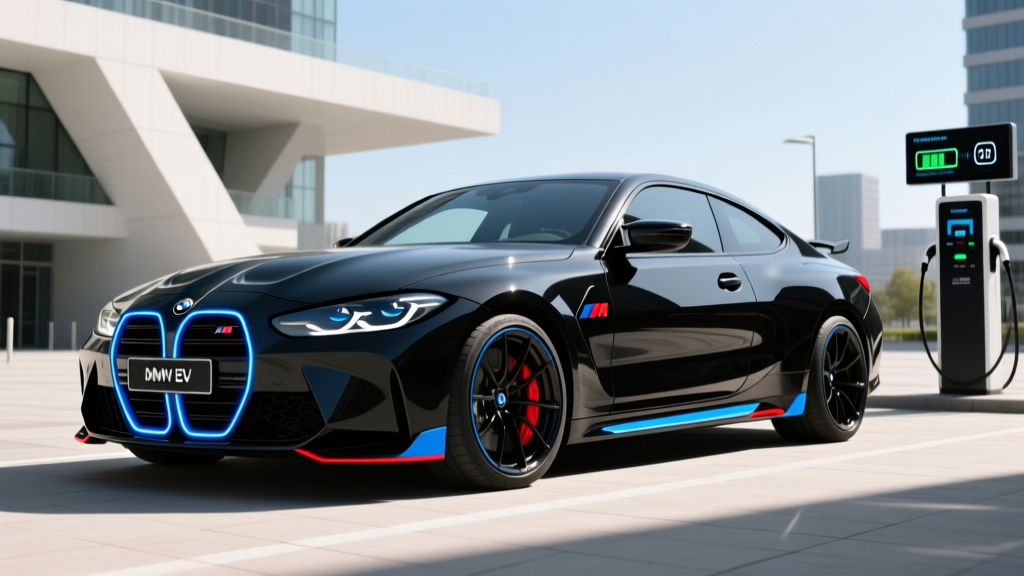
- BMW iX: More luxurious and refined interior, but $70K+ starting price puts it in a different demographic tier.
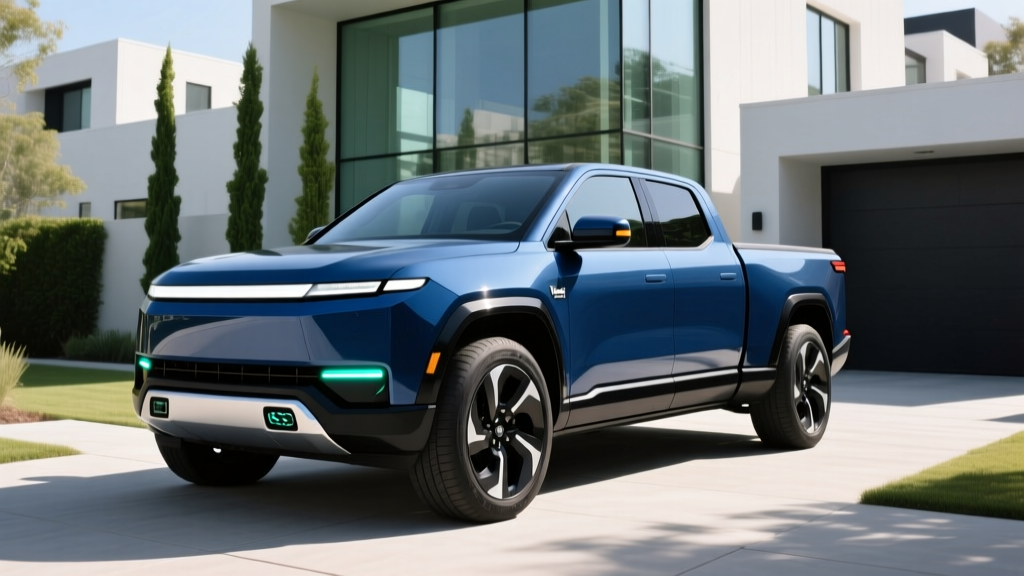
- Rivian R1S: Three-row family SUV with genuine off-road capability, but starts at ~$75K — targeting a wealthier demographic than the typical Tesla buyer.
- Supercharger reliability is your top priority for road trips
- You want the best software/OTA update experience in the EV market
- You value efficiency and range per dollar above interior luxury
- You're comfortable with a minimalist, screen-centric interior
- You want faster peak DC charging (Hyundai/Kia 800V platforms)
- You prefer physical buttons, traditional luxury materials, or Apple CarPlay
- You need three full-size rows of seating (Rivian R1S, Kia EV9)
- Brand perception matters in your social or professional circles
Frequently Asked Questions
What is the real-world range of a Tesla Model Y?
The 2026 Model Y Long Range AWD carries an EPA rating of 320 miles. In real-world highway driving at 70+ mph, expect 270–290 miles. In freezing temperatures, plan for 230–260 miles. The base RWD Model Y is rated at 260 miles EPA and delivers ~210–235 miles in mixed real-world use.
How fast does a Tesla charge at home and on the road?
At home on a 240V Level 2 charger at 48 amps, a Long Range Tesla adds ~44 miles of range per hour — a full overnight charge easily covers any daily commute. On a V3 Supercharger, 10–80% takes ~25 minutes at up to 250 kW. The base RWD model peaks at 170 kW and takes ~30 minutes for 10–80%.
How much does a Tesla cost after the federal tax credit?
The base Model Y RWD starts at $42,990 and can drop to ~$35,490 if you qualify for the full $7,500 §30D credit. The Model Y Long Range AWD goes from $48,990 to ~$41,490. Eligibility depends on your income (under $300K joint AGI), the vehicle's MSRP (under the cap), and battery-sourcing requirements. Verify with a tax professional.
Does the Tesla Model Y qualify for the $7,500 federal EV tax credit?
As of 2026, both the Model Y and Model 3 are assembled in U.S. factories and generally meet domestic-content requirements. However, the full $7,500 credit depends on critical-mineral sourcing thresholds that tighten each year, plus buyer income caps. The credit can be applied at point of sale through a participating dealer. Check the IRS Clean Vehicle Credit page for the latest rules.
What are the demographics of Tesla owners in terms of income?
The median household income of a new Tesla buyer in 2025–2026 is approximately $120,000–$135,000 — down from ~$175,000 in 2020 due to price cuts and the introduction of lower-cost trims. Tesla buyers still earn significantly above the U.S. median (~$80,000) but the brand has moved from luxury-only to upper-middle-class accessible.
Is Tesla Autopilot or FSD actually self-driving?
No. Both Autopilot and Full Self-Driving (Supervised) are SAE Level 2 driver-assistance systems. The driver must remain fully attentive, with hands on the wheel and eyes on the road. Tesla monitors attention via cabin camera. Only Level 4 services like Waymo operate without a human driver in defined areas.
How does Tesla's warranty compare?
Tesla covers the battery and drive unit for 8 years / 120,000 miles on Long Range models (8 yr / 100,000 mi on RWD base), with a minimum 70% capacity retention guarantee over that period. The vehicle limited warranty is 4 years / 50,000 miles. This is competitive with the industry standard, though some rivals (Hyundai/Kia) offer 10-year/100,000-mile powertrain coverage.