Why Delta Electronics Matters to Your Tesla
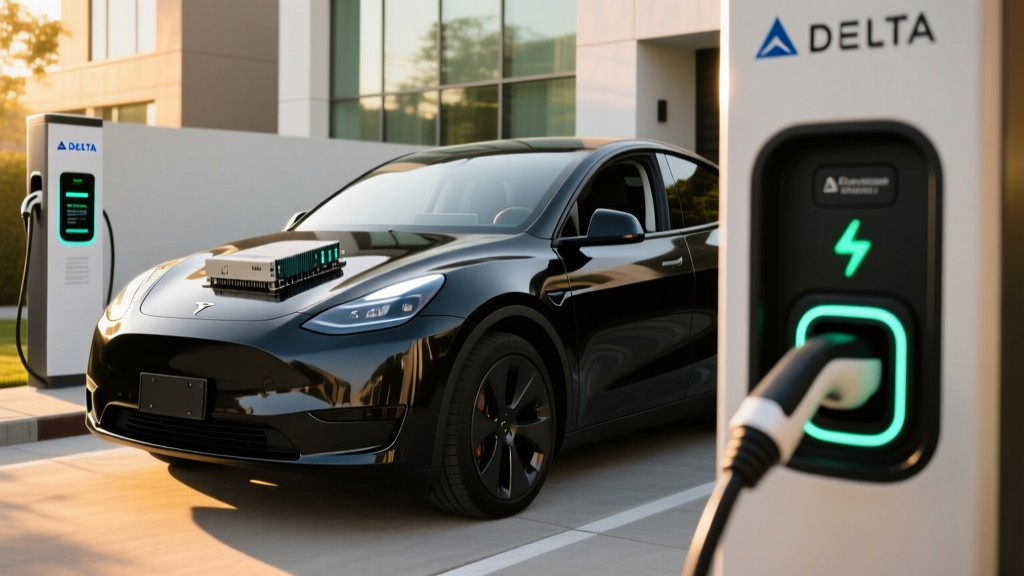
If you've ever wondered who builds the power electronics inside a Tesla, the answer often traces back to Delta Electronics, one of the world's largest power-management companies and a confirmed Tesla supplier. Based in Taiwan with manufacturing across Asia, Europe, and the Americas, Delta Electronics supplies Tesla with critical components including onboard chargers, DC-DC converters, and power modules used across the Model 3, Model Y, and increasingly the Cybertruck platform.
For EV buyers, understanding the Delta Electronics–Tesla supplier relationship matters because these components directly affect how fast your car charges at home, how efficiently it converts battery energy to motion, and how reliable the powertrain proves over 100,000+ miles. Delta's expertise in high-efficiency power conversion (often exceeding 96% efficiency in onboard charger units) is one reason Tesla vehicles consistently rank among the most energy-efficient EVs on the market.
This article examines the Delta Electronics–Tesla supply chain connection and pairs it with a comprehensive 2026 Tesla Model Y review — the vehicle where Delta's components see the highest volume deployment.
2026 Tesla Model Y: Full Spec Breakdown
The 2026 Model Y received a significant refresh (internally called "Juniper") that updated the exterior, interior, suspension tuning, and powertrain efficiency. Here's the complete specification sheet for the two primary trims available in the US market.
| Specification | Long Range AWD | Performance AWD |
|---|---|---|
| EPA Estimated Range | 320 miles | 293 miles |
| Battery Capacity (usable) | ~78 kWh (NMC) | ~78 kWh (NMC) |
| Drivetrain | Dual Motor AWD | Dual Motor AWD |
| Horsepower | 384 hp | 456 hp |
| 0–60 mph | 4.8 seconds | 3.5 seconds |
| Top Speed | 125 mph | 155 mph |
| Max DC Fast Charge Rate | 250 kW | 250 kW |
| 10–80% DC Fast Charge | ~25 minutes | ~25 minutes |
| Level 2 Home Charge Rate | 11.5 kW (44 mi/hr) | 11.5 kW (44 mi/hr) |
| MPGe (combined) | 122 MPGe | 111 MPGe |
| Energy Consumption | 28 kWh/100 mi | 30 kWh/100 mi |
| Cargo Volume (rear seats up) | 30.2 cu ft | 30.2 cu ft |
| Cargo Volume (seats folded) | 72.1 cu ft | 72.1 cu ft |
| Rear Legroom | 40.5 in | 40.5 in |
| Base MSRP | $46,630 | $52,130 |
| Battery Warranty | 8 yr / 120,000 mi | 8 yr / 120,000 mi |
Real-World Range: What the EPA Number Doesn't Tell You
EPA Sticker: 320 miles (Long Range AWD)
Real-World Expectation: Plan for 270–290 miles on highway road trips at 70–75 mph. In cold weather (below 32°F), expect a 20–30% reduction, bringing usable range to roughly 220–255 miles depending on cabin heating demands and driving style. City driving with regenerative braking can match or slightly exceed the EPA figure.
Tesla's NMC (nickel manganese cobalt) battery pack in the 2026 Model Y holds approximately 78 kWh of usable energy. The pack uses a structural battery design where cells are bonded directly into the vehicle floor, improving rigidity and reducing weight. According to fueleconomy.gov, the Long Range AWD achieves 122 MPGe combined, which translates to roughly 3.5 miles per kWh — among the most efficient midsize electric SUVs available.
The Model Y's heat pump (standard on all trims) is a significant cold-weather advantage. Unlike resistive heaters that draw heavily from the battery, the heat pump scavenges ambient heat and waste heat from the drivetrain, reducing energy draw for cabin heating by up to 30% in moderate cold. On the Delta Electronics side, the onboard charger and DC-DC converter play a role in overall thermal management efficiency, as these components themselves generate heat that must be managed during fast charging and high-load driving.
Charging Speed: Home and DC Fast Charging
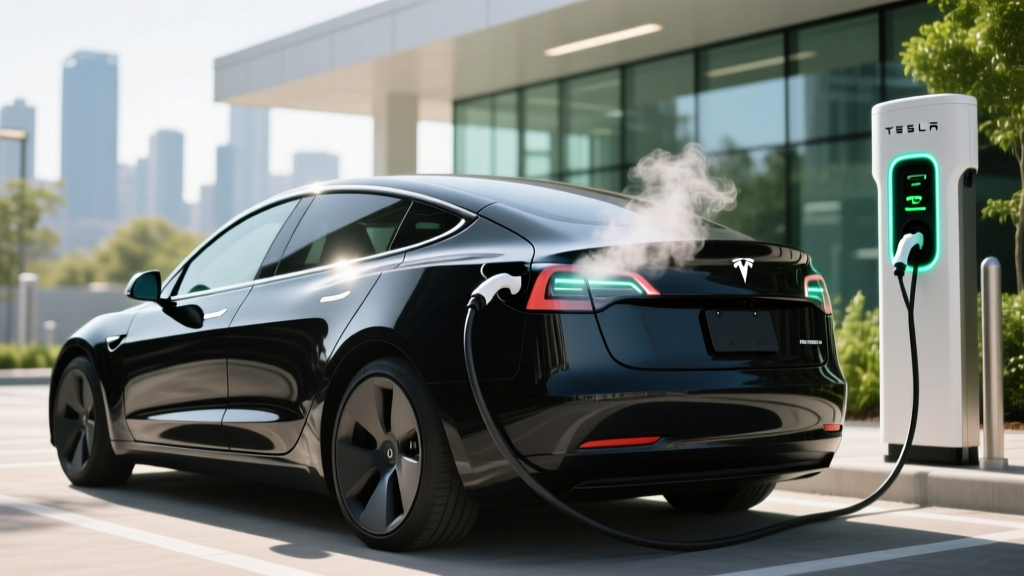
Charging speed remains one of the Model Y's strongest practical advantages, and this is where Delta Electronics' component quality is most visible to owners. The onboard charger — the device that converts AC power from your home outlet into DC power for the battery — is rated at 11.5 kW, meaning a full charge from empty on a Level 2 home charger takes roughly 7 hours.
| Charging Level | Power (kW) | Miles Added per Hour | Full Charge Time |
|---|---|---|---|
| Level 1 (120V standard outlet) | 1.4 kW | ~4 mi/hr | ~55 hours |
| Level 2 (240V, 48A home charger) | 11.5 kW | ~44 mi/hr | ~7 hours |
| DC Fast Charge (V3 Supercharger) | Up to 250 kW peak | Up to ~1,000 mi/hr (peak) | 10–80% in ~25 min |
| DC Fast Charge (V4 Supercharger) | Up to 250 kW peak | Up to ~1,000 mi/hr (peak) | 10–80% in ~25 min |
The 250 kW peak DC fast-charge rate is sustained only between approximately 10–30% State of Charge (SoC). The charge curve tapers progressively: expect ~180 kW from 30–50%, ~120 kW from 50–70%, and below 60 kW above 80%. This is why Tesla (and all experienced EV owners) recommend charging only to 80% on road trips — the last 20% can add 15–20 minutes to your stop.
Tesla's NACS (North American Charging Standard) connector is now the dominant charging standard in North America, with Ford, GM, Rivian, Hyundai, and most major automakers adopting it. The Model Y accesses the full Tesla Supercharger network — over 6,500 V3 and V4 stalls across the US — plus third-party networks using the included CCS adapter. Home charging with a Tesla Wall Connector (which Delta Electronics does not manufacture, though Delta supplies power modules used in various charging stations globally) provides the most convenient daily ownership experience.
Performance, Ride, and Daily Driving
The 2026 Juniper refresh brought meaningful improvements to ride quality. Tesla retuned the suspension with new dampers and revised bushings, reducing the harshness over sharp bumps that plagued pre-2025 models. The Long Range AWD's 384 hp and 4.8-second 0–60 time provide effortless highway merging and passing. The Performance trim's 456 hp and 3.5-second sprint is sports-car territory in a five-passenger SUV.
One-pedal driving via regenerative braking remains intuitive in the Model Y, though Tesla removed the driver-adjustable regen strength setting several years ago. The system recovers energy aggressively when you lift off the accelerator, allowing most daily driving without touching the brake pedal.
Autopilot and FSD (Supervised): Standard Autopilot includes Traffic-Aware Cruise Control and Autosteer (lane centering) on divided highways. The optional Full Self-Driving (Supervised) package ($8,000) adds automatic lane changes, navigation-guided on/off-ramp handling, and city-street stop-sign/traffic-light recognition. This is an SAE Level 2 system — the driver must remain fully attentive with hands on the wheel at all times. It is not autonomous driving.
Pricing, Trims, and Federal Tax Credit Eligibility
| Trim | Base MSRP | Destination | Est. Total | Federal §30D Credit | Net Cost (if eligible) |
|---|---|---|---|---|---|
| Long Range AWD | $46,630 | $1,390 | $48,020 | Up to $7,500* | ~$40,520 |
| Performance AWD | $52,130 | $1,390 | $53,520 | Up to $7,500* | ~$46,020 |
*Federal EV tax credit eligibility under IRS §30D depends on multiple factors that change annually. As of 2026, key requirements include:
- MSRP Cap: SUVs/vans/pickups must have an MSRP at or below $80,000 (both Model Y trims qualify)
- Buyer Income Cap: Modified AGI must not exceed $150,000 (single), $225,000 (head of household), or $300,000 (joint filing)
- Battery Sourcing: A percentage of critical minerals and battery components must be sourced from the US or free-trade-agreement countries — this requirement tightens each year, and eligibility can change mid-year
- Point-of-Sale Transfer: Eligible buyers can transfer the credit to the dealer at purchase, reducing the purchase price directly rather than waiting for a tax refund
- FEOC Restriction: Vehicles with battery components from Foreign Entities of Concern (certain Chinese manufacturers) may be disqualified
Always verify current eligibility on irs.gov or consult a tax professional before counting the credit into your budget. Tesla's website also maintains a real-time eligibility indicator at checkout.
Interior, Technology, and Cargo
The 2026 Model Y interior received a substantial upgrade with higher-quality materials, ventilated front seats (previously absent), ambient lighting, and a rear-seat touchscreen for climate and entertainment control. The minimalist design remains polarizing — there are no physical buttons for climate, mirrors, or glovebox; everything routes through the 15.4-inch central touchscreen.
Infotainment: Tesla's proprietary system includes native navigation with real-time Supercharger routing, Spotify/Apple Music integration, Netflix/YouTube streaming while parked, and a built-in web browser. There is no Apple CarPlay or Android Auto — a dealbreaker for some buyers.
Cargo space: 30.2 cubic feet behind the second row and 72.1 cubic feet with seats folded makes the Model Y competitive with midsize gas SUVs. The front trunk (frunk) adds 4.1 cubic feet for charging cables or a small bag. Rear legroom of 40.5 inches accommodates adults comfortably on longer trips.
Pros
- Class-leading Supercharger network access (6,500+ stalls)
- Excellent efficiency: 28 kWh/100 mi (Long Range)
- 250 kW DC fast charging with ~25 min 10–80% time
- Strong OTA updates add features post-purchase
- Heat pump standard for cold-weather efficiency
- Improved ride quality with Juniper suspension refresh
Cons
- No Apple CarPlay or Android Auto
- Touchscreen-only controls frustrate some drivers
- FSD (Supervised) remains Level 2 despite the name
- Insurance costs run 15–30% higher than comparable gas SUVs
- No adjustable regenerative braking strength
- Tax credit eligibility can change with sourcing rules
Delta Electronics' Role in the Model Y Supply Chain
Delta Electronics supplies several mission-critical power components to Tesla, though the company rarely receives public credit. Key contributions include:
- Onboard Charger (OBC): Converts AC grid power to DC for battery charging. Delta's high-efficiency designs (96%+) minimize energy loss and heat generation during Level 2 home charging.
- DC-DC Converter: Steps down the high-voltage traction battery (approximately 400V nominal) to 12V/16V for auxiliary systems — lights, infotainment, power windows, and the low-voltage battery.
- Power Modules for Superchargers: Delta is a known supplier of power electronics modules used in DC fast-charging infrastructure, including components that appear in Tesla Supercharger cabinets.
- Thermal Management Components: Power electronics generate significant heat; Delta's integrated designs help manage thermal loads across the powertrain.
For Tesla owners, these components operate invisibly but directly affect charging reliability, energy efficiency, and long-term powertrain durability. Delta Electronics' manufacturing scale (the company reported over $13 billion in revenue in 2024) gives Tesla supply-chain resilience across multiple global factories.
Who Should Buy the 2026 Tesla Model Y?
Choose the Model Y Long Range if: You want a daily-driver EV with 270+ real-world highway miles, access to the best fast-charging network in North America, and strong efficiency for a midsize SUV. Ideal for commuters, small families, and road-trippers who value Supercharger convenience.
Choose the Model Y Performance if: You want sports-car acceleration in a practical SUV and don't mind sacrificing 27 miles of EPA range for the extra power.
Look elsewhere if: You require Apple CarPlay, prefer physical buttons, need three rows of seating (consider the Model X or Rivian R1S), or live in an area with limited Supercharger density and no home charging option.
Frequently Asked Questions
What is the real-world range of the 2026 Tesla Model Y?
The EPA rates the Long Range AWD at 320 miles. In real-world highway driving at 70–75 mph, expect 270–290 miles. Cold weather (below 32°F) can reduce range by 20–30%, yielding roughly 220–255 miles. City driving with regenerative braking often matches or exceeds the EPA estimate.
How fast does the Model Y charge at home and on the road?
On a 240V Level 2 home charger (48A), the Model Y charges at 11.5 kW, adding about 44 miles of range per hour — a full charge takes roughly 7 hours. On a Tesla V3 or V4 Supercharger, it peaks at 250 kW and charges from 10–80% in approximately 25 minutes, though the charge curve tapers significantly above 50% SoC.
Does the 2026 Model Y qualify for the $7,500 federal EV tax credit?
Both trims fall under the $80,000 SUV MSRP cap, making them potentially eligible. However, buyer income limits ($150K single / $300K joint), battery critical-mineral sourcing requirements, and FEOC restrictions all affect eligibility. These rules tighten annually. Verify on irs.gov or through Tesla's checkout tool before relying on the credit.
Is the Model Y worth buying over competitors like the Hyundai Ioniq 5 or Ford Mustang Mach-E?
The Model Y wins on charging-network access (Superchargers), energy efficiency, and over-the-air update capability. The Ioniq 5 offers 800V architecture for faster peak charging on Electrify America, a more conventional interior with physical controls, and Apple CarPlay. The Mach-E provides a more traditional driving feel. If Supercharger access and efficiency are your top priorities, the Model Y remains the benchmark.
What are the biggest pros and cons of the 2026 Model Y?
Top pros: Supercharger network, 250 kW fast charging, strong efficiency (28 kWh/100 mi), improved ride quality, heat pump for cold weather, and continuous OTA updates. Top cons: no CarPlay/Android Auto, touchscreen-only controls, higher insurance costs, FSD remains Level 2 despite the name, and tax credit eligibility can shift with sourcing rules.
How long will the Model Y battery last?
Tesla warranties the battery for 8 years or 120,000 miles (whichever comes first), guaranteeing at least 70% capacity retention. Real-world data from Tesla's fleet suggests NMC packs degrade approximately 10–12% over the first 100,000 miles, with degradation slowing significantly after the initial break-in period. Many Model Y packs are projected to retain 80%+ capacity at 150,000 miles with normal use.