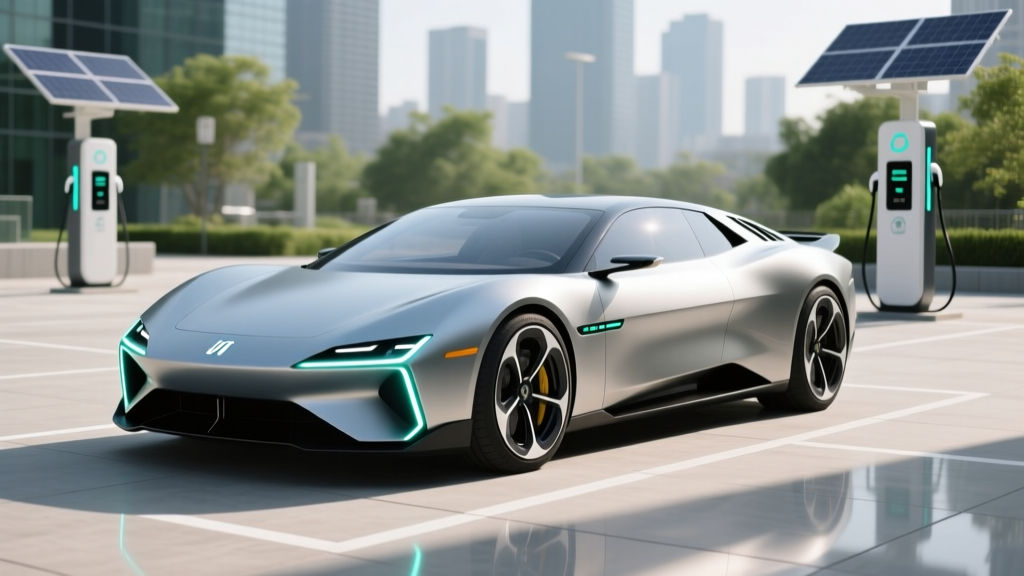
If you've searched for an electric car DeLorean, you're likely looking at the DeLorean Alpha5 — the all-electric grand tourer that resurrects the iconic gull-wing nameplate on a modern 800V EV platform. The short answer: the Alpha5 is a low-volume, high-price halo EV (estimated $125,000+) with a targeted 300+ mile EPA range, 0-60 mph in roughly 2.9 seconds, and dramatic gull-wing doors that are equal parts showpiece and practical compromise. It is not yet in widespread customer hands as of early 2026, so most specs remain manufacturer-estimated rather than EPA-certified. If you want a daily-drivable electric GT with real service infrastructure, a Tesla Model S Plaid or Porsche Taycan still makes more sense. If you want exclusivity, heritage styling, and are comfortable with startup risk, the Alpha5 is the only game in town wearing the DMC badge.
Quick Verdict: DeLorean Alpha5 (2026)
Best for: Collectors and enthusiasts who want a gull-wing EV statement car and can absorb startup ownership risk.
Not ideal for: First-time EV buyers, daily commuters without a second vehicle, or anyone who prioritizes service-center density and proven battery longevity data.
Range, Battery, and Real-World Expectations
DeLorean Motor Company (the Texas-based revival entity, not the original 1980s manufacturer) has targeted a battery pack in the 100+ kWh usable range, using an 800-volt architecture that enables fast DC charging. The claimed EPA range target is north of 300 miles, but as with any low-volume startup, independent EPA testing data on fueleconomy.gov is not yet published for the Alpha5.
EPA Estimate vs. Reality
Manufacturer target: 300+ miles EPA
Real-world highway (70-75 mph): Expect ~240–270 miles based on comparable 100 kWh GT-class EVs (Taycan, Model S).
Cold weather (below 30°F): Subtract 20–30%, yielding ~180–215 miles without preconditioning.
Why it matters: The Alpha5's aerodynamic profile and estimated weight (likely 5,000+ lbs) will push consumption higher on sustained highway runs.
| Spec | Alpha5 (Est.) | Tesla Model S Plaid | Porsche Taycan Turbo S |
|---|---|---|---|
| Battery (usable) | ~100 kWh (NMC est.) | 95 kWh (NMC) | 83.7 kWh (NMC) |
| EPA Range | 300+ mi (target) | 396 mi | 283 mi |
| Peak DC Charge | ~250 kW (est.) | 250 kW | 270 kW |
| 10–80% DC Time | ~22 min (est.) | ~27 min | ~22 min |
| 0–60 mph | ~2.9 sec | 1.99 sec | 2.4 sec |
| Horsepower | ~600 HP (est.) | 1,020 HP | 750 HP |
| Base MSRP | ~$125,000 (est.) | $89,990 | $190,900 |
| Battery Warranty | TBD | 8 yr / 150,000 mi | 8 yr / 100,000 mi |
Charging: What 800V Actually Gets You
The Alpha5's 800-volt architecture is the same approach used by Hyundai/Kia's E-GMP platform and Porsche's Taycan. The advantage is sustaining higher charge rates deeper into the session. Where a 400V vehicle might peak at 150 kW and taper quickly, an 800V pack can pull 200–250 kW through the 10–60% state of charge window before thermal management and cell-protection protocols slow the curve.
For a ~100 kWh battery, a sustained 200 kW average from 10–80% means roughly 22–25 minutes at a 350 kW-capable Electrify America or Ionity station. The catch: you need a functioning high-power stall, a preconditioned battery (navigate to a charger in the car's nav to trigger thermal prep), and ambient temperatures above roughly 50°F for optimal speed.
| Level | Power | Miles Added per Hour | Use Case |
|---|---|---|---|
| Level 1 (120V) | ~1.4 kW | ~4–5 mi/hr | Emergency trickle |
| Level 2 (240V / 48A) | ~11.5 kW | ~33–38 mi/hr | Home overnight (full charge ~9 hrs) |
| DC Fast (peak) | ~250 kW | ~800+ mi/hr (first 5 min) | Road-trip 10–80% in ~22 min |
Home charging on a 48-amp Level 2 circuit (the most common residential install) will replenish the Alpha5 overnight. Expect to pay $800–$1,500 for a quality Level 2 wall connector and $500–$2,000 for electrician installation depending on panel proximity and whether a 200-amp service upgrade is needed.
Price, Tax Credits, and Ownership Costs
Here's where the electric car DeLorean story gets complicated for practical buyers. The estimated $125,000+ MSRP exceeds the IRS §30D federal tax credit MSRP cap of $55,000 for sedans (and $80,000 for SUVs/pickups). That means the Alpha5 does not qualify for the up-to-$7,500 new clean vehicle credit — period. State incentives vary; check your local DMV or energy office for potential rebates.
| Category | DeLorean Alpha5 | Tesla Model S LR | Porsche Taycan 4S |
|---|---|---|---|
| Purchase Price | $125,000 (est.) | $79,990 | $109,400 |
| Federal Tax Credit | $0 (MSRP cap) | $0 (MSRP cap) | $0 (MSRP cap) |
| 5-yr Electricity (15k mi/yr) | ~$5,500 | ~$5,200 | ~$5,800 |
| 5-yr Insurance (est.) | $18,000–$25,000 | $12,000–$16,000 | $15,000–$20,000 |
| 5-yr Maintenance | $2,500–$4,000 | $1,500–$2,500 | $3,500–$5,000 |
| Depreciation (5-yr est.) | 50–60% (startup risk) | 40–50% | 45–55% |
Insurance is a wildcard for low-volume vehicles. Specialty insurers like Hagerty or Chubb may offer agreed-value collector policies, but standard carriers may struggle to price risk on a car with limited crash-test data from NHTSA or IIHS. Budget $300–$450/month until real claims data exists.
Gull-Wing Doors: Cool Factor vs. Daily Reality
The Alpha5's signature feature is also its biggest practical liability. Gull-wing doors require significant overhead clearance — roughly 6.5 to 7 feet of vertical space when fully open. That means low parking garage ceilings, carports, and tight urban street parking become genuine obstacles. In rain, the doors channel water inward when opening. In cold climates, ice can seal the hinges and gas struts.
Compare this to the Tesla Model X's falcon-wing doors, which use sensors and articulating hinges to adapt to tight spaces. Early Alpha5 renderings and prototypes suggest a simpler, single-hinge gull-wing design — more authentic to the DMC-12, less forgiving in a Costco parking lot.
Electric Car DeLorean vs. Gas Alternatives
Some buyers considering the Alpha5 are cross-shopping modern sports cars and grand tourers. Here's how the EV proposition stacks up against gas rivals in this price bracket:
| Metric | DeLorean Alpha5 (EV) | Chevrolet Corvette Z06 (Gas) | Porsche 911 Turbo S (Gas) |
|---|---|---|---|
| 0–60 mph | ~2.9 sec | 2.6 sec | 2.6 sec |
| Fuel/Energy Cost per Mile | ~$0.04–$0.07 | ~$0.18–$0.24 | ~$0.20–$0.26 |
| Annual "Fuel" (15k mi) | ~$700–$1,100 | ~$2,700–$3,600 | ~$3,000–$3,900 |
| Oil Changes / yr | 0 | 2–3 | 2 |
| Emissions (tailpipe) | None | ~404 g CO₂/mi | ~380 g CO₂/mi |
| Service Network | Very limited | Nationwide | Nationwide |
The EV wins on running costs and instant torque delivery. The gas alternatives win on service infrastructure, track-day endurance, and proven long-term parts availability. If you're buying a weekend toy, the Alpha5's scarcity is the appeal. If you need a reliable cross-country GT, the gas options — or a Taycan — remain safer bets.
Common Misconceptions About the Electric DeLorean
| Myth | Fact |
|---|---|
| "It's made by the original DeLorean company." | The original DeLorean Motor Company went bankrupt in 1982. The current DMC (Texas) is a separate entity that acquired the name and remaining parts inventory, now developing the Alpha5 as a new EV. |
| "It qualifies for the $7,500 federal tax credit." | No. At an estimated $125,000+ MSRP, it exceeds the IRS §30D sedan cap of $55,000. No credit applies. |
| "It's self-driving." | No production DeLorean has been certified for autonomous driving. Any ADAS features would be SAE Level 2 at most — requiring full driver attention. |
| "Gull-wing doors are impractical in any EV." | The Tesla Model X uses falcon-wing doors (a gull-wing variant) with sensor-assisted articulation. The Alpha5's simpler hinge design is less adaptable but still functional with adequate clearance. |
| "I can buy one at any dealership." | The Alpha5 uses a direct-order/reservation model typical of EV startups. No traditional dealer network exists as of 2026. |
First-Time EV Buyer? Read This Before Reserving
If the Alpha5 is your first electric vehicle, understand these realities:
- Home charging is nearly mandatory. Relying on public DC fast charging for a $125,000 vehicle is expensive ($0.30–$0.50/kWh at Electrify America stations) and accelerates battery wear if done exclusively. Budget $1,500–$3,000 for a Level 2 home install before delivery.
- Startup risk is real. Companies like Fisker, Lordstown, and Canoo have shown that low-volume EV startups can fail, leaving owners with orphaned vehicles and no service path. DeLorean's heritage brand recognition provides some buffer, but warranty fulfillment and parts availability remain unproven.
- Cold weather reduces range 20–30%. If you live in the northern U.S. or Canada, a 300-mile target range becomes ~210 miles in January. Preconditioning the battery while plugged in mitigates this, but only if you have garage access.
- Resale value is unpredictable. Collector cars can appreciate, but modern EVs typically depreciate faster than gas cars due to battery degradation concerns and rapid tech obsolescence. The Alpha5's limited production run could cut either way.
Should You Reserve the Alpha5?
Choose the Alpha5 if: You already own a practical daily driver, have a garage with Level 2 charging, value exclusivity over service convenience, and can absorb the financial risk of a startup EV.
Choose a Tesla Model S, Porsche Taycan, or Lucid Air instead if: You need reliable nationwide service, want EPA-certified range data, require a federal tax credit (none of these qualify either at current MSRPs, but used-EV credits may apply on pre-owned models under $25,000), or plan to drive this as your only vehicle.
Frequently Asked Questions
Is the DeLorean Alpha5 actually in production?
As of early 2026, the Alpha5 has moved past concept stage with prototypes shown, but full-scale customer deliveries have not been widely confirmed. Reservations are open, but treat delivery timelines as estimates. Always verify current production status directly with DMC before making financial commitments.
How fast does the electric DeLorean charge?
The estimated 800V architecture supports peak DC charging around 250 kW, which should deliver a 10–80% charge in approximately 22 minutes at a capable 350 kW station. Real-world speeds depend on battery temperature, state of charge, and charger availability.
Will the Alpha5 have over-the-air updates?
DMC has indicated connected-car capabilities, which typically include OTA software updates for infotainment and powertrain calibration. However, the depth and frequency of updates remain unproven compared to established players like Tesla and Rivian.
Can I get the Alpha5 serviced locally?
Service infrastructure is the biggest unknown. Unlike Tesla's 1,000+ Supercharger and service locations or Porsche's established dealer network, DMC's service footprint is minimal. Buyers in major metro areas may have mobile-technician options, but rural owners should plan for long-distance service logistics.
Does the DeLorean Alpha5 use LFP or NMC battery chemistry?
DMC has not officially confirmed cell chemistry, but given the performance targets (sub-3-second 0–60) and estimated 100 kWh pack size, NMC (nickel manganese cobalt) is the likely choice. NMC offers higher energy density than LFP, which matters in a GT car, but degrades slightly faster if routinely charged to 100%. For daily use, charging to 80% and using DC fast charging sparingly will maximize longevity.
Is the Alpha5 safe? Has it been crash-tested?
No NHTSA or IIHS crash-test ratings exist for the Alpha5 as of 2026. Low-volume manufacturers sometimes receive exemptions from certain Federal Motor Vehicle Safety Standards (FMVSS), though they must still meet baseline safety requirements. If crash-test data matters to you — and it should — established EVs from Tesla, BMW, Hyundai, and Porsche carry top IIHS Top Safety Pick+ ratings.
Final Word: Heritage Meets Startup Risk
The electric car DeLorean — the Alpha5 — is a compelling story: an iconic 1980s name reborn as a modern electric grand tourer with gull-wing drama and legitimate performance credentials. But stories don't charge batteries or honor warranties. The practical reality is that this is a low-volume, high-price EV from a company with no proven track record in series production, no federal tax credit eligibility, and an untested service network.
If you're a collector adding to a garage that already includes a practical EV daily driver, the Alpha5's scarcity and heritage may justify the risk. If you're spending $125,000 on your first and only electric car, the Porsche Taycan, Lucid Air, or Tesla Model S deliver more range, faster charging certainty, nationwide service, and proven battery longevity — even if none of them open their doors quite like a DeLorean.