Quick Answer: Is a John Deere Electric Tractor Practical in 2026?
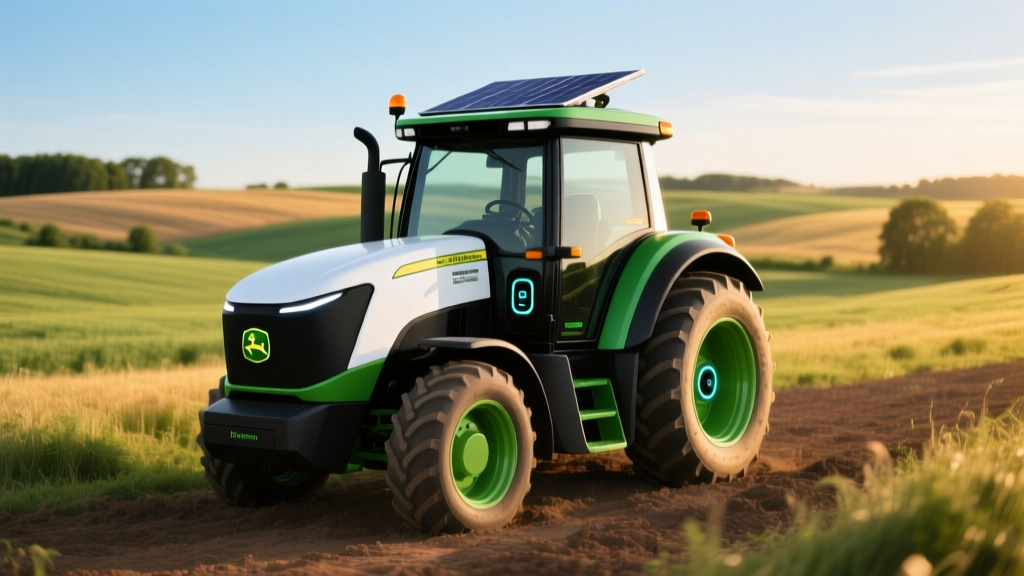
John Deere's electric tractor lineup in 2026 centers on the 5E Electric Series and the compact 1E Electric utility tractors — aimed at small-to-mid-acreage farms, nurseries, livestock operations, and municipal grounds. Expect 4–8 hours of continuous light-to-moderate PTO work per charge, battery capacities from 40–75 kWh, and Level 2 AC charging in roughly 5–8 hours. Base pricing starts around $45,000 for the 1E and $85,000+ for the 5E. Compared to an equivalent diesel compact tractor, you'll pay a 30–50% upfront premium but recoup costs through dramatically lower fuel and maintenance expenses over 5–7 years. These are not replacements for high-horsepower row-crop tractors — they're purpose-built for loader work, mowing, light tillage, and barn chores.
Deere's Electric Tractor Lineup: Current Specs at a Glance
John Deere has been developing electric agricultural equipment since its 2020 acquisition of battery-electric drivetrain companies and subsequent concept reveals. As of the 2026 model year, two production electric tractor platforms are available or taking orders in the U.S. market:
| Specification | 1E Electric (Compact) | 5E Electric (Mid-Size) |
|---|---|---|
| Motor Output | 25 HP (18.6 kW) continuous / 40 HP peak | 55 HP (41 kW) continuous / 75 HP peak |
| Battery Capacity | 40 kWh (LFP chemistry) | 75 kWh (LFP chemistry) |
| Estimated Runtime | 4–6 hours (light loader/mowing) | 5–8 hours (mixed PTO/loader work) |
| Charge Rate (Level 2 AC) | 7.2 kW (J1772 connector) | 11.5 kW (J1772 connector) |
| Full Charge Time (Level 2) | ~5.5 hours | ~6.5 hours |
| DC Fast Charge | Not available | 25 kW CCS (0–80% in ~2.5 hrs) |
| PTO | 540 RPM rear (15 HP at PTO) | 540/1000 RPM rear (40 HP at PTO) |
| Hydraulic Flow | 6.5 GPM | 12.3 GPM |
| Lift Capacity (3-pt) | 1,430 lbs | 3,100 lbs |
| Base MSRP | ~$45,000 | ~$87,500 |
| Warranty (Battery) | 5 years / 5,000 hours | 5 years / 5,000 hours |
Battery chemistry note: Deere uses LFP (lithium iron phosphate) cells across its electric tractor range. LFP trades some energy density for superior cycle life (3,000+ cycles to 80% capacity) and thermal stability — a deliberate choice for agricultural equipment that operates in hot, dusty, vibration-heavy conditions. This is the same chemistry used in many commercial EVs where longevity matters more than maximizing range per kilogram.
Electric Tractor vs. Diesel: The Real Cost Comparison
The purchase-price gap between electric and diesel tractors is real. But total cost of ownership tells a different story for operations that fit the electric profile. Here's a side-by-side five-year cost projection comparing the 5E Electric against a comparable John Deere 5075E diesel (75 HP) used roughly 600 hours/year:
| Cost Factor (5 Years / 3,000 hrs) | 5E Electric | 5075E Diesel |
|---|---|---|
| Purchase Price (MSRP) | $87,500 | $58,000 |
| Fuel / Energy Cost | $2,880 (electric @ $0.12/kWh) | $18,900 (diesel @ $3.50/gal, 2.5 gal/hr) |
| Maintenance (oil, filters, DEF, coolant) | $600 (cabin air filter, gear oil check) | $5,400 (oil changes every 250 hrs, filters, DEF) |
| Estimated Federal/State Incentives | –$7,500 to –$15,000* | $0 |
| Total 5-Year Cost | $73,480 – $80,980 | $82,300 |
*Incentive eligibility varies. Federal tax credit rules under IRS §30D apply to certain qualifying electric vehicles; agricultural equipment may also qualify under §45W (commercial clean vehicle credit) or USDA REAP grants. Consult a tax professional for your specific situation.
The break-even point typically arrives between years 4 and 6 depending on diesel prices, electricity rates, and annual hours. If diesel climbs above $4/gallon in your area, break-even accelerates. Operations running fewer than 300 hours/year will take longer to recoup the upfront premium — electric makes strongest economic sense for daily-use tractors.
Charging Infrastructure: What Your Farm Needs
Unlike highway EVs, farm electric tractors charge where they sleep — the barn, equipment shed, or workshop. But rural electrical infrastructure is the single biggest barrier to adoption.
Level 2 Charging (Standard)
Both Deere electric tractors ship with a Level 2 AC charging cord. You'll need:
- 240V dedicated circuit — 40A for the 1E (7.2 kW), 50–60A for the 5E (11.5 kW)
- Hardwired or NEMA 14-50 outlet installed by a licensed electrician
- Installation cost: $800–$2,500 if your panel has capacity; $3,000–$7,000+ if you need a panel upgrade (common on older farms with 100A service)
DC Fast Charging (5E Only)
The 5E's optional 25 kW CCS DC charge capability is useful for operations needing mid-day top-ups. A 25 kW DC unit costs $8,000–$15,000 installed — practical for larger operations with multiple electric machines, overkill for a single tractor.
The Rural Grid Reality
Many farms sit at the end of long distribution lines with limited transformer capacity. Before ordering, have your rural electric cooperative assess:
- Available amperage at your service panel
- Whether a transformer upgrade is needed (can add $2,000–$10,000 and weeks of lead time)
- Time-of-use rates — charging overnight at $0.06–$0.08/kWh versus peak afternoon rates at $0.18–$0.25/kWh dramatically changes your operating cost
Common Electric Tractor Misconceptions
| Myth | Fact |
|---|---|
| "Electric tractors can't do real farm work" | The 5E delivers 40 HP at the PTO — sufficient for rotary cutters up to 7', small round balers, post-hole augers, and loader work. It won't pull a 12' bat-wing mower or run a large square baler, but that's not its design target. |
| "The battery won't last" | LFP chemistry is rated for 3,000+ full cycles at 80% capacity retention. At 600 hours/year with daily charging, that's 12–15+ years of service before meaningful degradation. Deere's 5-year/5,000-hour warranty backs this. |
| "You'll be stranded with a dead battery mid-field" | Unlike a road-trip EV, a farm tractor works a known radius from its charging point. Most operators develop a charge-during-lunch routine. The 5E's DC fast option adds a 50% charge in ~75 minutes. |
| "It costs the same as diesel to run" | At national-average electricity rates ($0.12/kWh), the 5E costs roughly $1.80/hour in energy vs. $8.75/hour in diesel fuel — an 80% reduction in energy cost per operating hour. |
Who Should (and Shouldn't) Buy an Electric Tractor
Decision Framework: Is a Deere Electric Tractor Right for You?
Choose electric if:
- You operate 300–1,200 hours/year on tasks within the tractor's HP class (loader work, mowing, light tillage, livestock chores, material handling)
- Your work is within 2–3 miles of a charging point
- You have or can install 240V service at your equipment shed
- You value near-silent operation (barns, greenhouses, noise-sensitive neighbors, early-morning/late-evening chores)
- You want zero exhaust emissions in enclosed or semi-enclosed spaces (barns, pole buildings, greenhouses)
- You're in a state with agricultural electrification incentives or USDA REAP grant eligibility
Stick with diesel if:
- You need 75+ continuous PTO horsepower for primary tillage, large hay equipment, or grain-cart work
- Your operation runs 1,500+ hours/year across widely dispersed fields with no charging access
- Your electrical service can't support Level 2 charging without a prohibitively expensive upgrade
- You regularly operate in temperatures below 0°F where battery performance drops 20–30%
- You need the rapid refueling of a diesel fill-up (5 minutes) during harvest windows
Real-World Ownership: What Dealers and Early Adopters Report
Based on early-adopter feedback from nurseries, small dairies, and diversified vegetable farms that received 2024–2025 model deliveries:
What owners praise:
- Instant torque — electric motors deliver full torque at 0 RPM, making loader work and hydraulic response noticeably quicker than diesel equivalents
- No warm-up time — the tractor is ready to work the moment you turn the key, even at 20°F (though battery capacity is reduced in cold)
- Maintenance elimination — no engine oil, no fuel filters, no DEF fluid, no air intake cleaning. The only recurring consumables are cabin air filters and hydraulic fluid checks
- Noise reduction — operators report being able to have normal conversations while the tractor runs, and working near livestock without stressing animals
What owners flag as limitations:
- Continuous heavy PTO work drains the battery faster than expected — running a 6' rotary cutter in thick, wet grass can cut runtime to 3–4 hours on the 1E
- Charging time is a real operational constraint — if you need the tractor for a second shift, a 5.5–6.5 hour Level 2 charge means you must plan ahead
- Dealer service network is still developing — not all Deere dealerships have certified high-voltage technicians on staff. Confirm your local dealer's EV service capability before purchasing
- Cold-weather capacity loss — at 10°F, expect 20–25% less runtime. LFP batteries are more cold-sensitive than NMC. Deere's battery thermal management system helps but doesn't eliminate this
Incentives, Grants, and Tax Credits for Farm EVs
Electric agricultural equipment sits at an intersection of several incentive programs that can substantially reduce net cost:
- USDA REAP Grants — The Rural Energy for America Program can cover up to 50% of eligible energy-efficiency and renewable-energy improvements for agricultural producers. Electric equipment paired with on-farm solar has been approved under recent funding rounds. Check current availability at USDA's REAP page.
- IRS §45W Commercial Clean Vehicle Credit — Up to $7,500 for qualifying commercial electric vehicles under 14,000 lbs GVWR, or up to $40,000 for heavier vehicles. Eligibility depends on battery sourcing, MSRP caps, and business-use requirements. See IRS §45W guidance.
- State-level agricultural electrification programs — States including California, New York, Minnesota, and Colorado have offered additional rebates or cost-share programs for electric farm equipment. Availability and funding vary by year.
- Rural electric co-op incentives — Many cooperatives offer discounted off-peak rates or equipment rebates for members adding EV charging loads.
Tax credit eligibility involves MSRP caps, buyer income limits, and battery critical-mineral sourcing requirements that change annually. Always verify current-year rules with a qualified tax professional before relying on credit amounts in your purchasing decision.
The Bottom Line: Where Deere Electric Tractors Fit in 2026
John Deere's electric tractors are not a universal replacement for diesel — and they don't pretend to be. They're a specialized tool that excels for operations with predictable daily hours, access to 240V charging, and workloads within the 25–55 HP continuous range. For those operations, the math works: lower energy cost per hour, near-zero maintenance, and a quieter, cleaner working environment. For high-horsepower, high-hour, remote-field operations, diesel remains the pragmatic choice.
The agricultural EV transition will follow the same pattern as the passenger EV transition — starting with the use cases where electric is unambiguously better, then expanding as battery energy density improves and charging infrastructure reaches more farms. If your operation fits the current profile, a Deere electric tractor is a defensible, data-backed investment today.
How long does a Deere electric tractor battery last before replacement?
Deere rates its LFP battery packs for 3,000+ full charge cycles at 80% capacity retention. At typical farm usage (one charge cycle per day, 250 working days/year), that translates to 12+ years before the battery drops below 80% of original capacity. The 5-year/5,000-hour warranty provides a backstop. Full battery replacement cost is estimated at $12,000–$18,000 depending on model — a significant expense, but one that likely won't materialize for well over a decade.
Can I charge a Deere electric tractor from a standard 120V outlet?
Technically yes, using a Level 1 adapter, but it's impractical. At 1.4 kW (120V/12A), a full charge on the 5E would take over 50 hours. Level 2 at 240V is the minimum practical charging standard for daily agricultural use.
Does the electric tractor work in winter?
Yes, but with reduced capacity. LFP batteries lose roughly 20–25% of usable capacity at 10°F and below. Deere's thermal management system preconditions the battery during charging to mitigate this. Cold-weather operators should plan for shorter runtimes and consider storing/charging the tractor in a heated building when possible.
Is a Deere electric tractor eligible for the $7,500 federal EV tax credit?
Possibly, but agricultural tractors fall into a gray area between the §30D personal-use credit and the §45W commercial credit. Eligibility depends on how the tractor is titled, its GVWR, battery sourcing compliance, and whether you're purchasing as an individual or business entity. Consult a tax professional and review current IRS clean vehicle credit guidance for your specific situation.
How does the Deere electric tractor compare to a diesel in terms of torque?
The electric motor delivers peak torque from 0 RPM — there's no turbo lag, no throttle ramp-up, no clutch engagement delay. For loader work, this translates to noticeably faster bucket cycles. The 5E's 75 HP peak output is available instantly, whereas the diesel 5075E must build RPMs to reach its rated power. In real-world loader and material-handling tasks, the electric tractor feels more responsive despite similar or slightly lower continuous HP ratings.