When EV shoppers search for David Lau Tesla, they're usually looking for the engineering DNA behind Tesla's most accessible sedan. As Tesla's Vice President of Software Engineering, Lau has overseen the platform integration that defines the current Model 3 — from the Highland refresh's thermal management to the FSD Supervised stack. This review breaks down the 2026 Tesla Model 3 lineup with the exact numbers buyers need: EPA range, battery chemistry, DC fast-charge curves, and post-tax-credit pricing.
2026 Tesla Model 3: Trim Lineup and Core Specs
Tesla currently offers the Model 3 in three primary configurations for the 2026 model year. Each variant targets a distinct buyer profile — from the efficiency-focused commuter to the dual-motor performance enthusiast.
| Spec | RWD (Base) | Long Range AWD | Performance |
|---|---|---|---|
| EPA Range | 272 mi | 341 mi | 315 mi |
| Battery (usable) | ~60 kWh (LFP) | ~75 kWh (NMC) | ~75 kWh (NMC) |
| Drivetrain | RWD / Single Motor | AWD / Dual Motor | AWD / Dual Motor |
| Horsepower | 271 hp | 346 hp | 510 hp |
| 0–60 mph | 5.8 sec | 4.2 sec | 2.9 sec |
| Efficiency (MPGe) | 132 MPGe combined | 132 MPGe combined | 118 MPGe combined |
| Base MSRP | $38,990 | $45,990 | $52,990 |
| Battery Warranty | 8 yr / 100,000 mi | 8 yr / 120,000 mi | 8 yr / 120,000 mi |
Sources: fueleconomy.gov, Tesla Model 3 Design Studio.
Real-World Range: What the EPA Sticker Doesn't Tell You
Long Range AWD: EPA 341 mi — Expect 280–310 mi in mixed highway driving at 70–80 mph; 230–260 mi in sub-30°F winter conditions.
RWD: EPA 272 mi — Expect 220–245 mi highway; 180–210 mi in cold weather.
Performance: EPA 315 mi — Expect 250–280 mi highway; aggressive driving reduces this further.
The LFP (lithium iron phosphate) pack in the RWD trim trades energy density for longevity and thermal stability. LFP cells tolerate regular 100% charging without the degradation concerns of NMC chemistry, making the RWD variant ideal for daily commuters who charge at home nightly. The trade-off: LFP batteries lose a larger percentage of usable range in extreme cold — roughly 30–40% range reduction below 20°F, compared to 20–30% for the NMC-equipped Long Range.
Tesla's heat pump (standard on all 2026 Model 3 trims) recovers waste heat from the drivetrain to warm the cabin, partially offsetting cold-weather losses. On the highway, aerodynamic drag dominates efficiency above 65 mph regardless of chemistry.
Charging Speed: DC Fast Charge and Home Level 2
Charging infrastructure access remains the top concern for EV buyers. Here's the full charging profile for the 2026 Model 3 across all three connection types:
| Charging Level | RWD (LFP) | Long Range / Performance (NMC) |
|---|---|---|
| Level 1 (120V, 12A) | ~3 mi/hr | ~3 mi/hr |
| Level 2 (240V, 48A) | ~33 mi/hr (11.5 kW) | ~44 mi/hr (11.5 kW) |
| DC Fast Charge (peak) | 170 kW peak | 250 kW peak |
| 10–80% DCFC time | ~30 min | ~25 min |
| Connector | NACS (native) | NACS (native) |
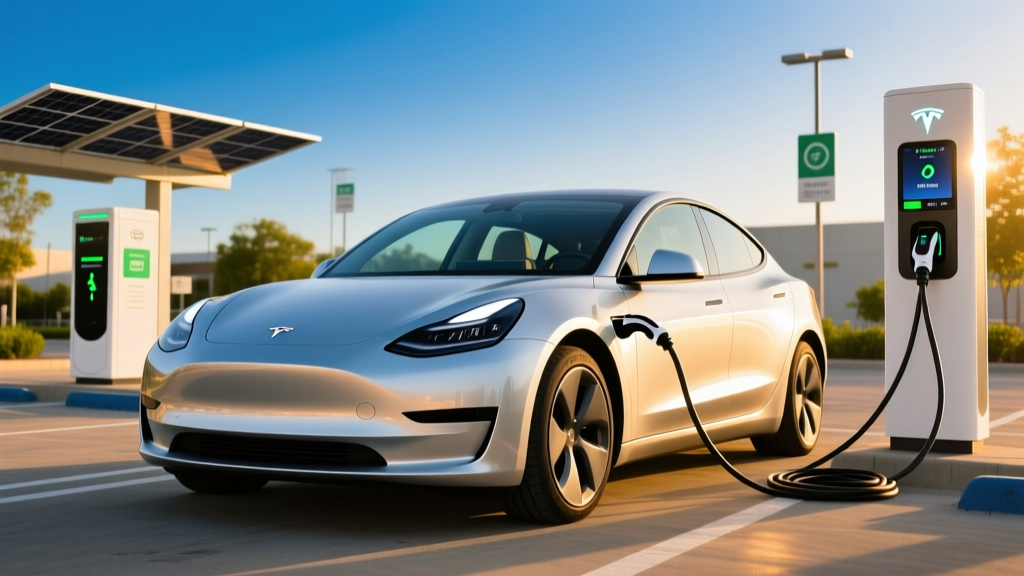
The Model 3 uses the NACS (North American Charging Standard) connector natively — no adapter needed at Tesla Superchargers. For Electrify America or other CCS1-equipped networks, Tesla sells a CCS adapter (~$175) or you can use NACS-to-CCS adapters from third-party manufacturers.
Charging curve reality: The Long Range peaks at 250 kW only between roughly 10–30% State of Charge. From 50–80%, the rate tapers to 80–120 kW. That means the advertised "175 miles in 15 minutes" applies to the initial portion of the charge session, not the full 10–80% sweep. Plan road-trip stops around the 20–25 minute mark for 10–80%.
Interior, Cargo, and Technology
The Highland refresh brought meaningful interior improvements to the Model 3 platform that carries into 2026:
- Cargo volume: 23 cu ft (rear trunk + frunk combined)
- Rear legroom: 35.2 inches
- Front headroom: 40.3 inches
- Display: 15.4-inch center touchscreen; rear-seat 8-inch display for climate/media
- Audio: 17-speaker premium system (Long Range/Performance); 9-speaker on RWD
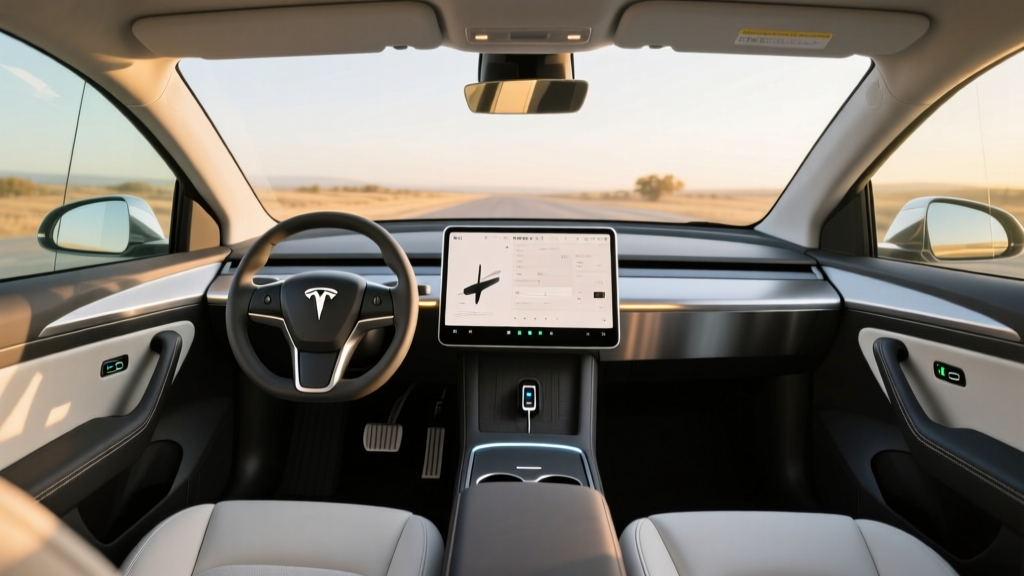
The ventilated front seats, ambient lighting, and acoustic glass (front and rear) significantly reduce cabin noise compared to pre-2024 Model 3s. However, the absence of physical turn signal stalks (replaced by steering-wheel buttons) and the lack of a traditional instrument cluster remain divisive. New owners typically adapt within a week, but test-drive before committing.
Driver assistance: Basic Autopilot (Traffic-Aware Cruise Control + Autosteer) is standard. FSD (Supervised) remains a $8,000 add-on or $99/month subscription. FSD is SAE Level 2 — you must keep hands on the wheel and eyes on the road at all times. Tesla's camera-only vision stack has improved substantially, but it is not autonomous driving.
Pricing, Tax Credit Eligibility, and Total Cost
| Trim | MSRP | Est. §30D Credit | Effective Price |
|---|---|---|---|
| RWD | $38,990 | Up to $7,500* | ~$31,490* |
| Long Range AWD | $45,990 | Up to $7,500* | ~$38,490* |
| Performance | $52,990 | Up to $7,500* | ~$45,490* |
*Federal §30D credit eligibility depends on:
- Buyer income caps: AGI ≤ $150K (single), $225K (head of household), $300K (joint)
- MSRP cap: Sedans must be ≤ $55,000 (all Model 3 trims qualify)
- Battery sourcing: Critical minerals and battery components must meet phased-in domestic/free-trade requirements — Tesla has largely localized its supply chain, but verify current-year compliance at IRS.gov
- Point-of-sale transfer: You can transfer the credit to the dealer at purchase for an immediate price reduction, rather than claiming it on your tax return
Tesla also offers a $1,000 referral discount in many periods, and some states (California, Colorado, Massachusetts) stack additional rebates of $2,000–$5,000. Consult your tax professional for personal eligibility.
Pros and Cons at a Glance
- Class-leading efficiency (kWh/mi)
- Access to Supercharger network (20,000+ stalls)
- OTA updates continuously add features
- Low maintenance cost (no oil, minimal brake wear)
- LFP battery on RWD = longer cycle life
- Strong resale value relative to non-Tesla EVs
- No physical stalks (turn signals, wipers on screen)
- Minimalist interior not for everyone
- Rear visibility limited; relies on cameras
- Insurance premiums 15–30% above segment average
- FSD ($8K) remains Level 2 — not autonomous
- Cold-weather range loss significant on LFP trim
Model 3 vs. Key Competitors: Is It Still the Default?
David Lau's engineering team has kept the Model 3 competitive against a wave of challengers. Here's how it stacks up against the two most common cross-shops:
| Metric | Tesla Model 3 LR | Hyundai Ioniq 6 SEL | BMW i4 eDrive40 |
|---|---|---|---|
| EPA Range | 341 mi | 316 mi | 301 mi |
| Peak DC Charge | 250 kW | 240 kW | 205 kW |
| Base MSRP | $45,990 | $42,500 | $57,900 |
| Charging Network | Supercharger (native) | CCS → NACS adapter | CCS → NACS adapter |
| §30D Credit | Likely $7,500 | Likely $7,500 | $0 (MSRP > $55K cap) |
The Ioniq 6 undercuts on price and offers a more conventional interior, but lacks Supercharger access without an adapter (and Hyundai's NACS transition is still rolling out). The BMW i4 delivers superior build quality and driving dynamics but loses the federal credit due to its MSRP and offers less range. The Model 3 Long Range remains the efficiency-per-dollar benchmark in this segment.
Who Should Buy the 2026 Model 3?
- Choose the RWD ($38,990) if you commute under 50 miles daily, have home Level 2 charging, and want the lowest entry price with LFP longevity.
- Choose the Long Range AWD ($45,990) if you take road trips exceeding 250 miles, live in a cold climate, or need dual-motor traction.
- Choose the Performance ($52,990) if track capability matters and you accept the efficiency/range trade-off.
- Look elsewhere if you need more than 23 cu ft of cargo (consider Model Y), prefer physical controls, or want a luxury badge (BMW i4, Mercedes EQB).
Frequently Asked Questions
What is the real-world range of the 2026 Tesla Model 3?
The Long Range AWD delivers approximately 280–310 highway miles at 70–80 mph in mild weather, dropping to 230–260 miles in sub-freezing temperatures. The RWD (LFP) yields 220–245 highway miles, with steeper cold-weather losses of 30–40%.
How fast does the Model 3 charge at home and on the road?
On a 48-amp Level 2 home charger, expect 33–44 miles of range per hour depending on trim. At a 250 kW Supercharger, the Long Range adds ~175 miles in 15 minutes (10–30% SoC), with a full 10–80% session taking about 25 minutes.
Does the 2026 Model 3 qualify for the $7,500 federal tax credit?
All three trims fall under the $55,000 sedan MSRP cap. Most buyers under the income thresholds ($150K single / $300K joint) qualify, provided battery-sourcing requirements are met. Tesla's localized supply chain has largely satisfied current-year critical-mineral rules, but confirm at IRS.gov before purchase.
Is the Model 3 worth buying over the Hyundai Ioniq 6 or BMW i4?
For most buyers, yes — the Model 3 Long Range offers the best combination of range (341 mi), Supercharger network access, and post-credit pricing (~$38,490). The Ioniq 6 suits those wanting a conventional cockpit; the i4 targets luxury buyers willing to forgo the tax credit.
What are the biggest drawbacks of the Model 3?
The stalkless steering wheel (button-based turn signals), camera-reliant rear visibility, higher-than-average insurance costs, and the $8,000 FSD upsell (which remains Level 2, not autonomous) are the most common owner complaints.
How does David Lau's software engineering role affect the Model 3?
Lau oversees the vehicle software stack — including the infotainment OS, Autopilot/FSD integration, OTA update pipeline, and thermal management algorithms. The Highland refresh's improved ride quality, cabin quietness, and regenerative braking calibration all trace to software-defined tuning under his team's purview.