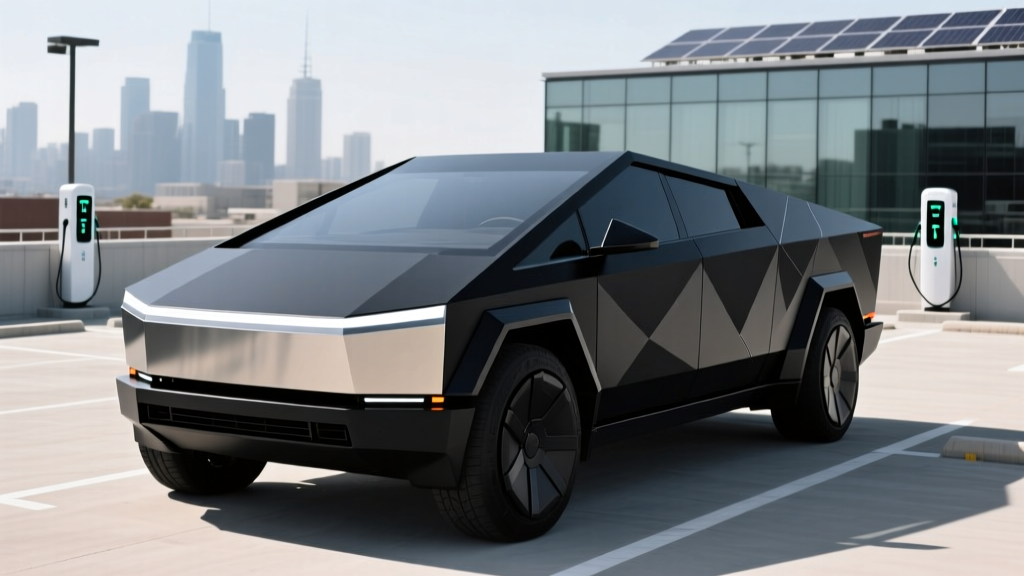
The Tesla Cybertruck is unlike anything else on the road — a stainless-steel exoskeleton with angular geometry that practically begs for a vinyl wrap. Search interest in "Cybertruck wrapped" has surged as owners seek to protect the bare steel, add color, or simply personalize a vehicle that rolls off the line in exactly one shade: unpainted. But beyond the wrap culture, the Cybertruck is a serious electric pickup with legitimate capability, serious charging hardware, and ownership economics that deserve a hard look. This review covers the 2026 Cybertruck lineup — AWD, Cyberbeast, and the newly available RWD — with exact specs, real-world range data, and what wrapping actually means for your investment.
Quick Verdict: Is the Cybertruck Worth It in 2026?
The Cybertruck delivers genuine truck utility wrapped in polarizing design and class-leading EV performance. The AWD trim at $79,990 hits the sweet spot for range and capability, while the Cyberbeast at $99,990 exists for those who want a 2.6-second 0-60 time in a 6,800-pound vehicle. The RWD model, finally entering production, drops the entry price closer to $60,990 but sacrifices range and dual-motor traction. Wrapping a Cybertruck costs between $3,500 and $7,000 depending on film quality and complexity — a worthwhile investment given the stainless steel's susceptibility to fingerprints, micro-scratches, and the owner's desire for individuality. For buyers who need a daily-driver truck with Supercharger access, tow capability, and don't mind the attention, the Cybertruck remains a compelling, if unconventional, choice.
Range, Battery, and Real-World Efficiency
Tesla equipped the dual-motor Cybertruck variants with an NMC (nickel manganese cobalt) lithium-ion battery pack. The usable capacity sits at approximately 123 kWh — one of the largest packs in any consumer EV sold in the US. Here is how that translates to real miles:
| Trim | EPA Est. Range | Battery (usable kWh) | MPGe (combined) | kWh/100 mi |
|---|---|---|---|---|
| RWD | ~250 mi | ~100 kWh (LFP) | ~68 MPGe | ~49 |
| AWD | 340 mi | 123 kWh (NMC) | 70 MPGe | 48 |
| Cyberbeast | 320 mi | 123 kWh (NMC) | 65 MPGe | 51 |
Tesla has discussed a Range Extender option — a bed-mounted battery pack adding an estimated 130+ miles of range — but as of the 2026 model year, availability remains limited and pricing has not been finalized. For most buyers, the 340-mile EPA figure on the AWD is sufficient for daily use and manageable on road trips given the Supercharger network.
Charging Speed: DC Fast, Level 2, and the 800V Architecture
The Cybertruck uses an 800-volt electrical architecture, enabling peak DC fast-charge rates up to 325 kW at compatible Superchargers (V4 stalls). Tesla quotes a 10–80% charge in approximately 20 minutes under ideal conditions. However, the charge curve tells a more nuanced story.
| Charge Level | Power / Rate | Miles Added per Hour | Notes |
|---|---|---|---|
| Level 1 (120V) | ~1.4 kW | ~3 mi/hr | Emergency/trickle only |
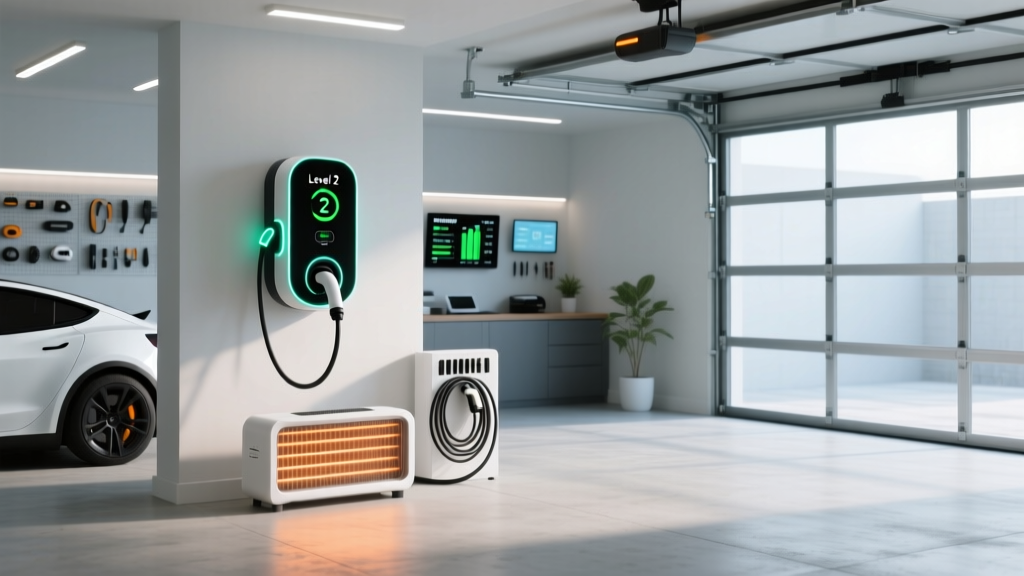
| Level 2 (240V, 48A) | 11.5 kW | ~29 mi/hr | Home Wall Connector; full charge in ~12 hr |
| Level 2 (240V, 80A) | 19.2 kW | ~48 mi/hr | Requires upgraded Wall Connector + 100A circuit |
| DC Fast (peak) | 325 kW | — | 10–80% in ~20 min; tapers significantly above 80% |
| DC Fast (sustained avg) | ~180–220 kW | — | Average rate from 10–80% in real-world conditions |
At peak, the Cybertruck can add roughly 200 miles of range in 15 minutes at a V4 Supercharger. The 800V architecture keeps charge rates higher for longer compared to 400V competitors, but you will see tapering begin around 55–60% state of charge (SoC), with rates dropping below 100 kW past 80%. Battery preconditioning — triggered automatically when you navigate to a Supercharger — is essential for hitting peak rates, particularly in cold weather. Without preconditioning, expect peak rates closer to 150–200 kW even at a capable stall.
For home charging, the Tesla Wall Connector at 48 amps (11.5 kW) is the practical standard. Plan on roughly 12 hours for a full charge from near-empty. Most owners charge 20–50% overnight, which requires only 4–6 hours — easily manageable on a standard Level 2 install. Per Tesla's home charging guide, installation costs typically range from $1,000 to $2,500 depending on panel proximity and local permitting.
Performance and Drivetrain
The Cybertruck's performance numbers are staggering for a vehicle with a 4,700-pound bed capacity and a 6-foot bed. Here is the breakdown by trim:
| Spec | RWD | AWD | Cyberbeast |
|---|---|---|---|
| Drivetrain | Single motor, RWD | Dual motor, AWD | Tri-motor, AWD |
| Horsepower | ~400 hp | 600 hp | 845 hp |
| 0–60 mph | ~6.0 sec | 4.1 sec | 2.6 sec |
| Top Speed | 112 mph | 130 mph | 130 mph |
| Towing Capacity | 7,500 lb | 11,000 lb | 11,000 lb |
| Payload Capacity | ~3,500 lb | 4,700 lb | 4,700 lb |
The Cyberbeast's 2.6-second 0–60 time is hypercar territory in a truck body. It is also largely irrelevant for daily driving. The AWD's 4.1 seconds is more than adequate for merging, passing, and the occasional traffic-light sprint, and it comes without the $20,000 premium. Towing at the 11,000-pound maximum will slash range roughly in half — expect 150–180 miles on a charge when pulling a heavy trailer. This is consistent with all electric pickups and is a function of physics, not a Tesla-specific shortcoming.
Wrapping the Cybertruck: What Owners Need to Know
Why wrap a Cybertruck? The stainless-steel body panels are not painted — they are cold-rolled and left bare. This creates several realities that drive the wrapping trend:
- Fingerprint magnet: The brushed steel shows every handprint, smudge, and water spot. A wrap eliminates this maintenance hassle entirely.
- Micro-scratch protection: While the steel is dent-resistant, it can accumulate fine surface scratches from car washes and environmental contact. A quality PPF (paint protection film) or vinyl wrap shields the surface.
- Color customization: Tesla offers zero paint options. A wrap is the only path to a colored Cybertruck, with popular choices including satin black, matte white, metallic gray, and color-shift films.
- Resale preservation: Keeping the stainless steel pristine under a wrap preserves the original surface for future buyers.
Professional Cybertruck wraps typically cost $4,000–$7,000 for full-body vinyl and $5,500–$9,000 for full-body PPF (which offers superior scratch and rock-chip protection). The angular geometry actually makes wrapping somewhat more straightforward than curvaceous vehicles — fewer compound curves — but the sheer panel size and the number of flat surfaces require precision to avoid visible seams. Expect a 2–4 day installation at a reputable shop.
Pricing, Trims, and Federal Tax Credit Eligibility
The Cybertruck's pricing has shifted since its 2023 unveiling. Here is the 2026 model-year lineup:
| Trim | Base MSRP | §30D Federal Credit | Effective Price (if eligible) |
|---|---|---|---|
| RWD | $60,990 | Up to $7,500 | ~$53,490 |
| AWD | $79,990 | Up to $7,500 | ~$72,490 |
| Cyberbeast | $99,990 | $0 (exceeds MSRP cap) | $99,990 |
Under IRS §30D rules, the federal EV tax credit has critical eligibility requirements:
- MSRP cap: Trucks, vans, and SUVs must have an MSRP at or below $80,000. The Cyberbeast at $99,990 does not qualify. The AWD at $79,990 sits right at the limit — options that push the MSRP above $80,000 will disqualify it.
- Income cap: Modified adjusted gross income must not exceed $300,000 (joint filers), $225,000 (head of household), or $150,000 (single filers).
- Battery sourcing: The credit is split into two $3,750 halves — one for critical minerals and one for battery component manufacturing. Tesla's supply chain has progressively met more of these requirements, but the exact credit amount (up to $7,500, $3,750, or $0) depends on the specific vehicle's battery sourcing at time of delivery. Always verify with your dealer and consult a tax professional.
- Point-of-sale transfer: As of 2024, eligible buyers can transfer the credit to the dealer at purchase, receiving the discount upfront rather than waiting for tax filing.
The RWD model, once fully in production, will likely qualify for the full $7,500 credit (assuming income and sourcing requirements are met), making it the most affordable entry point. The AWD's eligibility is trim-and-options dependent — a fully optioned AWD may cross the $80,000 threshold.
Interior, Cargo, and Technology
The Cybertruck's cabin is minimalist even by Tesla standards. A single 18.5-inch touchscreen dominates the dash, handling infotainment, climate, vehicle settings, and camera feeds. A rear 9.4-inch screen serves passengers in the second row. The steering yoke (standard; a round wheel is now available as an option) and the absence of physical buttons define the experience.
Passenger space: Front legroom measures approximately 41.4 inches; rear legroom comes in at 38.2 inches. The rear bench fits three adults, though the center position is compromised by a narrow floor hump and limited shoulder room. Headroom is generous thanks to the roofline.
Cargo: The 6-foot bed offers approximately 67 cubic feet of volume with the tonneau cover closed. The vault-style bed includes a powered retractable cover, integrated bed rails with tie-downs, and a built-in ramp. The front trunk (frunk) provides roughly 7 cubic feet of lockable storage — enough for a charging cable kit and a small bag.
Driver assistance: The Cybertruck ships with Tesla's Basic Autopilot (lane centering, adaptive cruise control). Enhanced Autopilot ($6,000) adds auto lane-change, autosteer on city streets, and smart summon. Full Self-Driving (Supervised) at $8,000 or $99/month adds traffic-light and stop-sign recognition with automatic response. Per NHTSA guidelines, all Tesla driver-assist features are SAE Level 2 — the driver must remain fully engaged and supervising at all times. The Cybertruck is not self-driving.
Standout tech: The Cybertruck features steer-by-wire (no mechanical connection between yoke and wheels), four-wheel steering for a tight 35-foot turning circle, adaptive air suspension with 16 inches of ground clearance in Extract Mode, and a 240V bed outlet capable of powering tools or a campsite. The stainless-steel exoskeleton and armored glass (now updated with improved lamination) are signature features.
Warranty and Ownership Costs
Tesla covers the Cybertruck with the following warranty structure:
- Basic vehicle: 4 years / 50,000 miles
- Battery and drive units: 8 years / 120,000 miles (minimum 70% capacity retention)
- Corrosion: Not applicable in the traditional sense — stainless steel does not rust like conventional steel, though surface discoloration can occur in coastal/salty environments
Insurance costs for the Cybertruck are notably high. Expect annual premiums of $3,500–$5,500 depending on your driving record, location, and coverage level. The stainless-steel body, expensive structural battery pack, and specialized repair requirements drive these rates. Get quotes before ordering.
Maintenance is minimal — no oil changes, no transmission fluid, no spark plugs. Budget for cabin air filter replacement (~$100–$150 annually), tire rotation, wiper fluid, and brake fluid checks. Tesla recommends tire replacement every 25,000–40,000 miles given the vehicle's weight and torque. A set of four 35-inch all-terrain tires runs approximately $1,200–$1,800.
Who Should Buy the Cybertruck?
Choose the Cybertruck AWD if: You want a daily-driver electric truck with 340 miles of range, 11,000-pound towing, Supercharger road-trip capability, and you can stay within the $80,000 MSRP cap for the tax credit. This is the volume trim for good reason.
Choose the Cyberbeast if: Performance is paramount, budget is not a constraint, and you accept that the $99,990 price eliminates federal tax credit eligibility. The tri-motor powertrain and 845 hp are engineering showcases, not rational purchases.
Choose the RWD if: You want the lowest entry price, primarily drive in fair-weather urban/suburban environments, and don't need AWD traction or maximum range. Best as a second vehicle or commuter truck.
Look elsewhere if: You need a discreet vehicle, want a conventional truck interior with physical controls, prioritize rear-seat comfort for adults on long trips, or need proven long-term reliability data. The Ford F-150 Lightning, Rivian R1T, and Chevrolet Silverado EV offer more traditional truck experiences with competitive EV specs.
Pros
- Class-leading DC fast-charge rate (325 kW peak, 800V architecture)
- Stainless-steel exoskeleton is dent- and corrosion-resistant
- Access to Tesla Supercharger network — the most reliable public charging network in the US
- 11,000-lb towing and 4,700-lb payload with AWD/Cyberbeast
- Steer-by-wire and four-wheel steering yield an unexpectedly tight turning circle
- 240V bed outlet for worksite and campsite power
Cons
- Polarizing design draws constant attention — not for the privacy-minded
- Cyberbeast exceeds $80K MSRP cap — no federal tax credit
- Insurance premiums significantly above truck averages
- Minimalist interior lacks physical controls; yoke takes adaptation
- Real-world highway range falls notably short of EPA, especially while towing
- Build quality inconsistencies reported by early owners (panel gaps, trim issues)
Frequently Asked Questions
What is the real-world range of the Cybertruck?
The AWD's EPA estimate is 340 miles, but real-world highway driving at 70–75 mph yields approximately 280–300 miles. In cold weather below freezing, expect 220–250 miles. The Cyberbeast delivers roughly 260–280 miles highway. Towing at max capacity cuts range roughly in half across all trims.
How fast does the Cybertruck charge?
At a Tesla V4 Supercharger, the Cybertruck peaks at 325 kW and charges from 10–80% in approximately 20 minutes with proper battery preconditioning. At home on a Level 2 Wall Connector (11.5 kW), expect roughly 29 miles of range per hour, or a full charge in about 12 hours.
Does the Cybertruck qualify for the $7,500 federal EV tax credit?
It depends on the trim and your income. The RWD ($60,990) and AWD ($79,990) are under the $80,000 MSRP cap for trucks, but options on the AWD can push it over. The Cyberbeast ($99,990) does not qualify. All trims are subject to buyer income limits ($300K joint / $150K single) and battery-sourcing requirements per IRS §30D. Verify eligibility at point of sale.
How much does it cost to wrap a Cybertruck?
A full-body vinyl wrap costs $4,000–$7,000 at a professional shop. Full paint protection film (PPF) runs $5,500–$9,000. The angular design simplifies some aspects of installation but requires precision on the large flat panels. Expect 2–4 days for completion.
Is the Cybertruck worth buying over the F-150 Lightning or Rivian R1T?
The Cybertruck wins on charging speed (325 kW vs. Lightning's ~150 kW or R1T's ~200 kW), Supercharger network access, and raw acceleration. The F-150 Lightning offers a more traditional truck experience with a lower starting price and broader dealer network. The Rivian R1T excels in off-road capability, interior quality, and adventure-oriented design. If you value charging infrastructure and performance, the Cybertruck has the edge. If you want conventional truck ergonomics and proven build quality, the Lightning or R1T may suit you better.
Can the Cybertruck tow a camper or boat?
Yes — the AWD and Cyberbeast are rated for 11,000 pounds of towing. However, towing near max capacity will reduce range to roughly 150–180 miles per charge. Plan charging stops accordingly and use the Tesla app's trip planner, which factors in trailer weight when estimating range.