The Wiper Blade That Broke the Internet: Cybertruck Maintenance Costs in Context
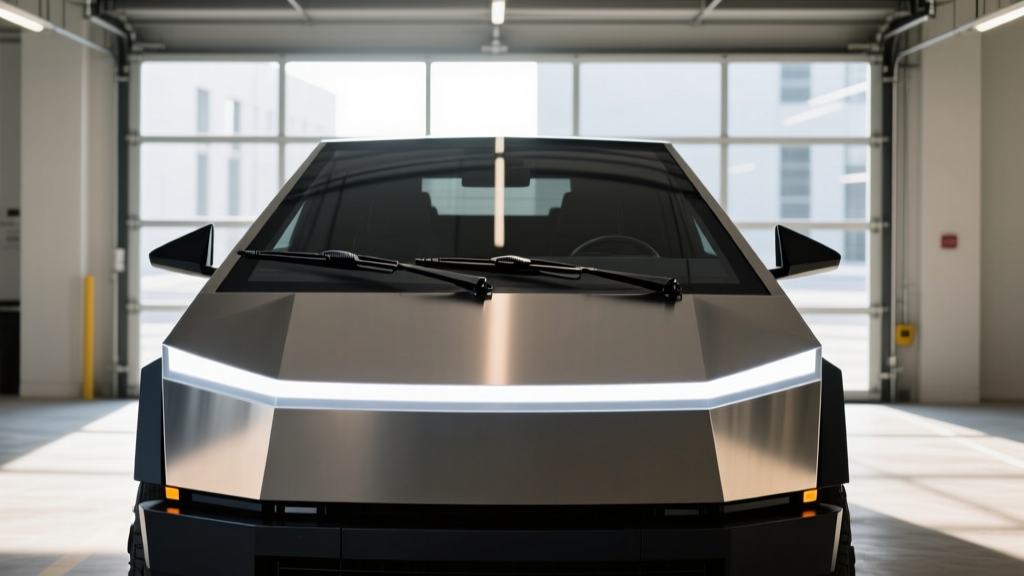
If you've searched for Cybertruck windshield wiper cost, you've likely seen the sticker shock: a single, custom-molded wiper blade assembly that can run owners between $100 and $160 through Tesla's parts and service channels. Unlike conventional trucks that use off-the-shelf $15 blade pairs from any auto parts store, the Cybertruck's angular stainless-steel exoskeleton and steeply raked windshield require a proprietary, single-blade design that integrates with the truck's aerodynamic cowl. It's a legitimate ownership friction point — but one that only makes sense when evaluated against the full cost-of-ownership picture.
This review covers the 2026 Tesla Cybertruck lineup (AWD, Cyberbeast, and the now-available RWD) with the exact range, charging, pricing, and maintenance data you need to decide whether this polarizing electric pickup fits your garage.
Cybertruck Specs at a Glance: Range, Battery, and Performance
| Spec | AWD | Cyberbeast | RWD |
|---|---|---|---|
| EPA Range | 340 mi | 320 mi | ~250 mi (est.) |
| Battery (usable) | ~123 kWh (NMC) | ~123 kWh (NMC) | ~123 kWh (NMC) |
| 0–60 mph | 3.9 sec | 2.6 sec | ~6.5 sec (est.) |
| Horsepower | 600 hp | 845 hp | ~315 hp (est.) |
| Drivetrain | Dual-motor AWD | Tri-motor AWD | Single-motor RWD |
| Max Tow Capacity | 11,000 lb | 11,000 lb | 7,500 lb (est.) |
| Base MSRP | $79,990 | $99,990 | $60,990 |
Tesla does not officially publish the Cybertruck's pack chemistry, but teardowns and supply-chain reporting confirm a nickel-manganese-cobalt (NMC) 4680-cell architecture with a structural battery pack. This chemistry delivers high energy density — necessary for a 6,800-pound stainless-steel truck — but trades some cycle-life longevity versus LFP. The ~123 kWh usable capacity is among the largest in any production consumer EV.
The EPA's 340-mile sticker on the AWD Cybertruck is achievable in mild, city-dominant driving. Expect ~270–290 miles on a 75°F highway trip at 70 mph, and ~220–250 miles in sub-30°F winter conditions due to cabin heating load and increased rolling resistance. Towing near max capacity compresses range to roughly 150–180 miles. The truck's brick-like 0.38 Cd drag coefficient is the primary highway-range enemy.
Charging Speed: 800V Architecture Meets the Supercharger Network
The Cybertruck uses an 800-volt electrical architecture, enabling it to accept peak DC fast-charge rates up to 350 kW at V4 Superchargers. Here is what that translates to in real time:
| Charge Level | Power | 10–80% Time | Miles Added per Hour |
|---|---|---|---|
| Level 1 (120V outlet) | ~1.4 kW | N/A (days) | ~4 mi/hr |
| Level 2 (240V / 48A Wall Connector) | 11.5 kW | ~9–10 hrs (full) | ~34 mi/hr |
| DC Fast Charge (V4 Supercharger) | Peak 350 kW | ~15 min (10–80%) | ~1,300 mi/hr (peak) |
| DC Fast Charge (50–150 kW public) | Variable | ~35–55 min | ~200–500 mi/hr |
The 800V system is the Cybertruck's charging ace. On a V4 Supercharger, the charge curve holds above 250 kW from roughly 10% to 45% SoC before tapering. That 10–80% sprint in approximately 15 minutes is among the fastest of any production truck. However, on older 150 kW CCS-adapted chargers (Tesla opened Superchargers to non-Tesla EVs using a Magic Dock adapter, but Cybertruck uses NACS natively), expect the 10–80% session to stretch past 40 minutes. Preconditioning the battery via navigation-routed Supercharging is essential — without it, peak rates may be halved in cold weather.
Pricing, Trims, and the Federal Tax Credit Question
The Cybertruck's pricing has been a moving target since its 2023 unveiling. As of the 2026 model year, the lineup stands as follows:
| Trim | MSRP | §30D Credit Eligible? | Effective Price (if eligible) |
|---|---|---|---|
| RWD | $60,990 | Potentially (under $80K truck cap) | ~$53,490 |
| AWD (Dual-Motor) | $79,990 | Borderline (at $80K truck cap) | ~$72,490 |
| Cyberbeast (Tri-Motor) | $99,990 | No (exceeds $80K truck MSRP cap) | $99,990 |
The IRS §30D Clean Vehicle Credit provides up to $7,500 for qualifying new EVs, but trucks face an $80,000 MSRP cap (lower than the $55,000 sedan cap). Buyer income limits also apply: modified AGI cannot exceed $300,000 (joint), $225,000 (head of household), or $150,000 (single). Additionally, the vehicle must meet critical-mineral and battery-component sourcing requirements, which have tightened annually through 2026. The RWD Cybertruck is the most likely candidate for the credit; the AWD sits right at the cap and may qualify depending on destination fees and options; the Cyberbeast is categorically excluded by MSRP. Always verify current eligibility at IRS.gov and consult a tax professional before purchasing.
Tesla also offers the Cybertruck via point-of-sale credit transfer at the dealership, reducing your out-of-pocket cost at purchase rather than waiting for a tax refund — provided the vehicle qualifies.
Efficiency, Cargo, and the Wiper Cost in Perspective
According to fueleconomy.gov, the dual-motor AWD Cybertruck achieves an EPA-rated 58 MPGe combined, consuming roughly 56 kWh per 100 miles. That is thirsty by EV standards — a direct consequence of 6,800+ pounds of stainless steel and a frontal area larger than most full-size pickups. For comparison, the Rivian R1T Dual-Motor achieves 73 MPGe combined, and the Ford F-150 Lightning Extended Range lands at 70 MPGe.
Cargo capacity breaks down as:
- Bed (vault): ~67 cu ft (6' × 4' footprint, lockable tonneau)
- Frunk (front trunk): ~7.1 cu ft
- Rear cabin storage: Under-seat compartments, 60/40 split folding rear seats
- Passenger space: ~41 inches front legroom, ~38 inches rear legroom (comparable to midsize crew-cab trucks)
Now, back to that wiper blade. At $100–$160 per replacement, and assuming a 12–18 month replacement interval, you're budgeting roughly $80–$120 per year in wiper maintenance. For context:
- A Ford F-150 Lightning uses standard wiper blades: ~$25–$40 per pair.
- Rivian R1T: ~$30–$50 per set.
- Tesla Model Y: ~$35–$50 per pair.
The Cybertruck's proprietary wiper premium is real, but over five years it adds approximately $300–$400 versus a conventional truck. That's a fraction of the fuel savings the electric powertrain delivers — but it's a tangible example of the "Tesla tax" on proprietary parts that buyers should factor in.
- Class-leading 800V charging: 10–80% in ~15 min at V4 Superchargers
- Stainless-steel exoskeleton resists dents, scratches, and corrosion
- 11,000-lb towing with integrated trailer brake controller
- 48V electrical architecture enables high-power accessories
- Access to Tesla's Supercharger network (17,000+ stalls in North America)
- Cyberbeast's 2.6-second 0–60 is supercar territory in a pickup
- Proprietary parts carry premium pricing (wiper blades, body panels, glass)
- 58 MPGe is the least efficient EV truck on the market
- Real-world highway range drops sharply due to poor aerodynamics
- Rear visibility is compromised by the vault/sail design
- Build-quality inconsistencies reported in early production units
- Cyberbeast and AWD trims ineligible or borderline for §30D tax credit
Battery Warranty, Driver Assists, and Standout Tech
Tesla covers the Cybertruck's battery and drive units with an 8-year / 120,000-mile warranty (whichever comes first), with a guaranteed minimum 70% capacity retention over that period. The NMC chemistry will degrade faster than LFP in high-heat, high-cycle scenarios, but Tesla's thermal management system is among the best in the industry. Real-world degradation data from 2024–2025 model-year Cybertrucks is still limited, but Tesla's historical fleet data on NMC packs suggests ~8–12% loss over the first 100,000 miles.
On the tech front, the Cybertruck ships with:
- Autopilot (standard): Adaptive cruise, lane-keeping, emergency braking — this is SAE Level 2 driver-assist, not autonomous driving. You must remain engaged.
- Full Self-Driving (Supervised) ($8,000 option or $99/mo subscription): Adds automatic lane changes, traffic-light recognition, and city-street navigation. Still Level 2 — Tesla's naming is aspirational, and NHTSA continues to scrutinize FSD safety data.
- 18.5-inch center touchscreen with integrated vehicle controls (no physical gauges or knobs)
- Steer-by-wire with rear-wheel steering for a tighter turning circle than its wheelbase suggests
- Bioweapon Defense Mode (HEPA air filtration) and powered tonneau cover
The steer-by-wire system is the Cybertruck's most divisive feature. It eliminates the mechanical connection between the steering wheel and the rack, enabling variable ratio steering (fewer turns lock-to-lock at low speed). Some drivers adapt within a day; others find the lack of road feedback unsettling. Test-drive before committing.
Who Should Buy the Cybertruck — And Who Shouldn't
- You need a full-size electric truck for towing and want the fastest DC charging in the segment
- You value the Supercharger network for long-distance truck travel
- You want a statement vehicle and accept the polarizing design
- You're considering the RWD trim for fleet or commercial use under the $80K credit cap
- Efficiency is a priority (Rivian R1T and F-150 Lightning beat it by 20%+)
- You want traditional truck ergonomics (physical knobs, conventional mirrors, flat-load floor)
- You need a crew-cab rear seat optimized for child seats or adult passengers on long trips
- Parts availability and predictable maintenance costs matter more than cutting-edge tech
Frequently Asked Questions
How much does a Tesla Cybertruck windshield wiper blade actually cost?
The proprietary single wiper blade assembly for the Cybertruck typically costs between $100 and $160 through Tesla's service parts channel, including labor if installed at a service center. The blade is custom-molded to the truck's steeply angled windshield and aerodynamic cowl. DIY installation is possible and takes roughly 5 minutes once you learn the attachment mechanism, saving the labor fee.
What is the real-world highway range of the Cybertruck?
The EPA rates the dual-motor AWD Cybertruck at 340 miles. In real-world highway testing at 70 mph in moderate temperatures, expect 270–290 miles. In cold weather (below 30°F), that drops to 220–250 miles. Towing near the 11,000-lb maximum compresses range to approximately 150–180 miles.
Does the Cybertruck qualify for the $7,500 federal EV tax credit?
It depends on the trim. The RWD ($60,990) is the strongest candidate. The AWD ($79,990) sits at the §30D truck MSRP cap and may qualify depending on destination charges and options. The Cyberbeast ($99,990) exceeds the cap and does not qualify. All trims are subject to buyer income limits and battery-sourcing requirements. Verify at IRS.gov before purchasing.
How fast does the Cybertruck charge at home?
On a Tesla Wall Connector (240V, 48 amps), the Cybertruck adds approximately 34 miles of range per hour, or about 11.5 kW. A full 10–100% charge takes roughly 9–10 hours. Level 1 (standard 120V outlet) adds only about 4 miles per hour — essentially useless for a 123 kWh pack unless used as a trickle maintainer.
Is the Cyberbeast's 2.6-second 0–60 time usable in daily driving?
The Cyberbeast's 845-hp tri-motor powertrain delivers supercar-level acceleration, but the truck's 6,800-pound mass means you feel the weight in corners and braking. The acceleration is genuinely thrilling in short bursts, but the efficiency penalty is steep — Cyberbeast owners report real-world consumption exceeding 60 kWh/100mi in spirited driving.
What is the Cybertruck's battery warranty?
Tesla provides an 8-year / 120,000-mile warranty on the battery and drive units, guaranteeing a minimum of 70% capacity retention. This is competitive with Rivian (8yr/175,000mi) and Ford (8yr/100,000mi) for the F-150 Lightning.