Quick Verdict: The Cybertruck Is Heavy — Here's Why It Matters
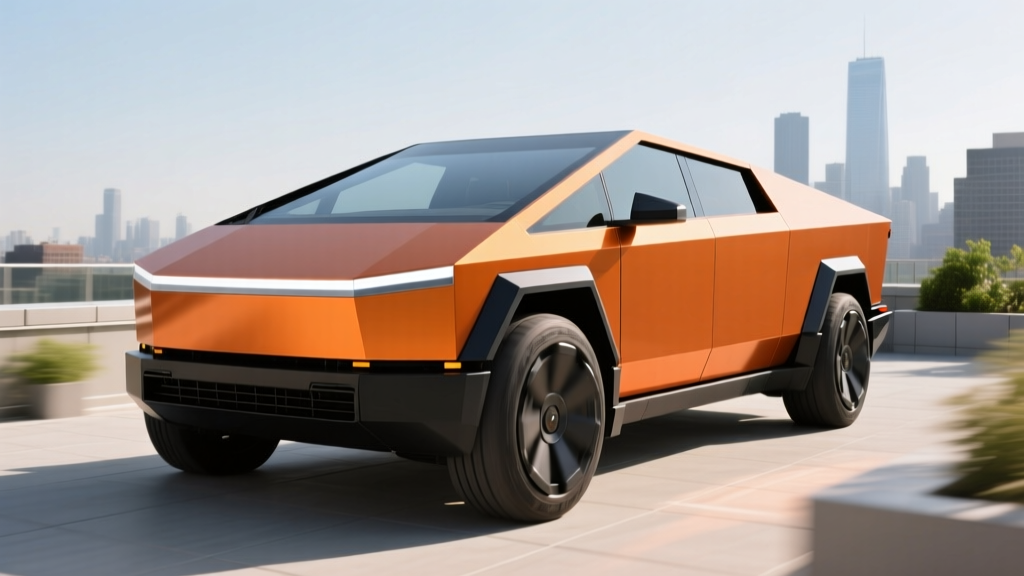
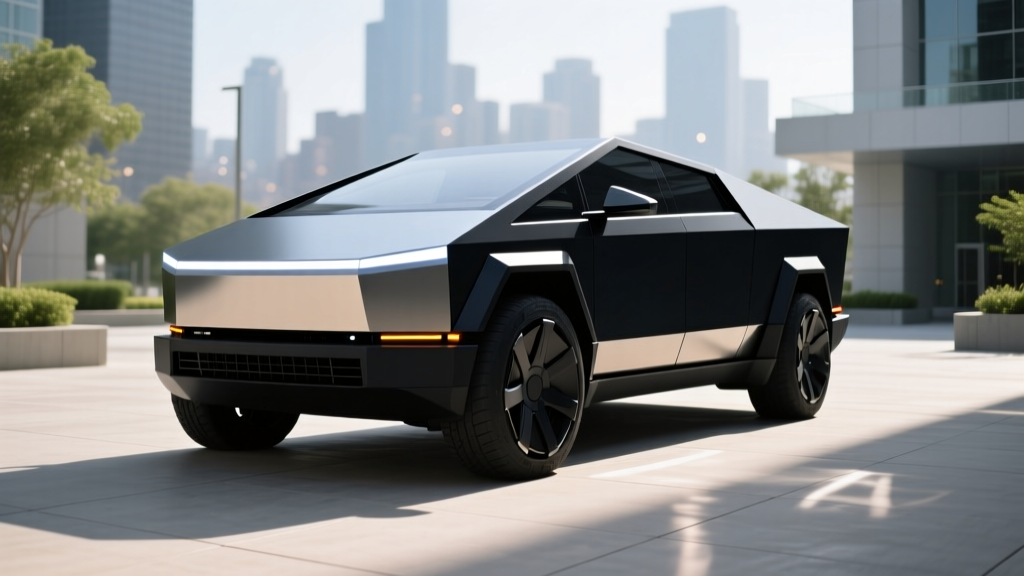
The Tesla Cybertruck is one of the heaviest light-duty pickups on the road, and its curb weight shapes nearly every aspect of ownership — from range and tire wear to charging times and bridge-load compliance. If you've been searching for exactly how much a Cybertruck weighs, the short answer is that it depends on the trim, but the numbers are substantial across the board.
The 2026 Tesla Cybertruck lineup spans three trims, and their curb weights range from roughly 6,603 lbs for the Long Range AWD to approximately 6,843 lbs for the Cyberbeast performance variant. For context, a Ford F-150 Lightning Extended Range tips the scales at around 6,370 lbs, and a Rivian R1T Dual-Motor Max comes in near 7,150 lbs. The Cybertruck sits firmly in the heavyweight EV truck category, but its stainless-steel exoskeleton and large battery pack make that mass somewhat expected.
Weight matters for EV buyers because it directly influences real-world range, energy consumption (kWh/100mi), tire longevity, and braking distances. Let's break down every critical spec you need before deciding whether the Cybertruck's heft is a feature or a dealbreaker.
Cybertruck Weight, Range, and Performance Specs at a Glance
| Specification | Long Range AWD | All-Wheel Drive | Cyberbeast |
|---|---|---|---|
| Curb Weight | ~6,603 lbs | ~6,762 lbs | ~6,843 lbs |
| GVWR | ~9,100 lbs | ~9,100 lbs | ~9,100 lbs |
| EPA Range (est.) | ~340 mi* | ~318 mi* | ~307 mi* |
| Battery (usable, est.) | ~123 kWh (NMC) | ~123 kWh (NMC) | ~123 kWh (NMC) |
| Drivetrain | Dual-Motor AWD | Dual-Motor AWD | Tri-Motor AWD |
| Horsepower | ~600 hp | ~600 hp | ~845 hp |
| 0–60 mph | ~4.8 sec | ~3.9 sec | ~2.6 sec |
| Max Tow Capacity | 11,000 lbs | 11,000 lbs | 11,000 lbs |
| MPGe (combined, est.) | ~67 MPGe | ~64 MPGe | ~60 MPGe |
| kWh/100mi (est.) | ~50 | ~52 | ~56 |
*EPA range figures are estimated based on Tesla's published data and fueleconomy.gov listings. Final EPA certification values may vary. Always check the window sticker for the official number.
The Cybertruck's EPA-estimated range is achievable in mixed city/suburban driving at moderate temperatures (65–75°F). In real-world highway testing at 70–75 mph, expect approximately 15–20% range reduction from the EPA sticker — putting the Long Range AWD at roughly 270–290 highway miles. In cold weather (below 32°F), range can drop an additional 10–25% depending on cabin heating demand and whether the battery is preconditioned. Heavy towing (8,000+ lbs) can cut range by 40–50%.
How Much Does a Cybertruck Weigh Compared to Competitors?
Understanding the Cybertruck's curb weight requires context. Here's how it stacks up against the key electric and conventional trucks in its class:
| Vehicle | Curb Weight (approx.) | Powertrain |
|---|---|---|
| Tesla Cybertruck Long Range AWD | 6,603 lbs | BEV |
| Tesla Cybertruck Cyberbeast | 6,843 lbs | BEV |
| Ford F-150 Lightning Ext. Range | ~6,370 lbs | BEV |
| Rivian R1T Dual-Motor Max | ~7,150 lbs | BEV |
| GMC Hummer EV Pickup | ~9,063 lbs | BEV |
| Ford F-150 (gas, 3.5L EcoBoost) | ~4,700 lbs | ICE |
| Toyota Tundra Hybrid | ~5,500 lbs | HEV |
The Cybertruck is lighter than the Rivian R1T Max Pack and dramatically lighter than the Hummer EV, but it's roughly 300 lbs heavier than the F-150 Lightning Extended Range. That extra mass comes primarily from the stainless-steel exoskeleton — Tesla uses 30X cold-rolled ultra-hard stainless steel, which is far denser than the aluminum or stamped steel used by competitors. The trade-off is exceptional dent and corrosion resistance, but you pay for it in curb weight and energy consumption.
Battery Chemistry, Capacity, and What the Weight Means for Efficiency
The Cybertruck uses a large NMC (nickel-manganese-cobalt) lithium-ion battery pack with an estimated usable capacity of approximately 123 kWh. Tesla has not adopted LFP (lithium iron phosphate) chemistry for the Cybertruck — LFP is heavier per kWh of energy stored, which would push curb weight even higher. NMC offers better energy density, which is critical for a vehicle this heavy to achieve over 300 miles of range.
The battery pack alone accounts for a significant portion of the Cybertruck's weight — likely over 1,800 lbs. Combined with the steel exoskeleton, heavy-duty suspension, and tri-motor powertrain (on the Cyberbeast), the mass adds up quickly.
Here's what that means for your energy bill: at an estimated 50–56 kWh per 100 miles, the Cybertruck consumes roughly 2–2.5× the energy of a Tesla Model Y per mile driven. At the US average electricity rate of ~$0.17/kWh, charging from 0–100% at home costs approximately $21–$24. For comparison, filling an F-150 gas truck at $3.40/gallon and 18 MPG combined costs about $57 for equivalent range.
Charging Speed: DC Fast Charging and Home Level 2
Charging a vehicle this heavy with a battery this large requires patience — or a good fast-charging strategy. Here's what the Cybertruck supports:
| Charging Level | Max Rate | Estimated Speed |
|---|---|---|
| Level 1 (120V household) | ~1.4 kW | ~2–3 mi/hr |
| Level 2 (240V home/public) | ~11.5 kW (48A) | ~18–22 mi/hr |
| DC Fast Charge (Tesla Supercharger V4) | ~250 kW peak | 10–80% in ~30–35 min |
| DC Fast Charge (CCS via adapter) | ~150–250 kW | Varies by station |
A few critical notes on the Cybertruck's charging curve:
- Peak vs. sustained rate: The Cybertruck can peak near 250 kW at a low state of charge (SoC), but like all large packs, the charge rate tapers significantly above 60–70% SoC. The 10–80% time of ~30–35 minutes reflects this taper — you won't see 250 kW for the entire session.
- Preconditioning matters: Navigate to a Supercharger using the truck's built-in navigation, and the battery will automatically precondition (warm up) to accept maximum charge rates. Skipping preconditioning in cold weather can add 10–15 minutes to your session.
- Home charging reality: At 11.5 kW on a Level 2 home charger (like the Tesla Wall Connector on a 60A circuit), a full 0–100% charge takes roughly 11–13 hours. Most owners who plug in nightly will rarely need a full charge — adding 150–200 miles overnight is typical.
- NACS connector: The Cybertruck uses the native NACS (North American Charging Standard) connector, giving direct access to Tesla's Supercharger network — currently the most reliable DC fast-charging network in the US. A CCS adapter is available for non-Tesla networks like Electrify America.
Pricing, Trims, and Federal Tax Credit Eligibility
The Cybertruck's pricing has shifted since its initial delivery event. Here's where the 2026 model year stands:
| Trim | Base MSRP (est.) | Federal Tax Credit (§30D) | Effective Price (if eligible) |
|---|---|---|---|
| Long Range AWD | ~$79,990 | Varies — see below | ~$72,490* |
| All-Wheel Drive | ~$99,990 | Varies — see below | ~$92,490* |
| Cyberbeast | ~$119,990 | Varies — see below | ~$112,490* |
*Effective price assumes full $7,500 credit eligibility. Your actual eligibility depends on multiple factors — see checklist below.
The IRS §30D clean vehicle credit can provide up to $7,500 for qualifying new EV purchases, but the Cybertruck faces several hurdles:
- MSRP cap: Trucks/vans/SUVs must have an MSRP at or below $80,000. The Long Range AWD may qualify; the AWD and Cyberbeast trims exceed this cap and are not eligible.
- Buyer income limits: Modified AGI must not exceed $150,000 (single), $225,000 (head of household), or $300,000 (joint filers).
- Battery sourcing requirements: A percentage of critical minerals and battery components must be sourced from the US or free-trade-agreement countries. These thresholds tighten annually. Check the latest IRS guidance before purchasing.
- Point-of-sale transfer: As of 2024+, eligible buyers can transfer the credit to the dealer at purchase, reducing the upfront cost rather than waiting for a tax refund.
Always verify eligibility at fueleconomy.gov and consult a tax professional before relying on the credit.
Cargo, Passenger Space, and Daily Practicality
For a truck that weighs over 6,600 lbs, the Cybertruck's interior and bed dimensions are surprisingly compact compared to full-size conventional pickups:
- Bed length: 6 feet (72 inches)
- Cargo bed volume: ~67 cu ft
- Front trunk (frunk): ~7 cu ft — useful for charging cables and groceries
- Seating: 6-passenger (3-across front bench + 3-across rear)
- Rear legroom: ~38 inches — adequate for adults but tighter than an F-150 SuperCrew
- Max payload: ~2,500 lbs
- Max towing: 11,000 lbs
The Cybertruck's 6-foot bed is shorter than the 6.5- or 8-foot beds common on conventional full-size trucks. If you regularly haul 4×8 sheets of plywood (which fit with the tailgate down), the Cybertruck can accommodate them — but just barely. The motorized tonneau cover is a standout feature, providing lockable, weather-sealed bed storage that integrates with the truck's angular design.
Tech, Driver Assistance, and Ownership Considerations
The Cybertruck carries Tesla's latest technology stack, including:
- Infotainment: 18.5-inch front touchscreen + 9.4-inch rear touchscreen, with Tesla's proprietary OS (no Apple CarPlay or Android Auto)
- Driver assistance: Tesla Autopilot standard (adaptive cruise + lane-keeping); Full Self-Driving (Supervised) available as a paid add-on
- Steer-by-wire: The Cybertruck uses a fully electronic steer-by-wire system with a yoke-style steering wheel — no mechanical connection between the wheel and the rack
- 48-volt electrical architecture: A first for a production vehicle at this scale, reducing wiring harness weight and enabling higher-power accessories
- Armor glass: Tesla's proprietary laminated glass — more resistant to impacts than standard automotive glass, though not impervious to all damage
- Powershare (V2L/V2H): Bidirectional charging capability — power tools at a job site or provide backup home power during outages
Tesla Autopilot and FSD (Supervised) are SAE Level 2 driver-assistance systems. The driver must remain fully attentive, keep hands available, and be prepared to take over at any moment. These systems are not self-driving. Only Level 4 services like Waymo's robotaxi operate without a human driver in defined areas.
Warranty Coverage
| Component | Coverage |
|---|---|
| Basic Vehicle | 4 years / 50,000 miles |
| Battery & Drive Unit | 8 years / 120,000 miles (min. 70% retention) |
| Restraint System | 5 years / 60,000 miles |
| Corrosion (body) | 12 years / unlimited miles |
The 8-year/120,000-mile battery warranty with a 70% capacity retention threshold is competitive within the EV truck segment. Tesla's stainless-steel body should resist corrosion far better than painted steel, which is reflected in the generous 12-year corrosion warranty.
Pros and Cons: The Cybertruck Ownership Reality
Pros
- Class-leading acceleration (Cyberbeast: 2.6s 0–60)
- Stainless-steel exoskeleton — extremely dent/corrosion resistant
- Access to Tesla Supercharger network (NACS native)
- 11,000-lb towing capacity
- Bidirectional charging (V2L/V2H) for job-site and backup power
- Steer-by-wire enables extremely tight turning radius for a truck
- Distinctive design — highest recognition factor of any new vehicle
Cons
- Heavy curb weight reduces efficiency (50–56 kWh/100mi)
- Highway and cold-weather range loss is significant (~20–35%)
- Short 6-foot bed limits utility vs. conventional full-size trucks
- Only the base Long Range trim may qualify for the §30D tax credit
- No Apple CarPlay or Android Auto — Tesla ecosystem only
- Steer-by-wire and yoke require a learning curve
- Insurance premiums tend to be higher than average for the segment
- Panel gaps and build-quality inconsistencies reported by early owners
Who Should Buy the Cybertruck — And Who Shouldn't
Decision Framework
Choose the Cybertruck if:
- You want an electric truck with Supercharger network access and don't need an 8-foot bed
- Performance matters — the Cyberbeast is the quickest production pickup ever built
- You value the stainless-steel body for durability in harsh environments
- You need bidirectional power for job-site tools or home backup
Look elsewhere if:
- You need maximum towing range — towing 10,000+ lbs will cut range to ~150–180 miles
- You require a full-size back seat with class-leading rear legroom (consider the F-150 Lightning)
- You want Apple CarPlay/Android Auto integration
- You need the full $7,500 tax credit and are shopping above the $80,000 MSRP cap
- Efficiency and low cost-per-mile are your top priorities (a Model Y or Ioniq 5 will cost far less to operate)
Frequently Asked Questions
How much does a Cybertruck weigh exactly?
The 2026 Tesla Cybertruck weighs approximately 6,603 lbs (Long Range AWD), 6,762 lbs (AWD), or 6,843 lbs (Cyberbeast) at curb weight. That makes it heavier than the F-150 Lightning (~6,370 lbs) but lighter than the Hummer EV (~9,063 lbs). The stainless-steel exoskeleton and ~123 kWh NMC battery pack are the primary contributors to this mass.
What is the real-world range of the Cybertruck?
While the Long Range AWD carries an EPA-estimated range of approximately 340 miles, real-world highway driving at 70–75 mph typically yields 270–290 miles. In cold weather (below freezing), expect 220–260 miles depending on cabin heat usage and battery preconditioning. Towing at or near the 11,000-lb max capacity can reduce range to roughly 150–180 miles.
How fast does the Cybertruck charge?
On a Tesla Supercharger V4, the Cybertruck peaks at approximately 250 kW and charges from 10–80% in roughly 30–35 minutes. At home on a Level 2 charger (11.5 kW / 48A), expect about 18–22 miles of range per hour of charging, or a full charge in 11–13 hours. The charge rate tapers significantly above 70% SoC — avoid planning trips around 100% charges.
Does the Cybertruck qualify for the $7,500 federal EV tax credit?
Possibly — but only the Long Range AWD trim, which sits near the $80,000 MSRP cap for trucks under IRS §30D rules. The AWD and Cyberbeast trims exceed this cap and are not eligible. Even for the Long Range, eligibility depends on buyer income limits, battery critical-mineral sourcing requirements, and point-of-sale transfer rules. Check IRS.gov and consult a tax professional before purchasing.
Is the Cybertruck worth buying over the F-150 Lightning or Rivian R1T?
It depends on your priorities. The F-150 Lightning offers a more conventional truck experience with a larger bed, more rear-seat room, and potentially lower pricing — but it uses CCS charging and doesn't access Superchargers natively. The Rivian R1T excels in off-road capability and adventure features but costs more and weighs even more. The Cybertruck wins on acceleration, Supercharger access, and the stainless-steel body, but loses on bed length, efficiency, and tax-credit accessibility for higher trims.
Why is the Cybertruck so heavy?
Three primary factors: (1) the 30X cold-rolled stainless-steel exoskeleton is significantly denser than the aluminum or mild steel used by competing trucks; (2) the ~123 kWh NMC battery pack is large and heavy (estimated 1,800+ lbs); and (3) the heavy-duty suspension, tri-motor powertrain (Cyberbeast), and 48-volt architecture add mass. The weight trade-off buys durability, performance, and range — but it costs efficiency.