Tesla Cybertruck Warranty: What's Actually Covered?
The Tesla Cybertruck warranty structure reflects its positioning as a premium electric pickup, with coverage terms that differ meaningfully between the battery pack and the rest of the vehicle. Understanding these terms is critical before signing a delivery agreement, especially given the truck's price point and the long-term cost implications of out-of-warranty battery replacement.
| Warranty Component | Coverage Term |
|---|---|
| Basic Vehicle Limited Warranty | 4 years / 50,000 miles |
| Battery & Drive Unit Warranty (AWD & Cyberbeast) | 8 years / 120,000 miles |
| Battery Capacity Retention Guarantee | Minimum 70% over warranty period |
| Restraint System | 5 years / 60,000 miles |
| Corrosion Perforation | 12 years / unlimited miles |
The 8-year/120,000-mile battery and drive unit warranty applies to both the Dual Motor AWD and the tri-motor Cyberbeast trims. Tesla guarantees the battery will retain at least 70% of its original capacity during this period. If degradation exceeds that threshold, Tesla will repair or replace the pack at no cost. This 70% retention floor is consistent with industry norms from Ford, Rivian, and GM, though some competitors guarantee 80%.
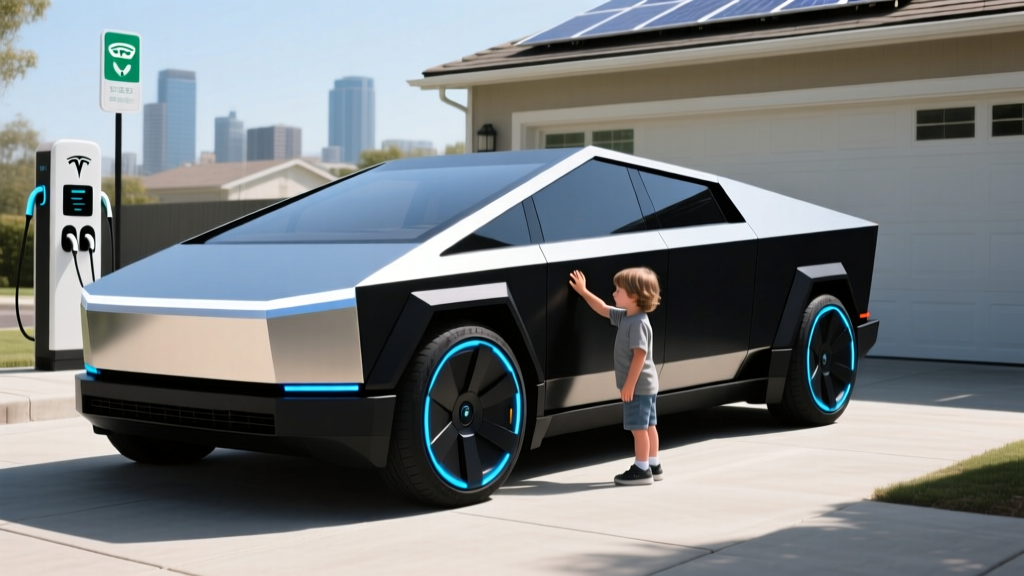
The basic vehicle warranty at 4 years/50,000 miles is average for the segment. Rivian matches it, while Ford offers 3 years/36,000 miles on the F-150 Lightning's bumper-to-bumper coverage. The stainless steel exoskeleton carries the 12-year corrosion perforation warranty, though surface rust or cosmetic patina on the unpainted steel panels is not covered—a nuance worth understanding given the Cybertruck's bare-metal finish.
EPA Range vs. Real-World Expectations
EPA Estimated Range: 340 miles (AWD) / 320 miles (Cyberbeast)
Real-World Expectation: 270–300 miles highway driving; 220–250 miles in cold weather (below 32°F) or at sustained speeds above 75 mph. The Range Extender add-on (when available) is projected to push total range to approximately 470 miles EPA.
The Cybertruck AWD's 340-mile EPA rating is derived from its approximately 123 kWh usable battery pack, which uses 4680-format cells with nickel-manganese-cobalt (NMC) chemistry. The Cyberbeast trim sacrifices roughly 20 miles of range due to its tri-motor powertrain's higher energy draw and more aggressive performance tuning.
In real-world highway testing at 70–75 mph, expect to use between 45 and 50 kWh per 100 miles, which translates to roughly 250–270 miles before hitting a 10% state of charge. Cold weather compounds this: lithium-ion cells lose efficiency below freezing, and cabin heating demands energy that would otherwise go to propulsion. Plan for 20–30% range reduction in winter conditions, consistent with most large EVs without a dedicated heat pump optimized for extreme cold.
The Cybertruck's efficiency rating sits at approximately 56 MPGe combined (AWD), or about 58 kWh per 100 miles. For comparison, the Ford F-150 Lightning Extended Range achieves 66 MPGe combined, and the Rivian R1T Dual-Motor Large Pack lands around 70 MPGe. The Cybertruck's angular stainless-steel body creates more aerodynamic drag than its competitors, directly impacting highway efficiency.
Charging Speed: DC Fast Charge and Home Level 2
| Charging Level | Power / Rate | Speed |
|---|---|---|
| DC Fast Charge (Peak) | 250 kW (V3 Supercharger) | 10–80% in ~30 minutes |
| DC Fast Charge (Sustained avg.) | ~170 kW average to 80% | ~150 miles added in 15 min |
| Level 2 Home (48A / 11.5 kW) | 11.5 kW | ~37 miles per hour of charging |
| Level 2 Home (32A / 7.7 kW) | 7.7 kW | ~25 miles per hour of charging |
| Level 1 (120V) | ~1.4 kW | ~3–4 miles per hour |
The Cybertruck supports a peak DC fast-charge rate of 250 kW on Tesla V3 Superchargers using its native NACS connector. However, peak rate is not sustained rate. The charge curve tapers significantly above 60% state of charge, and thermal management limits sustained input. Expect an average rate of roughly 170 kW from 10–80%, yielding a 30-minute session under ideal conditions. In practice, battery preconditioning (initiated automatically when you navigate to a Supercharger) is essential to hit these numbers—without it, cold-soak can cut peak charge rates by 40–50%.
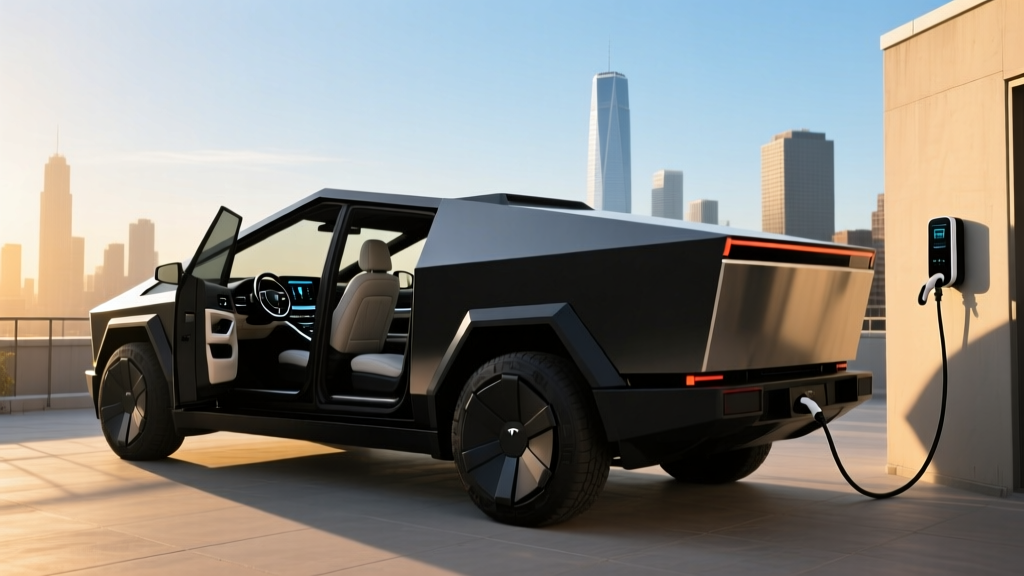
At home, the Cybertruck's onboard charger accepts up to 11.5 kW (48 amps) on a Level 2 circuit. A full charge from 10% to 100% takes approximately 10–11 hours at this rate. Most owners install a Tesla Wall Connector on a 60-amp dedicated circuit, which delivers the full 48 amps to the vehicle. Installation costs typically range from $800 to $2,000 depending on panel proximity and local permitting, though a panel upgrade to 200A service can add $1,500–$3,000 for older homes.
Performance, Pricing, and Tax Credit Eligibility
| Trim | Drivetrain | 0–60 mph | Horsepower | Base MSRP |
|---|---|---|---|---|
| AWD | Dual Motor AWD | 3.9 seconds | 600 hp | $79,990 |
| Cyberbeast | Tri-Motor AWD | 2.6 seconds | 845 hp | $99,990 |
The dual-motor AWD Cybertruck delivers 600 horsepower and a 3.9-second 0–60 time—quick for any vehicle, let alone a 6,600-pound stainless-steel truck. The Cyberbeast's tri-motor setup pushes 845 horsepower and a 2.6-second sprint, placing it in supercar territory. Both trims feature adaptive air suspension with up to 16 inches of ground clearance and a stated towing capacity of 11,000 pounds.
| Cost Factor | AWD | Cyberbeast |
|---|---|---|
| Base MSRP (2025/2026) | $79,990 | $99,990 |
| Federal §30D Tax Credit | $0 (exceeds MSRP cap) | $0 (exceeds MSRP cap) |
| Estimated Out-the-Door | ~$83,000–$86,000 | ~$103,000–$107,000 |
Neither Cybertruck trim qualifies for the IRS §30D federal tax credit. The credit's MSRP cap for pickup trucks is $80,000, and the AWD trim starts at $79,990 before destination charges—which push it over the threshold. The Cyberbeast at $99,990 is well above the cap. Additionally, the §30D credit imposes buyer income limits ($300,000 joint / $150,000 single) and battery critical-mineral sourcing requirements that further restrict eligibility. Consult a tax professional for your specific situation, and verify current-year rules on IRS.gov before making a purchase decision.
With destination fees, taxes, and typical dealer documentation, expect out-the-door pricing of roughly $83,000–$86,000 for the AWD and $103,000–$107,000 for the Cyberbeast. Tesla does not negotiate pricing, and as of early 2026, inventory availability has normalized compared to the initial launch-period premiums.
Cargo Space, Interior, and Practical Utility
The Cybertruck's 6-foot composite bed offers 67 cubic feet of cargo volume with the tonneau cover closed. The vault-style bed is sealed and lockable, and the powered tonneau cover supports up to 300 pounds of distributed weight. Under the bed floor, there is no traditional spare tire—Tesla provides a tire repair kit instead.
The front trunk (frunk) adds approximately 7 cubic feet of lockable storage, useful for charging cables or groceries. Inside the cabin, the rear seat offers 38.5 inches of legroom—adequate for adults on shorter trips but tighter than the F-150 Lightning's 43.6 inches. The rear seat folds in a 60/40 split to extend cargo capacity into the cabin.
The 18.5-inch center touchscreen runs Tesla's latest infotainment software, including navigation, streaming, and vehicle controls. A rear 9.4-inch touchscreen serves second-row passengers. The Cybertruck includes Tesla's standard suite of driver-assistance features (Traffic-Aware Cruise Control, Autosteer) which operate at SAE Level 2—meaning the driver must remain fully engaged and hands on the wheel at all times. Full Self-Driving (Supervised) is available as a $8,000 add-on or subscription, but remains a Level 2 system despite its name.
Who Should Buy the Cybertruck?
Choose the Cybertruck AWD if: You want a fast, head-turning electric pickup with strong towing capacity, Supercharger network access, and 340 miles of range for daily driving and weekend trips—and you can absorb $80K+ without a federal tax credit.
Choose the Cyberbeast if: Performance is paramount, you want tri-motor redundancy for off-road traction, and the $100K price point fits your budget.
Look elsewhere if: You need maximum rear-seat space (Rivian R1T or F-150 Lightning are roomier), you require the longest possible range (R1T Max Pack achieves ~410 miles), or you want to leverage the $7,500 federal tax credit.
The Cybertruck is best suited for buyers who prioritize Tesla's Supercharger network, rapid acceleration, and distinctive design over traditional truck practicality. It excels as a daily driver that can tow a boat or trailer on weekends, but its bed dimensions and rear-seat space fall short of full-size conventional pickups.
Pros and Cons at a Glance
Pros
- 340-mile EPA range (AWD); 470 mi projected with Range Extender
- 250 kW peak DC fast charging on Supercharger network
- Class-leading acceleration (2.6s Cyberbeast)
- 11,000-lb towing capacity
- Sealed, lockable bed vault with powered tonneau
- Over-the-air software updates and Tesla ecosystem
- 8-year/120,000-mile battery warranty
Cons
- No federal §30D tax credit eligibility (MSRP cap)
- Rear legroom tighter than F-150 Lightning and R1T
- Highway efficiency (~56 MPGe) trails competitors due to drag
- Real-world range drops significantly in cold/highway use
- Stainless steel panels prone to cosmetic surface marks
- No spare tire included
- FSD remains Level 2 despite name and price
Frequently Asked Questions
What is the real-world range of the Tesla Cybertruck?
The AWD Cybertruck is EPA-rated at 340 miles, but real-world highway driving at 70–75 mph typically yields 270–300 miles. In freezing temperatures, expect 220–250 miles due to battery efficiency loss and cabin heating demands. The Cyberbeast trims are rated at 320 miles EPA, with proportionally lower real-world figures.
How fast does the Cybertruck charge at home and on the road?
On a Tesla V3 Supercharger, the Cybertruck peaks at 250 kW DC and charges from 10–80% in approximately 30 minutes, though sustained rates average closer to 170 kW. At home on a 48-amp Level 2 charger (11.5 kW), it adds roughly 37 miles of range per hour, with a full 10–100% charge taking about 10–11 hours.
Does the Cybertruck qualify for the $7,500 federal EV tax credit?
No. The IRS §30D credit caps eligible pickup trucks at $80,000 MSRP. The Cybertruck AWD starts at $79,990 before destination charges, which push it over the threshold. The Cyberbeast at $99,990 is well above the cap. Always verify current rules on IRS.gov and consult a tax professional.
How does the Cybertruck warranty compare to the F-150 Lightning and Rivian R1T?
Tesla offers 8 years/120,000 miles on the battery and drive unit with a 70% capacity retention guarantee. Ford matches 8 years/100,000 miles on the Lightning's battery with an identical 70% floor. Rivian provides 8 years/175,000 miles on the R1T battery pack—a notably longer mileage limit. Basic vehicle coverage is 4/50,000 for Tesla, 3/36,000 for Ford, and 5/60,000 for Rivian.
Is the Cybertruck worth buying over key competitors?
It depends on your priorities. The Cybertruck wins on acceleration, Supercharger access, and head-turning design. The Ford F-150 Lightning offers more rear-seat room, Pro Power Onboard, and a lower entry price. The Rivian R1T delivers superior off-road capability, a longer Max Pack range option, and better rear-seat comfort. None of these three qualify for the full $7,500 credit at their top trims, but lower Lightning and R1T trims may still be eligible.
What happens if the Cybertruck battery needs replacement out of warranty?
Out-of-warranty battery replacement for a pack of this size (~123 kWh) currently costs between $15,000 and $25,000 including labor, based on Tesla service estimates and third-party EV repair data. However, 4680-cell NMC packs have demonstrated strong longevity in Model Y applications, and most owners will not exceed 30% degradation within the 8-year warranty window under normal use patterns.