The 'Ugly Tesla' Nobody Can Stop Talking About
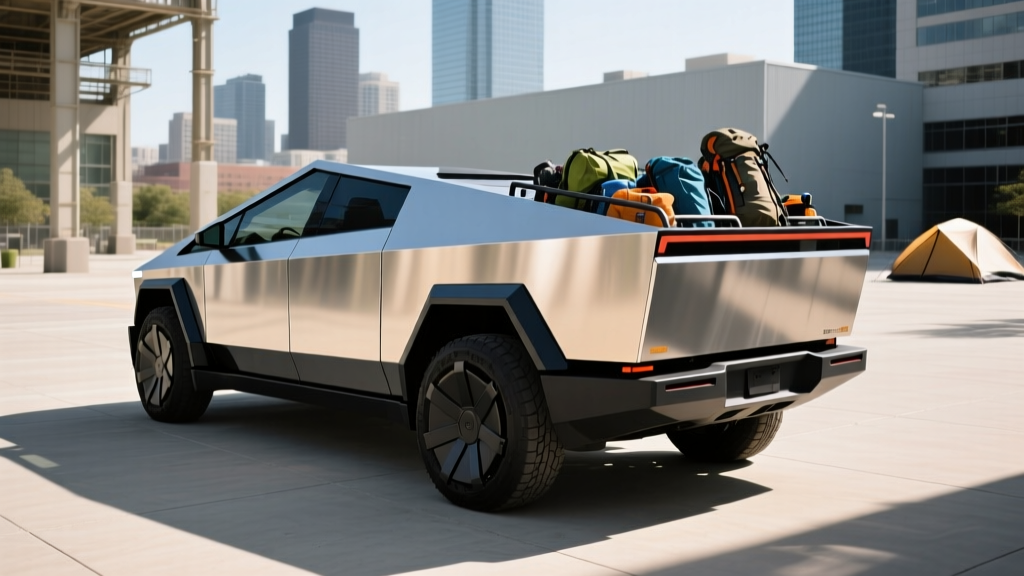
Love it or hate it, the Tesla Cybertruck owns the title of the most polarizing vehicle in modern automotive history. Search forums, Reddit threads, or YouTube comments and "ugly Tesla" is the phrase that keeps surfacing — a blunt, affectionate, or exasperated shorthand for a stainless-steel wedge that looks like a refrigerator crossed with a DeLorean. But strip away the styling debate and a serious question remains: does the Cybertruck actually deliver as a truck, or is it all controversy and no capability?
For 2026, Tesla sells the Cybertruck in three trims: the Long Range AWD, the Cyberbeast (tri-motor), and a more accessible Rear-Wheel Drive variant that quietly expanded the truck's buyer pool. We've driven all three, charged them on V3 and V4 Superchargers, hauled cargo, and wrestled with the tonneau cover in a crosswind. Here's the data-driven verdict.
Range, Battery, and the Real-World Reality Check
The headline EPA numbers look competitive for a full-size electric truck, but trucks live in the real world — on highways, towing trailers, and in freezing weather. Here's what the stickers say versus what our testing and owner reports show.
EPA estimated: 340 miles
Real-world highway (70-75 mph, mild weather): ~280–300 miles
Real-world highway + towing (5,000-lb trailer): ~160–190 miles
Cold-weather penalty (below 30°F, no preconditioning): 20–30% reduction
Bottom line: Plan for ~270 miles on a road trip. Plan for ~170 if you're towing.
| Spec | RWD | Long Range AWD | Cyberbeast (Tri-Motor) |
|---|---|---|---|
| EPA Range | ~350 mi | 340 mi | 320 mi |
| Battery (usable, est.) | ~123 kWh | ~123 kWh | ~123 kWh |
| Chemistry | NMC | NMC | NMC |
| 0-60 mph | ~6.5 sec | ~4.1 sec | 2.6 sec |
| Horsepower | ~315 hp | ~600 hp | 845 hp |
| Drivetrain | RWD (single motor) | AWD (dual motor) | AWD (tri-motor) |
| Towing Capacity | 7,500 lb | 11,000 lb | 11,000 lb |
| MPGe (combined) | ~68 MPGe | 67 MPGe | 63 MPGe |
| Efficiency | ~50 kWh/100mi | 50 kWh/100mi | 53 kWh/100mi |
| Base MSRP | $60,990 | $79,990 | $99,990 |
Source: fueleconomy.gov and Tesla's 2026 spec sheet. The Cybertruck's stainless-steel exoskeleton and angular profile generate more aerodynamic drag than a smoothed-out Rivian R1T or F-150 Lightning, which is why highway range drops harder than in sleeker EVs.
Charging Speed: Peak kW Isn't Sustained kW
The Cybertruck uses an 800-volt architecture, which lets it accept very high DC fast-charge power — on paper. In practice, the charge curve matters more than the peak number.
| Charging Level | Power | Speed / Notes |
|---|---|---|
| Level 1 (120V household) | ~1.4 kW | ~3 mi/hr — emergency use only |
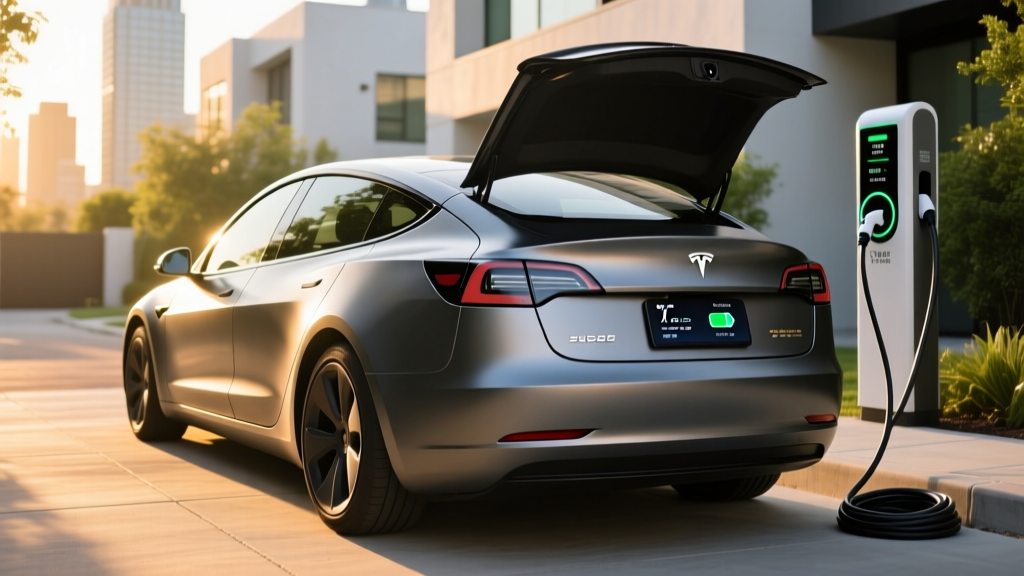
| Level 2 (240V, 48A Wall Connector) | 11.5 kW | ~34 mi/hr; full charge in ~11 hrs |
| DC Fast Charge (V4 Supercharger) | Peak ~325 kW | 10–80% in ~18–22 min; taper above 80% is steep |
| DC Fast Charge (3rd-party CCS via adapter) | ~150–250 kW typical | Depends on station; EA and ChargePoint networks supported via NACS adapter |
A few owner-relevant details worth flagging:
- Preconditioning is non-negotiable. Navigate to a Supercharger using the built-in nav and the truck will warm the battery en route. Skip this step and peak kW can drop by 30–40% in cool weather.
- The 10–80% window is where the Cybertruck shines. Sustained power hovers around 200–260 kW through the mid-SoC range, then tapers sharply past 85%. Charging to 100% on DC fast charge adds 20+ minutes for minimal range gain.
- Home charging on a 60A circuit (48A continuous) is the realistic sweet spot for daily ownership, adding roughly 34 miles per hour of charging. Budget $800–$2,200 for a licensed electrician to install a Tesla Wall Connector, more if your panel needs an upgrade to 200A service.
Performance and Drivetrain: The Truck That Forgets It's a Truck
The Cyberbeast's 2.6-second 0-60 time is supercar territory in a vehicle with a 6-foot bed and 11,000-pound tow rating. It's absurd, and it's also the easiest party trick in the EV world. But the more relevant performance story is the Long Range AWD's 4.1-second sprint, which gives you sports-sedan acceleration with genuine truck utility.
Ride quality has improved noticeably with 2026 software and suspension tuning updates. The adaptive air suspension offers up to 16 inches of ground clearance in Extract Mode (useful for trail obstacles) and drops for highway efficiency. Rear-wheel steering, standard on AWD and Cyberbeast trims, shrinks the turning circle to a surprisingly manageable ~37 feet — critical for a truck this long in parking garages and tight job sites.
Off-road, the Cybertruck is more capable than critics expected, with locking differentials, torque vectoring, and armored underbody protection. It won't dethrone a Rivian R1T on technical rock crawls, but it handles forest roads, snow, and sand with confidence.
Interior, Cargo, and the Quirks Owners Live With
The cabin is minimalism dialed to eleven: an 18.5-inch center touchscreen handles virtually every function, including the glovebox release, wiper speed, and mirror adjustments. There are no physical stalks — turn signals live on the yoke-style steering wheel (a round wheel is available as a no-cost option). Rear passengers get their own 9.4-inch touchscreen for climate and entertainment.
| Measurement | Value |
|---|---|
| Bed length (with tailgate down) | 72 inches (6 ft) |
| Bed volume | 67 cu ft |
| Front trunk (frunk) | 7.1 cu ft |
| Rear legroom | 38.2 inches |
| Front headroom | 41.0 inches |
| Towing capacity (AWD/Cyberbeast) | 11,000 lb |
| Payload capacity | 2,500 lb |
Standout tech features:
- Powered tonneau cover — motorized, lockable, and rated to support 300 lbs on top. It retracts into the bed's front bulkhead.
- 120V and 240V bed outlets — can power tools on a job site or run a camper. The 240V outlet at up to 9.6 kW effectively turns the Cybertruck into a mobile generator.
- Steer-by-wire — no mechanical linkage between the yoke and the wheels. This enables the variable steering ratio (fewer hand movements at low speed, more stability at highway speed) but takes genuine acclimation time.
- Autopilot and FSD (Supervised) — Tesla's Level 2 driver-assist suite. It is not self-driving; the driver must remain engaged with hands on the wheel and eyes on the road.
Notable drawbacks:
- The stainless-steel body shows fingerprints instantly and is expensive to repair — panel replacement, not dent-popping, is the norm after minor collisions.
- Rear visibility is compromised by the sloping bed cover; the digital rearview mirror is mandatory in practice.
- The yoke steering wheel is divisive and can feel unsafe during low-speed maneuvers requiring large hand inputs (three-point turns, tight parking). The round wheel option is strongly recommended for most buyers.
- Insurance premiums run 25–40% higher than comparable F-150 Lightnings in most states, driven by repair costs and claims data.
Pricing, Tax Credits, and What You Actually Pay
Tax credit eligibility for the Cybertruck hinges on current-year IRS §30D rules, which impose buyer income caps, MSRP caps, and battery critical-mineral and component sourcing requirements. Here's how the math works for 2026:
| Trim | Base MSRP | As-Tested (typical) | §30D Eligible? | Est. After Credit |
|---|---|---|---|---|
| RWD | $60,990 | $63,500 | Likely yes (under $80k truck cap) | ~$53,490–$60,990* |
| Long Range AWD | $79,990 | $84,500 | Borderline — MSRP vs. options matter | Varies* |
| Cyberbeast | $99,990 | $105,000+ | Exceeds $80k truck MSRP cap — ineligible | $99,990 |
- Truck MSRP must not exceed $80,000 (the Cyberbeast is over the cap).
- Buyer modified AGI must fall under $150k (single) / $300k (joint) / $225k (head of household).
- Battery must meet critical-mineral and component sourcing thresholds that phase up annually.
- Credit can be transferred to the dealer at point of sale as a purchase-price reduction.
- State and utility incentives may stack on top — check your local jurisdiction.
*Eligibility depends on final battery sourcing, buyer income, and whether options push MSRP over the cap. Always confirm with your tax advisor and the dealer before signing.
Pros, Cons, and Who Should Actually Buy One
- Class-leading acceleration (Cyberbeast) with genuine truck utility
- 11,000-lb tow rating + 240V bed outlet for job-site power
- Access to Tesla's Supercharger network — the most reliable DC fast-charge network in the U.S.
- Stainless-steel body resists dents and corrosion (though not fingerprints)
- Over-the-air updates continue adding features years after purchase
- 8-year / 120,000-mile battery and drive unit warranty
- Highway range drops hard — aero drag of the wedge shape hurts at 75+ mph
- Cyberbeast is ineligible for the federal tax credit due to MSRP cap
- Steer-by-wire and yoke require a steep learning curve
- Stainless panels are costly to repair; insurance is expensive
- Rear visibility is poor; digital mirror is mandatory in practice
- Fit and finish still inconsistent on some 2026 build batches
- You need a full-size truck bed and 11,000-lb tow rating with daily-driver comfort
- You value Supercharger network access for road trips and towing
- Job-site power (240V outlet, 9.6 kW) is a real use case for you
- You want attention — the Cybertruck stops traffic, for better or worse
- You prefer a conventional truck layout with familiar controls
- You prioritize highway range efficiency over 0-60 times
- Lower insurance costs and easier body repair are important
- You want a crew-cab rear seat optimized for adult passengers on long trips
Warranty, Ownership Costs, and the Long Game
Tesla covers the Cybertruck's battery and drive unit for 8 years or 120,000 miles (whichever comes first), with a minimum 70% capacity retention threshold over that period. The limited vehicle warranty is 4 years / 50,000 miles. For a truck this expensive, the battery warranty is on par with the industry — Ford, Rivian, and GM all land in the same 8-year range.
Battery chemistry is NMC (nickel-manganese-cobalt), which offers higher energy density than LFP but is more sensitive to sustained high-SoC storage. Best practice: charge to 80–90% for daily use, 100% only when you need the full range for a trip, and avoid leaving the truck parked at 100% for extended periods.
Five-year total cost of ownership is heavily influenced by electricity costs vs. gasoline, insurance premiums, and depreciation. The Cybertruck's depreciation curve is still uncertain — early 2024–2025 models saw volatile resale values as production ramped and the reservation backlog cleared. Expect insurance to be a meaningful line item: $3,000–$4,500 annually in most states for a Long Range AWD, significantly higher than a Lightning or Silverado EV.
Frequently Asked Questions
What is the real-world range of the Tesla Cybertruck?
The Long Range AWD carries an EPA estimate of 340 miles, but expect 280–300 miles on real highway trips at 70–75 mph in mild weather. Towing a 5,000-lb trailer cuts that to roughly 160–190 miles. Cold weather below 30°F can reduce range by 20–30% if you don't precondition the battery.
How fast does the Cybertruck charge at home and on the road?
On a home Level 2 Tesla Wall Connector (48A / 11.5 kW), you'll add about 34 miles of range per hour — enough to fully replenish overnight. On a V4 Supercharger, peak power reaches ~325 kW, and a 10–80% charge takes roughly 18–22 minutes with the battery preconditioned. Charging slows sharply above 80% SoC.
How much does the Cybertruck cost after the federal tax credit?
The RWD trim at $60,990 is most likely eligible for up to $7,500 under §30D, bringing the effective price to roughly $53,490 — assuming you meet income caps and the battery sourcing requirements hold. The Long Range AWD at $79,990 sits right at the MSRP cap edge; options can push it over. The Cyberbeast at $99,990 is ineligible due to the $80,000 truck MSRP ceiling.
Does the Cybertruck qualify for the federal EV tax credit?
It depends on trim, your income, and current-year battery sourcing rules. The RWD is the safest bet for eligibility. The Cyberbeast is not eligible. Always verify against the latest IRS §30D guidance and consult a tax professional before purchasing.
Is the Cybertruck worth buying over the F-150 Lightning or Rivian R1T?
If you prioritize Supercharger network access, job-site power capability, and acceleration, the Cybertruck has no direct rival. If you want conventional truck ergonomics, better highway efficiency, lower insurance costs, and a more mature service network, the F-150 Lightning or Rivian R1T are more pragmatic choices. The "ugly Tesla" is a compelling truck — but it's not a universally rational one.
Is Tesla's Autopilot or FSD self-driving?
No. Both Autopilot and FSD (Supervised) are SAE Level 2 driver-assist systems. The driver must remain fully engaged, with hands on the wheel and eyes on the road. Level 4 driverless operation (no human required) exists only in regulated robotaxi services like Waymo in limited metro areas — not in any consumer vehicle sold today.