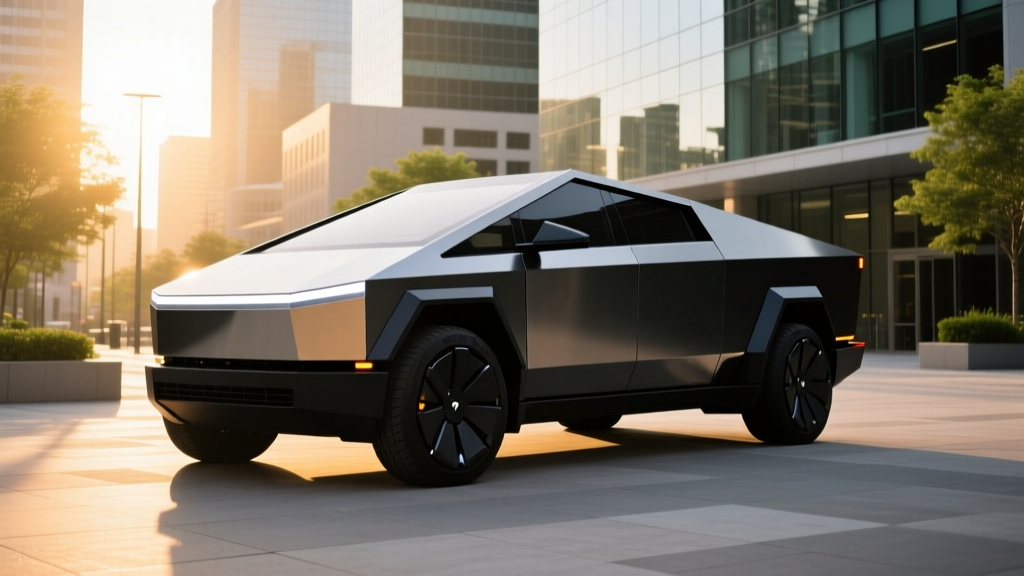
The Tesla Cybertruck has never been a vehicle that asks for your approval. Since its 2019 unveiling and eventual 2023 delivery, the angular stainless-steel pickup has split public opinion like no other vehicle in modern automotive history. The phrase "Cybertruck ugly" trends in forums, comment sections, and social media polls with remarkable consistency. But does a vehicle this polarizing actually make sense as a daily driver, a work truck, or a road-trip companion in 2026?
After spending significant time with the Cybertruck across multiple trims — including highway runs, cold-weather commutes, and DC fast-charging sessions — the answer is more nuanced than the design itself. Below is a data-driven breakdown of what the Cybertruck actually delivers, where it falls short, and whether its looks matter once you're behind the wheel.
Tesla Cybertruck 2026: Core Specifications at a Glance
| Specification | AWD (Dual Motor) | Cyberbeast (Tri-Motor) |
|---|---|---|
| EPA Range | 340 miles | 320 miles |
| Battery Capacity (usable) | ~123 kWh (NMC) | ~123 kWh (NMC) |
| Peak DC Fast Charge | 250 kW | 250 kW |
| 10–80% Charge Time | ~28 min | ~28 min |
| Level 2 Home Charge Rate | 11.5 kW (~34 mi/hr) | 11.5 kW (~34 mi/hr) |
| 0–60 mph | 4.1 seconds | 2.6 seconds |
| Horsepower | 600 hp | 845 hp |
| Drivetrain | Dual-Motor AWD | Tri-Motor AWD |
| Towing Capacity | 11,000 lbs | 11,000 lbs |
| MPGe (Combined) | 67 MPGe | 64 MPGe |
| Efficiency (kWh/100 mi) | 50 kWh/100 mi | 52 kWh/100 mi |
| Base MSRP (2026) | $79,990 | $99,990 |
| Battery/Drive Unit Warranty | 8 yr / 120,000 mi | 8 yr / 120,000 mi |
The Design Debate: Is the Cybertruck Actually Ugly?
Let's address the keyword directly. The Cybertruck's design — cold-rolled stainless steel exoskeleton, origami-fold panel lines, absence of curves — was engineered to eliminate traditional paint-shop complexity and dent resistance. The result is a vehicle that looks like a low-polygon render parked among conventional trucks.
Objectively, the design serves functional purposes:
- 30X-grade stainless steel resists dents and eliminates paint (reducing manufacturing steps).
- Flat bed walls maximize the 6-foot bed's utility for sheet goods (4×8 plywood fits with the tailgate down and a bed cover installed).
- Armor glass (laminated composite) replaces traditional tempered glass for impact resistance.
Subjectively, the design polarizes because it rejects every visual cue that truck buyers have internalized over decades: no chrome, no fender flares, no grille. Whether that reads as "ugly" or "minimalist" depends entirely on your design tolerance. What we can confirm: in parking lots, the Cybertruck draws more attention than a $100,000 supercar. Love or hate, indifference is impossible.
Real-World Range vs. EPA Estimate
EPA Estimate: 340 miles (AWD) / 320 miles (Cyberbeast)
Real-World Highway (70 mph, 72°F): Expect ~270–290 miles. The Cybertruck's aerodynamic profile — angular and tall — creates substantial drag at highway speeds, reducing efficiency to roughly 55–58 kWh/100 mi on the interstate.
Cold-Weather (30°F, highway): Expect ~220–250 miles. The large battery pack takes longer to precondition, and cabin heating draws heavily without a dedicated heat pump in early production units (2026 models include improved thermal management).
City/Stop-and-Go: Closer to EPA, around 310–330 miles (AWD). Regenerative braking recovers energy effectively at lower speeds.
Charging Performance: 250 kW Peak, But the Curve Matters
The Cybertruck supports a peak DC fast-charge rate of 250 kW on V3 and V4 Tesla Superchargers. In practice, the charging curve tells a more important story than the peak number.
| Charging Method | Power (kW) | Rate (mi/hr added) | Notes |
|---|---|---|---|
| DC Fast Charge (10–50% SoC) | ~250 kW peak | ~300 mi/hr | Sustains near peak only below 50% SoC with preconditioned battery |
| DC Fast Charge (50–80% SoC) | ~100–150 kW taper | ~130–180 mi/hr | Significant taper above 50%; 10–80% in ~28 min |
| Level 2 Home (Wall Connector, 48A) | 11.5 kW | ~34 mi/hr | Full charge in ~11 hours from near empty |
| Level 2 Home (32A, NEMA 14-50) | 7.7 kW | ~23 mi/hr | Full charge in ~16 hours |
| Level 1 (120V standard outlet) | ~1.4 kW | ~4 mi/hr | Emergency/trickle only |
Key takeaway: The Cybertruck's 123 kWh battery is massive, which means even at 250 kW, a full 10–80% session takes longer than smaller-battery EVs. Plan for ~28 minutes at a V3 Supercharger with a preconditioned battery. On road trips, the Supercharger network's reliability remains a significant advantage — per fueleconomy.gov, the Cybertruck AWD achieves 67 MPGe combined, which is middling for an EV but expected given its 6,600+ lb curb weight.
For non-Tesla networks (Electrify America, EVgo), the Cybertruck ships with a NACS connector natively. A CCS adapter is available from Tesla for compatibility with legacy CCS stations, though NACS adoption across networks continues to expand through 2026.
Performance: The Cyberbeast Defies Physics (Mostly)
The tri-motor Cyberbeast produces 845 horsepower and hits 0–60 mph in 2.6 seconds — a figure that embarrassed supercars costing three times as much just a few years ago. The dual-motor AWD is hardly slow at 4.1 seconds and 600 hp.
But straight-line speed isn't the whole story:
- Steer-by-wire: The Cybertruck uses a fully electronic steering system with no mechanical connection between the yoke and the wheels. This allows a variable steering ratio (fewer turns lock-to-lock at low speed), but some drivers report a synthetic feel that takes adaptation.
- Rear-wheel steering: Up to 10 degrees of rear steering reduces the turning circle to ~35 feet — remarkable for a 223-inch-long truck.
- Air suspension: Adaptive damping with up to 16 inches of ground clearance in Extract mode (useful for light off-road work, not rock crawling).
- Braking: The heavy curb weight (~6,600 lbs AWD, ~6,800 lbs Cyberbeast) means brake wear and stopping distances are truck-appropriate, not sports-car-appropriate.
Pricing, Tax Credits, and What You'll Actually Pay
For 2026, Tesla offers the Cybertruck in two main trims. The previously announced rear-wheel-drive (RWD) base model, originally teased at $60,990, has been delayed and remains unavailable as of early 2026 — buyers can currently only order the AWD or Cyberbeast.
| Trim | Base MSRP | As-Tested (w/ FSD, Foundation Series) | Federal Tax Credit (§30D) | Effective Price |
|---|---|---|---|---|
| AWD (Dual Motor) | $79,990 | $93,990 | $0 (exceeds MSRP cap) | $79,990 – $93,990 |
| Cyberbeast (Tri-Motor) | $99,990 | $114,990 | $0 (exceeds MSRP cap) | $99,990 – $114,990 |
Federal Tax Credit Eligibility (§30D): The Cybertruck does not qualify for the $7,500 federal EV tax credit. IRS §30D imposes an MSRP cap of $80,000 for trucks, vans, and SUVs — and while the AWD's base MSRP sits at $79,990, the destination fee and any options push it above the threshold. The Cyberbeast at $99,990 far exceeds the cap. Additionally, §30D has buyer income limits ($150K single / $300K joint) and critical-mineral/battery-component sourcing requirements. Per IRS guidelines, always verify eligibility with a tax professional before purchase. Point-of-sale transfer is available for qualifying vehicles, but the Cybertruck currently does not meet the MSRP requirement.
Cargo, Interior, and Daily Practicality
The Cybertruck's dimensions create unusual trade-offs:
- Bed: 6 feet long × 4 feet wide (between wheel wells). The powered tonneau cover ("Vault") is lockable and supports distributed loads. With the tailgate down and cover removed, 4×8 sheets of plywood fit flat.
- Front trunk (frunk): ~7.1 cu ft — lockable, drainable, useful for groceries or tools.
- Cabin: 6-passenger seating (3-across front bench). Rear legroom is ~38 inches — adequate but not class-leading compared to the Rivian R1T or Ford F-150 Lightning.
- Towing: 11,000 lbs rated. However, towing at capacity reduces range by approximately 40–50%, bringing real-world towing range to ~150–170 miles. Plan charging stops accordingly.
The interior is stark by design: a single 18.5-inch front touchscreen handles all vehicle controls, navigation, and media. Rear passengers get a 9.4-inch screen. Physical buttons are nearly absent — even the glovebox opens via the touchscreen. This minimalism appeals to some and frustrates others. There are no traditional instrument clusters, no physical climate dials, and no HomeLink garage-door button (you use the screen or your phone).
Driver Assistance: Autopilot and FSD (Supervised)
SAE Automation Level: Level 2. Tesla Autopilot and Full Self-Driving (Supervised) are driver-assistance systems, not autonomous driving. The driver must remain fully engaged, hands on the yoke, eyes on the road at all times. Only Level 4 services like Waymo operate without a human driver in geofenced areas. Per NHTSA, no consumer vehicle sold in the US is self-driving.
The Cybertruck ships with Tesla's HW4 (Hardware 4) suite: higher-resolution cameras, improved radar processing, and more capable neural-network inference. FSD (Supervised) in 2026 handles highway lane changes, on-ramp-to-off-ramp navigation, and city-street turns with increasing competence — but it still makes errors at complex intersections, construction zones, and unprotected left turns. The $8,000 FSD purchase (or $99/month subscription) remains a personal risk-tolerance calculation, not a guaranteed safety upgrade.
Cybertruck vs. the Competition: Rivian R1T, F-150 Lightning, Silverado EV
Pros
- Stainless-steel exoskeleton is dent-proof and paint-free — genuine durability advantage for job sites
- Supercharger network access (NACS native) — most reliable DC charging infrastructure in 2026
- Cyberbeast performance is unmatched in the truck segment (2.6 sec 0–60)
- 11,000-lb towing capacity and 2,500-lb payload
- Bioweapon Defense Mode (HEPA filtration) is genuinely useful in wildfire/smoke regions
- OTA updates continuously add features post-purchase
Cons
- Highway efficiency is poor (~55 kWh/100 mi) — range drops sharply above 70 mph
- No federal tax credit due to MSRP cap — effective price is significantly higher than competitors
- Steer-by-wire and yoke steering require adaptation; not all drivers acclimate
- Panel gaps and early build-quality issues persist (improving but not resolved)
- Rear visibility is limited; relies heavily on camera feeds
- No Apple CarPlay or Android Auto — Tesla-only ecosystem
- High insurance premiums (average ~$4,500–$5,500/yr depending on state and driving record)
vs. Rivian R1T (Dual-Motor Max): The R1T offers better build quality, a more refined interior, a front trunk with 11 cu ft, and a quad-motor option with tank turns. EPA range is comparable (~352 mi Max Pack). However, Rivian's CCS charging and reliance on third-party networks (with NACS adapter) is less seamless than Tesla's native Supercharger access. Starting MSRP is similar (~$79,900 for Dual-Motor Large).
vs. Ford F-150 Lightning (Extended Range): The Lightning is the conventional-truck buyer's EV gateway — familiar styling, excellent ride quality, Pro Power Onboard (V2L), and an EPA range of ~320 miles. It qualifies for the $7,500 tax credit at many trim levels, making the effective price significantly lower than the Cybertruck. However, towing range and DC charging speed (peak ~150 kW) trail the Cybertruck.
vs. Chevrolet Silverado EV (4WT/Extended Range): GM's Silverado EV offers a massive ~400-mile EPA range (4WT Max Range) and a Multi-Flex midgate for extended bed length. DC charging peaks at ~350 kW on Ultium architecture. Pricing starts lower, and fleet/commercial trims are available. However, interior tech and software refinement lag Tesla's integration.
Who Should Actually Buy the Cybertruck?
Buy the Cybertruck if:
- You need a genuinely durable, dent-resistant truck for job-site or off-road use where stainless steel's toughness pays dividends
- You prioritize Supercharger network reliability for frequent road trips
- You want supercar-level acceleration in a truck body (Cyberbeast)
- You're in a region with wildfire/smoke exposure and value HEPA cabin filtration
- You're a Tesla ecosystem adopter comfortable with screen-centric controls
Look elsewhere if:
- You need the $7,500 federal tax credit — the Cybertruck doesn't qualify
- You tow frequently over long distances — towing range is ~150 miles at capacity
- You prefer traditional truck ergonomics, physical controls, or CarPlay
- Build quality and panel consistency are top priorities (Rivian or Ford are more refined)
- You want the lowest cost-per-mile EV truck (Lightning with tax credit wins on value)
Frequently Asked Questions
What is the real-world range of the Tesla Cybertruck?
The EPA rates the AWD at 340 miles and the Cyberbeast at 320 miles. In real-world highway driving at 70 mph in moderate temperatures, expect ~270–290 miles. In cold weather (below freezing), highway range drops to ~220–250 miles due to battery thermal losses, cabin heating, and increased air density. City driving with regenerative braking recovers more energy and approaches the EPA estimate.
How fast does the Cybertruck charge at home and on the road?
On a Tesla V3/V4 Supercharger, the Cybertruck peaks at 250 kW and charges from 10–80% in approximately 28 minutes with a preconditioned battery. At home on a 48-amp Level 2 Wall Connector (11.5 kW), you add roughly 34 miles of range per hour, meaning a full charge from near-empty takes about 11 hours — easily accomplished overnight.
Does the Cybertruck qualify for the $7,500 federal EV tax credit?
No. Under IRS §30D, trucks must have an MSRP at or below $80,000 to qualify. The Cybertruck AWD's base MSRP of $79,990 is technically at the cap, but destination charges and any factory options push it above $80,000, disqualifying it. The Cyberbeast at $99,990 far exceeds the cap. Always consult a tax professional and verify current IRS rules before purchase.
Is the Cybertruck worth buying over the Rivian R1T or F-150 Lightning?
It depends on your priorities. If Supercharger network access, stainless-steel durability, and extreme acceleration matter most, the Cybertruck is compelling. If tax-credit eligibility, refined build quality, or traditional truck ergonomics are more important, the F-150 Lightning (with tax credit) or Rivian R1T (better interior, quad-motor option) may serve you better. Test-drive all three before committing.
What's the biggest drawback of owning a Cybertruck?
Highway efficiency. The Cybertruck's angular shape and 6,600+ lb weight result in ~55 kWh/100 mi at highway speeds — significantly worse than more aerodynamic EVs. This means shorter real-world range on road trips and more frequent charging stops. Insurance costs are also notably higher than comparable trucks, averaging $4,500–$5,500 annually depending on your state and driving record.
Can the Cybertruck actually tow 11,000 pounds?
Yes, the rated towing capacity is 11,000 lbs for both AWD and Cyberbeast trims. However, towing at or near capacity reduces range by approximately 40–50%, bringing effective towing range down to ~150–170 miles. For frequent heavy towing, plan your route around Supercharger stops and expect longer charging sessions due to the energy demands of a loaded trailer.
Is the Cybertruck's steer-by-wire system safe?
Tesla's steer-by-wire system has redundant electronic controllers and meets FMVSS safety standards. It eliminates the mechanical steering column, replacing it with electronic signals. While the system is engineered with fail-safes, it does feel different from traditional hydraulic or electric power steering — the yoke requires fewer hand movements at low speed but takes practice. Some drivers adapt within days; others never prefer it over a conventional wheel.