Cybertruck Total Sales: What the Numbers Reveal About Demand
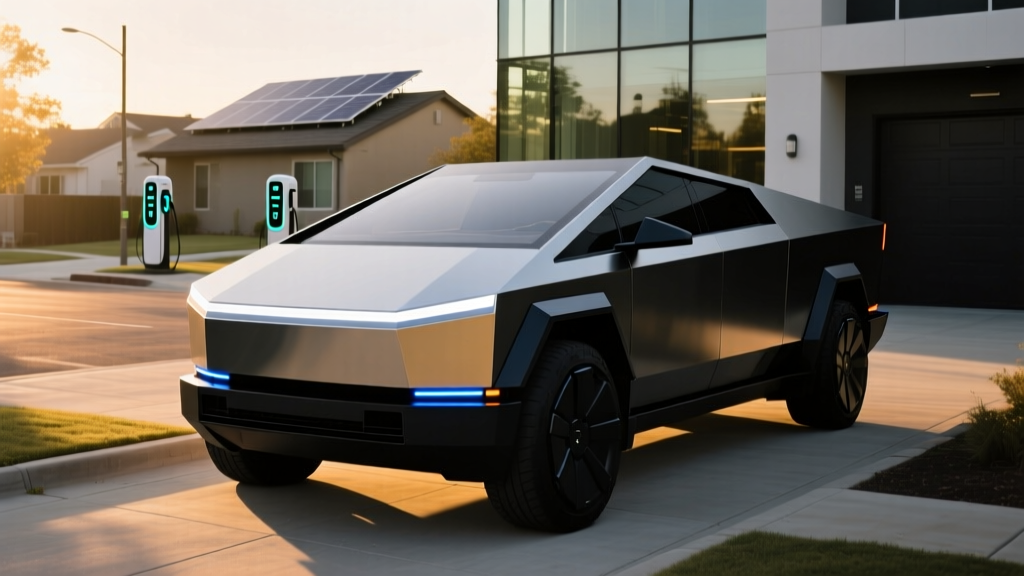
Since its first deliveries in late 2023, the Tesla Cybertruck has become one of the most polarizing vehicles on the road — and one of the most searched. Buyers and analysts alike have tracked Cybertruck total sales closely, trying to gauge whether the angular stainless-steel pickup is a volume hit or a niche curiosity. By early 2026, cumulative U.S. deliveries have crossed the 150,000-unit mark, with the truck consistently ranking among the top-selling EVs in the premium pickup segment, though trailing mainstream rivals like the Ford F-150 Lightning and Rivian R1T in total volume.
Sales data from Cox Automotive and Tesla's quarterly production reports show that Cybertruck ramped slowly through 2024 due to manufacturing complexity, then accelerated through 2025 as the dual-motor AWD and Cyberbeast trims reached full production. The introduction of the more affordable Long Range AWD trim in late 2025 further boosted order fulfillment. Still, the truck's six-figure pricing on higher trims and its polarizing design have kept total sales below Tesla's initial projections of 250,000+ units annually.
What matters more than headline sales figures is whether the Cybertruck actually delivers as a daily-driver EV pickup. Below, we break down the real-world specs, ownership costs, and practical limitations you need to evaluate before joining those sales numbers.
Range, Efficiency, and the Real-World Reality Check
The Cybertruck lineup offers three battery configurations across its trims. Tesla uses a structural battery pack with a 4680-cell architecture and an NMC (nickel manganese cobalt) chemistry, prioritizing energy density and power delivery over the LFP chemistry found in some Model 3/Y variants.
- Long Range AWD: EPA-estimated 340 miles | Real-world highway (70 mph): ~280–300 miles | Cold weather (below 32°F): ~240–260 miles
- AWD (Dual-Motor): EPA-estimated 320 miles | Real-world highway: ~265–285 miles | Cold weather: ~230–250 miles
- Cyberbeast (Tri-Motor): EPA-estimated 320 miles | Real-world highway: ~260–280 miles | Cold weather: ~220–245 miles
The Cybertruck's large frontal area and ~6,800 lb curb weight create substantial aerodynamic drag at highway speeds. Expect 15–20% range reduction at sustained 75–80 mph cruising, and up to 30% in sub-freezing temperatures without consistent preconditioning. The available range extender (a bed-mounted battery pack adding ~130 miles) partially offsets this, but adds weight and reduces bed space.
| Spec | AWD (Dual-Motor) | Long Range AWD | Cyberbeast (Tri-Motor) |
|---|---|---|---|
| EPA Range | 320 mi | 340 mi | 320 mi |
| Battery (usable) | ~123 kWh (NMC) | ~135 kWh (NMC) | ~123 kWh (NMC) |
| MPGe (combined) | 79 MPGe | 83 MPGe | 76 MPGe |
| Efficiency | 43 kWh/100mi | 41 kWh/100mi | 45 kWh/100mi |
| 0–60 mph | 4.1 sec | 3.9 sec | 2.6 sec |
| Horsepower | 600 hp | 600 hp | 845 hp |
| Drivetrain | Dual-Motor AWD | Dual-Motor AWD | Tri-Motor AWD |
| Towing Capacity | 11,000 lb | 11,000 lb | 11,000 lb |
| Payload | 2,500 lb | 2,500 lb | 2,500 lb |
| Bed Length | 6 ft (72 in) | 6 ft (72 in) | 6 ft (72 in) |
| Cargo Volume (bed) | ~67 cu ft | ~67 cu ft | ~67 cu ft |
| Frunk | 7 cu ft | 7 cu ft | 7 cu ft |
| Base MSRP | $81,630 | $98,630 | $101,630 |
Charging Speed: 800V Architecture Under the Hood
The Cybertruck runs on an 800-volt electrical architecture, enabling some of the fastest DC charging in the full-size pickup segment. At a V4 Supercharger or compatible 800V DC station, the truck can accept peak rates above 350 kW — though sustained rates taper significantly past 60% state of charge, as is typical with all lithium-ion packs.
| Charging Level | Max Power | Rate / Time |
|---|---|---|
| Level 1 (120V household) | 1.4 kW | ~3 miles per hour |
| Level 2 (240V, 48A Wall Connector) | 11.5 kW | ~29 miles per hour |
| Level 2 (240V, 80A) | 19.2 kW | ~48 miles per hour |
| DC Fast Charge (V4 Supercharger) | Peak 350+ kW | 10–80% in ~20 minutes |
| DC Fast Charge (CCS adapter, 250 kW station) | ~250 kW | 10–80% in ~28 minutes |
Charge curve reality check: The 350 kW peak is achieved between roughly 10% and 45% SoC. From 45–65%, the rate drops to approximately 200–250 kW, and from 65–80%, it tapers further to 120–150 kW. A 10–80% session at a V4 Supercharger averages around 230–250 kW sustained, which is still exceptional for a vehicle with a 123–135 kWh battery.
Home charging on a Tesla Wall Connector at 48 amps adds about 29 miles of range per hour — meaning a full overnight charge (10 hours) recovers roughly 290 miles. For most owners, this eliminates range concerns for daily driving, provided you have access to a 240V/60A circuit. Installation typically costs $800–$2,500 depending on panel capacity and run length, according to Tesla's certified installer network.
Performance, Capability, and Daily Practicality
The Cybertruck's performance figures are staggering by any measure — the Cyberbeast's 2.6-second 0–60 mph time makes it quicker than most supercars while weighing nearly 7,000 pounds. But beyond straight-line speed, the truck's steer-by-wire system and rear-wheel steering give it a surprisingly tight 35-foot turning circle, narrower than many midsize SUVs.
The adaptive air suspension provides up to 16 inches of ground clearance in Extract mode (useful for off-road terrain) and can lower the bed for easier loading. The 11,000-pound towing capacity matches conventional heavy-duty half-ton trucks, though towing at max capacity will cut range roughly in half — expect 150–170 real-world miles when pulling a heavy trailer.
Interior and cargo: The cabin seats five adults with 41 inches of front legroom and 38 inches of rear legroom. The 18.5-inch center touchscreen runs Tesla's latest infotainment software, including navigation with real-time Supercharger routing, streaming media, and a built-in Wi-Fi hotspot. The powered tonneau cover and integrated bed ramp are practical touches, though the bed's 6-foot length is shorter than the 6.5-foot beds on competing F-150 Lightning and Silverado EV configurations.
The 7-cubic-foot frunk is small compared to the F-150 Lightning's 14-cubic-foot Mega Power Frunk, limiting its usefulness for grocery runs or gear storage.
Pricing, Tax Credit Eligibility, and Total Cost
Cybertruck pricing places it firmly in the premium truck segment. The entry-level dual-motor AWD starts at $81,630, while the Long Range AWD and Cyberbeast push past $98,000 and $101,000 respectively — before options or destination charges.
| Trim | Base MSRP | §30D Credit Eligible? | Effective Price (if eligible) |
|---|---|---|---|
| AWD (Dual-Motor) | $81,630 | No — exceeds $80,000 truck MSRP cap | $81,630 |
| Long Range AWD | $98,630 | No — exceeds $80,000 truck MSRP cap | $98,630 |
| Cyberbeast (Tri-Motor) | $101,630 | No — exceeds $80,000 truck MSRP cap | $101,630 |
- Pickups classified as trucks must have an MSRP at or below $80,000 to qualify.
- All Cybertruck trims currently exceed this cap — meaning no Cybertruck trim qualifies for the $7,500 federal credit at point of sale.
- Buyer income caps also apply: $300,000 (married filing jointly), $225,000 (head of household), $150,000 (single).
- Battery critical-mineral and component sourcing requirements must be met (per IRS §30D guidelines).
- Some state-level incentives (e.g., California, Colorado, New York) may still apply — check your state's energy office for current programs.
Without the federal credit, the Cybertruck's effective cost of ownership leans heavily on fuel savings and lower maintenance. Based on fueleconomy.gov data, charging the Long Range AWD at the U.S. average electricity rate of $0.17/kWh costs approximately $7.00 per 100 miles, compared to roughly $16–$18 per 100 miles for a gas F-150 at 20 MPG combined and $3.50/gallon. Over five years and 75,000 miles, that translates to roughly $6,750–$8,250 in fuel savings — meaningful, but not enough to offset the Cybertruck's premium pricing versus a loaded F-150 Lightning Lariat (~$68,000).
Warranty, Driver-Assist Tech, and Notable Drawbacks
Tesla covers the Cybertruck with a 4-year/50,000-mile basic warranty and an 8-year/120,000-mile battery and drive unit warranty, with a guaranteed minimum 70% battery capacity retention over the warranty period. This battery warranty is slightly longer in mileage than the F-150 Lightning's 8-year/100,000-mile coverage.
- Class-leading 0–60 performance (2.6 sec Cyberbeast)
- 800V architecture with 350+ kW peak DC charging
- 11,000-lb towing capacity with integrated trailer brake controller
- Stainless-steel exoskeleton resists dents and corrosion
- Steer-by-wire + rear-wheel steering = tight turning circle
- Extensive Supercharger network access (17,000+ stalls in North America)
- OTA software updates continuously add features
- No federal §30D tax credit (all trims exceed $80k truck cap)
- Significant highway and cold-weather range loss (~20–30%)
- Polarizing design limits resale appeal in some markets
- 6-foot bed is shorter than most full-size competitors
- Small 7-cu-ft frunk
- Steer-by-wire requires adaptation; no physical steering column feel
- Insurance premiums run 25–40% higher than comparable gas trucks
- Panel gaps and early build-quality issues reported on 2024 models
Driver-assist technology: The Cybertruck ships with Tesla's Enhanced Autopilot, including Traffic-Aware Cruise Control, Autosteer, and Auto Lane Change. Full Self-Driving (Supervised) is available as a $8,000 add-on or $99/month subscription. Per NHTSA classification, both systems are SAE Level 2 — the driver must remain fully attentive, with hands on the steering yoke, at all times. This is not autonomous driving.
Cybertruck vs. the Competition: Is It Worth Buying?
The Cybertruck competes directly with the Ford F-150 Lightning, Rivian R1T, and Chevrolet Silverado EV. Each has distinct strengths:
- F-150 Lightning: Starts lower (~$55,000), qualifies for §30D credit on select trims, larger frunk, more conventional design. Range tops out at 320 miles (Extended Range). Slower charging (peak ~150 kW on older architecture).
- Rivian R1T: Quad-motor performance, 352-mile Max Pack, excellent off-road capability, premium interior. Starts at ~$75,000; does not qualify for §30D credit. Smaller service network.
- Chevrolet Silverado EV: 4WT trim offers 400-mile EPA range, competitive pricing, GM's Ultium platform. Less performance-oriented. Still ramping production as of 2026.
- You prioritize acceleration and tech-forward features above all else
- You have reliable home Level 2 charging and access to V4 Superchargers
- You value the Tesla Supercharger network for frequent road trips
- You're willing to pay a premium without a federal tax credit
- You need the lowest entry price and federal tax-credit eligibility
- You want a conventional truck layout with a large frunk
- You tow frequently within a 200-mile radius and can charge at home
- You want the best off-road capability and adventure-oriented features
- You prefer a more refined interior and quad-motor precision
- You don't need the longest range and accept a smaller service footprint
Frequently Asked Questions
What is the real-world range of the Tesla Cybertruck?
The Long Range AWD achieves an EPA-estimated 340 miles, but real-world highway driving at 70–75 mph typically yields 280–300 miles. In cold weather (below 32°F), expect 240–260 miles. The standard AWD and Cyberbeast trims deliver 320 miles EPA, with real-world highway figures around 260–285 miles. Towing at max capacity cuts range roughly in half.
How fast does the Cybertruck charge at home and on the road?
On a Tesla Wall Connector (Level 2, 48A/11.5 kW), the Cybertruck gains approximately 29 miles of range per hour. At a V4 Supercharger, peak DC fast-charging exceeds 350 kW, with a 10–80% session taking roughly 20 minutes. Sustained average rate is approximately 230–250 kW due to charge-curve tapering above 50% SoC.
Does the Cybertruck qualify for the federal EV tax credit?
No. Under current IRS §30D rules, trucks must have an MSRP at or below $80,000 to qualify. All 2026 Cybertruck trims exceed this threshold (starting at $81,630). Buyer income caps and battery-sourcing requirements would further restrict eligibility even if pricing were lower. Check your state's energy office for potential state-level rebates.
Is the Cybertruck worth buying versus the F-150 Lightning or Rivian R1T?
The Cybertruck excels in performance, charging speed, and Supercharger network access. However, its higher pricing (no federal credit), shorter bed, and polarizing design make the F-150 Lightning a more practical value play and the Rivian R1T a stronger off-road and adventure option. Your decision should hinge on budget, charging access, and whether you prioritize acceleration and tech over conventional truck utility.
What is the battery warranty on the Cybertruck?
Tesla provides an 8-year/120,000-mile battery and drive unit warranty, guaranteeing a minimum of 70% capacity retention over the warranty period. The basic vehicle warranty covers 4 years/50,000 miles.
How does Cybertruck total sales compare to competitors?
As of early 2026, cumulative Cybertruck sales have surpassed 150,000 units in the U.S., placing it in the top tier of premium electric pickups. However, the Ford F-150 Lightning has outsold it on a cumulative basis due to its earlier launch and broader trim availability. The Rivian R1T trails both in volume due to lower production capacity.