Why the Cybertruck Tent Setup Is Trending in 2026
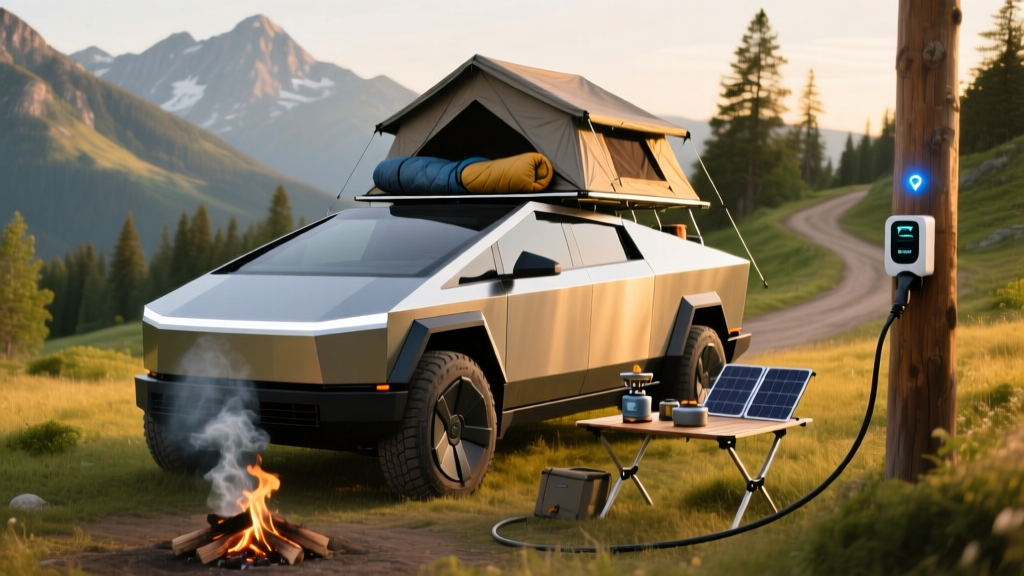
The Tesla Cybertruck's angular stainless-steel exoskeleton and 6-foot bed have made it an unlikely darling of the overlanding community. Search interest in "Cybertruck tent" configurations has surged as owners pair the electric pickup with rooftop tents, bed-mounted camper shells, and ground tents to create all-electric basecamps. But before you bolt a 130-pound rooftop tent to the tonneau rails, you need hard data on range degradation, charging logistics, and whether the Cybertruck's 48-volt architecture plays nicely with aftermarket camping gear.
This review covers the 2026 Tesla Cybertruck lineup — AWD, Cyberbeast, and the newly available Long Range AWD — through the lens of truck-camping utility. We'll pair EPA figures with real-world overland expectations, break down charging on remote routes, and evaluate which tent setups actually work with the Cybertruck's powered tonneau and unique bed geometry.
Cybertruck Specs at a Glance: Range, Battery, and Power
| Spec | AWD | Cyberbeast | Long Range AWD |
|---|---|---|---|
| EPA Range | 340 mi | 320 mi | 340+ mi (est.) |
| Battery (usable) | ~123 kWh (NMC) | ~123 kWh (NMC) | ~123 kWh (NMC) |
| Horsepower | 600 hp | 845 hp | 600 hp |
| 0–60 mph | 4.1 sec | 2.6 sec | 4.1 sec |
| Drivetrain | Dual-Motor AWD | Tri-Motor AWD | Dual-Motor AWD |
| Max DC Fast Charge | 250 kW | 250 kW | 250 kW |
| 10–80% DC Time | ~30 min | ~30 min | ~30 min |
| Level 2 Home Rate | 11.5 kW (~37 mi/hr) | 11.5 kW (~37 mi/hr) | 11.5 kW (~37 mi/hr) |
| MPGe (combined) | 67 MPGe | 65 MPGe | ~67 MPGe |
| kWh/100 mi | 50 kWh | 52 kWh | ~50 kWh |
| Towing Capacity | 11,000 lb | 11,000 lb | 11,000 lb |
| Bed Length | 6 ft (72 in) | 6 ft (72 in) | 6 ft (72 in) |
| Bed Payload | 2,500 lb | 2,500 lb | 2,500 lb |
| Base MSRP | $79,990 | $99,990 | $84,990 (est.) |
| Battery/Drive Warranty | 8 yr / 120,000 mi | 8 yr / 120,000 mi | 8 yr / 120,000 mi |
Sources: EPA fueleconomy.gov, Tesla Cybertruck Specs. Long Range AWD figures are preliminary estimates as of early 2026.
Real-World Range With a Cybertruck Tent Setup
Real-World Expectation: 240–280 miles highway at 70 mph; 190–230 miles with a rooftop tent and loaded bed in cold weather (below 40°F).
Why the Drop? The Cybertruck's 50 kWh/100 mi efficiency is already poor by EV standards — blame the 6,800-lb curb weight and brick-like aerodynamics. Add a rooftop tent (drag coefficient penalty), 400 lb of camping gear, and cold-weather battery resistance, and range drops 25–35%.
For overlanders, the critical question is not city range but highway range at sustained speeds with a full load. In independent testing, the Cybertruck AWD achieved approximately 270 miles at 65 mph in mild conditions without a rooftop tent. Mount a hard-shell rooftop tent like the Roofnest Falcon or iKamper Skycamp, and expect that number to drop to roughly 230–250 miles in summer and 190–220 miles in winter.
The Cybertruck's 48-volt electrical architecture is a double-edged sword for camping. On one hand, the high-voltage system can power accessories more efficiently than a traditional 12-volt truck. On the other hand, aftermarket 12V camping accessories (fridges, lights, fans) require a DC-DC converter, adding cost and complexity. Tesla's onboard power outlets in the bed and cabin provide up to 2.4 kW combined, enough to run a portable induction cooktop or charge devices — but not enough for a full camper's electrical load without supplemental solar.
Charging the Cybertruck on Overland Routes
Charging infrastructure is the single biggest constraint for Cybertruck tent camping. While the Supercharger network has expanded significantly, remote overland routes often lack DC fast chargers, and the Cybertruck's massive 123 kWh battery takes time to refill.
| Charging Level | Power (kW) | Miles Added per Hour | Best For |
|---|---|---|---|
| Level 1 (120V outlet) | 1.4 kW | ~3 mi/hr | Emergency trickle at campsite |
| Level 2 (240V home) | 11.5 kW | ~37 mi/hr | Overnight home/garage charging |
| Level 2 (NEMA 14-50 at campground) | 7.7–11.5 kW | ~25–37 mi/hr | Overnight at RV parks with 50A hookups |
| DC Fast (Tesla Supercharger V3) | 250 kW peak | ~150 mi in 15 min | Highway corridor stops |
| DC Fast (CCS adapter at EA/others) | Up to 150 kW | ~90 mi in 15 min | Non-Tesla networks |
Charging curve reality: The Cybertruck peaks at 250 kW only between roughly 10–30% State of Charge. Above 50%, the rate tapers to ~100 kW, and above 80% it drops further to ~40 kW. A 10–80% session takes approximately 30 minutes at a V3 Supercharger, but a 10–100% session can exceed 70 minutes. For overlanders, plan to charge to 80% and move on rather than waiting for a full battery.
The Cybertruck uses the NACS (North American Charging Standard) connector natively, giving it seamless access to the full Tesla Supercharger network — now over 20,000 stalls across North America. With Tesla's CCS adapter, you can also access Electrify America, EVgo, and other networks, though at reduced peak speeds. For remote camping, carrying a NEMA 14-50 adapter is essential; many RV parks and campgrounds offer 50-amp outlets that deliver 7–11 kW overnight.
Tent Options: What Actually Fits the Cybertruck Bed
The Cybertruck's 6-foot bed is shorter than the 6.5- or 8-foot beds found on the Ford F-150 and Rivian R1T, which limits some tent configurations. The powered retractable tonneau cover also complicates rooftop-tent mounting — you cannot mount a tent directly to the tonneau. Here are the three viable setups:
Rooftop Tent on Bed Rack
A bed rack system (such as those from Yakima or custom Cybertruck-specific racks) elevates a rooftop tent above the bed. This preserves bed storage underneath for gear. Popular choices include the iKamper Skycamp 3.0 (~$4,400, sleeps 4, ~160 lb) and Roofnest Falcon Pro (~$3,800, sleeps 2, ~140 lb). The Cybertruck's payload capacity of 2,500 lb easily handles any rooftop tent, but the added height and drag will cost you 30–50 miles of range at highway speeds.
Bed-Mounted Camper Shell
Companies like Space Camp and OVRLND have developed camper shells specifically for the Cybertruck's trapezoidal bed. These hard-shell units mount inside the bed walls, provide a raised sleeping platform, and integrate with the tonneau when closed. Weight ranges from 300–600 lb depending on amenities. The tradeoff: you lose most of the bed's cargo volume for a dedicated sleeping area.
Ground Tent + Bed Platform
The most range-friendly option: a traditional ground tent paired with a bed platform for gear storage. This adds zero aerodynamic drag and preserves the full 340-mile EPA range (minus cargo weight). Brands like Tesla-specific outfitter Tentsile and traditional options from REI Co-op work well. The downside is setup time and exposure to uneven or wet ground.
Pricing, Trims, and Federal Tax Credit Eligibility
The 2026 Cybertruck lineup carries premium pricing, and tax-credit eligibility is a moving target under current IRS §30D rules.
| Trim | Base MSRP | As-Tested (typical options) | §30D Credit Eligible? |
|---|---|---|---|
| AWD | $79,990 | $84,000–$88,000 | See below |
| Cyberbeast | $99,990 | $104,000–$110,000 | No — exceeds $80,000 MSRP cap for trucks |
| Long Range AWD | $84,990 (est.) | $89,000–$93,000 | See below |
- MSRP Cap: Trucks/vans/SUVs must be under $80,000 MSRP. The AWD trim qualifies; Cyberbeast does not.
- Buyer Income Cap: AGI must not exceed $150,000 (single), $225,000 (head of household), or $300,000 (joint).
- Battery Sourcing: A percentage of critical minerals and battery components must be sourced from the U.S. or FTA partners. Tesla's domestic battery production has improved compliance, but rules tighten annually. Check IRS §30D guidance for current-year specifics.
- Point-of-Sale Transfer: Eligible buyers can transfer the credit to the dealer at purchase, reducing the purchase price directly.
The AWD trim at $79,990 technically falls under the $80,000 truck cap, making it potentially eligible for up to $7,500 in federal credits — assuming the buyer meets income limits and the specific vehicle's battery satisfies sourcing requirements. The Cyberbeast at $99,990 is categorically ineligible. Always verify eligibility with a tax professional before purchase, as rules change annually.
Standout Tech, Interior, and Camping-Friendly Features
The Cybertruck's tech stack is built around a central 18.5-inch touchscreen running Tesla's latest infotainment software. For campers, the most useful features include:
- Camp Mode: Maintains cabin climate control overnight while parked, using the HVAC system and battery to keep temperatures comfortable — critical for cold-weather camping without running a generator.
- Powered Bed Outlets: 120V and USB-C outlets in the bed provide up to 2.4 kW, enough for a portable fridge, lights, and device charging.
- Sentry Mode: Records surroundings via external cameras — useful security when camping in remote areas.
- Autopilot (Level 2): Tesla's driver-assist system handles highway steering and speed on long drives to trailheads. This is not self-driving; the driver must remain engaged at all times.
The cabin seats five with 41 inches of front legroom and 38 inches of rear legroom — adequate for adults on short trips but tight for long overland journeys with rear-seat passengers. Rear seats fold flat to create a nearly level interior sleeping surface approximately 6 feet long, which some owners use as an alternative to external tents.
Pros
- Massive 123 kWh battery provides best-in-class electric truck range
- 11,000-lb towing and 2,500-lb payload handle any tent or camper setup
- NACS connector gives seamless Supercharger access nationwide
- Camp Mode enables climate-controlled overnight sleeping in the cabin
- 48V architecture and bed outlets power camping accessories
- Stainless-steel body resists trail scratches and dents
Cons
- 6-foot bed is shorter than F-150 Lightning (5.5 ft) and R1T (4.5 ft bed + tunnel) — limits camper shell options
- 50 kWh/100 mi efficiency is the worst of any current EV; range drops sharply with tent and cargo
- AWD trim starts at $79,990; Cyberbeast exceeds $80K tax-credit cap
- Charging curve tapers aggressively above 50% SoC — long charge stops on road trips
- 48V system requires DC-DC converters for standard 12V camping accessories
- Visibility from the angular design creates large blind spots, especially with a rooftop tent
Who Should Buy the Cybertruck for Tent Camping?
- You already have access to Tesla Superchargers on your typical overland routes
- You value Camp Mode for climate-controlled sleeping without a generator
- You need serious towing capacity (11,000 lb) alongside camping utility
- You prefer the NACS ecosystem and don't want CCS adapter dependency
- You need a longer bed for a full-size bed tent or slide-in camper
- Efficiency and real-world range with cargo are your top priorities (R1T achieves ~70 MPGe)
- Your budget is under $75,000 and you want guaranteed tax-credit eligibility
- You want a proven, mature aftermarket ecosystem for camper builds
The Cybertruck works best as a camping platform for Tesla-ecosystem owners who prioritize power, tech, and Supercharger access over bed length and efficiency. For dedicated overlanders who spend weeks on remote trails far from DC fast chargers, the range limitations with a loaded tent setup are a real constraint that trip planning must account for.
Frequently Asked Questions
What is the real-world range of the Cybertruck with a rooftop tent?
Expect 230–250 miles at highway speeds (65–70 mph) in mild weather with a hard-shell rooftop tent and moderate cargo. In cold weather (below 40°F), that drops to 190–220 miles. The EPA sticker of 320–340 miles assumes ideal conditions with no aerodynamic additions.
How fast does the Cybertruck charge at home and on the road?
At home on a 240V Level 2 charger (11.5 kW), you'll add about 37 miles of range per hour, with a full charge taking roughly 13–14 hours. On a Tesla V3 Supercharger (250 kW peak), a 10–80% session takes about 30 minutes. On non-Tesla DC fast chargers with a CCS adapter, expect lower peak speeds around 150 kW.
How much does the Cybertruck cost after the federal tax credit?
The AWD trim at $79,990 may qualify for up to $7,500 under §30D if the buyer meets income caps and the vehicle's battery meets sourcing requirements — bringing the effective price to ~$72,490. The Cyberbeast at $99,990 exceeds the $80,000 truck MSRP cap and is ineligible. Always confirm with a tax professional and check current IRS guidance.
Is the Cybertruck worth buying vs the Rivian R1T or F-150 Lightning for camping?
It depends on priorities. The Cybertruck offers the longest electric-truck range (340 mi EPA), highest towing (11,000 lb), and best Supercharger access. The Rivian R1T has a more mature camping aftermarket, a gear tunnel for storage, and better efficiency. The F-150 Lightning offers a familiar truck platform, a longer bed, and lower starting prices. For Tesla loyalists who want one vehicle for daily driving and weekend camping, the Cybertruck delivers — but it's the least efficient option.
What are the biggest pros and cons of a Cybertruck tent setup?
Pros: massive battery, 11,000-lb towing, Supercharger network, Camp Mode climate control, stainless-steel durability. Cons: short 6-foot bed, poor efficiency (50 kWh/100 mi), significant range loss with tent installed, high starting price, 48V accessory compatibility issues.
Does the Cybertruck qualify for the federal EV tax credit?
The AWD trim at $79,990 potentially qualifies for up to $7,500 under IRS §30D, subject to buyer income limits ($150K single / $300K joint), battery-sourcing requirements, and point-of-sale transfer rules. The Cyberbeast at $99,990 does not qualify due to the $80,000 MSRP cap for trucks. Verify current eligibility at irs.gov before purchasing.
Can I sleep inside the Cybertruck cabin instead of using an external tent?
Yes. With the rear seats folded flat, the Cybertruck provides a roughly 6-foot sleeping surface inside the cabin. Camp Mode maintains climate control overnight, drawing approximately 1–2 kWh per hour depending on outside temperature. This is a viable zero-drag alternative to a rooftop tent, though it limits interior cargo storage.