Quick Verdict: Is the Tesla Cybertruck Safe in 2026?
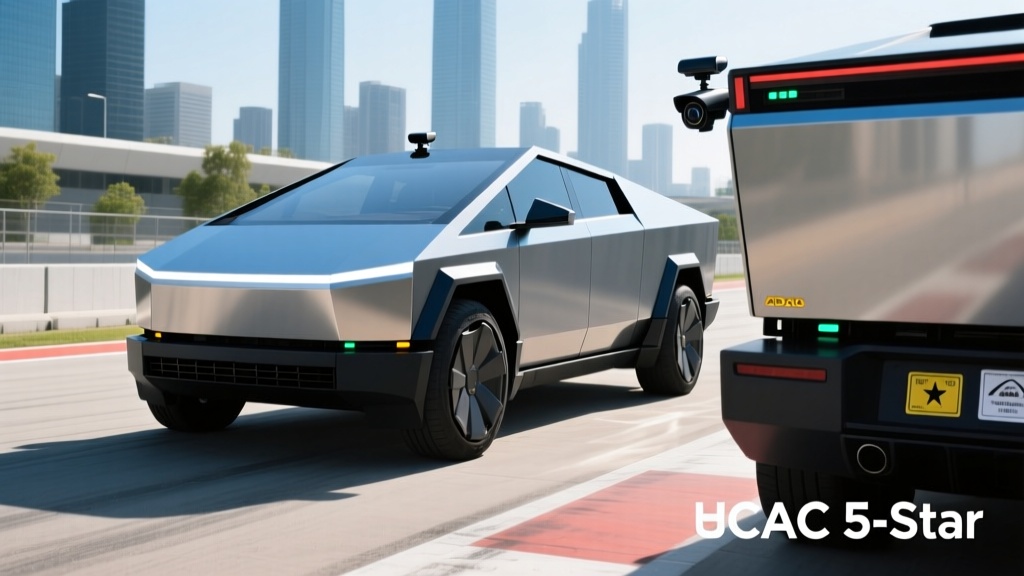
The short answer: the Tesla Cybertruck is engineered with an exceptionally rigid stainless-steel exoskeleton and standard active safety tech, but its safety story is more nuanced than a simple yes or no. As of early 2026, the Cybertruck has earned a 5-star overall rating from NHTSA, performing well in frontal and side crash tests thanks to its ultra-hard 30X cold-rolled stainless-steel body panels and low center of gravity from the under-floor battery pack. However, IIHS evaluation has been more cautious, and the truck's extreme mass, sharp angular geometry, and pedestrian-impact profile raise legitimate concerns that crash-test stars alone don't capture.
This review examines the Cybertruck's crash performance, driver-assistance limitations, and the full ownership picture — range, charging, pricing, and tax-credit eligibility — so you can decide whether this polarizing electric truck fits your driveway.
Crash Test Ratings & Structural Safety
NHTSA awarded the 2024–2026 Tesla Cybertruck AWD a 5-star overall safety rating, with 5 stars in frontal crash, 5 stars in side crash, and 4 stars in the rollover test. The truck's low-slung battery pack gives it a rollover risk of approximately 14.5%, which is competitive for a full-size pickup.
The exoskeleton design — using 30X cold-rolled stainless steel stamped at up to 1.4 mm thickness — creates an extraordinarily stiff passenger cell. In side-impact testing, the Cybertruck's door intrusion was minimal. However, this same rigidity transfers more crash energy to occupants in certain low-speed impacts compared to crumple-zone-optimized unibody vehicles.
IIHS has tested the Cybertruck on select criteria but has not awarded it a Top Safety Pick designation as of this writing. Buyers should monitor iihs.org for updated evaluations, as IIHS applies stricter small-overlap and pedestrian-headlight criteria than NHTSA's star system.
Active Safety & Driver Assistance: Autopilot Is Not Self-Driving
Every Cybertruck ships with Tesla's basic Autopilot suite: traffic-aware cruise control, autosteer (lane centering), automatic emergency braking, blind-spot monitoring, and lane-departure warning. The optional Full Self-Driving (Supervised) package ($8,000 or $99/month) adds features like Navigate on Autopilot (highway interchanges), Auto Lane Change, Autopark, and Smart Summon.
Both Autopilot and FSD (Supervised) are SAE Level 2 driver-assistance systems. The driver must keep hands on the wheel, eyes on the road, and remain fully responsible for vehicle operation at all times. This is not autonomous or "self-driving" capability. Only Level 4 services like Waymo operate without a human driver.
- Detect all stationary objects, construction barrels, or emergency vehicles reliably
- Handle unmapped roads, severe weather, or complex urban intersections without intervention
- Replace an attentive driver — NHTSA data shows misuse of Level 2 systems contributes to preventable crashes
- Operate legally hands-free — Tesla's camera-based driver monitoring will issue warnings and disengage if you look away
The Cybertruck uses Tesla's HW4 (Hardware 4) computer with a camera-only vision stack — no radar or ultrasonic sensors. In real-world use, Autopilot performs well on clearly marked highways but can struggle in heavy rain, construction zones, and faded lane markings. The truck's wide stance (86.6 inches without mirrors) also means autosteer can feel less precise in narrow urban lanes.
Real-World Range, Battery & Efficiency
The 2026 Cybertruck is available in three configurations, each with distinct range profiles:
| Spec | Long Range AWD | Cyberbeast (Tri-Motor) |
|---|---|---|
| EPA Range | 340 miles | 320 miles |
| Battery (Usable) | ~123 kWh (NMC) | ~123 kWh (NMC) |
| Efficiency | 76 MPGe / 44 kWh/100mi | 70 MPGe / 48 kWh/100mi |
| Drivetrain | Dual-Motor AWD | Tri-Motor AWD |
| Horsepower | 600 hp | 845 hp |
| 0–60 mph | 4.1 seconds | 2.6 seconds |
The Cybertruck's EPA rating of 340 miles (Long Range) and 320 miles (Cyberbeast) assumes mixed driving. In real-world highway testing at 70–75 mph, expect ~260–290 miles from the Long Range and ~245–270 miles from the Cyberbeast. The truck's brick-like aerodynamic profile (despite Tesla's claims of a low drag coefficient) and 6,800+ lb curb weight punish efficiency at sustained highway speeds.
❄️ Cold-Weather Impact: In sub-freezing temperatures (20–32°F), expect a 20–30% range reduction, bringing the Long Range down to roughly 230–260 miles. The Cybertruck uses a heat pump for cabin and battery thermal management, which mitigates but does not eliminate cold-weather losses. Preconditioning the battery while plugged in is essential for maintaining range and charge speed in winter.
An RWD base model has been announced for 2026 production with an estimated 250-mile EPA range and a lower MSRP, but as of this writing, deliveries have not begun at scale and specs remain preliminary.
Charging Speed: DC Fast & Home Level 2
The Cybertruck uses the NACS (North American Charging Standard) connector natively, meaning seamless access to Tesla's Supercharger network — the most reliable DC fast-charging infrastructure in the U.S. with over 25,000 stalls as of 2026.
| Charging Level | Power | Speed / Time |
|---|---|---|
| Level 1 (120V household) | ~1.4 kW | ~2–3 mi/hr |
| Level 2 (240V home, 48A) | 11.5 kW | ~20–24 mi/hr; full charge ~12 hrs |
| DC Fast Charge (V4 Supercharger) | Peak 250 kW | 10–80% in ~30 minutes |
| DC Fast (sustained avg.) | ~170 kW avg. | Adds ~200 mi in 20 min (preconditioned) |
Charging curve reality: The Cybertruck peaks at 250 kW only at a low state of charge (roughly 5–20%). Above 50% SoC, the charge rate tapers significantly, dropping below 100 kW past 80%. This is standard for large NMC battery packs, but the 123 kWh capacity means the taper zone still represents a lot of energy. Always precondition the battery (the truck does this automatically when you navigate to a Supercharger) to achieve peak charge rates.
For home charging, Tesla's Wall Connector at 48 amps (11.5 kW) is the practical solution. Budget $500–$1,500 for a licensed electrician to install a 60-amp circuit, depending on panel proximity and whether your home's electrical panel needs an upgrade. A full overnight charge from 10% to 100% takes approximately 11–12 hours.
Pricing, Tax Credit & Ownership Cost
The Cybertruck's pricing has been a moving target since its 2023 debut. As of early 2026, here is where the lineup stands:
| Trim | MSRP | §30D Credit Eligible? | Est. After Credit |
|---|---|---|---|
| Long Range AWD | $79,990 | Yes (truck MSRP cap: $80K) | ~$72,490 |
| Cyberbeast (Tri-Motor) | $99,990 | No (exceeds $80K truck cap) | $99,990 |
| RWD (announced) | ~$60,990 (est.) | Expected yes | ~$53,490 |
- MSRP Cap: Trucks/vans/SUVs must be ≤$80,000. The Long Range AWD at $79,990 qualifies; the Cyberbeast at $99,990 does not.
- Income Cap: Modified AGI ≤$150,000 (single) / ≤$300,000 (joint). Exceed these and you get $0.
- Battery Sourcing: Critical minerals and battery component requirements tighten annually. Check IRS.gov §30D guidance for current-year sourcing compliance before purchasing.
- Point-of-Sale Transfer: Eligible buyers can transfer the credit to the dealer at purchase, reducing the out-of-pocket price immediately rather than waiting for tax filing.
Ownership economics: The Cybertruck's efficiency of 44–48 kWh/100 miles means charging costs are higher than lighter EVs. At the U.S. average electricity rate of $0.17/kWh, you'll spend roughly $7.50–$8.15 per 100 miles on home charging. Compare that to a gas truck at 18 MPG and $3.50/gallon: $19.44 per 100 miles. The fuel savings are real, but the Cybertruck is among the most expensive EVs to "fuel" due to its mass and drag.
Insurance premiums for the Cybertruck run significantly higher than average — expect $2,500–$4,000+ annually depending on your profile, driven by high repair costs for the stainless-steel body and limited aftermarket parts availability.
Cargo, Passenger Space & Practicality
The Cybertruck's 6-foot vault-style bed offers 67 cu ft of cargo volume with the tonneau closed. The bed is 4 feet wide between the wheel wells (accommodating standard 4×8 sheets of plywood only diagonally). A front trunk (frunk) provides an additional 7.1 cu ft of lockable storage — useful for charging cables and groceries.
Interior space is adequate but not class-leading:
- Front legroom: 41.5 inches
- Rear legroom: 38.0 inches (tighter than a Ford F-150 Lightning's 43.6 inches)
- Seating: 5-passenger bench front, 3-across rear — though the rear middle seat is narrow
- Towing capacity: 11,000 lbs (Long Range AWD), though towing at max capacity cuts range roughly in half
The 18.5-inch front touchscreen handles all vehicle controls, navigation, and media. There are no physical buttons or stalks — turn signals are on the steering wheel, and the wiper stalk has been eliminated. This minimalist approach frustrates some drivers and delights others. The rear passengers get a 9.4-inch screen for climate and media controls.
How It Compares: Cybertruck vs. Key Rivals
| Attribute | Tesla Cybertruck LR AWD | Ford F-150 Lightning Lariat | Rivian R1T Dual-Motor |
|---|---|---|---|
| EPA Range | 340 mi | 320 mi (Ext. Range) | 352 mi (Max Pack) |
| MSRP (comparable trim) | $79,990 | ~$77,495 | ~$83,000 |
| 0–60 mph | 4.1 sec | 3.8 sec | 4.5 sec |
| Max Tow | 11,000 lbs | 10,000 lbs | 11,000 lbs |
| Rear Legroom | 38.0 in | 43.6 in | 41.3 in |
| Charging Network | NACS (Supercharger native) | NACS adapter (2025+) | NACS adapter (2025+) |
| Bed Length | 6 ft | 5.5 ft | 4.5 ft (+ Gear Tunnel) |
- You want native Supercharger access without adapters
- Stainless-steel durability and a head-turning design matter to you
- You value Tesla's software ecosystem, OTA updates, and Supercharger route planning
- You prioritize acceleration and tech over rear-seat comfort
- Rear-seat passenger space and traditional truck ergonomics are priorities
- You want a proven dealer service network for body and mechanical work
- You need the Mega Power Frunk (14.1 cu ft) for job-site use
- Off-road capability and the Gear Tunnel (11.7 cu ft enclosed) appeal to your adventures
- You prefer a more conventional, refined truck interior
- Build quality and panel fit are important to you
Warranty Coverage
| Coverage | Term |
|---|---|
| Basic Vehicle | 4 years / 50,000 miles |
| Battery & Drive Units | 8 years / 120,000 miles (min. 70% retention) |
| Battery Chemistry | NMC (nickel manganese cobalt) |
| Roadside Assistance | 4 years / 50,000 miles |
The 8-year/120,000-mile battery warranty guarantees at least 70% capacity retention. In practice, Tesla's NMC packs have shown approximately 10–15% degradation over 100,000 miles based on fleet data, though the Cybertruck's heavy weight may accelerate wear compared to lighter Tesla models. Battery replacement out of warranty is estimated at $15,000–$25,000+ given the pack size.
- 5-star NHTSA overall safety rating
- Native NACS / Supercharger access
- Class-leading stainless-steel body durability
- Blistering acceleration (2.6s Cyberbeast)
- 11,000-lb towing capacity
- Heat pump standard for cold-weather efficiency
- Poor pedestrian safety profile (sharp geometry)
- High insurance premiums ($2,500–$4,000+/yr)
- Tight rear legroom vs. F-150 Lightning
- Steep highway/cold-weather range loss
- No physical buttons — all controls on touchscreen
- Cyberbeast exceeds §30D MSRP cap — no tax credit
- Limited service center capacity for body repairs
Who Should Buy the Cybertruck?
Best for: Tech-forward buyers who want a distinctive daily-driver truck with Supercharger convenience, strong acceleration, and don't regularly haul rear-seat passengers. The Long Range AWD at $79,990 (potentially ~$72,490 after the federal credit) is the value sweet spot in the lineup.
Not ideal for: Families needing maximum rear-seat space, fleet buyers who need dealer-serviceable body repairs, budget-conscious shoppers (insurance and efficiency costs add up), or anyone whose driving is predominantly urban/pedestrian-dense where the truck's geometry poses a higher external risk.
Frequently Asked Questions
Is the Cybertruck safe in a crash?
Yes, for its occupants. NHTSA gave the Cybertruck AWD a 5-star overall rating with strong frontal and side crash performance. The stainless-steel exoskeleton and low battery-mounted center of gravity provide excellent structural protection. However, pedestrian safety is a concern due to the truck's sharp, angular front end.
What is the real-world range of the Cybertruck?
The EPA rates the Long Range AWD at 340 miles and the Cyberbeast at 320 miles. In real-world highway driving at 70–75 mph, expect 260–290 miles (Long Range) and 245–270 miles (Cyberbeast). In freezing temperatures, subtract another 20–30% for a realistic winter range of 230–260 miles (Long Range).
How fast does the Cybertruck charge?
On a V4 Tesla Supercharger, the Cybertruck peaks at 250 kW and charges from 10–80% in approximately 30 minutes with battery preconditioning. Sustained average charge rate is closer to 170 kW due to taper above 50% SoC. At home on a 48-amp Level 2 charger (11.5 kW), a full charge takes about 11–12 hours.
Does the Cybertruck qualify for the federal EV tax credit?
The Long Range AWD at $79,990 qualifies for up to $7,500 under §30D because it falls under the $80,000 MSRP cap for trucks. The Cyberbeast at $99,990 does not qualify. Buyer income must be ≤$150,000 (single) or ≤$300,000 (joint), and battery-sourcing requirements must be met. Check IRS.gov for current eligibility before purchasing.
Is the Cybertruck worth buying vs. the F-150 Lightning or Rivian R1T?
The Cybertruck wins on Supercharger convenience, stainless-steel durability, and raw acceleration. The F-150 Lightning wins on rear-seat space, traditional truck ergonomics, and dealer serviceability. The Rivian R1T wins on off-road capability and interior refinement. Your choice depends on whether you prioritize tech/network (Tesla), practicality (Ford), or adventure capability (Rivian).
What are the biggest drawbacks of owning a Cybertruck?
High insurance costs, tight rear-seat legroom, steep range loss at highway speeds and in cold weather, a touchscreen-only control scheme that frustrates some drivers, limited body-shop repair options for the stainless-steel panels, and the Cyberbeast trim's ineligibility for the federal tax credit.