Cybertruck Safety: What the Crash Tests Actually Show
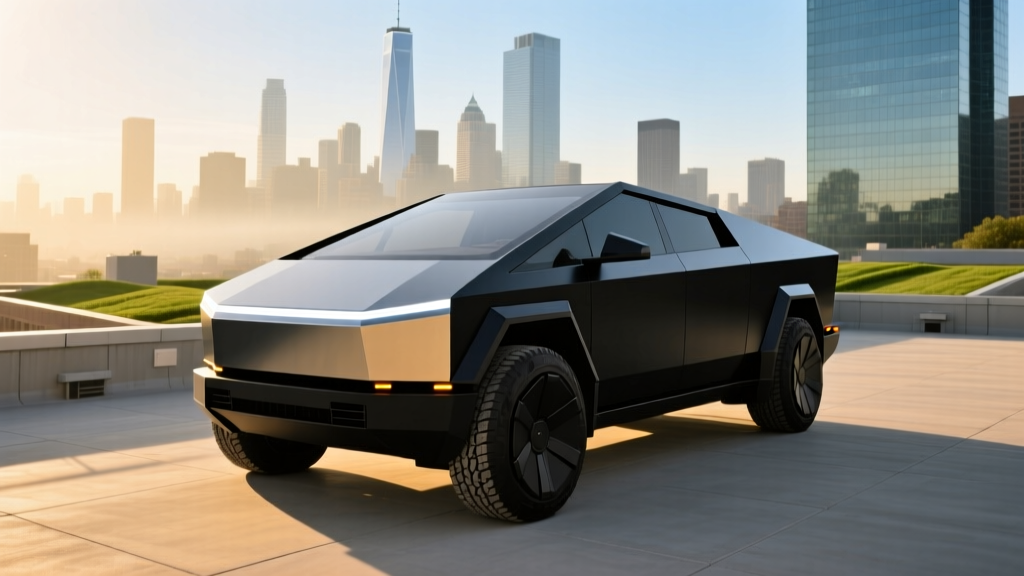
The angular, stainless-steel exoskeleton of the Tesla Cybertruck was marketed as nearly bulletproof — literally. But when it comes to crashworthiness, marketing claims matter less than controlled laboratory data. For buyers researching the Cybertruck safety rating, the picture in 2026 is split between federal (NHTSA) and independent (IIHS) evaluations, and neither tells the full story without context.
As of early 2026, the National Highway Traffic Safety Administration (NHTSA) has published partial crash-test results for the Cybertruck. The truck earned a 5-star overall rating in frontal and side-impact crash tests, which is the highest possible score. However, NHTSA has not yet completed the full battery of rollover resistance testing needed for a comprehensive star rating across all categories.
The Insurance Institute for Highway Safety (IIHS) has tested the Cybertruck in select categories. Results have been mixed: the truck performed well in moderate overlap front and side-impact tests but received lower marks in the updated side test (which uses a heavier barrier simulating a modern SUV) and has not yet been evaluated for the Top Safety Pick designation. The Cybertruck's rigid stainless-steel body panels present unique challenges for crumple-zone engineering — occupant protection depends heavily on how well the underlying aluminum and high-strength steel frame manages crash energy.
Range, Battery, and Efficiency: The Numbers That Matter
Safety aside, the Cybertruck is a full-size electric pickup, and buyers need to know how far it goes on a charge — not just what the EPA sticker says, but what happens on a real highway at 75 mph in January.
EPA estimated range: 340 miles (AWD, dual-motor) / 320 miles (Cyberbeast tri-motor)
Real-world highway (70-75 mph, 68°F): ~275-300 miles
Cold weather (32°F, highway): ~230-260 miles (expect 20-30% range loss)
Towing a 7,500-lb trailer: ~160-190 miles
The Cybertruck's 6,600+ lb curb weight and flat-panel aerodynamics work against highway efficiency. If your commute is mostly city/suburban at lower speeds, expect to be closer to the EPA number.
| Spec | AWD | Cyberbeast (Tri-Motor) |
|---|---|---|
| Battery (usable) | ~123 kWh (NMC) | ~123 kWh (NMC) |
| EPA Range | 340 mi | 320 mi |
| Efficiency | 56 MPGe (2.0 kWh/mi) | 53 MPGe (2.1 kWh/mi) |
| Horsepower | 600 hp | 845 hp |
| 0-60 mph | 4.1 sec | 2.6 sec |
| Drivetrain | Dual-motor AWD | Tri-motor AWD |
| Towing Capacity | 11,000 lbs | 11,000 lbs |
| Payload | 2,500 lbs | 2,500 lbs |
Tesla uses NMC (nickel manganese cobalt) chemistry in the Cybertruck's 4680-format cells, chosen for high energy density needed to move this heavy vehicle. NMC offers better range-per-kWh than LFP but is more sensitive to sustained high states of charge — Tesla recommends daily charging to 80-90% for longevity, reserving 100% for trips.
Charging Speed: DC Fast and Home Level 2
The Cybertruck uses an 800-volt architecture, which is one of the strongest EV charging platforms on the market. This matters because higher voltage allows faster charging without excessive current (and heat). Here's what the charging curve actually looks like in practice:
| Charging Level | Max Power | Speed / Time |
|---|---|---|
| Level 1 (120V, 12A) | ~1.4 kW | ~3 mi/hr (emergency only) |
| Level 2 (240V, 48A) | 11.5 kW | ~27 mi/hr; full charge ~11 hrs |
| DC Fast (Tesla Supercharger V4) | Peak 350 kW | 10-80% in ~20 min |
| DC Fast (CCS adapter, 150 kW station) | ~150 kW | 10-80% in ~38 min |
Charging curve reality check: The 350 kW peak only holds between roughly 10-30% state of charge. From 30-60%, expect ~200-250 kW. Above 80%, the rate drops sharply to protect the battery — going from 80-100% can take as long as 10-80%. Always precondition the battery via the Tesla app or navigation before arriving at a Supercharger to hit peak rates.
For home charging, you'll need a NACS (North American Charging Standard) wall connector on a 60-amp circuit to get the full 11.5 kW. A standard 240V/40A circuit (like a dryer outlet) will deliver about 9.6 kW, or roughly 22 mi/hr — still enough for most daily driving if you plug in overnight.
Pricing, Trims, and Federal Tax Credit Eligibility
The Cybertruck's pricing has shifted since its late-2023 launch. Here's where the lineup stands for 2026:
| Trim | MSRP | After §30D Credit* |
|---|---|---|
| AWD | $79,990 | $72,490 |
| Cyberbeast | $99,990 | $92,490 |
*Tax credit eligibility is complex and not guaranteed for every buyer.
- MSRP cap: Trucks (including pickups) must have an MSRP at or below $80,000 to qualify. The AWD trim at $79,990 clears this bar. The Cyberbeast at $99,990 does not qualify.
- Income cap: Modified adjusted gross income must not exceed $150,000 (single), $225,000 (head of household), or $300,000 (joint filing).
- Battery sourcing: Under IRS §30D rules, a portion of the credit depends on critical minerals and battery components being sourced from the US or free-trade-agreement partners. Tesla's 4680 cells have been progressively shifting to US-sourced materials, but the exact credit amount ($3,750 or $7,500) depends on current-year sourcing compliance. Verify the latest eligibility on the IRS website or with a tax professional before purchasing.
- Point-of-sale transfer: As of 2024, you can transfer the credit to the dealer at purchase, reducing your out-of-pocket cost immediately rather than waiting until tax filing.
Interior, Cargo, and Technology
The Cybertruck's cabin is minimalist even by Tesla standards. An 18.5-inch front touchscreen handles virtually all vehicle controls — there are no physical buttons for climate, mirrors, or glovebox. A 9.4-inch rear touchscreen serves back-seat passengers. The steering yoke (standard on most trims) takes significant adaptation; a round wheel is available as an option.
Cargo dimensions:
- Bed (vault): 6 ft long × 4 ft wide (between wheel wells), 67 cu ft volume with tonneau closed
- Frunk (front trunk): ~7 cu ft — enough for charging cables and a small bag
- Interior passenger volume: Front headroom 40.2 in, rear headroom 37.8 in; rear legroom 38.4 in (adequate for adults but not class-leading vs. Rivian R1T or Ford F-150 Lightning)
- Towing: 11,000 lbs max (requires integrated brake controller and weight-distribution hitch for trailers above 5,000 lbs)
Standout tech:
- Steer-by-wire: No mechanical connection between the yoke and wheels. Enables variable steering ratio — fewer turns lock-to-lock at low speeds, more stability at highway speed. Novel but polarizing.
- 48-volt architecture: Reduces wiring harness weight and enables higher-power accessories.
- Armor glass: Laminated glass with a polymer interlayer. More resistant to impacts than standard tempered glass, though not impervious (as the 2019 demo famously showed).
- Autopilot: Standard. Includes adaptive cruise, lane centering, and automatic emergency braking.
- FSD (Supervised): $8,000 add-on or $99/month. Still Level 2 — requires full driver attention.
- Powershare (V2L/V2H): Up to 11.5 kW bidirectional power. Can run tools at a job site or power home essentials during an outage with the Tesla Powerwall integration.
Notable drawbacks: The stainless-steel body is prone to fingerprint smudges and is difficult to repair after dents (panel replacement is often required). Visibility is compromised by thick A-pillars and the angular roofline. The yoke steering is awkward in parking lots for many drivers. And at 6,600+ lbs, tire wear is accelerated — expect to replace tires every 25,000-35,000 miles.
Warranty Coverage
| Coverage | Term |
|---|---|
| Basic Vehicle | 4 years / 50,000 miles |
| Battery & Drive Unit | 8 years / 150,000 miles (min 70% retention) |
| Roadside Assistance | 4 years / 50,000 miles |
Tesla's battery warranty guarantees the pack will retain at least 70% of its original capacity over 8 years or 150,000 miles (whichever comes first). This is slightly more generous than the typical 100,000-mile threshold seen on other EVs, reflecting the expectation that a truck will accumulate higher mileage. Out-of-warranty battery replacement for a ~123 kWh NMC pack is estimated at $15,000-$22,000 — a significant long-term ownership cost to factor in.
Who Should Buy the Cybertruck?
- You need a truck bed for work or recreation and want EV running costs
- You have access to home Level 2 charging and/or Tesla Superchargers
- You value the 11,000-lb towing capacity and bidirectional power (V2L/V2H)
- You're drawn to the steer-by-wire tech and want something distinctly different from legacy pickups
- You qualify for the §30D tax credit (income and MSRP requirements met)
- You need a proven, long-term reliability track record (the Cybertruck is still early in its lifecycle)
- Traditional truck ergonomics matter more to you than futuristic design
- You frequently tow heavy loads long distances — range drops dramatically under load
- You want a conventional round steering wheel as standard
- Insurance costs are a major concern (Cybertruck premiums run 30-50% higher than comparable ICE trucks)
Pros and Cons at a Glance
- 800V architecture — fastest-charging truck in its class
- 5-star NHTSA frontal and side crash results
- 11,000-lb towing with integrated brake controller
- 11.5 kW bidirectional power (V2L/V2H)
- Stainless-steel body resists corrosion and minor scratches
- Access to Tesla Supercharger network (17,000+ stalls in North America)
- Cyberbeast trim exceeds $80K MSRP cap — no federal tax credit
- Real-world highway range ~275-300 mi, far below 340 EPA
- Steer-by-wire and yoke polarize drivers
- Stainless panels are hard to repair; body shop options limited
- Heavy tire wear due to 6,600+ lb weight
- Insurance premiums significantly above class average
- IIHS testing incomplete; no Top Safety Pick award yet
Competitive Comparison: Cybertruck vs. R1T vs. F-150 Lightning
The Cybertruck competes directly with the Rivian R1T (dual-motor, ~$75,000+, EPA 352 mi max) and the Ford F-150 Lightning (extended range, ~$65,000+, EPA 320 mi). The R1T offers better rear-seat comfort and a unique gear tunnel for storage. The F-150 Lightning is more conventional in design, easier to service at existing Ford dealerships, and generally cheaper to insure. The Cybertruck's edge is its 800V charging speed and V2H capability — neither competitor matches the 350 kW peak charge rate or 11.5 kW bidirectional output.
From a safety standpoint, the F-150 Lightning has earned the IIHS Top Safety Pick+ award, a distinction the Cybertruck has not yet achieved. The Rivian R1T has also performed well in IIHS testing. If crash-test credentials are your top priority, the Lightning currently leads this segment.
Frequently Asked Questions
What is the real-world range of the Cybertruck?
The EPA rates the AWD Cybertruck at 340 miles and the Cyberbeast at 320 miles. In real-world highway driving at 70-75 mph, expect 275-300 miles. In cold weather (below freezing), that drops to 230-260 miles. Towing a heavy trailer can cut range to 160-190 miles.
How fast does the Cybertruck charge?
On a Tesla V4 Supercharger, the Cybertruck peaks at 350 kW and charges from 10-80% in approximately 20 minutes. On a typical home Level 2 charger (240V, 48A), it adds about 27 miles of range per hour, requiring roughly 11 hours for a full charge.
Does the Cybertruck qualify for the $7,500 federal EV tax credit?
The AWD trim at $79,990 MSRP qualifies under the §30D truck MSRP cap of $80,000 — but only if your income falls below IRS thresholds ($150K single / $300K joint) and the battery meets current-year critical-mineral and component sourcing requirements. The Cyberbeast at $99,990 does not qualify. Always verify on IRS.gov before purchasing.
Is the Cybertruck worth buying vs. the Rivian R1T or F-150 Lightning?
It depends on priorities. The Cybertruck wins on charging speed (350 kW peak), V2H capability (11.5 kW), and distinctive design. The F-150 Lightning wins on conventional ergonomics, dealer service access, lower insurance costs, and a stronger IIHS safety record. The Rivian R1T offers the best blend of adventure features, rear-seat comfort, and range. If fast charging and tech novelty matter most, the Cybertruck is compelling. If proven reliability and safety awards are paramount, the Lightning is the safer pick.
Has the Cybertruck been tested by IIHS?
IIHS has tested the Cybertruck in some categories as of early 2026, with mixed results. It has not yet earned the Top Safety Pick or Top Safety Pick+ designation. NHTSA has given it 5 stars in frontal and side crash tests. Full evaluation from both agencies is ongoing.
What is the Cybertruck's battery warranty?
Tesla covers the battery and drive unit for 8 years or 150,000 miles, whichever comes first, guaranteeing at least 70% capacity retention over that period. Out-of-warranty replacement is estimated at $15,000-$22,000.