Quick Verdict: The Cybertruck's Long-Term Ownership Equation
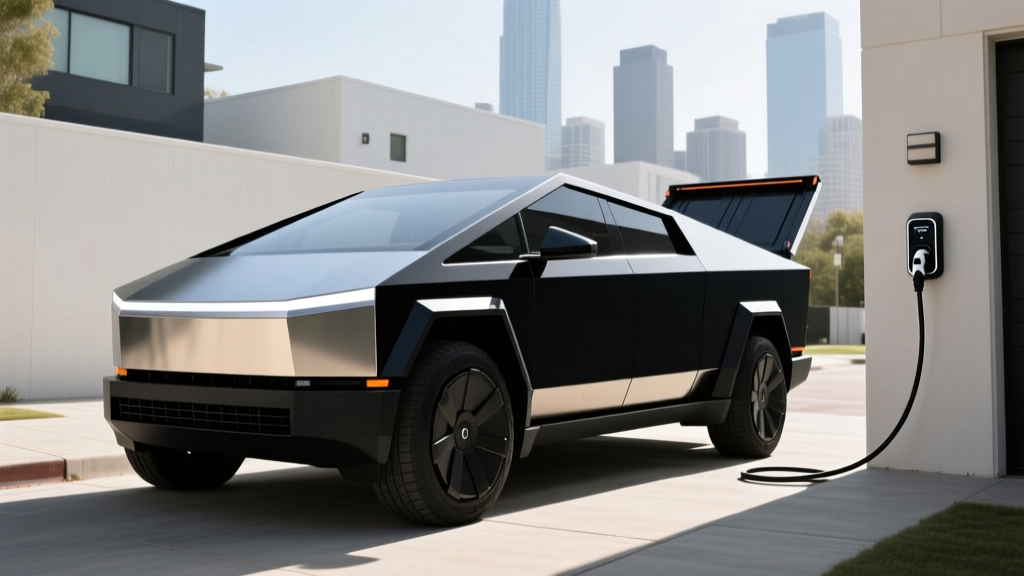
The Tesla Cybertruck has polarized the truck market since its 2024 deliveries began, but as 2026 models roll off the line and early adopters approach their second year of ownership, a critical question is crystallizing for buyers and current owners alike: what happens to Cybertruck resale value when key warranty milestones approach and eventually expire? This isn't just an academic exercise — it's a financial calculation that affects whether this stainless-steel pickup is a sound long-term investment or a depreciating liability.
In this comprehensive review, we break down the Cybertruck's full spec sheet — from its EPA-rated range and DC fast-charging performance to the granular details of Tesla's battery and vehicle limited warranties — and map those warranty expiration dates against projected resale trajectories. Whether you're eyeing a new 2026 Cybertruck, considering a used model, or planning your exit strategy from an existing truck, this guide gives you the numbers to decide.
Range, Battery, and Real-World Efficiency
| Spec | Dual Motor AWD | Cyberbeast (Tri-Motor) |
|---|---|---|
| EPA Range | 340 miles | 320 miles |
| Battery Capacity (usable) | ~123 kWh (estimated) | ~123 kWh (estimated) |
| Battery Chemistry | NMC (Nickel Manganese Cobalt) | NMC |
| MPGe (combined) | 72 MPGe | 69 MPGe |
| Efficiency (kWh/100 mi) | 47 kWh/100 mi | 49 kWh/100 mi |
Tesla has not officially published the Cybertruck's exact battery capacity, but teardown analysis and EPA efficiency filings suggest a usable capacity around 123 kWh using NMC chemistry — the same nickel-manganese-cobalt formulation Tesla uses across its performance-oriented vehicles. NMC offers higher energy density than LFP (lithium iron phosphate), enabling the Cybertruck's substantial range in a large vehicle, but it is more sensitive to sustained high state-of-charge storage. For long-term battery health, Tesla recommends daily charging to 80-90% and only charging to 100% before long trips.
Charging Speed: DC Fast and Home Level 2
| Charging Level | Power (kW) | Speed (mi/hr added) | Notes |
|---|---|---|---|
| Level 1 (120V outlet) | ~1.4 kW | ~3-4 mi/hr | Emergency/trickle only; ~80+ hrs for full charge |
| Level 2 (240V / 48A Wall Connector) | 11.5 kW | ~33 mi/hr | Full charge in ~11 hours; ideal overnight setup |
| Level 2 (240V / 80A) | 19.2 kW | ~55 mi/hr | Requires 100A circuit; faster but less common |
| DC Fast Charge (peak) | 250 kW (V3 Supercharger) | ~200+ mi/hr at peak | 10-80% in ~30 minutes; tapers significantly above 80% |
| DC Fast Charge (V4 Supercharger) | Up to 350 kW | Higher sustained rates | Availability expanding in 2026; Cybertruck charge curve still peaks ~250 kW |
The Cybertruck uses the NACS (North American Charging Standard) connector natively — the same Tesla-standard plug now being adopted industry-wide by Ford, GM, Rivian, and others. This means Cybertruck owners have full access to the Tesla Supercharger network (over 20,000 stalls in North America as of 2026), which remains the most reliable and widely available DC fast-charging infrastructure in the U.S.
Charging-curve reality check: while the Cybertruck peaks at roughly 250 kW on a V3 Supercharger, that peak rate is only sustained between approximately 10-30% state of charge. The curve tapers progressively — by 60% SoC, you're typically seeing 120-150 kW, and above 80%, it drops to under 50 kW. The 10-80% time of approximately 30 minutes is the practical benchmark; charging from 80-100% can add another 25-35 minutes. Always precondition the battery via the Tesla app or navigation routing to a Supercharger for optimal charge speeds, especially in cold weather.
Performance, Drivetrain, and Capability
| Spec | Dual Motor AWD | Cyberbeast (Tri-Motor) |
|---|---|---|
| 0-60 mph | 3.9 seconds | 2.6 seconds |
| Horsepower | 600 hp | 845 hp |
| Drivetrain | Dual-motor AWD | Tri-motor AWD (torque vectoring rear) |
| Towing Capacity | 11,000 lbs | 11,000 lbs |
| Payload Capacity | 2,500 lbs | 2,500 lbs |
| Bed Length | 6 ft | 6 ft |
| Ground Clearance (max) | 17.4 in (adaptive air suspension) | 17.4 in |
| Approach/Departure Angle | 35°/30° | 35°/30° |
The Cybertruck's adaptive air suspension offers 12 inches of travel and can raise the vehicle for off-road clearance or lower it for highway efficiency and easier bed access. The Cyberbeast's tri-motor setup — one front, two rear — enables torque vectoring across the rear axle, giving this 6,800-pound truck genuinely startling cornering composure and traction in low-grip conditions.
Towing reality: while Tesla rates both trims at 11,000 lbs, expect range to drop by roughly 40-50% when towing near max capacity at highway speeds. That puts real towing range at approximately 150-180 miles for the Dual Motor — a critical planning factor for anyone towing a trailer long distance. The Cybertruck's integrated trailer brake controller and tow mode help manage the load, but physics is physics.
Interior, Cargo Space, and Technology
The Cybertruck's interior is minimalist by design — a single 18.5-inch front touchscreen handles virtually all vehicle controls, navigation, media, and climate functions. A smaller rear touchscreen serves back-seat passengers. There are no physical gauges; speed, range, and driving info are all on the central display.
| Dimension | Measurement |
|---|---|
| Front Legroom | 41.3 inches |
| Rear Legroom | 34.7 inches |
| Front Headroom | 40.2 inches |
| Rear Headroom | 38.1 inches |
| Bed Volume | 67 cu ft (with tonneau closed) |
| Under-bed Storage (frunk-equivalent) | Lockable sub-floor compartments |
| Seating Capacity | 5 (bench front, 3-across rear) |
The powered stainless-steel tonneau cover is a standout feature — it retracts automatically and supports up to 300 lbs of distributed weight when closed. The bed features a 120V/240V power outlet (up to 9.6 kW of vehicle-to-load output), making the Cybertruck a legitimate mobile power source for job sites or camping. This V2L (vehicle-to-load) capability can run power tools, a small refrigerator, or even provide backup power to essential home circuits via a proper transfer switch.
On the technology front, the Cybertruck ships with Tesla's latest hardware suite (Hardware 4.0/AI4) supporting Autopilot standard and Full Self-Driving (Supervised) as an add-on. FSD remains an SAE Level 2 system — the driver must remain attentive and in control at all times. It is not autonomous driving.
Warranty Coverage and Expiration Timeline
Understanding the Cybertruck's warranty structure is essential for projecting long-term ownership costs and resale value. Tesla provides three distinct warranty coverages:
| Warranty Type | Coverage | Expiration |
|---|---|---|
| New Vehicle Limited Warranty | 4 years / 50,000 miles (whichever comes first) | ~2028-2030 for 2026 models depending on mileage |
| Battery & Drive Unit Limited Warranty | 8 years / 120,000 miles (Dual Motor); 8 years / 150,000 miles (Cyberbeast) | ~2032-2034 for 2026 models |
| Battery Capacity Retention Guarantee | Minimum 70% capacity retention during battery warranty period | Same as battery warranty above |
The battery warranty is the financial backbone of Cybertruck resale confidence. If the battery degrades below 70% of its original capacity within the 8-year/120,000-mile window (or 150,000 for Cyberbeast), Tesla will repair or replace it to bring retention back above that threshold. This is a critical safety net: a full Cybertruck battery replacement outside warranty would likely cost $15,000-$25,000+ based on current Tesla service pricing and the pack's ~123 kWh size.
The gap between vehicle warranty expiration (year 4 / 50k miles) and battery warranty expiration (year 8 / 120k miles) is where resale dynamics get interesting. A Cybertruck at year 5 with 65,000 miles still has substantial battery warranty remaining, which should support its resale value. But a year-7 Cybertruck nearing 110,000 miles with battery warranty about to expire represents a much riskier proposition for second owners — and the market will price that risk in.
Pricing, Tax Credits, and Total Cost of Ownership
| Trim | 2026 Base MSRP | Federal Tax Credit (§30D) | Effective Price |
|---|---|---|---|
| Dual Motor AWD | $79,990 | Up to $7,500* | ~$72,490* |
| Cyberbeast (Tri-Motor) | $99,990 | $0 (exceeds MSRP cap) | $99,990 |
*Federal tax credit eligibility under IRS §30D requires: buyer AGI below $150,000 (single) / $300,000 (joint); vehicle MSRP at or below $80,000 for trucks; critical minerals and battery component sourcing thresholds (which increase annually through 2032); and final assembly in North America. The Dual Motor AWD at $79,990 clears the MSRP cap for trucks, but battery-sourcing rules may reduce or eliminate the credit depending on the specific build date and supply chain composition. The Cyberbeast at $99,990 exceeds the $80,000 truck MSRP cap and does not qualify. Always verify current-year eligibility with a tax professional. Point-of-sale transfer is available through registered dealers.
For a 5-year ownership projection on the Dual Motor AWD (assuming 15,000 miles/year, home charging at $0.14/kWh, and $7,500 tax credit applied):
- Purchase price (after credit): ~$72,490
- Estimated 5-year electricity cost: ~$4,200 (75,000 mi ÷ 100 × 47 kWh × $0.14)
- Estimated 5-year insurance: ~$14,000-$18,000 (Cybertruck insurance premiums run 20-40% above comparable trucks due to stainless-steel body repair costs and high performance)
- Estimated maintenance (5 yr): ~$1,200-$1,800 (no oil changes; cabin air filter, tire rotation, wiper fluid, brake fluid check)
- Estimated 5-year depreciation: ~$28,000-$38,000 (highly dependent on market conditions, warranty status at sale, and used-EV demand)
- Estimated 5-year total cost of ownership: ~$118,000-$132,000
Cybertruck Resale Value: What Drives Depreciation at Warranty Expiration
The Cybertruck faces a unique set of resale pressures that distinguish it from more conventional EVs like the Ford F-150 Lightning or Rivian R1T:
- 8-year battery warranty provides long runway of coverage for second owners
- Tesla Supercharger network access (now universal with NACS adoption) reduces range-anxiety discount
- Stainless-steel body is dent- and corrosion-resistant — no paint to chip or fade
- V2L capability and 11,000-lb towing keep it functional as a work truck
- Over-the-air updates continue to add features post-purchase
- Polarizing design limits the used-buyer pool compared to conventional truck styling
- Stainless-steel body panels, while durable, require specialized repair if deeply scratched or structurally compromised — higher collision repair costs
- Tesla's history of aggressive price cuts on new vehicles can crater used values overnight
- Build-quality inconsistencies reported in early 2024-2025 deliveries may affect long-term reliability perception
- High initial MSRP means large absolute depreciation dollars even if percentage is average
- Niche status: fewer used buyers specifically seeking a Cybertruck vs. an F-150 Lightning
The critical resale inflection point arrives around year 4-5 / 50,000-70,000 miles, when the basic vehicle warranty expires. At this stage, the powertrain and battery are still covered, but suspension components, electronics, HVAC, and the complex adaptive air suspension system fall to the owner. Given the Cybertruck's technological complexity — steer-by-wire, 48-volt architecture, air suspension, powered tonneau — out-of-warranty repairs could be costly. Savvy used buyers will discount for this risk, and sellers approaching the year-4 mark may face a softening market.
The second inflection point is year 7-8 / 100,000-120,000 miles, when the battery warranty itself nears expiration. A Cybertruck at this stage with a verified state-of-health (SoH) reading above 85% and documented Tesla service history will command a premium. One with unknown battery health or approaching the 120,000-mile threshold will see a steep discount — buyers are pricing in the potential $15,000-$25,000 battery replacement risk.
How the Cybertruck Stacks Up Against Key Competitors
| Spec | Tesla Cybertruck DM AWD | Ford F-150 Lightning (Ext. Range) | Rivian R1T Dual-Motor |
|---|---|---|---|
| EPA Range | 340 mi | 320 mi | 352 mi |
| Starting MSRP | $79,990 | ~$76,995 | ~$75,900 |
| 0-60 mph | 3.9 sec | ~3.8 sec | ~4.5 sec |
| Towing Capacity | 11,000 lbs | 10,000 lbs | 11,000 lbs |
| Max DC Charge Rate | 250 kW | 150 kW | 220 kW |
| Battery Warranty | 8 yr / 120,000 mi | 8 yr / 100,000 mi | 8 yr / 175,000 mi |
| Bed Length | 6 ft | 5.5 ft | 4.5 ft (+ pass-through) |
The Cybertruck leads on DC fast-charging speed and raw performance but trails the Rivian R1T on battery warranty mileage coverage (Rivian offers 175,000 miles) and the F-150 Lightning on conventional truck utility and dealer service accessibility. For buyers prioritizing resale confidence at warranty expiration, Rivian's longer battery mileage warranty and the F-150 Lightning's established dealer network for out-of-warranty repairs are meaningful advantages.
Who Should Buy the Cybertruck in 2026?
- You want the fastest-charging electric truck on the Supercharger network
- You value V2L capability for job-site power or off-grid camping
- You plan to keep the truck within the 8-year battery warranty window and trade before 120,000 miles
- You live in a region with strong Tesla Supercharger coverage and want seamless road-trip charging
- You prioritize performance (sub-4-second 0-60) in a full-size truck
- You need a proven long-term reliability track record and conventional dealer service (consider F-150 Lightning)
- You want maximum battery warranty mileage coverage (Rivian R1T: 175,000 mi)
- You frequently tow heavy loads over long distances and need maximum range buffer
- You prefer a conventional truck bed length (the 6-foot bed is shorter than most full-size ICE trucks)
- You're risk-averse about resale depreciation on a polarizing, high-MSRP vehicle
Frequently Asked Questions
What is the real-world range of the Tesla Cybertruck?
The Dual Motor AWD carries an EPA rating of 340 miles, but expect 270-300 miles on highway road trips at 70-80 mph and 220-260 miles in freezing temperatures. The Cyberbeast's EPA rating is 320 miles with similar real-world reductions. Efficiency is rated at 47 kWh/100 mi (Dual Motor) per fueleconomy.gov.
How fast does the Cybertruck charge at home and on the road?
On a Tesla Wall Connector (Level 2, 240V/48A), the Cybertruck charges at 11.5 kW, adding roughly 33 miles of range per hour — a full charge takes about 11 hours overnight. On DC fast charging, it peaks at 250 kW on V3 Superchargers with a 10-80% time of approximately 30 minutes. The charge curve tapers significantly above 60% SoC.
Does the Cybertruck qualify for the federal EV tax credit?
The Dual Motor AWD at $79,990 MSRP falls just under the $80,000 truck cap for IRS §30D, making it potentially eligible for up to $7,500 — but only if the buyer meets income limits ($150K single / $300K joint AGI) and the vehicle meets critical minerals and battery component sourcing requirements, which tighten annually. The Cyberbeast at $99,990 exceeds the MSRP cap and does not qualify. Point-of-sale transfer is available at registered dealers. Always consult a tax professional for your specific situation.
Is the Cybertruck worth buying vs. the F-150 Lightning or Rivian R1T?
The Cybertruck wins on DC fast-charging speed (250 kW vs. 150 kW for Ford), Supercharger network access, and V2L power output. The F-150 Lightning offers a more conventional truck experience with Ford's dealer network for service. The Rivian R1T provides a longer battery warranty (175,000 miles) and more refined off-road capability. The choice depends on your priorities: charging speed and tech (Cybertruck), dealer familiarity and bed size (Lightning), or warranty coverage and adventure focus (R1T).
What are the biggest pros and cons of owning a Cybertruck?
Pros: Supercharger access, 250 kW fast charging, 11,000-lb towing, 9.6 kW V2L output, stainless-steel durability, sub-4-second 0-60 (Dual Motor), OTA updates.
Cons: Polarizing design limits resale buyer pool, shorter 6-foot bed, high insurance premiums, build-quality concerns from early production, expensive out-of-warranty repairs on steer-by-wire and air suspension, Cyberbeast doesn't qualify for the federal tax credit.
How does warranty expiration affect Cybertruck resale value?
The first major resale dip occurs around year 4-5 when the basic vehicle warranty (4 yr/50,000 mi) expires, leaving complex systems like adaptive air suspension and steer-by-wire uncovered. The second dip occurs at year 7-8 as the battery warranty (8 yr/120,000 mi for Dual Motor, 8 yr/150,000 mi for Cyberbeast) approaches expiration. Maintaining documented Tesla service records and monitoring battery SoH through the Tesla app can help preserve value at these inflection points.
What does a Cybertruck battery replacement cost out of warranty?
Based on current Tesla service pricing for large battery packs, an out-of-warranty Cybertruck battery replacement is estimated at $15,000-$25,000+ depending on labor and whether a full pack swap or module-level repair is performed. This is why the 8-year battery warranty is the single most important factor in used Cybertruck valuation.