If you've been searching cuanto vale una cybertruck, you're not alone. Tesla's stainless-steel electric pickup has polarized the truck market since deliveries began, and the 2026 pricing landscape has shifted considerably from the original announcement years. Whether you're weighing the Long Range AWD, the Cyberbeast, or the more accessible Rear-Wheel Drive variant, the real cost of ownership extends well beyond the sticker price.
This review covers every 2026 Cybertruck trim with exact EPA range figures, real-world range expectations, charging speeds, and the current federal tax credit picture. No marketing fluff — just the data you need to decide if Tesla's electric truck fits your garage and your budget.
2026 Tesla Cybertruck: Trim Pricing at a Glance
Tesla has restructured the Cybertruck lineup several times since late 2023. For the 2026 model year, three primary trims are available, each with distinct powertrain and range profiles. The prices below reflect Tesla's MSRP before destination charges and any applicable incentives.
| Trim | Drivetrain | Base MSRP | Est. After §30D Credit* | Destination |
|---|---|---|---|---|
| Rear-Wheel Drive (RWD) | Single Motor / RWD | $60,990 | $53,490 | $1,995 |
| Long Range AWD | Dual Motor / AWD | $79,990 | $72,490 | $1,995 |
| Cyberbeast | Tri-Motor / AWD | $99,990 | $99,990 (ineligible) | $1,995 |
*Federal §30D credit eligibility depends on MSRP caps, buyer income limits, and battery component/critical-mineral sourcing. The Cybertruck is classified as a light truck under IRS rules, so the MSRP cap is $80,000. See the tax credit section below for full details. Always verify current eligibility at IRS.gov or with a tax professional.
EPA Range vs. Real-World Range: What You'll Actually Get
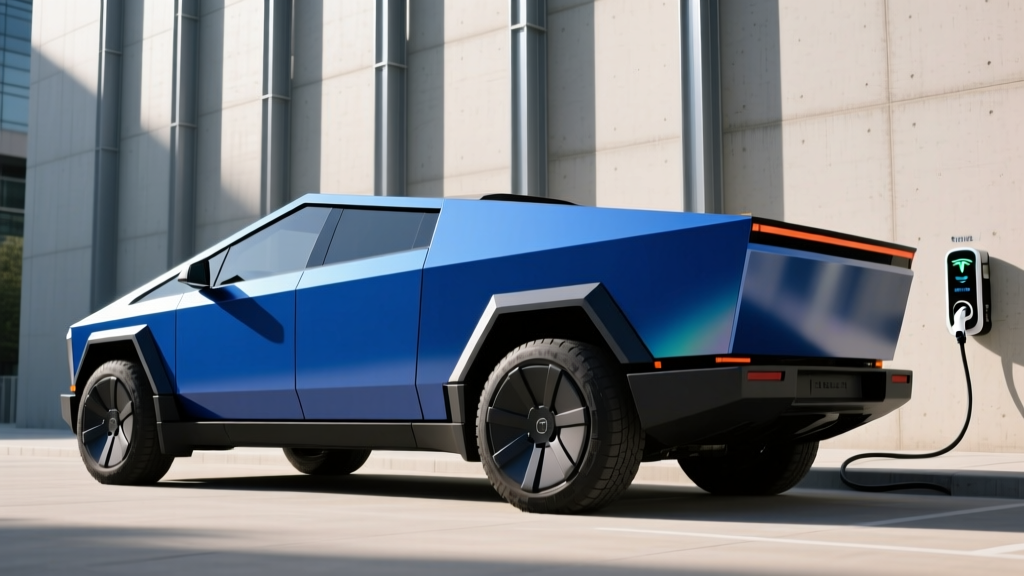
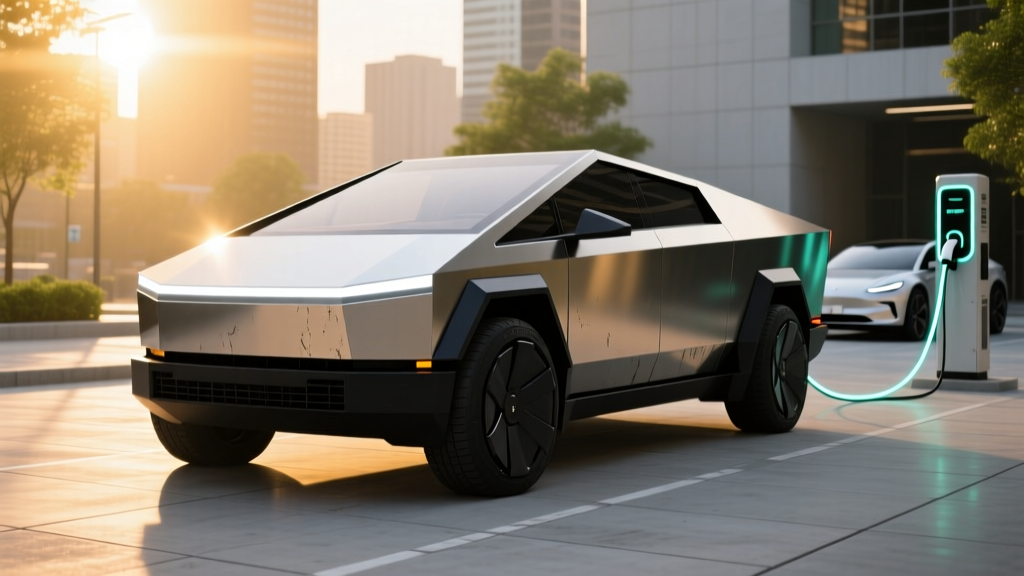
The Cybertruck's angular, stainless-steel exoskeleton looks futuristic, but that flat-panel design creates aerodynamic drag that directly impacts highway efficiency. EPA estimates tell part of the story; real-world driving tells the rest.
| Trim | EPA Range | Real-World Highway | Cold Weather (20°F) |
|---|---|---|---|
| RWD | 250 mi | ~210–225 mi | ~170–190 mi |
| Long Range AWD | 340 mi | ~280–305 mi | ~225–255 mi |
| Cyberbeast | 320 mi | ~260–285 mi | ~210–240 mi |
Real-world estimates based on sustained 70–75 mph highway driving, moderate climate, and typical payload. Cold-weather figures reflect LFP/NMC chemistry behavior at 20°F without preconditioning. Source: fueleconomy.gov EV range methodology.
The Long Range AWD's 340-mile EPA estimate is competitive with the Rivian R1T's Large battery pack and the Ford F-150 Lightning Extended Range. However, the Cybertruck's bluff-body aerodynamics mean you'll see a steeper drop at sustained highway speeds compared to sleeker EVs. At 75 mph on a flat interstate, expect the Long Range to deliver roughly 280–305 miles before needing a charge stop. In freezing temperatures, lithium-ion chemistry slows ion movement and increases internal resistance, which can knock 20–30% off your range if you don't precondition the battery.
Preconditioning matters here. If you navigate to a Supercharger using the built-in navigation, the Cybertruck will automatically warm the battery pack to optimal charging temperature. Skipping this step — or charging at a non-Tesla DC fast charger without manual preconditioning — will result in noticeably slower charge rates, especially below 40°F.
Battery Chemistry, Capacity, and Longevity
Tesla has not published official usable kWh figures for every Cybertruck trim, but teardown data and EPA efficiency calculations point to the following battery specifications:
| Trim | Est. Usable Capacity | Chemistry | Structural Pack |
|---|---|---|---|
| RWD | ~100 kWh | LFP (Lithium Iron Phosphate) | Yes — 4680 cells |
| Long Range AWD | ~123 kWh | NMC (Nickel Manganese Cobalt) | Yes — 4680 cells |
| Cyberbeast | ~123 kWh | NMC | Yes — 4680 cells |
The RWD model's LFP chemistry is a deliberate choice: LFP cells are less energy-dense but offer superior cycle life (often 3,000+ cycles before significant degradation), tolerate daily 100% charges without accelerated wear, and avoid cobalt supply-chain concerns. The trade-off is lower energy density, which is why the RWD has the shortest range despite a substantial battery.
The Long Range and Cyberbeast use NMC chemistry for maximum energy density — more miles per kilogram of battery. NMC cells degrade faster if routinely charged to 100%, so Tesla recommends daily charging to 80–90% for these trims, reserving 100% for road trips.
Degradation reality: Based on Tesla's fleet data and third-party tracking (Recurrent Auto, Teslanomics), expect roughly 8–12% capacity loss over the first 100,000 miles, after which the degradation curve flattens significantly. The 4680 cell architecture with its tabless design improves thermal management, which should help long-term State of Health (SoH) compared to older 2170 cells.
Charging Speed: DC Fast, Level 2, and the 4680 Advantage
The Cybertruck's 4680 battery cells and 800-volt-class architecture enable some of the fastest DC charging in the pickup segment. Here's what you can expect at each charging level:
| Charging Level | Power / Voltage | Speed (miles added) | Notes |
|---|---|---|---|
| Level 1 (120V household) | ~1.4 kW | ~3–4 mi/hr | Emergency only; 340 mi takes ~90+ hours |
| Level 2 (240V home) | 11.5 kW (48A) | ~34–37 mi/hr | Full charge overnight (~9–10 hours for Long Range) |
| DC Fast Charge (V4 Supercharger) | Peak 350 kW | 10–80% in ~15 min | Sustained rate tapers above 60% SoC |
| DC Fast Charge (CCS adapter, 3rd party) | Up to 250 kW | 10–80% in ~20–25 min | Depends on station; Electrify America, EVgo |
The charge curve matters more than peak kW. The Cybertruck peaks at roughly 350 kW at a V4 Supercharger, but that rate only sustains from approximately 10% to 40% State of Charge. From 40–60%, it tapers to around 200–250 kW, and above 80% it drops sharply to protect the cells. A 10–80% charge takes approximately 15 minutes under ideal conditions (warm battery, V4 cabinet availability). At a third-party CCS station using Tesla's CCS adapter, expect 250 kW peak and a 20–25 minute 10–80% session.
For home charging, the Cybertruck's onboard charger accepts up to 11.5 kW on a 240V/60A circuit (48A continuous). Most owners install a Tesla Wall Connector or a compatible Level 2 unit on a NEMA 14-60 or hardwired 60A circuit. Budget $800–$2,500 for professional installation depending on your electrical panel's capacity and the run distance from panel to garage. Homes with older 100A service panels may need a $2,000–$4,000 panel upgrade — confirm with a licensed electrician before purchasing equipment.
Performance, Efficiency, and Towing
The Cybertruck lineup spans from a practical single-motor commuter truck to a tri-motor performance beast. Here's how each trim performs:
| Spec | RWD | Long Range AWD | Cyberbeast |
|---|---|---|---|
| 0–60 mph | 6.5 sec | 4.1 sec | 2.6 sec |
| Horsepower | ~315 hp | ~600 hp | ~845 hp |
| Torque | ~420 lb-ft | ~740 lb-ft | ~740 lb-ft |
| Top Speed | 112 mph | 130 mph | 130 mph |
| Max Towing | 7,500 lbs | 11,000 lbs | 11,000 lbs |
| Payload | ~2,500 lbs | ~2,500 lbs | ~2,500 lbs |
| EPA Efficiency | ~67 MPGe / 50 kWh/100mi | ~72 MPGe / 47 kWh/100mi | ~68 MPGe / 49 kWh/100mi |
The Cyberbeast's 2.6-second 0–60 time makes it the quickest production pickup truck ever sold, rivaling supercars. But the Long Range AWD at 4.1 seconds is already faster than any gas truck on the market and offers the best range-to-performance balance.
Towing reality check: The 11,000-lb max tow rating is legitimate, but towing at or near capacity will cut your range by 40–55%. Plan on 140–180 miles between charge stops when towing a heavy trailer in the Long Range AWD. The Cybertruck's integrated trailer brake controller and tow-assist cameras are well-implemented, but the Supercharger network's tight pull-through spots remain a pain point for truck-and-trailer combinations.
Cargo Space, Interior, and Daily Practicality
The Cybertruck's dimensions place it in a unique category — shorter than a full-size F-150 but larger than a midsize Tacoma.
- Bed length: 6 feet (72 inches) with the tonneau closed
- Cargo bed volume: ~67 cu ft
- Front trunk (frunk): ~7 cu ft (lockable, drainable)
- Seating: 5 passengers (3-across rear bench)
- Rear legroom: ~41.5 inches
- Total cargo volume (bed + frunk + cabin): ~120+ cu ft with seats folded
The powered stainless-steel tonneau cover (Tesla calls it the "sail" vault) is standard and locks automatically. It supports up to 300 lbs of distributed weight on top — useful for roof-mounted gear. The 6-foot bed is shorter than a traditional F-150 6.5-foot box, which matters if you haul 4x8 sheets of plywood; they won't fit flat without the tailgate down.
Inside, the minimalist cabin centers on an 18.5-inch touchscreen with no physical buttons. The rear passengers get their own 9.4-inch touchscreen for climate and media. Build quality on 2025–2026 models has improved noticeably over early 2024 deliveries — panel gaps are tighter and the stainless-steel panels show fewer fingerprint smudges with Tesla's updated passivation treatment.
Notable drawbacks: The rear visibility is compromised by the bed sail design, making the backup camera essential. The steer-by-wire system (no mechanical linkage between the yoke and the wheels) takes 2–3 days of adjustment for most drivers. And the sharp exterior edges, while striking, are a parking-lot liability for neighboring vehicles.
Federal Tax Credit Eligibility (IRS §30D) — 2026 Rules
The Cybertruck qualifies for the up to $7,500 federal clean vehicle credit under IRS §30D, but only specific trims and specific buyers will see the full amount. Here's the eligibility checklist:
- MSRP cap: Light trucks must be ≤ $80,000 → RWD ($60,990) ✅ and Long Range ($79,990) ✅ qualify; Cyberbeast ($99,990) ❌ does not
- Buyer income cap: AGI ≤ $150,000 (single), $225,000 (head of household), $300,000 (joint) → verify against your tax return
- Battery components: Must be manufactured/assembled in North America (percentage threshold increases annually) → Tesla's Texas-built 4680 cells currently meet this requirement
- Critical minerals: Must be sourced from the US or FTA partners (percentage threshold increases annually) → verify current-year compliance on fueleconomy.gov
- Point-of-sale transfer: You can transfer the credit to the dealer at purchase for an immediate price reduction, or claim it on your tax return
- One credit per VIN, one credit per taxpayer per year
Rules are subject to change. Consult IRS.gov or a tax professional for your specific situation.
In practical terms: the RWD and Long Range AWD trims are likely eligible for the full or partial $7,500 credit for buyers within the income caps, assuming Tesla's supply chain continues to meet the escalating sourcing thresholds. The Cyberbeast's MSRP exceeds the $80,000 truck cap, making it ineligible regardless of buyer income. The point-of-sale transfer option means you can effectively reduce the purchase price at the dealership rather than waiting until tax filing.
Warranty Coverage
| Component | Coverage |
|---|---|
| Basic Vehicle (bumper-to-bumper) | 4 years / 50,000 miles |
| Battery & Drive Unit | 8 years / 120,000 miles (Long Range, Cyberbeast) |
| Battery & Drive Unit (RWD) | 8 years / 100,000 miles |
| Battery capacity retention threshold | 70% minimum SoH during warranty period |
Tesla's battery warranty guarantees the pack will retain at least 70% of its original capacity during the coverage period. If degradation exceeds 30% within 8 years/120,000 miles, Tesla will repair or replace the battery at no cost. Based on current fleet data, very few Tesla vehicles have hit this threshold under normal use. Out-of-warranty battery replacement costs are estimated at $15,000–$25,000 depending on the pack, though 4680 cell costs are declining annually.
Cybertruck vs. Rivian R1T vs. Ford F-150 Lightning
The electric pickup segment gives buyers three distinct philosophies. Here's how they compare on the metrics that matter:
| Spec | Cybertruck Long Range | Rivian R1T (Large Battery) | F-150 Lightning (Ext. Range) |
|---|---|---|---|
| MSRP | $79,990 | $79,900 | $77,995 |
| EPA Range | 340 mi | 352 mi | 320 mi |
| Max DC Charge | 350 kW | 220 kW | 150 kW |
| 10–80% DC Time | ~15 min | ~27 min | ~41 min |
| 0–60 mph | 4.1 sec | 4.5 sec | 4.0 sec |
| Max Towing | 11,000 lbs | 11,000 lbs | 10,000 lbs |
| Bed Length | 6 ft | 4.5 ft (+ Gear Tunnel) | 5.5 ft |
| Tax Credit (§30D) | Likely eligible | Likely eligible | Likely eligible |
Choose the Cybertruck if: You prioritize the fastest DC charging in the segment, want tri-motor performance (Cyberbeast), and prefer the Supercharger network's reliability for road trips.
Choose the Rivian R1T if: You value off-road capability (quad-motor available), the innovative Gear Tunnel for gear storage, and a more traditional interior layout with physical controls.
Choose the F-150 Lightning if: You need a full-size truck footprint, want Pro Power Onboard for job-site power, and prefer a conventional dealer service network over Tesla's mobile-ranger model.
- Fastest DC charging in the pickup segment (350 kW peak)
- Class-leading 0–60 in Cyberbeast trim (2.6 sec)
- Access to Tesla Supercharger network (17,000+ stalls)
- Stainless-steel exoskeleton resists dents and corrosion
- OTA updates continually add features
- LFP option on RWD allows daily 100% charging
- Aerodynamic drag reduces highway range significantly
- 6-foot bed is shorter than most competitors
- Steer-by-wire yoke has a steep learning curve
- Rear visibility is poor; camera-dependent
- Sharp exterior edges are a parking-lot risk
- Cyberbeast exceeds $80K MSRP cap — no tax credit
- Limited third-party service options outside Tesla network
Who Should Buy the Cybertruck?
The Cybertruck is best suited for tech-forward buyers who value charging speed and performance over traditional truck utility. If your use case involves daily commuting with occasional road trips and you have home Level 2 charging, the Long Range AWD is the sweet spot — 340 miles of EPA range, 350 kW DC charging, and 11,000-lb towing cover most scenarios.
It's less ideal for buyers who need a full-size bed for construction work, who regularly tow heavy trailers long distances (range drops hard), or who live in areas without reliable Supercharger access. The Rivian R1T and F-150 Lightning serve those use cases more effectively.
For fleet buyers or those with solar-plus-storage at home, the RWD trim at ~$53,490 after the tax credit is a compelling value proposition — essentially a daily-drivable, zero-fuel-cost work truck with a 250-mile range that covers most urban routes.
Frequently Asked Questions
What is the real-world range of the Tesla Cybertruck?
The EPA rates the Long Range AWD at 340 miles, but real-world highway driving at 70–75 mph typically yields 280–305 miles. In cold weather (below 30°F), expect 225–255 miles without preconditioning. The RWD delivers roughly 210–225 miles highway, and the Cyberbeast falls between 260–285 miles on the open road.
How fast does the Cybertruck charge at home and on the road?
At home on a Level 2 charger (240V, 48A), the Cybertruck adds roughly 34–37 miles of range per hour, fully charging overnight in 9–10 hours. On a Tesla V4 Supercharger, it peaks at 350 kW and charges from 10–80% in approximately 15 minutes. At third-party CCS stations with the adapter, expect 20–25 minutes for the same 10–80% session.
How much does the Cybertruck cost after the federal tax credit?
The RWD starts at $60,990 and can drop to approximately $53,490 with the full $7,500 §30D credit (income and sourcing requirements apply). The Long Range AWD at $79,990 may qualify for approximately $72,490 after the credit. The Cyberbeast at $99,990 exceeds the $80,000 MSRP cap for trucks and is not eligible for the federal credit.
Does the Cybertruck qualify for the federal EV tax credit?
The RWD and Long Range AWD trims are eligible for up to $7,500 under IRS §30D, provided the buyer meets income caps ($150K single / $300K joint) and the battery meets current-year component and critical-mineral sourcing thresholds. The Cyberbeast is ineligible due to its MSRP exceeding the $80,000 light-truck cap. Verify current eligibility on fueleconomy.gov before purchasing.
Is the Cybertruck worth buying vs. the Rivian R1T or F-150 Lightning?
If you prioritize charging speed, Supercharger network access, and performance, the Cybertruck is the strongest choice. If off-road capability and a more conventional truck experience matter more, the Rivian R1T excels. If you need a full-size truck footprint and traditional dealer service, the F-150 Lightning is the better fit. All three are likely eligible for the §30D tax credit in qualifying trims.
What's the biggest concern with owning a Cybertruck?
The most common owner-reported concerns are the short 6-foot bed limiting utility, the steer-by-wire yoke requiring an adjustment period, and the stainless-steel panels showing water spots and requiring specific cleaning products. Range loss during towing is also significant — plan for 40–55% range reduction when pulling near max capacity.