The Tesla Cybertruck entered production in late 2023, and by the 2026 model year it has settled into a lineup of three trims: the Long Range AWD, the tri-motor Cyberbeast, and a newly introduced rear-wheel-drive variant that lowers the entry price. Buyers researching the Cybertruck payload and towing capability alongside real-world range will find a truck that pushes EV boundaries—but not without trade-offs in efficiency, charging infrastructure compatibility, and price.
This review covers every number that matters: payload ratings, bed dimensions, EPA range versus highway reality, DC fast-charge curves, and whether any trim still qualifies for the federal §30D tax credit in 2026.
Cybertruck Payload, Towing, and Bed Specs at a Glance
Before range or performance, truck buyers need the work numbers. Here is how the 2026 Cybertruck lineup stacks up for payload, towing, and cargo volume.
| Specification | RWD (Base) | Long Range AWD | Cyberbeast (Tri-Motor) |
|---|---|---|---|
| Max Payload Capacity | 2,500 lbs | 2,500 lbs | 2,500 lbs |
| Max Towing Capacity | 7,500 lbs | 11,000 lbs | 11,000 lbs |
| Bed Length | 6 ft (72 in) | ||
| Bed Width (between wheel wells) | 47 in | ||
| Cargo Bed Volume | ~42 cu ft | ||
| Front Trunk (Frunk) | ~7 cu ft | ||
| Total Cargo Volume (bed + frunk + cabin) | ~120 cu ft | ||
| Bed Outlet Power | Up to 9.6 kW (240V / 120V) | ||
| Ground Clearance (max) | 17.4 in (adaptive air suspension) | ||
The 2,500-pound payload rating is competitive with midsize trucks like the Ford F-150 Lightning (which rates up to 2,235 lbs depending on trim) but falls short of heavy-duty ICE pickups. The stainless-steel exoskeleton bed is dent-resistant and requires no liner, though the 47-inch width between the wheel wells means standard 4×8 sheets of plywood will not lie flat—a notable limitation for contractors.
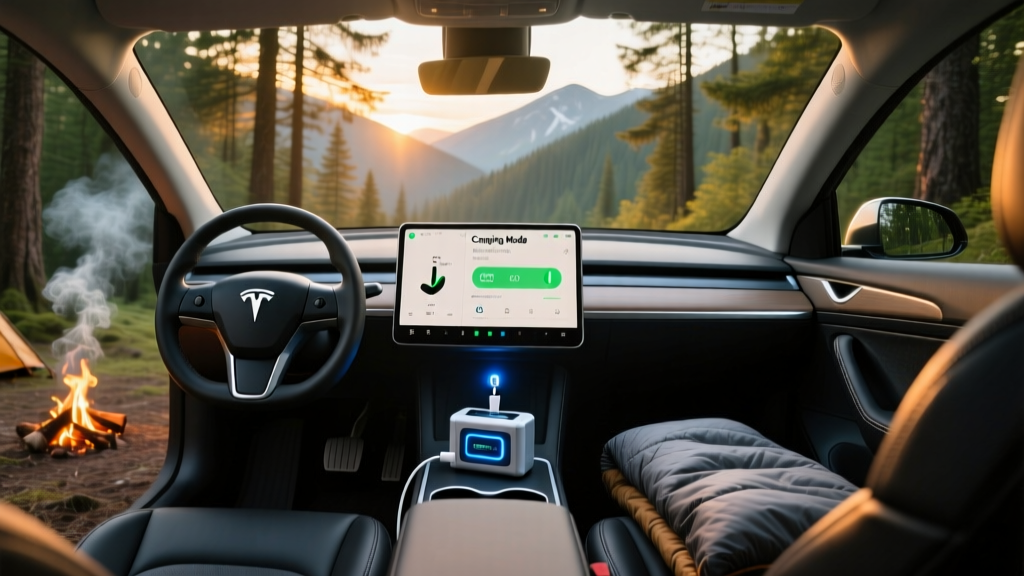
The 9.6 kW onboard power system (branded as Powershare) is a standout. It can run job-site tools, power a campsite, or serve as a backup home generator via a Tesla Powerwall integration. This vehicle-to-load (V2L) capability is one of the Cybertruck's strongest utility arguments.
Range, Battery, and Real-World Efficiency
EPA Range (2026 trims):
- RWD: EPA 250 mi | Real-world highway: ~210–225 mi
- Long Range AWD: EPA 340 mi | Real-world highway: ~275–300 mi
- Cyberbeast: EPA 320 mi | Real-world highway: ~260–280 mi
Cold-weather caveat: Expect 15–25% range reduction in sustained sub-freezing temperatures due to cabin heating and battery thermal management demands, even with the standard heat pump.
The Cybertruck uses a ~123 kWh usable battery pack (NMC lithium-ion chemistry) in the AWD and Cyberbeast trims, while the RWD variant uses a smaller ~100 kWh pack. The angular stainless-steel body creates more aerodynamic drag than a sleek sedan, which is why highway efficiency drops noticeably compared to EPA combined figures.
| Trim | Battery (usable kWh) | Chemistry | EPA MPGe (combined) | kWh/100 mi |
|---|---|---|---|---|
| RWD | ~100 kWh | NMC | 68 MPGe | 48 kWh |
| Long Range AWD | ~123 kWh | NMC | 64 MPGe | 52 kWh |
| Cyberbeast | ~123 kWh | NMC | 59 MPGe | 57 kWh |
For context, 52 kWh/100 mi on the Long Range AWD means a full charge costs roughly $8–$14 at home (depending on your local electricity rate of $0.12–$0.22/kWh) and significantly more at public DC fast chargers where rates can exceed $0.40/kWh. According to fueleconomy.gov, the Cybertruck Long Range sits near the bottom of EV efficiency rankings due to its weight and aerodynamics.
Charging Speed: DC Fast Charge and Home Level 2
Charging speed is where Cybertruck owners spend real time, and the 800-volt architecture delivers competitive numbers—on paper. In practice, the charge curve tapers significantly above 60% state of charge.
| Charging Level | Connector | Max Rate | Practical Speed |
|---|---|---|---|
| Level 1 (120V household) | NACS | 1.4 kW | ~3–4 mi/hr |
| Level 2 (240V home / public) | NACS | 11.5 kW (48A) | ~25–30 mi/hr |
| DC Fast Charge | NACS (native) | 250 kW peak | 10–80% in ~35 min (Long Range) |
The 250 kW peak charge rate is achieved only under ideal conditions: battery preconditioned via navigation to a Supercharger, ambient temperature above 60°F, and starting from a low state of charge. The curve holds above 200 kW until roughly 40% SoC, then steps down to ~150 kW by 55%, and slows further to under 80 kW past 70%. This means the last 20% (80–100%) can add another 25–30 minutes.
For home Level 2 charging, Tesla's Wall Connector at 48 amps delivers 11.5 kW, replenishing a depleted Long Range battery in about 11 hours. Most owners charging overnight from 20–80% will see a full top-up in roughly 7 hours. Installation of a 60-amp dedicated circuit typically costs $800–$2,000 depending on panel proximity, according to licensed electrician estimates.
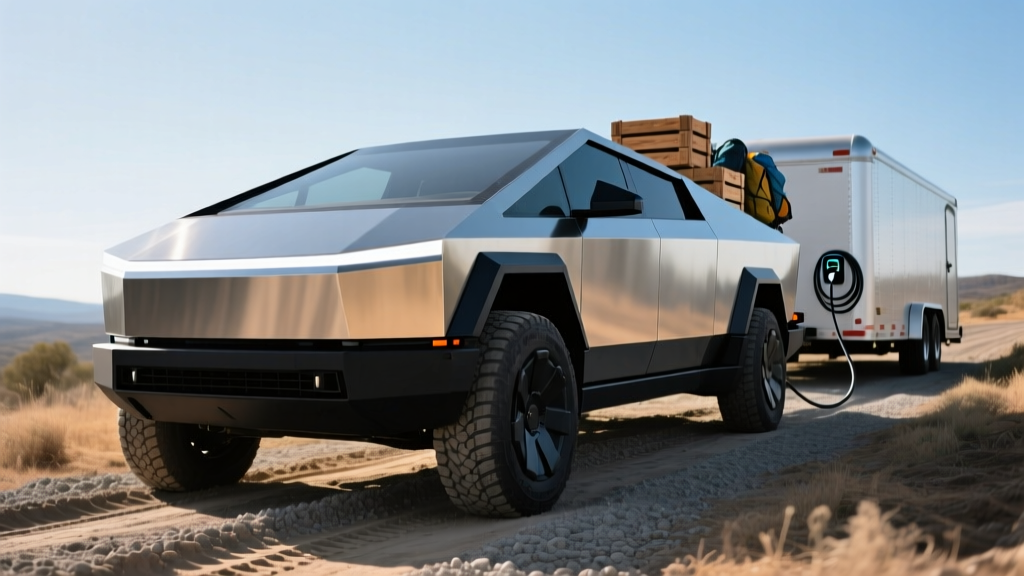
The Cybertruck uses the native NACS (North American Charging Standard) connector, giving it full access to Tesla's Supercharger network—the most reliable DC fast-charging network in the U.S. with over 25,000 stalls. For non-Tesla CCS chargers (Electrify America, EVgo), a NACS-to-CCS adapter is required and available from Tesla for approximately $175.
Performance, Drivetrain, and Driving Dynamics
| Trim | Drivetrain | Horsepower | 0–60 mph | Top Speed |
|---|---|---|---|---|
| RWD | Rear-Wheel Drive | ~600 hp | 5.0 sec (est.) | 130 mph |
| Long Range AWD | Dual-Motor AWD | 600 hp | 3.9 sec | 130 mph |
| Cyberbeast | Tri-Motor AWD | 845 hp | 2.6 sec | 130 mph |
The Cyberbeast's 2.6-second 0–60 time makes it the quickest production pickup ever built, a remarkable figure for a vehicle weighing over 6,800 pounds. The dual-motor Long Range AWD provides the best balance of performance and practicality, with ample passing power and standard all-wheel drive for snow and dirt.
Ride quality benefits from the adaptive air suspension, which adjusts ride height from 9.3 to 17.4 inches of ground clearance. In Off-Road mode, the Cybertruck can handle moderate trails, though its 8,000+ lb curb weight (Cyberbeast) limits agility on technical terrain. The steer-by-wire system (branded "Yoke steering" when equipped with the optional yoke) takes adjustment but offers a variable ratio that eliminates hand-over-hand turning.
Pricing, Trim Levels, and Federal Tax Credit Eligibility
| Trim | Base MSRP | Federal §30D Credit | Effective Price |
|---|---|---|---|
| RWD (Base) | $60,990 | Ineligible (MSRP cap for trucks: $80,000 — qualifies, but battery sourcing rules may disqualify)* | $60,990–$53,490 |
| Long Range AWD | $79,990 | Potentially up to $7,500 (subject to income, sourcing rules) | $79,990–$72,490 |
| Cyberbeast | $99,990 | Ineligible (exceeds $80,000 MSRP cap for trucks) | $99,990 |
*As of 2026, the IRS §30D tax credit has specific requirements that make Cybertruck eligibility complex:
- MSRP Cap: Pickup trucks must have an MSRP at or below $80,000. This disqualifies the Cyberbeast outright.
- Buyer Income Limits: AGI must not exceed $150,000 (single), $225,000 (head of household), or $300,000 (joint filing).
- Battery Sourcing: To receive the full $7,500, the battery must meet critical-mineral and battery-component sourcing requirements that shift annually. Tesla's supply chain has been partially compliant, meaning some delivery months qualify for the full credit, some for $3,750, and some for $0.
- Point-of-Sale Transfer: Eligible buyers can transfer the credit to the dealer (Tesla) at purchase, reducing the purchase price directly rather than waiting for a tax refund.
The Long Range AWD at $79,990 sits just under the $80,000 truck MSRP cap, making it theoretically eligible—but only if your income qualifies and the specific vehicle's battery meets that month's sourcing requirements. Always verify eligibility on the IRS clean vehicle credit page and with a tax professional before purchasing.
Interior, Technology, and Driver Assistance
The Cybertruck's interior is minimalist even by Tesla standards. A single 18.5-inch center touchscreen handles infotainment, climate, and vehicle controls. A rear 9.4-inch touchscreen serves back-seat passengers. There are no physical buttons for climate or audio—everything routes through the screen, which some drivers find distracting.
Standout tech features:
- 9.6 kW Powershare (V2L) — power tools, appliances, or a home circuit
- Adaptive air suspension with automatic load-leveling when towing
- Steer-by-wire with variable ratio (no mechanical connection between steering wheel and rack)
- Stainless-steel exoskeleton — no paint, no dent risk from minor impacts
- Integrated tonneau cover (motorized) with bed seal for weather resistance
- Sentry Mode and Dashcam with built-in cameras on all sides
Driver assistance: The Cybertruck ships with Tesla's Basic Autopilot (lane centering, adaptive cruise). Enhanced Autopilot ($6,000) adds auto lane change and navigate-on-autopilot. Full Self-Driving (Supervised) at $8,000 adds traffic light recognition and city-street autosteer—but this is an SAE Level 2 system requiring full driver attention at all times. It is not autonomous driving.
ADAS Limitation Warning: Tesla Autopilot and FSD (Supervised) are SAE Level 2 driver-assistance systems. The driver must keep hands on the steering wheel (or apply torque), monitor the road, and be prepared to take over instantly. These systems do not make the Cybertruck self-driving.
Notable drawbacks:
- Visibility: The angular design and thick A-pillars create significant blind spots; the camera-based rear view helps but does not replace a traditional mirror
- Rear-seat headroom is tight for passengers over 6'2" due to the sloping roofline
- Panel gap consistency has improved since 2024 but still varies unit-to-unit
- No Apple CarPlay or Android Auto — Tesla's proprietary OS only
- Insurance premiums run 20–40% higher than comparable F-150 Lightning policies due to repair costs
Who Should Buy the Cybertruck — and Who Shouldn't
Choose the Cybertruck if:
- You need V2L power (9.6 kW) for job sites, camping, or home backup
- You want Supercharger network access for long-distance truck towing
- Performance is a priority (Cyberbeast is the quickest truck ever built)
- You value a stainless-steel bed that needs no liner and resists dents
Look elsewhere if:
- You regularly haul 4×8 sheets of material (bed width between wheel wells is only 47 in)
- You need a proven heavy-duty payload above 2,500 lbs
- You want CarPlay, physical buttons, or a traditional dealership service experience
- Your budget is under $60,000 (consider the F-150 Lightning Pro or Rivian R1T with fewer options)
Cybertruck vs. Key Competitors
| Spec | Cybertruck LR AWD | F-150 Lightning Lariat | Rivian R1T Dual-Motor |
|---|---|---|---|
| EPA Range | 340 mi | 320 mi (Ext. Range) | 352 mi (Max Pack) |
| Max Payload | 2,500 lbs | 2,235 lbs | 1,760 lbs |
| Max Towing | 11,000 lbs | 10,000 lbs | 11,000 lbs |
| 0–60 mph | 3.9 sec | 4.5 sec | 4.5 sec |
| Base MSRP | $79,990 | $69,995 | $75,900 |
| Charging Network | Supercharger (native) | Supercharger (adapter) | Supercharger (adapter) |
| V2L Power | 9.6 kW | 9.6 kW (Pro Power) | Not available |
The Cybertruck wins on payload and raw performance but costs more and sacrifices some practicality. The F-150 Lightning remains the best value for traditional truck buyers who want a familiar form factor. The Rivian R1T offers superior off-road capability and a more refined interior, though it lacks V2L.
Warranty and Ownership Costs
Tesla provides a 4-year/50,000-mile limited vehicle warranty and an 8-year/120,000-mile battery and drive unit warranty. The battery warranty guarantees at least 70% capacity retention over the coverage period. Given the NMC chemistry and large pack size, degradation should be modest for most owners—expect roughly 5–8% loss over 100,000 miles based on historical Tesla fleet data.
Insurance is the Cybertruck's hidden cost. Tesla's own insurance product (available in select states) uses real-time driving data to set premiums, but early Cybertruck policies have averaged $250–$400/month depending on trim and driving record. Third-party insurers often quote higher due to the stainless-steel body's specialized repair requirements.
Pros
- Class-leading 2,500 lb EV payload
- 9.6 kW V2L power for tools and home backup
- Native Supercharger access (no adapter needed)
- Cyberbeast performance (2.6 sec 0–60) is unmatched
- Stainless-steel body eliminates paint and dent concerns
- Adaptive air suspension with load-leveling
Cons
- 47-in bed width won't fit flat plywood sheets
- Efficiency is poor (52–57 kWh/100 mi) — high charging cost
- Cyberbeast exceeds $80K MSRP cap — no tax credit
- Insurance premiums significantly above segment average
- Steer-by-wire and yoke steering require adaptation
- No CarPlay/Android Auto
Frequently Asked Questions
What is the real-world range of the Cybertruck?
The Long Range AWD achieves an EPA-estimated 340 miles, but real-world highway driving at 70+ mph typically yields 275–300 miles. In cold weather (below 32°F), expect 250–270 miles on a full charge. The Cyberbeast, with its tri-motor power draw, drops to roughly 260–280 miles in mixed real-world use.
How fast does the Cybertruck charge at home and on the road?
On a home Level 2 charger (Tesla Wall Connector, 48A/11.5 kW), the Long Range adds about 25–30 miles of range per hour, filling from empty in roughly 11 hours. On a Tesla Supercharger (250 kW peak), a 10–80% charge takes approximately 35 minutes under ideal conditions, though the curve tapers significantly above 60% SoC.
Does the Cybertruck qualify for the $7,500 federal EV tax credit?
It depends on the trim and your income. The Long Range AWD at $79,990 falls under the $80,000 truck MSRP cap and may qualify, but only if your adjusted gross income is within IRS limits and the battery meets that year's critical-mineral sourcing requirements. The Cyberbeast at $99,990 is ineligible due to the MSRP cap. The RWD at $60,990 qualifies on price but may fail sourcing requirements. Always check the current IRS clean vehicle credit page and consult a tax professional.
What is the Cybertruck payload capacity, and how does it compare?
All 2026 Cybertruck trims rate a 2,500-pound maximum payload. This exceeds the Ford F-150 Lightning's 2,235-pound rating and the Rivian R1T's 1,760-pound rating, making the Cybertruck the payload leader among current electric pickups. However, it falls well short of heavy-duty ICE trucks like the F-250 (4,000+ lbs).
Is the Cybertruck worth buying over the F-150 Lightning or Rivian R1T?
If you prioritize payload capacity, V2L power, and Supercharger-native road-trip charging, the Cybertruck Long Range AWD is a strong choice. If you want a lower price, a more traditional truck layout, and easier service access, the F-150 Lightning is the pragmatic pick. If off-road capability and interior refinement matter most, the Rivian R1T edges ahead. The Cyberbeast exists for buyers who want hypercar acceleration in a truck body and don't need a tax credit to justify the $99,990 price.
Can the Cybertruck tow a trailer long distance?
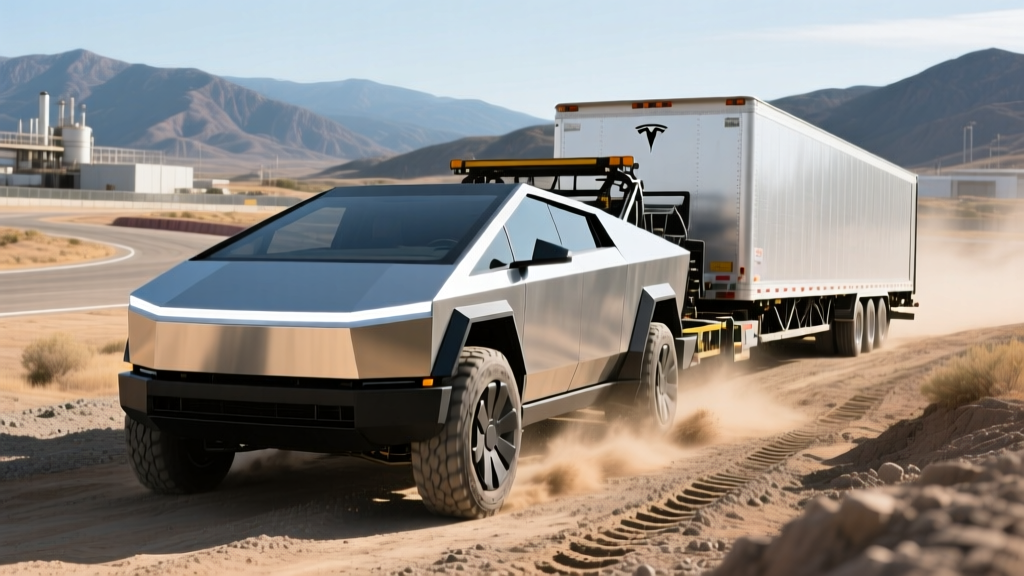
Yes, but towing dramatically reduces range. Expect a 40–50% range reduction when towing near the 11,000-pound maximum at highway speeds—meaning the Long Range AWD drops from 340 EPA miles to roughly 170–200 real-world towing miles. Tesla's Supercharger network makes this manageable with planning, as many stalls now accommodate pull-through charging for trailers.