Quick Verdict: The Cybertruck in 2026
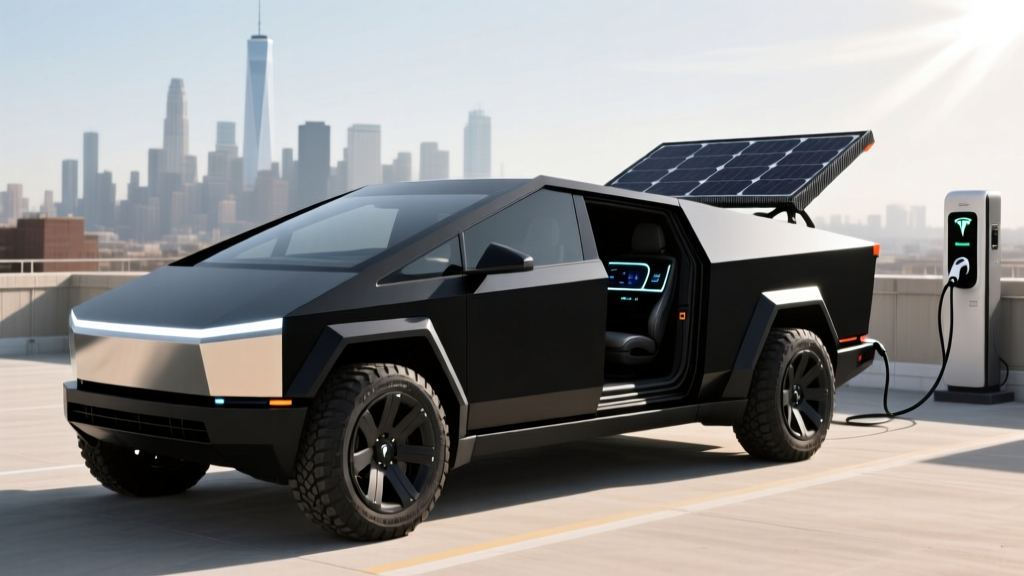
The Tesla Cybertruck enters the 2026 model year as one of the most polarizing — and modifiable — electric vehicles on the road. With its stainless-steel exoskeleton and 48-volt architecture, it invites customization unlike any other EV pickup. But every Cybertruck mod carries trade-offs in range, efficiency, and warranty coverage that owners must weigh carefully.
Whether you're eyeing a lift kit, aftermarket wheels, a light bar, or a full overland build, this review covers the Cybertruck's baseline specs and shows exactly how popular modifications impact real-world performance. We'll also address the question many buyers ask: does the Cybertruck still qualify for the federal EV tax credit in 2026?
Cybertruck Specs at a Glance
| Spec | AWD (Dual-Motor) | Cyberbeast (Tri-Motor) | RWD (Base) |
|---|---|---|---|
| EPA Range | 340 miles | 320 miles | ~250 miles (est.) |
| Battery (usable) | ~123 kWh (NMC) | ~123 kWh (NMC) | ~123 kWh (NMC) |
| Horsepower | 600 hp | 845 hp | ~315 hp (est.) |
| 0–60 mph | 3.9 sec | 2.6 sec | ~6.5 sec (est.) |
| Drivetrain | Dual-motor AWD | Tri-motor AWD | Single-motor RWD |
| Max DC Fast Charge | 250+ kW (NACS) | 250+ kW (NACS) | 250+ kW (NACS) |
| 10–80% DCFC Time | ~28 min | ~28 min | ~28 min |
| Level 2 Home Charge | ~11.5 kW (~34 mi/hr) | ~11.5 kW (~34 mi/hr) | ~11.5 kW (~34 mi/hr) |
| MPGe (combined) | 67 MPGe | 65 MPGe | TBD |
| Efficiency | ~50 kWh/100 mi | ~52 kWh/100 mi | TBD |
| Base MSRP | $79,990 | $99,990 | ~$60,990 (est.) |
| Battery/Drive Warranty | 8 yr / 120,000 mi | 8 yr / 120,000 mi | 8 yr / 120,000 mi |
Sources: fueleconomy.gov, tesla.com/cybertruck. RWD trim delayed to late 2025/2026; specs are Tesla-preliminary estimates.
Real-World Range: What the EPA Number Doesn't Tell You
EPA Sticker: 340 miles (AWD) / 320 miles (Cyberbeast)
Real-World Expectation: Expect 270–300 miles on mixed highway driving at 70 mph. In cold weather (below 32°F), plan for 220–260 miles. The Cybertruck's angular, brick-like aerodynamics (drag coefficient ~0.38) penalize highway efficiency more than sleeker EVs.
Independent testing from outlets like Edmunds and Recurrent Auto has confirmed that the Cybertruck AWD delivers roughly 280–300 miles in moderate temperatures at highway speeds. The Cyberbeast, with its tri-motor powertrain and higher performance draw, typically returns 260–280 miles in similar conditions. Cold weather compounds the penalty: the stainless-steel body offers less thermal insulation than conventional stamped steel, and battery preconditioning draws additional energy.
How Popular Cybertruck Mods Affect Range
This is where the "cybertruck mod" conversation gets critical. Aftermarket changes directly alter the energy equation:
- Larger/heavier wheels (22"+ aftermarket): Add unsprung mass and often increase rolling resistance. Expect a 5–10% range reduction (roughly 15–30 miles lost on the AWD).
- Lift kits (2–3 inches): Raise the frontal area and alter underbody airflow. Combined with larger tires, range drops of 10–15% are common in owner reports.
- Roof-top tent or cargo rack: Even an unloaded rack disrupts airflow over the tonneau area. A roof-top tent at highway speeds can slash range by 15–20%.
- Light bars and bull bars: Front-mounted accessories increase drag. A 50-inch LED light bar alone may cost 3–5% in highway efficiency.
- Bed rack / overland builds: Full expedition setups with tents, storage boxes, and spare tires routinely reduce range by 20–25%.
The takeaway: a moderately modded Cybertruck AWD that started at 340 EPA miles may realistically deliver 240–270 miles on a road trip. Plan charging stops accordingly.
Charging Speed: DC Fast and Home Level 2
| Charging Level | Power (kW) | Miles Added per Hour | Notes |
|---|---|---|---|
| Level 1 (120V outlet) | ~1.4 kW | ~3–4 mi/hr | Emergency/trickle only; full charge takes days |
| Level 2 (240V, 48A) | ~11.5 kW | ~34 mi/hr | Full charge in ~11 hours; ideal for overnight |
| DC Fast Charge (NACS) | 250+ kW peak | ~150+ mi in 15 min | 10–80% in ~28 min; tapers sharply above 80% |
The Cybertruck uses the NACS (North American Charging Standard) connector natively, giving it seamless access to Tesla's Supercharger network — the most reliable public charging infrastructure in the U.S. as of 2026. At a V4 Supercharger or comparable 250+ kW station, the Cybertruck peaks near 250–270 kW but sustains that rate only briefly.
Understanding the Charge Curve
Like all EVs, the Cybertruck's charge rate follows a tapering curve. You'll see peak speeds between 10–30% State of Charge (SoC), after which the rate gradually decreases. By 80% SoC, charging slows to roughly 60–80 kW, and above 90% it drops further. This is why the industry-standard metric is 10–80% time (~28 minutes) rather than 0–100%.
Mod impact on charging: Most Cybertruck mods don't alter the battery's charge acceptance rate. However, added weight (from armor, racks, larger wheels) means you need more kWh to add the same number of miles — effectively making each charging stop slightly longer in terms of miles gained per minute.
Cold-weather charging: Below freezing, the battery must precondition before accepting peak DC rates. Always use the vehicle's navigation to route to a Supercharger — this triggers automatic battery preconditioning and can shave 5–10 minutes off your 10–80% time in winter.
Pricing, Trims, and Federal Tax Credit Eligibility
The Cybertruck's pricing has shifted since its late-2023 launch. Here's where trims stand for the 2026 model year:
| Trim | Base MSRP | Federal §30D Credit | Effective Price |
|---|---|---|---|
| RWD (Base, upcoming) | ~$60,990 | Up to $7,500* | ~$53,490* |
| AWD (Dual-Motor) | $79,990 | Up to $7,500* | ~$72,490* |
| Cyberbeast (Tri-Motor) | $99,990 | Up to $7,500* | ~$92,490* |
*Federal EV tax credit (§30D) eligibility depends on multiple factors. See checklist below.
Does the Cybertruck Qualify for the $7,500 Federal Tax Credit?
Under current IRS §30D rules, the Cybertruck qualifies as a light-duty truck, which carries a higher MSRP cap than sedans. Here's the eligibility checklist for 2026:
- MSRP cap (trucks): Vehicle MSRP must not exceed $80,000. This means the AWD trim qualifies at $79,990, but the Cyberbeast at $99,990 does not.
- Buyer income limits: Modified Adjusted Gross Income (MAGI) must be ≤$300,000 (joint filers), ≤$225,000 (head of household), or ≤$150,000 (single filers).
- Battery sourcing: Critical minerals and battery components must meet phased-in percentages from U.S. or FTA-partner countries. Tesla's battery supply chain has been evolving; confirm current-year compliance on fueleconomy.gov before purchasing.
- Point-of-sale transfer: As of 2024+, buyers can transfer the credit to the dealer at purchase, reducing the upfront price rather than waiting for a tax refund.
- Final assembly: Must occur in North America (Cybertruck is built in Austin, TX — qualifies).
Key caveat: The AWD trim at $79,990 sits right at the MSRP cap. Adding dealer-installed accessories or choosing a configuration that pushes MSRP above $80,000 could disqualify the credit. Always verify the final MSRP on the window sticker before completing the purchase.
Performance, Cargo, and Tech
Performance Numbers
The Cyberbeast's 2.6-second 0–60 mph time makes it one of the quickest production pickups ever built, rivaling supercars. The AWD's 3.9 seconds is firmly in sports-car territory. Both use Tesla's dual- or tri-motor permanent-magnet setups with torque vectoring.
Towing capacity is rated at 11,000 lbs across AWD and Cyberbeast trims, though towing near max capacity cuts range roughly in half — expect 150–170 miles between charges when pulling a heavy trailer.
Cargo and Passenger Space
- Bed length: 6 feet (72 inches) with the tonneau cover closed
- Bed volume: ~67 cu ft
- Front trunk (frunk): ~7.1 cu ft — useful for charging cables and small gear
- Rear-seat legroom: ~41.5 inches (competitive with midsize crew cabs)
- Seating: 5 passengers (3-across rear bench)
The stainless-steel vault bed is dent-resistant but shows scratches readily. The powered tonneau cover is standard and supports up to 300 lbs of distributed load on top — a feature many overland-mod builders leverage.
Standout Tech
- 48-volt architecture: Industry-first for a production vehicle; reduces wiring harness weight and enables higher-power accessories
- Steer-by-wire: No mechanical connection between steering wheel and rack; enables variable ratio (fewer turns lock-to-lock at low speed)
- 18.5" front touchscreen + 9.4" rear screen: Runs Tesla's latest software with integrated navigation, streaming, and vehicle controls
- Autopilot (standard): SAE Level 2 driver assistance with adaptive cruise, lane-keeping, and automatic lane changes
- FSD (Supervised) option: Enhanced Level 2 system — requires continuous driver supervision; NOT autonomous driving
SAE Automation Level Reminder: Tesla Autopilot and FSD (Supervised) are Level 2 driver-assistance systems. The driver must remain fully engaged, hands on the wheel (or providing steering-torque input), and eyes on the road at all times. These systems do not make the Cybertruck self-driving. Only Level 4 services like Waymo operate without a human driver — and those are geofenced robotaxis, not consumer vehicles.
The Best Cybertruck Mods — and Their Trade-Offs
The Cybertruck's 48V system and angular geometry have spawned a thriving aftermarket. Here's a practical breakdown of popular Cybertruck mod categories and what they mean for daily ownership:
Wheels and Tires
The stock 20" all-season tires prioritize efficiency. Switching to 35" all-terrain tires on aftermarket wheels is the single most impactful mod — and the most costly in range. Expect:
- 5–12% range reduction depending on tire compound and tread pattern
- Speedometer recalibration required (Tesla service can update, or use aftermarket modules)
- Increased road noise at highway speeds
- Better off-road capability and ground clearance
Suspension and Lift Kits
The Cybertruck's adaptive air suspension already offers adjustable ride height (up to ~16 inches of ground clearance in Extract mode). Aftermarket 2–3" lift spacers provide permanent clearance gains but:
- May void suspension-related warranty claims
- Alter steering geometry, potentially increasing tire wear
- Combined with larger tires, compound range losses to 15–20%
Lighting and Accessories
Roof-mounted LED light bars (40–50") are popular but draw 100–200W when active — a minor efficiency hit but noticeable on long night drives. Bull bars and rock sliders add protection but also 50–150 lbs of weight.
Overland and Camping Builds
Full overland setups — roof-top tents, bed racks, drawer systems, portable fridges — can add 400–800 lbs. The payload capacity (~1,500 lbs) can handle it, but range suffers proportionally. Budget an extra charging stop on any trip over 200 miles with a full overland build.
Pros, Cons, and Who Should Buy
Pros
- Class-leading acceleration (2.6s Cyberbeast)
- NACS native — best public charging network access
- Stainless-steel body resists dents and corrosion
- 11,000-lb towing capacity
- 48V architecture enables powerful accessories
- Strong aftermarket / mod community
- AWD trim eligible for $7,500 federal tax credit (if MSRP ≤$80K)
Cons
- Real-world range significantly below EPA, especially highway/cold
- Mods further reduce range (10–25% depending on build)
- Cyberbeast exceeds $80K MSRP cap — no federal credit
- Steer-by-wire feels unusual; not all drivers adapt quickly
- Limited rear visibility; relies heavily on cameras
- Stainless steel shows fingerprints, scratches, and water spots
- Insurance premiums above average for the EV segment
- Panel gap and build-quality concerns persist in some units
Who This EV Suits Best
Buy the Cybertruck if: You want a high-performance electric truck with serious towing, a thriving mod community, and access to the Supercharger network. The AWD trim is the value play if you can keep MSRP under $80,000 for the tax credit.
Look elsewhere if: You prioritize maximum range (the Rivian R1T Dual-Motor or Chevrolet Silverado EV offer longer real-world range), prefer a conventional steering feel, or plan heavy off-road mods without accepting range trade-offs.
Frequently Asked Questions
What is the real-world range of the Cybertruck?
The EPA rates the AWD at 340 miles and the Cyberbeast at 320 miles. In real-world highway driving at 70 mph in moderate temperatures, expect 270–300 miles (AWD) and 260–280 miles (Cyberbeast). Cold weather (below freezing) reduces these figures by another 15–20%, landing around 220–260 miles. Adding mods like larger tires or a roof-top tent can cut range by an additional 10–25%.
How fast does the Cybertruck charge at home and on the road?
On a Level 2 home charger (240V, 48A), the Cybertruck charges at ~11.5 kW, adding roughly 34 miles of range per hour — a full charge takes about 11 hours. At a DC fast charger (NACS Supercharger), it peaks above 250 kW and charges from 10–80% in approximately 28 minutes. Charging slows significantly above 80% SoC to protect battery health.
How much does the Cybertruck cost after tax credits?
The AWD at $79,990 MSRP can qualify for the full $7,500 federal tax credit under IRS §30D, bringing the effective price to ~$72,490 — provided the buyer meets income limits and battery-sourcing requirements are satisfied. The Cyberbeast at $99,990 exceeds the $80,000 truck MSRP cap and does not qualify. The upcoming RWD base trim (~$60,990) should qualify if it meets sourcing rules.
Do Cybertruck mods void the warranty?
Tesla's battery and drive unit warranty covers 8 years / 120,000 miles with a minimum 70% capacity retention. Modifications don't automatically void the entire warranty, but Tesla can deny claims related to components affected by aftermarket parts. For example, a lift kit could void suspension claims; oversized wheels could affect bearing or motor warranty. Always document stock configurations and consult Tesla service before major mods.
Is the Cybertruck worth buying vs. the Rivian R1T or Ford F-150 Lightning?
The Cybertruck wins on acceleration, charging network access (NACS/Supercharger), and mod culture. The Rivian R1T offers more refined interior quality, better real-world range (~350+ miles with Max Pack), and a more traditional driving feel. The Ford F-150 Lightning provides familiar truck ergonomics, a larger frunk, and competitive pricing. Your choice depends on priorities: performance and charging infrastructure (Cybertruck), range and refinement (R1T), or familiarity and utility (F-150 Lightning).
Does the Cybertruck qualify for the federal EV tax credit in 2026?
The AWD trim at $79,990 qualifies if the buyer's MAGI is within limits ($300K joint / $150K single), battery sourcing requirements are met, and final MSRP stays at or below $80,000. The Cyberbeast does not qualify due to its $99,990 MSRP. Always verify current eligibility on fueleconomy.gov and consult a tax professional, as §30D rules are subject to legislative changes.
What are the best first mods for a new Cybertruck owner?
Start with reversible, low-impact modifications: all-weather floor liners, a screen protector, ceramic coating or PPF for the stainless steel (to reduce fingerprints and water spots), and a quality set of all-terrain tires if you plan light off-roading. Avoid lift kits and roof racks until you've established your baseline range and charging routine — then modify with a clear understanding of the efficiency trade-offs.