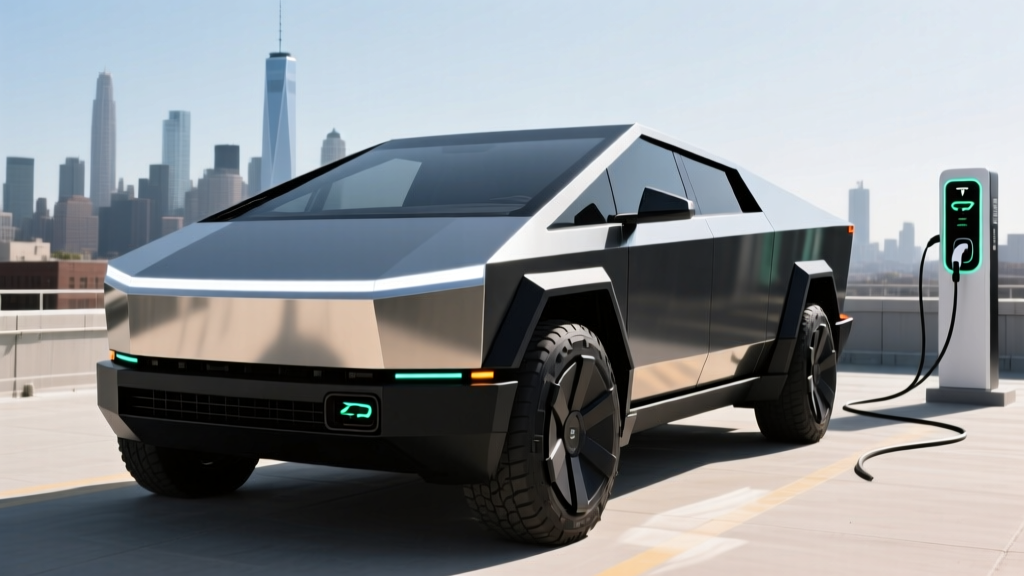
The Tesla Cybertruck remains one of the most polarizing electric vehicles on the road, and for 2026, leasing has emerged as the most popular way to get behind the wheel of the stainless-steel pickup. With MSRPs pushing past $80,000 on higher trims and rapid depreciation curves typical of first-generation EV platforms, a Cybertruck lease offers lower monthly payments and an exit strategy before long-term battery health becomes a concern. But does the math actually work? This review breaks down the real-world range, charging performance, ownership economics, and federal tax credit implications of leasing the 2026 Cybertruck.
2026 Cybertruck Trim Lineup and Pricing
Tesla offers the Cybertruck in three configurations for the 2026 model year. Pricing has shifted since the truck's late-2023 launch, reflecting both production maturity and Tesla's dynamic pricing strategy.
| Trim | Drivetrain | HP | 0-60 mph | EPA Range | Base MSRP |
|---|---|---|---|---|---|
| Rear-Wheel Drive | RWD (single motor) | ~295 hp | 6.5 sec | 250 mi | $60,990 |
| All-Wheel Drive | AWD (dual motor) | ~600 hp | 4.1 sec | 340 mi | $79,990 |
| Cyberbeast | AWD (tri-motor) | ~845 hp | 2.6 sec | 320 mi | $99,990 |
The RWD trim was added to the lineup to broaden accessibility, though availability has been limited and delivery timelines stretch several months. The AWD remains the volume seller and the trim most commonly found in lease inventories. The Cyberbeast occupies the performance halo position and is rarely discounted in lease programs.
As-tested pricing: A well-equipped AWD with Full Self-Driving (Supervised) capability ($8,000), the Armor Glass upgrade, and destination fees lands near $91,500 before incentives. Lease pricing typically factors in the negotiated cap cost, money factor, residual value, and any applicable lease cash from Tesla or the leasing bank.
Battery Chemistry, Capacity, and Real-World Range
The Cybertruck uses a structural battery pack integrated into the vehicle's exoskeleton. Tesla has not published the exact usable kWh figure, but teardown analyses and EPA filing data place the AWD pack at approximately 123 kWh usable, using a nickel-manganese-cobalt (NMC) chemistry optimized for energy density and high-rate discharge.
EPA vs. Real-World Range: What to Actually Expect
EPA Estimated Range (AWD): 340 miles
Real-world highway (70-75 mph, mild weather): ~270-290 miles. The Cybertruck's boxy aerodynamic profile — a drag coefficient around 0.34 Cd despite active aero aids — exacts a significant highway penalty. Expect roughly 2.0-2.2 kWh/mile at sustained highway speed, compared to the EPA combined cycle which blends city regen-heavy driving.
Cold weather (below 32°F): Reduce EPA figures by 20-35%. In sub-freezing conditions with cabin heating active, the AWD may deliver 220-260 miles before requiring a charge stop. The structural pack's thermal management system helps, but the physics of cold lithium-ion cells and resistive heating loads cannot be fully offset.
Towing: When pulling near the 11,000-lb max rating, range drops by 40-55%. Plan for 150-180 miles between charges under heavy load.
The RWD trim's smaller pack and lighter curb weight yield a more modest 250-mile EPA figure, but its real-world consistency is arguably better because single-motor efficiency is less sensitive to drivetrain losses.
Charging Performance: DC Fast, Level 2, and the NACS Advantage
The Cybertruck uses the North American Charging Standard (NACS) connector natively — no adapter required — and supports Tesla's V4 Supercharger architecture as well as the full legacy Supercharger network.
| Charging Level | Power (kW) | Speed (mi/hr added) | Time / Notes |
|---|---|---|---|
| Level 1 (120V household) | ~1.4 kW | ~3-4 mi/hr | Emergency/trickle only; ~90+ hr for full charge |
| Level 2 (240V / 48A Wall Connector) | 11.5 kW | ~34-37 mi/hr | ~9-10 hr for 10-100%; ideal overnight home charging |
| DC Fast Charge (V3 Supercharger) | Peak 250 kW | Up to ~190 mi/hr at peak | 10-80% in ~28-32 min; sustained rate drops above 60% SoC |
| DC Fast Charge (V4 Supercharger) | Peak 350 kW* (truck limited to ~250 kW) | Up to ~190 mi/hr at peak | Same 10-80% curve; V4 cabinet delivers more current but truck's pack limits intake |
Charging curve reality check: The Cybertruck's peak 250 kW rate is sustained only between approximately 10-30% State of Charge (SoC). By 50% SoC, the rate tapers to roughly 150-170 kW, and above 80% it drops sharply to under 50 kW. This tapering curve means a 10-80% session takes around 30 minutes, but pushing from 80-100% adds another 40+ minutes — a critical planning factor on road trips. Always plan charge stops to 80% unless overnight.
Level 2 home charging: The onboard charger maxes at 11.5 kW (48 amps). To achieve this, you need a Tesla Wall Connector or equivalent NACS Level 2 EVSE on a 60-amp dedicated circuit. Most home installations with a 200-amp electrical panel can accommodate this. Expect installation costs of $800-$2,500 depending on panel proximity and local permit requirements, per data from the U.S. Department of Energy.
Efficiency: MPGe and Energy Consumption
Per fueleconomy.gov, the 2026 Cybertruck AWD achieves an EPA-rated combined 77 MPGe, translating to approximately 43 kWh per 100 miles. That makes it one of the least efficient EVs on the market — a direct consequence of its 6,600+ lb curb weight, aggressive tread tires, and angular aerodynamics.
For context, the Ford F-150 Lightning Extended Range achieves roughly 70 MPGe combined, while the Rivian R1T Dual-Motor Large Pack sits around 73 MPGe. The Cybertruck is in the right neighborhood but trails slightly due to its weight. Real-world highway efficiency often dips to 48-52 kWh/100mi, meaning your electricity cost per mile will be noticeably higher than a sedan-class EV.
At the national average electricity rate of ~$0.17/kWh (EIA, 2025), charging the AWD from 0-100% at home costs approximately $21. At 300 real-world miles per charge, that's roughly $0.07/mile — still well below gasoline at $3.50/gal in a comparable gas truck getting 18 mpg combined ($0.19/mile).
Federal Tax Credit, Lease Structure, and Total Cost
The Cybertruck's eligibility for the IRS §30D Clean Vehicle Credit is a moving target that depends on several factors:
- MSRP cap: Trucks must have an MSRP at or below $80,000. The RWD ($60,990) qualifies; the AWD ($79,990) is right at the limit; the Cyberbeast ($99,990) does not qualify.
- Buyer income caps: Modified adjusted gross income must not exceed $300,000 (joint filers), $225,000 (head of household), or $150,000 (single).
- Battery sourcing: Critical mineral and battery component sourcing requirements tighten annually. Tesla's supply chain has adapted, but verify current-year compliance on the IRS qualified vehicles list before signing.
- Point-of-sale transfer: As of 2024, buyers can transfer the credit to the dealer at purchase, reducing the purchase price directly. This applies to purchases, not leases directly.
Lease vs. Purchase: What You'll Actually Pay
| Scenario | AWD MSRP | Federal Credit | Effective Cost | Est. Monthly (72-mo, 10% down) |
|---|---|---|---|---|
| Purchase (eligible buyer) | $79,990 | Up to $7,500 | ~$72,490 | ~$975/mo (6.5% APR) |
| Lease (36-mo, 12k mi/yr) | $79,990 cap cost | Lease credit varies* | Varies by residual | ~$850-$1,050/mo |
| Cyberbeast Purchase | $99,990 | $0 (over MSRP cap) | $99,990 | ~$1,350/mo (6.5% APR) |
*Under IRC §30D, the tax credit applies to purchases. However, leasing companies may factor anticipated credit value or Tesla lease cash into the money factor or cap cost reduction, effectively passing savings to the lessee. Always confirm the exact lease terms with the financing entity.
Key lease consideration: Tesla's lease residual values on the Cybertruck have been volatile. Early leases set residuals optimistically high, leading to attractive monthly payments but creating risk if you plan to purchase at lease-end. If market values drop below the residual, walking away is your advantage. If they hold or rise, the purchase option becomes valuable. Negotiate or verify the residual percentage before signing.
Cargo, Passenger Space, and Daily Practicality
The Cybertruck's 6-foot bed (with the tonneau closed) offers approximately 67 cu ft of cargo volume. The bed features a powered retractable tonneau cover, integrated 120V and 240V outlets (up to 9.6 kW of vehicle-to-load power), and built-in ramps. The lockable "vault" design is a genuine security advantage over open-bed trucks.
Inside, the cabin seats five with 41.0 inches of front legroom and 38.4 inches of rear legroom — adequate for adults but not class-leading. The rear bench is relatively upright, and the panoramic glass roof (single-piece, no shade) creates an airy feel but contributes to solar heat gain in summer. The 18.5-inch front touchscreen runs Tesla's latest infotainment software, including streaming, gaming, and a custom-built navigation system with real-time Supercharger routing.
Notable drawbacks include the yoke-style steering wheel (standard on Cyberbeast, optional on AWD), which requires adaptation for low-speed maneuvers and three-point turns. Visibility is compromised by the thick A-pillars and the high beltline. The rear camera and digital mirror partially compensate.
Driver Assistance, Safety, and Warranty
SAE Automation Level: Level 2 — Tesla's Autopilot and Full Self-Driving (Supervised) are Level 2 driver-assistance systems. The driver must remain fully attentive, keep hands on the yoke/wheel, and be prepared to take over at any moment. This is not autonomous or self-driving capability.
Standard Autopilot includes Traffic-Aware Cruise Control and Autosteer. The optional FSD (Supervised) package ($8,000 purchase or $99/month subscription) adds Navigate on Autopilot, Auto Lane Change, Smart Summon, and traffic light/stop sign recognition. Real-world FSD performance varies widely by geography and road complexity — it excels on well-marked highways but requires frequent intervention in construction zones, unmapped areas, and adverse weather.
Tesla provides a 4-year/50,000-mile limited vehicle warranty and an 8-year/120,000-mile battery and drive unit warranty (whichever comes first), with a guaranteed minimum 70% battery capacity retention over the warranty period. This is competitive with the segment, though some rivals offer 8-year/100,000-mile battery coverage with the same 70% threshold.
Pros, Cons, and Who Should Lease the Cybertruck
Pros
- Class-leading Supercharger network access (17,000+ NACS stations in North America)
- Integrated 9.6 kW V2L / vehicle-to-load power — run job-site tools or home appliances during outages
- Stainless-steel exoskeleton eliminates paint damage concerns; highly dent-resistant
- Tri-motor Cyberbeast delivers supercar-level acceleration (2.6 sec 0-60) in a truck
- Lockable, weatherproof bed vault with powered tonneau
- Strong over-the-air update cadence adding features post-delivery
Cons
- Highway efficiency is poor (~43-52 kWh/100mi) — range shrinks fast at 75+ mph
- DC fast charging peaks at 250 kW with aggressive taper — 10-80% in ~30 min trails some competitors
- No rear cross-traffic alert or blind-spot monitoring at launch (added via OTA but still limited by sensor placement)
- Single-pane glass roof with no shade — cabin heat soak in southern climates
- Yoke steering requires significant adaptation; not ideal for all drivers
- Insurance premiums run 25-40% higher than comparable F-150 Lightning policies
- Panel gaps and build-quality inconsistencies remain reported issues
Who the Cybertruck Lease Suits Best
Best for: Tech-forward truck buyers who want Supercharger road-trip capability, need V2L power for job sites or camping, and value the security of a lockable bed vault. The lease structure is ideal for buyers uncertain about long-term depreciation or those who want to upgrade in three years.
Not ideal for: High-mileage commuters (the efficiency penalty adds up), fleet buyers needing proven long-term durability data, or buyers in regions with sparse Supercharger coverage who cannot charge at home.
Frequently Asked Questions
What is the real-world range of the Cybertruck AWD?
The EPA rates the AWD at 340 miles, but real-world highway driving at 70-75 mph typically yields 270-290 miles. In cold weather (below 32°F), expect 220-260 miles. City driving with regenerative braking can approach or slightly exceed the EPA figure.
How fast does the Cybertruck charge at home and on the road?
At home on a Level 2 Wall Connector (11.5 kW), the Cybertruck adds roughly 34-37 miles of range per hour, fully charging overnight in 9-10 hours. On a V3 or V4 Supercharger, it peaks at 250 kW and charges from 10-80% in approximately 28-32 minutes, though the rate tapers significantly above 60% SoC.
Does the Cybertruck qualify for the $7,500 federal EV tax credit?
It depends. The RWD ($60,990) and AWD ($79,990) fall under the $80,000 truck MSRP cap, but the buyer must also meet income limits ($150k single / $300k joint) and the vehicle must satisfy battery sourcing requirements that tighten each year. The Cyberbeast ($99,990) exceeds the MSRP cap and does not qualify. Always verify on the IRS qualified vehicles list before committing. Lease structures may indirectly pass credit value through cap cost reductions.
Is leasing a Cybertruck better than buying?
Leasing offers lower monthly payments, protection against steep depreciation (common in first-generation EV platforms), and the flexibility to upgrade. The downside is mileage limits (typically 10,000-15,000 mi/yr), potential disposition fees, and no equity buildup. If you drive under 12,000 miles annually and prefer a new vehicle every three years, leasing makes strong financial sense for the Cybertruck.
How does the Cybertruck compare to the F-150 Lightning and Rivian R1T?
The F-150 Lightning offers more conventional truck ergonomics, a larger frunk, and broader dealer-service coverage, but lacks Supercharger-native access. The Rivian R1T excels in off-road capability, interior quality, and adventure-oriented design, with slightly better efficiency. The Cybertruck wins on V2L power output, stainless-steel durability, and Supercharger network density. Choose based on your priority: conventional utility (Lightning), adventure (R1T), or tech-forward road-trip capability (Cybertruck).
What are the biggest ownership costs beyond the lease payment?
Budget for higher-than-average insurance ($2,400-$3,800/year depending on state and driving record), home Level 2 charger installation ($800-$2,500), tire replacement (the Cybertruck's 35-inch all-terrains run $350-$500 each and may need replacement at 25,000-35,000 miles), and electricity costs that are higher per mile than most EVs due to the truck's weight and aerodynamics.