Why Cybertruck Insurance Costs More Than You Expect
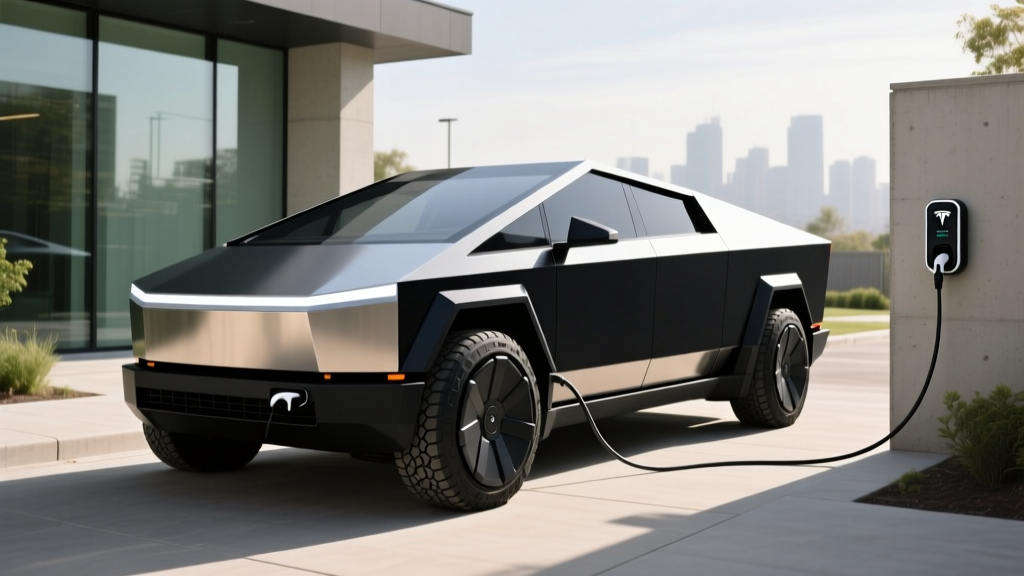
If you've been tracking Tesla's stainless-steel pickup, you already know the sticker price isn't the only shock. The 2026 Tesla Cybertruck insurance cost has become one of the most searched ownership questions, and for good reason: premiums are running 40–70% higher than comparable electric trucks like the Rivian R1T or Ford F-150 Lightning. National average quotes for a 40-year-old driver with clean record land between $3,800 and $5,400 per year depending on trim, with the tri-motor Cyberbeast pushing well past $6,000 in some metro areas.
Insurers price risk, and the Cybertruck presents a unique stack of them: stainless-steel exoskeleton panels that require specialized repair, high performance (0-60 in 2.6 seconds on the Cyberbeast), low parts availability, and Tesla's direct-to-consumer repair network that limits body-shop competition. Before you sign the delivery agreement, here's the full ownership picture — insurance, range, charging, tax credits, and whether the math works in 2026.
Cybertruck at a Glance: 2026 Specs
| Spec | AWD (Dual Motor) | Cyberbeast (Tri-Motor) |
|---|---|---|
| Base MSRP | $79,990 | $99,990 |
| EPA Range | 340 miles | 320 miles |
| Battery (usable) | ~123 kWh, NMC | ~123 kWh, NMC |
| Horsepower | 600 hp | 845 hp |
| 0-60 mph | 3.9 sec | 2.6 sec |
| Max DC Fast Charge | 250 kW (peak) | 250 kW (peak) |
| 10-80% DC Time | ~28 min | ~28 min |
| Level 2 (11.5 kW) | ~44 mi/hr | ~44 mi/hr |
| MPGe (combined) | 79 MPGe | 74 MPGe |
| Efficiency | 48 kWh/100 mi | 52 kWh/100 mi |
| Towing Capacity | 11,000 lbs | 11,000 lbs |
| Battery Warranty | 8 yr / 120,000 mi | 8 yr / 120,000 mi |
Sources: fueleconomy.gov, Tesla Cybertruck specs.
Real-World Range vs. EPA Sticker
The Cybertruck's aerodynamic profile — angular, blunt, and heavy (curb weight over 6,600 lbs) — punishes highway efficiency more than a sedan or crossover. Cold-weather losses are amplified by the large 123 kWh NMC pack needing more energy to precondition. If your commute is mostly stop-and-go city driving with regenerative braking set to Hold, you'll land closer to the EPA number. Cross-country road trippers should plan stops every 220–250 miles to keep buffer comfortable.
Charging: DC Fast, Level 2, and the 400-Volt Limitation
The Cybertruck uses Tesla's NACS connector natively and runs on a ~400-volt architecture (unlike the 800V systems in the Hyundai Ioniq 5 or Porsche Taycan). That caps peak DC fast charging at roughly 250 kW, and only at low state-of-charge with a preconditioned pack.
| Level | Power (kW) | Miles Added per Hour | Notes |
|---|---|---|---|
| Level 1 (120V, 12A) | ~1.4 kW | ~3 mi/hr | Emergency/top-up only |
| Level 2 (240V, 48A) | 11.5 kW | ~44 mi/hr | Full charge in ~11 hours |
| DC Fast (V3 Supercharger) | Peak 250 kW | — | 10-80% in ~28 min; tapers hard above 80% |
The charge curve matters: you'll see 250 kW only briefly between ~10-25% SoC, then it ramps down to ~150 kW through the midrange and below 75 kW past 80%. For road trips, charging from 15-70% is the sweet spot — roughly 20 minutes at a V3 Supercharger. Plan your stops around that window rather than topping to 90%.
Breaking Down the Cybertruck Insurance Cost
Insurance data from major carriers in early 2026 shows premiums clustering by trim and driver profile. Here's what owners are actually paying:
| Trim | Low Estimate | Average | High Estimate |
|---|---|---|---|
| AWD (Dual Motor) | $3,600 | $4,400 | $5,800 |
| Cyberbeast (Tri-Motor) | $4,500 | $5,600 | $7,200 |
Why is Cybertruck insurance cost so much higher than, say, an F-150 Lightning (~$2,200 average)?
- Repair complexity: Stainless-steel panels can't be stamped and painted like conventional steel; they require Tesla-certified body shops with limited throughput.
- Parts scarcity: Low production volume means longer claims cycles and rental reimbursement exposure for insurers.
- Performance risk: The Cyberbeast's 2.6-second 0-60 time places it in supercar territory, triggering high-performance surcharges.
- High replacement cost: Even the AWD trim starts near $80k before options, pushing comprehensive/collision payouts.
- ADAS claims data: Early NHTSA incident reports involving Autopilot and FSD Supervised (both SAE Level 2 systems requiring driver attention) add uncertainty to loss models.
How to Lower Your Premium
- Bundle with home/renters through carriers like State Farm or Geico for 10-15% discounts.
- Take a defensive-driving course (many states and insurers recognize AAA or NSC courses).
- Opt for higher deductibles ($1,000-$2,500) if you can self-insure minor body damage.
- Garage the truck and limit annual mileage — sub-7,500 mi/yr triggers low-mileage discounts at most carriers.
- Compare quotes from at least five insurers; Tesla's own insurance product (where available) uses real-time driving data and can undercut traditional carriers for safe drivers.
Federal Tax Credit: Does the Cybertruck Qualify?
Under IRS §30D, the Cybertruck does qualify for up to $7,500 — but only if you clear three hurdles:
- MSRP cap: Trucks must be under $80,000. The AWD at $79,990 squeaks in; the Cyberbeast at $99,990 is ineligible.
- Income cap: AGI must be ≤ $300,000 (married filing jointly), $225,000 (head of household), $150,000 (single).
- Battery sourcing: Critical-minerals and battery-component thresholds phase up annually. Verify VIN eligibility on fueleconomy.gov before delivery — rules tighten each year.
| Trim | MSRP | Federal Credit | Effective Price |
|---|---|---|---|
| AWD | $79,990 | Up to $7,500 | ~$72,490 |
| Cyberbeast | $99,990 | $0 (over MSRP cap) | $99,990 |
The point-of-sale transfer option lets you hand the credit to the dealer at delivery as a down-payment reduction — useful if your tax liability is lower than $7,500. Always confirm with a tax professional; §30D rules are subject to change.
Interior, Tech, and Daily Usability
The cabin seats five with a 60/40-split rear bench. Rear legroom measures about 38.5 inches — adequate but not class-leading versus the Rivian R1T or F-150 Lightning. Cargo volume behind the rear seats is limited; the real utility is the 6.5-foot bed (74.3 cu ft) with a motorized retractable tonneau, plus a front trunk (frunk) large enough for a carry-on and charging cables.
Tech highlights:
- 18.5-inch center touchscreen running Tesla's latest infotainment (gaming-capable while parked).
- Steer-by-wire with variable ratio — no mechanical linkage. Takes a week to build muscle memory.
- 48-volt electrical architecture (industry-first for a production truck) enabling thinner wiring and higher-power accessories.
- Powershare: 11.5 kW of vehicle-to-load (V2L) output via bed and cabin outlets — enough to run most home essentials during an outage.
- Autopilot standard; FSD (Supervised) is a $99/mo subscription or $8,000 purchase. Remember: this is SAE Level 2, not autonomous. Driver must remain engaged.
Notable drawbacks: panel-gap inconsistency on early builds, no rear-seat entertainment screens, limited third-party body-shop support, and the yoke steering option removed for 2026 (round wheel standard).
Who the Cybertruck Is Actually For
This truck rewards a specific buyer:
- Tech-forward truck buyers who want steer-by-wire, V2L, and OTA updates — and accept that the panel fit and service network aren't yet Toyota-tier.
- Home-charging-capable owners with 240V/48A circuits; public charging alone makes the efficiency penalty painful.
- Towing-light users: 11,000-lb capacity is real, but towing at max drops range to ~150 miles. Plan for short-haul, not cross-country trailer work.
Skip it if you need a work-site beater, live in an apartment without charging, or prioritize low total cost of ownership over performance and novelty.
Pros
- Class-leading performance (2.6s Cyberbeast)
- Stainless exoskeleton resists dents and corrosion
- 11.5 kW V2L / Powershare
- Supercharger network access (17,000+ US stalls)
- Large 123 kWh pack delivers usable 300+ mi highway
Cons
- Insurance 40-70% above rival EV trucks
- 400V architecture limits DC charge speed vs 800V rivals
- Limited third-party body repair network
- Cyberbeast over $80k MSRP cap — no federal credit
- Steer-by-wire learning curve; no yoke option for 2026
Frequently Asked Questions
What is the real-world range of the Cybertruck?
EPA rates the AWD at 340 miles and Cyberbeast at 320 miles. In real-world highway driving at 75 mph, expect 270-290 miles (AWD) and 240-260 miles (Cyberbeast). Sub-freezing temperatures drop those figures another 15-25%.
How fast does the Cybertruck charge?
Peak DC fast charge is 250 kW, delivering 10-80% in roughly 28 minutes at a V3 Supercharger with a preconditioned pack. Home Level 2 at 11.5 kW adds ~44 miles per hour, fully recharging overnight.
Does the Cybertruck qualify for the federal EV tax credit?
The AWD trim at $79,990 MSRP qualifies for up to $7,500 under IRS §30D if buyer income and battery-sourcing rules are met. The Cyberbeast at $99,990 exceeds the $80,000 truck MSRP cap and is ineligible.
Why is Cybertruck insurance cost so high?
Specialized stainless-steel body repair, scarce parts, high replacement cost, supercar-level acceleration, and evolving Autopilot/FSD claims data all push premiums 40-70% above rival electric trucks.
Is the Cybertruck worth buying vs. the F-150 Lightning or Rivian R1T?
Choose Cybertruck if you value performance, V2L capability, and Tesla's Supercharger ecosystem. Choose the F-150 Lightning for lower insurance (~$2,200/yr), conventional truck ergonomics, and broader dealer service. Choose the Rivian R1T for off-road capability and a more mature build quality.
Can I use the Cybertruck to power my home?
Yes. Tesla's Powershare provides 11.5 kW of continuous V2L output via bed and cabin outlets — enough for most essential circuits during an outage when paired with a Tesla Wall Connector and gateway.