Addressing the Cybertruck Exploding Headlines
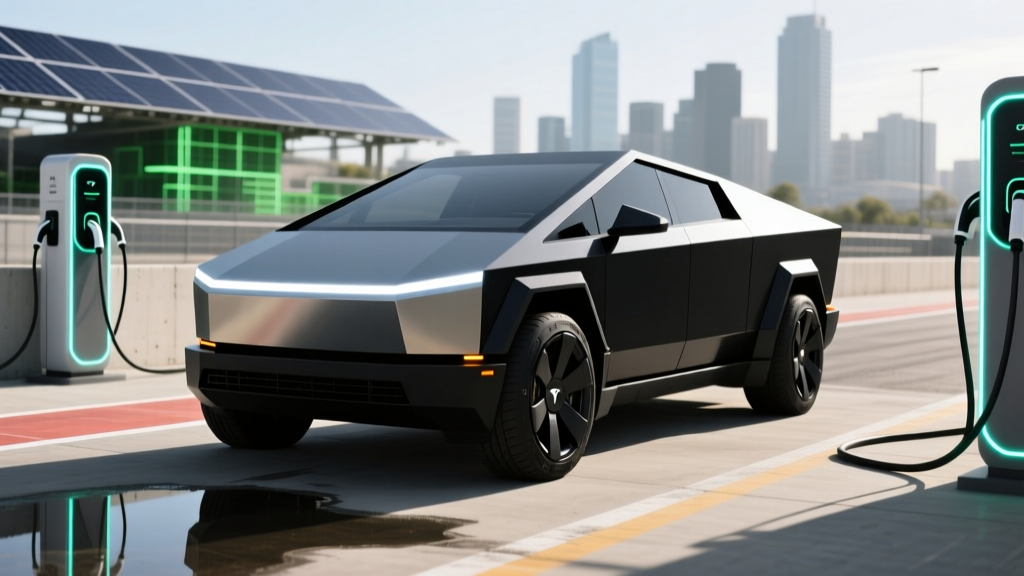
Search for "Cybertruck exploding" and you will find a handful of viral videos, social media posts, and forum threads showing Tesla's angular pickup truck on fire or suffering catastrophic damage. For prospective buyers researching the vehicle in 2026, it is critical to separate documented incidents from internet amplification and understand what the data actually says about the Cybertruck's battery safety profile.
The short answer: there is no pattern of spontaneous battery explosions unique to the Cybertruck. Like every lithium-ion EV on the road, it can experience thermal runaway under extreme conditions — severe collisions, manufacturing defects, or external fire exposure. What differs is the stainless-steel exoskeleton's behavior during crashes, the 4680 cell architecture, and Tesla's thermal management approach. This review examines every documented fire incident, the underlying battery engineering, and then delivers the full ownership picture — range, charging, pricing, and whether the Cybertruck earns a spot in your driveway.
What We Know About Cybertruck Fire Incidents
As of early 2026, publicly documented Cybertruck fire incidents remain extremely low relative to the vehicle's production volume. Tesla began deliveries in late 2023, and by 2026 cumulative production had surpassed 200,000 units. NHTSA's complaint database and independent EV fire tracking resources show fewer than a dozen confirmed thermal events, many of which involved high-speed collisions or post-accident scenarios rather than spontaneous combustion during normal operation.
For context, the National Highway Traffic Safety Administration investigates all reported EV thermal events. Internal combustion engine vehicles experience fires at a rate of roughly 1,529 per 100,000 vehicles according to NFPA data, while EVs across all brands sit at approximately 25 per 100,000. The Cybertruck falls within the expected EV range, though its stainless-steel body and structural battery pack introduce unique crash dynamics that investigators continue to study.
Range, Efficiency, and Real-World Expectations
| Specification | AWD (Dual Motor) | Cyberbeast (Tri Motor) |
|---|---|---|
| EPA Estimated Range | 340 miles | 320 miles |
| Battery Capacity (usable) | ~123 kWh | ~123 kWh |
| Battery Chemistry | NMC (Nickel Manganese Cobalt) | NMC |
| Cell Format | 4680 structural pack | 4680 structural pack |
| Efficiency (MPGe combined) | 72 MPGe | 68 MPGe |
| Energy Consumption | 47 kWh/100 mi | 50 kWh/100 mi |
| Drivetrain | Dual-motor AWD | Tri-motor AWD |
| Horsepower | 600 hp | 845 hp |
| 0-60 mph | 3.9 seconds | 2.6 seconds |
| Towing Capacity | 11,000 lbs | 11,000 lbs |
| Payload Capacity | 2,500 lbs | 2,500 lbs |
The AWD model carries a 340-mile EPA rating, but real-world results depend heavily on conditions. In mixed suburban driving at moderate temperatures, expect 300–320 miles. Sustained highway travel at 75+ mph drops that to roughly 260–285 miles due to the Cybertruck's poor aerodynamic drag coefficient (~0.38 Cd, worse than most sedans and even some competing trucks). In cold weather (below 32°F), range can fall 20–30%, putting real-world winter highway range in the 200–230 mile bracket. The Cyberbeast's tri-motor system adds weight and parasitic loss, shaving another 15–25 miles off these figures across all conditions.
The Cybertruck's efficiency penalty is the direct cost of its design choices. The stainless-steel exoskeleton is heavy — curb weight exceeds 6,600 lbs for the AWD and approaches 6,900 lbs for the Cyberbeast. Combined with the flat, angular windshield and large frontal area, the energy consumption per mile is among the highest of any production EV. If efficiency is a top priority, the Rivian R1T (dual-motor, ~2.8 kWh/mi) and the Ford F-150 Lightning (extended range, ~2.3 kWh/mi) both outperform it on the energy-per-mile metric.
Charging Speed: DC Fast Charge and Home Level 2
| Charging Level | Power / Rate | Time or Miles Added |
|---|---|---|
| DC Fast Charge (peak) | ~250 kW (V3 Supercharger) / up to 325 kW (V4 capable) | 10–80% in approximately 28–35 minutes |
| DC Fast Charge (sustained avg) | ~160–180 kW average across curve | Expect tapering above 60% SoC |
| Level 2 Home (48A / 11.5 kW) | 11.5 kW | ~30–33 miles of range per hour; 0–100% in ~11–13 hours |
| Level 2 Home (32A / 7.7 kW) | 7.7 kW | ~20–22 miles per hour; 0–100% in ~16–18 hours |
| Level 1 (120V / 12A) | ~1.4 kW | ~3–4 miles per hour (emergency/trickle only) |
The Cybertruck's 4680 cells support robust DC fast charging, but the massive ~123 kWh battery means even at peak rates, a full 10–80% session takes longer than smaller-battery EVs. The charge curve is the key detail most reviews omit: the truck pulls its peak ~250 kW only between roughly 10% and 35% state of charge. From 35% to 60%, power holds around 180–200 kW. Above 60%, it tapers progressively — by 80% you are looking at roughly 80–100 kW. This taper is a function of battery management system (BMS) protocols designed to protect the NMC cells from lithium plating at high SoC, and it is standard behavior across the industry.
For home charging, Tesla recommends a Wall Connector on a 60A circuit (delivering 48A / 11.5 kW to the vehicle). With the Cybertruck's enormous battery, overnight charging from 20% to 80% takes roughly 7–8 hours. If your electrical panel only supports a 40A circuit (32A / 7.7 kW), plan on longer sessions — a full recharge from near-empty will require an overnight plus morning top-off. Budget $800–$2,500 for professional Level 2 installation depending on panel capacity and run length; consult a licensed electrician for a site-specific quote.
Pricing, Trims, and Federal Tax Credit Eligibility
| Trim | Base MSRP | As-Tested (typical config) | §30D Credit Eligible? |
|---|---|---|---|
| AWD (Dual Motor) | $79,990 | $82,000–$88,000 | No — exceeds $80,000 truck MSRP cap |
| Cyberbeast (Tri Motor) | $99,990 | $102,000–$115,000 | No — exceeds $80,000 truck MSRP cap |
Here is the critical detail for tax-credit shoppers: the IRS §30D federal EV tax credit imposes an MSRP cap of $80,000 for vans, SUVs, and pickup trucks. The Cybertruck AWD starts at $79,990, which technically clears the cap, but once destination fees, paint protection, or any factory option pushes the final MSRP above $80,000, eligibility is lost. As of the 2026 model year, Tesla's configurator typically adds destination and order fees that push the AWD above the threshold. The Cyberbeast at $99,990 base is definitively ineligible.
- Vehicle MSRP must not exceed $80,000 (trucks/SUVs/vans) or $55,000 (sedans)
- Buyer AGI must not exceed $150,000 (single) / $225,000 (head of household) / $300,000 (joint)
- Battery components must meet escalating domestic-content and critical-mineral sourcing thresholds
- Credit can be transferred to the dealer as a point-of-sale discount (if eligible)
- Final assembly must occur in North America
Interior, Cargo, Tech, and Driver Assistance
The Cybertruck seats five across a single-row bench-style front (with a fold-down center armrest creating a sixth seating position in some configurations) and a three-across rear bench. Rear legroom measures approximately 38.5 inches — adequate for adults on longer trips but not class-leading. The cargo bed is 6 feet long with the tailgate up and offers 67 cubic feet of volume. The powered tonneau cover (called the "sail" design) retracts to accommodate taller items, and the bed includes a built-in 120V/240V outlet for job-site or camping use — a genuine utility advantage.
Front trunk (frunk) space is approximately 7.1 cubic feet, enough for a couple of carry-on bags or charging cables. Total enclosed cargo volume (bed + frunk + under-bed storage) makes it competitive with mid-size trucks like the Rivian R1T, though the F-150 Lightning's larger bed gives it an edge for pure haulers.
Tech highlights include:
- 18.5-inch central touchscreen running Tesla's latest vehicle OS with native navigation, streaming, and vehicle controls
- Rear-seat 9.4-inch touchscreen for climate and media
- Tesla Autopilot (SAE Level 2) standard, with Full Self-Driving (Supervised) available as a $8,000 add-on or $99/month subscription
- Steer-by-wire system (no mechanical linkage between yoke and wheels) — a first for a mass-production US vehicle
- Adaptive air suspension with up to 16 inches of ground clearance in Extract mode
- Bioweapon Defense Mode (HEPA filtration) and 15-speaker premium audio
Tesla's Autopilot and Full Self-Driving (Supervised) are SAE Level 2 driver-assistance systems. The driver must remain fully engaged, keep hands on the yoke (or demonstrate attention via the cabin camera), and be prepared to take over at any moment. No production Tesla is a self-driving vehicle. Only Level 4 services like Waymo operate without a human driver in geofenced areas.
Notable drawbacks include the polarizing yoke steering (a round wheel is no longer offered as of 2026), the stainless-steel body's susceptibility to fingerprint smudging, limited rear visibility (the rear camera is essential), and the absence of Apple CarPlay or Android Auto — Tesla's ecosystem is closed. Insurance premiums also run 30–50% higher than comparable trucks due to repair costs for the stainless-steel panels and structural battery pack.
Warranty and Long-Term Battery Outlook
Tesla covers the Cybertruck with a 4-year/50,000-mile limited vehicle warranty and an 8-year/120,000-mile battery and drive unit warranty. The battery warranty guarantees a minimum of 70% capacity retention over the coverage period. If degradation drops below that threshold within 8 years or 120,000 miles, Tesla will repair or replace the pack.
The 4680 NMC cells in the Cybertruck are relatively new in mass production, so long-term degradation data (10+ years) is still being collected. Early fleet data from Model Y vehicles using 4680 cells suggests degradation curves comparable to the older 2170-cell packs — approximately 8–12% loss over the first 100,000 miles, with the steepest drop occurring in the first 20,000 miles before leveling off. Proper care — avoiding routine 100% charges, minimizing DC fast charging when Level 2 is available, and using preconditioning — helps preserve long-term State of Health.
Pros, Cons, and Who Should Buy the Cybertruck
- Class-leading acceleration (2.6s 0-60 Cyberbeast)
- 11,000-lb towing capacity with integrated trailer tech
- Stainless-steel exoskeleton resists dents and corrosion
- 240V bed outlet for job-site and camping power
- Steer-by-wire provides a uniquely quick steering ratio
- Extensive Tesla Supercharger network access
- No federal tax credit eligibility at current MSRPs
- Poor efficiency (47–50 kWh/100 mi) means high charging costs
- Real-world highway range well below EPA sticker
- Yoke-only steering is divisive and not universally preferred
- High insurance premiums and repair costs
- No Apple CarPlay/Android Auto
- Build quality inconsistencies reported by early owners
Look elsewhere if: Maximum range-per-dollar is your priority (consider the Rivian R1T Max Pack at 410 miles EPA), you need the $7,500 tax credit (the Ford F-150 Lightning Lariat may qualify under $80K MSRP), or you prefer a conventional steering wheel and CarPlay integration.
Frequently Asked Questions
Is the Cybertruck exploding a widespread problem?
No. Documented Cybertruck fire incidents are extremely rare relative to production volume and fall within the expected range for lithium-ion EVs. There is no evidence of a systemic battery defect causing spontaneous explosions. Most reported thermal events involved severe collisions or external factors, not normal driving or charging.
What is the real-world range of the Cybertruck?
The AWD model's 340-mile EPA rating translates to roughly 300–320 miles in mixed driving, 260–285 miles on the highway, and 200–230 miles in cold winter conditions. The Cyberbeast trims these numbers by 15–25 miles. Towing reduces range dramatically — expect a 40–50% reduction when pulling a heavy trailer.
How fast does the Cybertruck charge?
On a V3 Supercharger, the Cybertruck peaks at approximately 250 kW and charges from 10% to 80% in about 28–35 minutes. The average sustained rate across the curve is 160–180 kW due to tapering above 60% SoC. At home on a 48A Level 2 charger, expect roughly 30–33 miles of range per hour.
Does the Cybertruck qualify for the federal EV tax credit?
Practically, no. The $80,000 MSRP cap for trucks under §30D is exceeded once destination and fees are added to the $79,990 AWD base price. The $99,990 Cyberbeast is definitively ineligible. Always verify current rules at irs.gov and consult a tax professional.
Is the Cybertruck worth buying vs. the Rivian R1T or F-150 Lightning?
It depends on your priorities. The Cybertruck wins on acceleration, towing capacity, and Supercharger network access. The Rivian R1T (Max Pack, 410 mi EPA) wins on range and efficiency. The F-150 Lightning (extended range, ~320 mi EPA) wins on tax-credit eligibility, traditional truck ergonomics, and dealer service infrastructure. Test-drive all three before deciding.
Is the stainless-steel body actually safer in a crash?
The 30X cold-rolled stainless-steel exoskeleton is exceptionally rigid and dent-resistant. However, crash safety depends on the entire vehicle structure — crumple zones, airbags, and battery enclosure integrity. As of 2026, the Cybertruck has not yet received a full IIHS Top Safety Pick rating or a complete NHTSA 5-star evaluation across all categories. Check iihs.org and nhtsa.gov for the latest crash-test results before purchasing.