If you have been browsing forums, Tesla inventory pages, or third-party dealer sites looking for a Cybertruck discount, you have probably noticed something: they are rare, inconsistent, and often misunderstood. Tesla does not operate a traditional dealership network, which means the typical negotiation-and-haggle path to a lower sticker price simply does not apply. But that does not mean there are zero avenues to reduce what you pay. In this review, we break down every angle — from Tesla's own inventory markdowns and federal tax credit eligibility under IRS §30D, to real-world ownership costs that determine whether the Cybertruck is actually a smart financial move in 2026.
We will also cover what matters just as much as the purchase price: the real-world range you can expect, how fast this truck charges, whether the battery warranty holds up, and how it stacks against the Ford F-150 Lightning and Rivian R1T. Let us get into the numbers.
2026 Tesla Cybertruck: Trim Pricing and Where Discounts Actually Exist
Tesla sells the Cybertruck in three primary trims for the 2026 model year. Prices have shifted since the late-2023 launch, and the original sub-$40,000 promise is long gone. Here is where things stand as of early 2026:
| Trim | Drivetrain | Base MSRP | As-Tested (Typical Config) |
|---|---|---|---|
| Long Range AWD | Dual-Motor AWD | $79,990 | $82,000–$84,000 |
| Cyberbeast | Tri-Motor AWD | $99,990 | $102,000–$106,000 |
| Rear-Wheel Drive | Single-Motor RWD | $60,990 | $62,000–$64,000 |
Where do Cybertruck discounts actually show up? There are three realistic channels:
- Tesla Inventory Vehicles: Tesla periodically lists demo units, loaner vehicles, or cancelled-order trucks on its online inventory page. These can carry $2,000–$6,000 markdowns from MSRP. Availability is sporadic and region-dependent.
- Federal Tax Credit (§30D): The Cybertruck qualifies for up to $7,500 under the IRS §30D Clean Vehicle Credit, provided you meet income caps and the vehicle meets battery-sourcing requirements. Critically, the MSRP cap for trucks is $80,000 — meaning the Long Range AWD at $79,990 barely qualifies, while the Cyberbeast does not. The RWD trim qualifies comfortably.
- Point-of-Sale Transfer: As of 2024, buyers can transfer the §30D credit to the dealer (Tesla) at the point of sale, effectively reducing your purchase price by $7,500 upfront rather than waiting for a tax refund. This is the closest thing to a guaranteed Cybertruck discount.
IRS §30D Eligibility Checklist for the Cybertruck
- MSRP Cap: Must be ≤ $80,000 (classified as a truck). Long Range AWD qualifies at $79,990; Cyberbeast does not.
- Buyer Income Cap: Modified AGI must not exceed $150,000 (single), $225,000 (head of household), or $300,000 (joint filers).
- Battery Sourcing: Critical minerals and battery components must meet phased-in thresholds per the Inflation Reduction Act. Tesla's supply chain has adapted, but verify current-year compliance on IRS.gov's qualified vehicle list.
- Point-of-Sale Option: You may transfer the credit to Tesla at purchase for an immediate price reduction.
- One Credit Per Taxpayer Per Year: You cannot claim §30D for another new EV in the same tax year.
For the most current qualified-vehicle list and income rules, always cross-check IRS Publication on Clean Vehicle Credits before committing.
Real-World Range: What the EPA Sticker Does Not Tell You
EPA vs. Real-World Range — Cybertruck Long Range AWD
EPA Estimated Range: 340 miles
Real-World Expectation: 270–310 miles (mixed driving); 250–280 miles (sustained highway at 70+ mph); 220–260 miles (sub-freezing winter conditions)
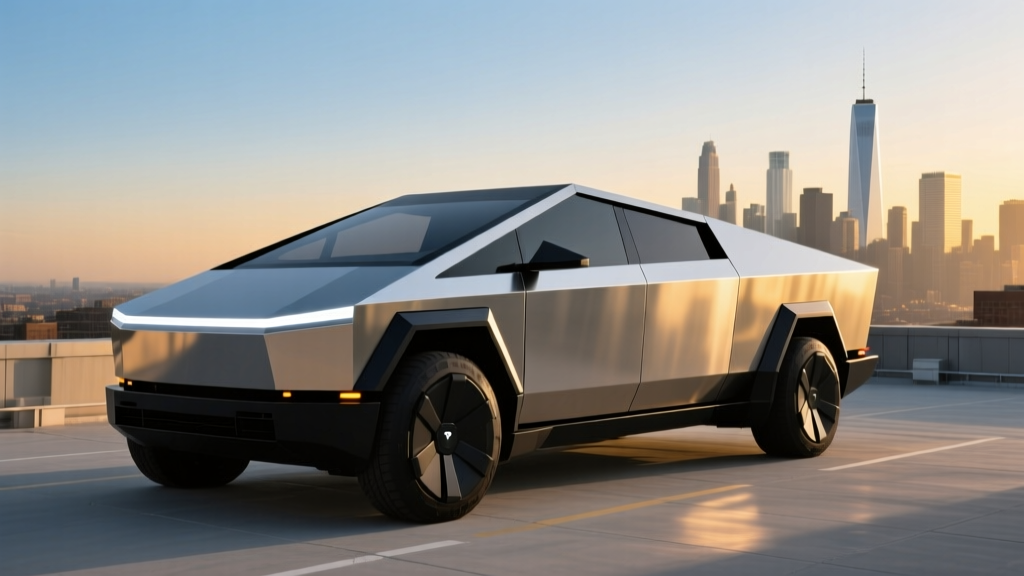
Why the gap? The Cybertruck's stainless-steel exoskeleton and angular design produce a drag coefficient significantly higher than sleeker EVs. At highway speeds, aerodynamic drag dominates energy consumption. Add cold temperatures (which reduce battery efficiency and increase cabin-heating load), and range drops further. The tri-motor Cyberbeast, with its heavier powertrain and stickier tires, sees an EPA rating of approximately 320 miles with similar real-world reduction.
The RWD variant carries a smaller battery pack and an EPA-estimated range of approximately 250 miles. For city-heavy commuters in mild climates, that figure holds up reasonably well. For road-trippers or those in northern states, plan your charging stops around 200 miles of usable range in winter.
Battery, Chemistry, and What It Means for Longevity
Tesla has not published the exact usable kWh capacity for every Cybertruck variant, but teardown data and EPA filings point to a usable battery capacity of approximately 123 kWh (NMC chemistry) for the Long Range AWD. The Cyberbeast uses the same pack with different power delivery tuning. The RWD model uses a smaller pack, estimated at approximately 100 kWh.
The NMC (nickel-manganese-cobalt) chemistry prioritizes energy density — necessary to push a 6,600+ lb. truck past 300 miles. The trade-off: NMC degrades slightly faster than LFP (lithium iron phosphate) over many charge cycles, and Tesla recommends daily charging to 80–90% rather than 100% for routine use to maximize longevity.
| Spec | Long Range AWD | Cyberbeast | RWD |
|---|---|---|---|
| Battery Chemistry | NMC | NMC | NMC (est.) |
| Usable Capacity (kWh) | ~123 kWh | ~123 kWh | ~100 kWh |
| EPA Range | 340 mi | 320 mi | 250 mi |
| EPA Efficiency | ~48 kWh/100mi | ~54 kWh/100mi | ~46 kWh/100mi |
| MPGe (Combined) | ~70 MPGe | ~62 MPGe | ~73 MPGe |
For context, the Ford F-150 Lightning Extended Range achieves roughly 54 kWh/100mi and 320 miles EPA. The Rivian R1T Dual-Motor Max sits around 48 kWh/100mi with up to 352 miles EPA. The Cybertruck's efficiency is competitive with the F-150 Lightning but trails the most efficient R1T configurations, largely due to its mass and aerodynamics.
Charging Speed: DC Fast Charge and Home Level 2
Charging speed is where truck buyers often feel the most pain — these are heavy vehicles with large batteries, and filling them takes time. Here is what the Cybertruck delivers:
| Charging Level | Rate | Time / Miles Added |
|---|---|---|
| DC Fast Charge (Peak) | ~350 kW (peak, V4 Supercharger) | 10–80% in ~20–25 minutes |
| DC Sustained (Avg. 10–80%) | ~200–250 kW average | Charge curve tapers significantly above 80% |
| Level 2 Home (48A / 11.5 kW) | 11.5 kW | ~30–34 miles of range per hour; full charge in ~11–13 hours |
| Level 1 (120V / 12A) | ~1.4 kW | ~3–4 miles per hour (emergency/trickle only) |
Key charging insight: The Cybertruck's 800-volt architecture (shared with the latest Tesla packs) enables the impressive peak charge rate. However, as with all EVs, the charge curve is not flat. You will see 350 kW only briefly in the 10–30% state-of-charge window. From 50% onward, the rate tapers to protect the battery, dropping below 100 kW past 80%. If you are road-tripping, plan your stops around 10–80% increments for the fastest turnaround. Charging from 80–100% at a DC fast charger can add 20+ minutes for relatively few miles.
At home, a Level 2 Wall Connector on a 60-amp circuit (48A continuous) will replenish the Long Range's pack overnight. Most owners who charge nightly at home never need to visit a public charger for daily driving. Budget approximately $500–$1,500 for a licensed electrician to install a 240V/60A circuit, depending on your panel's proximity to the garage and whether a panel upgrade is needed (older homes with 100A service may require a $2,000–$4,000 upgrade to 200A).
Performance, Cargo, and Daily Practicality
The Cybertruck's performance figures border on absurd for a vehicle this size:
| Spec | Long Range AWD | Cyberbeast | RWD |
|---|---|---|---|
| 0–60 mph | 3.9 sec | 2.6 sec | 6.5 sec (est.) |
| Horsepower | ~600 hp | ~845 hp | ~315 hp (est.) |
| Drivetrain | Dual-Motor AWD | Tri-Motor AWD | Single-Motor RWD |
| Towing Capacity | 11,000 lbs | 11,000 lbs | 7,500 lbs (est.) |
| Payload Capacity | 2,500 lbs | 2,500 lbs | 2,500 lbs |
The Cyberbeast's 2.6-second 0–60 time makes it one of the quickest production trucks ever built. But performance is only one dimension of practicality.
Cargo and space:
- Bed Length: 6 feet (with tailgate closed); extends with tailgate down
- Bed Volume: ~67 cu ft (bed); lockable tonneau cover included
- Front Trunk (Frunk): ~7 cu ft — useful for groceries or charging cables
- Cabin Seating: 5 passengers (bench front seat configuration available)
- Rear Legroom: ~38 inches — adequate for adults, though the sloping roofline limits headroom for taller passengers
Towing reality check: While the 11,000-lb. rating is competitive with full-size gas trucks, towing at or near max capacity will cut your range roughly in half. Expect 150–180 miles of range when pulling a heavy trailer. This is consistent with the F-150 Lightning and R1T — physics does not favor any EV when dragging 10,000+ lbs.
Technology, Driver Assistance, and Drawbacks
The Cybertruck runs Tesla's latest infotainment and driver-assistance suite:
- Infotainment: 18.5-inch front touchscreen, 9.4-inch rear touchscreen, integrated navigation with real-time Supercharger routing
- Autopilot: Standard — includes Traffic-Aware Cruise Control and Autosteer (SAE Level 2)
- Full Self-Driving (Supervised): Optional add-on ($8,000 or $99/month as of 2026). Still SAE Level 2 — the driver must remain fully engaged at all times. Despite the name, this is not autonomous driving.
- Steer-by-Wire: The Cybertruck uses a fully electronic steer-by-wire system with no mechanical connection between the yoke and the wheels. This enables the variable-ratio steering (fewer turns lock-to-lock) but has drawn mixed reviews for feel and learning curve.
- 48-Volt Architecture: A first for a production vehicle, reducing wiring harness weight and enabling higher-power accessories.
Driver-Assist Level Clarification
Tesla Autopilot and FSD (Supervised) are SAE Level 2 driver-assistance systems. They require continuous driver supervision, hands on or near the wheel, and full situational awareness. They do not make the Cybertruck a self-driving vehicle. Only Level 4 services like Waymo operate without a human driver — and those are limited to specific geofleets in select cities.
Notable Drawbacks
- Stainless-steel body panels are fingerprint-prone and difficult to repair — collision shops with EV and stainless experience are limited.
- Steer-by-wire yoke takes significant adaptation; some drivers find it less intuitive at low speeds or in parking lots.
- Rear visibility is compromised by the sloping bed cover and lack of a traditional rear window — you rely entirely on the backup camera and digital rearview.
- Build quality variance: Early production units (2024–2025) had documented panel-gap and trim issues. 2026 units show improvement, but inspect any delivery carefully.
- No Apple CarPlay or Android Auto. Tesla's proprietary system is the only interface.
Warranty Coverage and Long-Term Battery Outlook
| Coverage | Term |
|---|---|
| Basic Vehicle Limited Warranty | 4 years / 50,000 miles |
| Battery & Drive Unit Warranty | 8 years / 120,000 miles |
| Battery Capacity Retention Threshold | 70% minimum SoH over warranty period |
The 8-year/120,000-mile battery warranty is competitive with the industry standard (Ford matches it on the Lightning; Rivian offers 8 years/175,000 miles on the R1T). Tesla's 70% capacity retention threshold means that if your battery degrades below 70% of its original capacity within the warranty period, Tesla will repair or replace it. Based on data from Model 3 and Model Y fleets using similar NMC chemistry, most Tesla packs retain 85–92% capacity after 100,000 miles under normal use — well above the threshold.
If you need a full battery replacement out of warranty, current estimates for a pack this size run $18,000–$28,000 including labor, though prices are expected to decline as cell manufacturing scales. For reference, this is comparable to a major engine or transmission replacement on a gas truck.
Cybertruck vs. F-150 Lightning vs. Rivian R1T: Value Comparison
| Spec | Tesla Cybertruck LR AWD | Ford F-150 Lightning Ext. Range | Rivian R1T Dual-Motor Max |
|---|---|---|---|
| Base MSRP | $79,990 | $77,990 | $87,000 |
| EPA Range | 340 mi | 320 mi | 352 mi |
| Battery (kWh) | ~123 kWh | ~131 kWh | ~141 kWh |
| DC Fast Charge (Peak kW) | ~350 kW | ~150 kW | ~220 kW |
| 10–80% Time | ~22 min | ~41 min | ~30 min |
| 0–60 mph | 3.9 sec | 4.5 sec | 4.5 sec |
| Towing Capacity | 11,000 lbs | 10,000 lbs | 11,000 lbs |
| §30D Tax Credit | Eligible (MSRP ≤ $80K) | Eligible | Eligible (MSRP ≤ $80K trims only) |
The value verdict: The Cybertruck Long Range AWD offers the best combination of range, charging speed, and performance at its price point — but only if you can secure it at or below the $80,000 MSRP cap for tax-credit eligibility. The F-150 Lightning is the more practical work truck with a conventional bed and broader dealer service network. The Rivian R1T wins on build quality, off-road capability, and interior refinement, but at a premium.
Choose the Cybertruck If:
- You want the fastest DC charging in the truck segment
- Performance (0–60) matters to you in a truck
- You are committed to the Tesla Supercharger ecosystem
- You can configure within the $80K MSRP cap for the §30D credit
Choose a Competitor If:
- You need a conventional truck bed for work-site use (F-150 Lightning)
- You prioritize interior quality and off-road chops (Rivian R1T)
- You want a local dealer for service and warranty work (Ford)
- The steer-by-wire yoke does not suit your driving style
Frequently Asked Questions
What is the real-world range of the Cybertruck?
The EPA rates the Long Range AWD at 340 miles. In real-world mixed driving, expect 270–310 miles. Sustained highway driving at 75 mph reduces that to 250–280 miles. In sub-freezing winter conditions, plan for 220–260 miles. The Cyberbeast drops roughly 20 miles across all scenarios due to its tri-motor powertrain.
How fast does the Cybertruck charge at home and on the road?
At a V4 Tesla Supercharger, the Cybertruck peaks at approximately 350 kW and charges from 10–80% in roughly 20–25 minutes. At home on a Level 2 Wall Connector (11.5 kW / 48A), expect about 30–34 miles of range per hour of charging, or a full charge in 11–13 hours overnight.
How much does the Cybertruck cost after the federal tax credit?
If you qualify for the full $7,500 §30D credit and purchase the Long Range AWD at $79,990, your effective price drops to $72,490. The RWD trim at $60,990 falls to approximately $53,490 after the credit. The Cyberbeast at $99,990 exceeds the $80,000 MSRP cap for trucks and does not qualify for §30D. Always verify current eligibility on IRS.gov.
Does the Cybertruck qualify for the federal EV tax credit?
The Long Range AWD ($79,990) and RWD ($60,990) trims fall at or below the $80,000 MSRP cap for trucks and are eligible, assuming you meet the income thresholds ($150K single / $300K joint) and the vehicle's battery meets critical-mineral sourcing requirements. The Cyberbeast ($99,990) exceeds the cap and is not eligible. Tesla's eligibility status can shift with supply-chain changes, so confirm on the IRS qualified-vehicle list before purchasing.
Is the Cybertruck worth buying vs. the F-150 Lightning or Rivian R1T?
It depends on your priorities. The Cybertruck wins on DC charging speed (350 kW peak vs. 150 kW for the Lightning) and acceleration. The F-150 Lightning wins on conventional truck practicality, dealer service access, and slightly lower pricing. The Rivian R1T wins on build quality, interior refinement, and off-road capability. If you value the Tesla Supercharger network and cutting-edge tech, the Cybertruck is compelling. If you need a work truck or prefer traditional controls, the Lightning or R1T may serve you better.
What are the biggest pros and cons of the Cybertruck?
Pros: Class-leading DC fast-charge speed, exceptional performance, 11,000-lb towing, stainless-steel durability, Supercharger network access, steer-by-wire innovation.
Cons: Controversial styling limits resale predictability, rear visibility is poor, steer-by-wire yoke requires adaptation, limited collision-repair network for stainless panels, no Apple CarPlay/Android Auto, Cyberbeast trim ineligible for §30D credit.