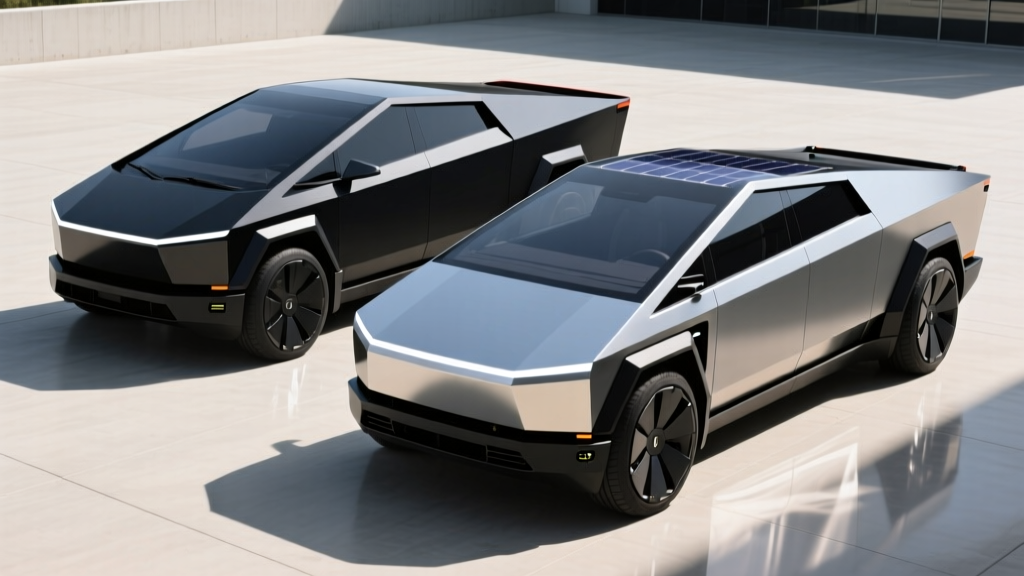
When Tesla unveiled the Cybertruck in November 2019, the angular stainless-steel pickup promised a 500-mile range, a sub-$40,000 starting price, and performance figures that seemed to defy physics. Fast-forward to 2026, and the production Cybertruck is finally on roads in volume — but the gap between the original Cybertruck concept and what you can actually buy today tells a story of engineering trade-offs, supply-chain realities, and shifting market economics.
This review breaks down exactly what Tesla delivered versus what it promised, with hard numbers on range, charging, pricing, and federal tax-credit eligibility. If you're weighing a Cybertruck purchase against the Rivian R1T, Ford F-150 Lightning, or Chevy Silverado EV, this is the data-driven comparison you need.
The Original Cybertruck Concept: What Was Promised
Elon Musk's 2019 presentation outlined three trims for the Cybertruck:
- Single Motor RWD: 250+ mile range, 0-60 in 6.5 seconds, starting at $39,900
- Dual Motor AWD: 300+ mile range, 0-60 in 4.5 seconds, starting at $49,900
- Tri-Motor AWD: 500+ mile range, 0-60 in 2.9 seconds, starting at $69,900
The concept also touted an exoskeleton body made of ultra-hard 30X cold-rolled stainless steel, armored glass (which famously cracked during the demo), adaptive air suspension with up to 17 inches of ground clearance, and a 3,500-pound payload capacity with 14,000-pound towing. Tesla also promised a solar-powered tonneau cover option that would add up to 15 miles of range per day.
2026 Production Cybertruck: What You Can Actually Buy
As of the 2026 model year, Tesla offers the Cybertruck in three main configurations. The base single-motor RWD variant was quietly dropped from initial production plans, leaving dual-motor and tri-motor options. Here are the current specs:
| Spec | AWD (Dual Motor) | Cyberbeast (Tri-Motor) |
|---|---|---|
| EPA Est. Range | 340 miles | 320 miles |
| Battery Capacity (usable) | ~123 kWh (NMC) | ~123 kWh (NMC) |
| 0-60 mph | 4.1 seconds | 2.6 seconds |
| Horsepower | 600 hp | 845 hp |
| Drivetrain | Dual-Motor AWD | Tri-Motor AWD |
| Max DC Fast Charge | 350 kW (800V architecture) | 350 kW (800V architecture) |
| 10-80% DC Charge Time | ~15 minutes | ~15 minutes |
| Level 2 Home Charge Rate | 11.5 kW (~44 mi/hr) | 11.5 kW (~44 mi/hr) |
| MPGe (combined) | 79 MPGe | 76 MPGe |
| Towing Capacity | 11,000 lbs | 11,000 lbs |
| Payload Capacity | 2,500 lbs | 2,500 lbs |
| Base MSRP | $79,990 | $99,990 |
| Battery/Drive Unit Warranty | 8 years / 120,000 miles | 8 years / 120,000 miles |
Charging Speed and Infrastructure
The production Cybertruck uses an 800-volt electrical architecture, enabling peak DC fast-charging rates of up to 350 kW at V4 Superchargers. In controlled testing, the 10-80% charge time clocks in around 15 minutes, though sustained charge rates taper significantly above 60% state of charge — a typical lithium-ion charge-curve behavior.
| Charge Level | Power (kW) | Miles Added per Hour | Notes |
|---|---|---|---|
| Level 1 (120V outlet) | ~1.4 kW | ~3-4 miles | Emergency/trickle only |
| Level 2 (240V, 48A) | 11.5 kW | ~44 miles | Full charge in ~11 hours |
| DC Fast (V4 Supercharger) | Up to 350 kW | ~130+ miles in 10 min | Peak rate, tapers after 60% |
| DC Fast (CCS adapter, 150 kW station) | ~150 kW | ~75 miles in 15 min | Requires NACS-to-CCS adapter |
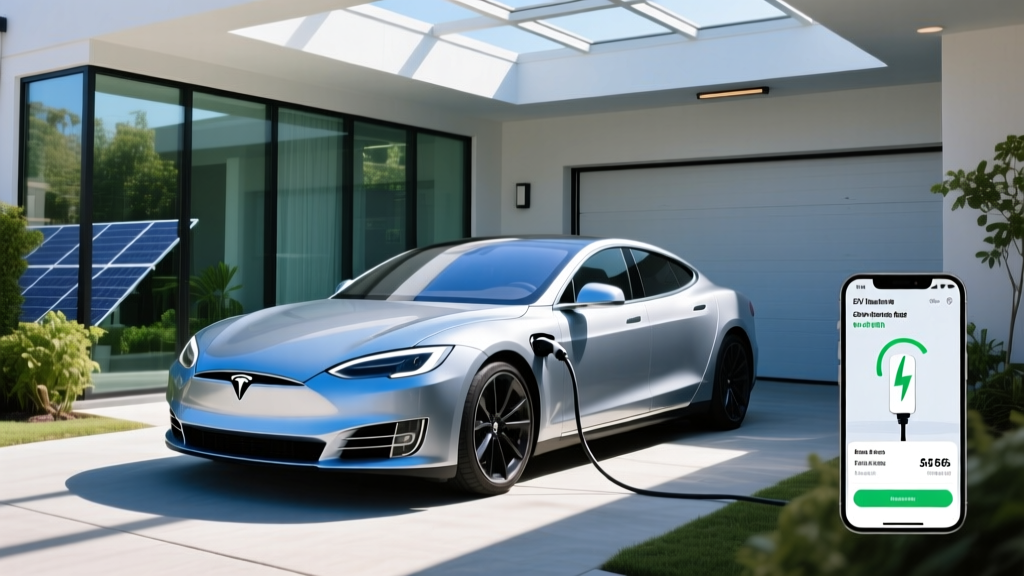
For home charging, a 48-amp Level 2 wall connector on a 60-amp circuit delivers 11.5 kW, adding roughly 44 miles of range per hour. A full 0-100% charge takes approximately 11 hours. Installation costs for a dedicated 60-amp circuit typically range from $800 to $2,500 depending on panel proximity and whether a service upgrade is needed — consult a licensed electrician for a site-specific quote.
Tesla's NACS (North American Charging Standard) connector is native to the Cybertruck. As of 2026, most major automakers have adopted NACS, and the Supercharger network remains the most reliable DC fast-charging infrastructure in North America, though Electrify America and other networks are accessible via adapter.
Pricing, Tax Credits, and Ownership Costs
The original Cybertruck concept promised a starting price of $39,900. The 2026 reality is starkly different. The dual-motor AWD starts at $79,990, while the Cyberbeast commands $99,990 before options and destination fees. A well-equipped AWD model with the Foundation Series package or similar options can push past $90,000.
- MSRP Cap: Trucks must be under $80,000 MSRP to qualify. The AWD at $79,990 technically squeaks under this cap; the Cyberbeast at $99,990 does not qualify.
- Income Limits: Modified adjusted gross income must not exceed $150,000 (single), $225,000 (head of household), or $300,000 (joint filing).
- Battery Sourcing: Critical minerals and battery components must meet escalating domestic-content thresholds. Tesla's supply chain has been adapting, but specific component sourcing varies by production batch. Verify current eligibility on IRS.gov's qualified vehicle list before purchasing.
- Point-of-Sale Transfer: If eligible, the credit can be transferred to the dealer at purchase, reducing the upfront price rather than waiting for a tax refund.
| Trim | MSRP | Est. Federal Credit | Effective Price |
|---|---|---|---|
| AWD (Dual Motor) | $79,990 | Up to $7,500 (if eligible) | ~$72,490 |
| Cyberbeast (Tri-Motor) | $99,990 | $0 (exceeds MSRP cap) | $99,990 |
Insurance premiums for the Cybertruck run higher than average for the pickup segment — expect $2,500 to $4,000 annually depending on your profile and state, driven by the stainless-steel body's repair complexity and high replacement part costs.
Performance, Cargo, and Daily Usability
The Cyberbeast's 2.6-second 0-60 mph time makes it one of the quickest production pickups ever built, and the dual-motor AWD's 4.1-second run is hardly slow. The steer-by-wire system and rear-wheel steering give the 6,800-pound truck a surprisingly tight turning circle and responsive handling for its size.
Cargo specifications:
- Vault (bed) length: 6 feet with the tailgate up; extends with the midgate folded
- Vault width (between wheel wells): ~49 inches
- Frunk (front trunk): ~7.1 cubic feet — useful for groceries or charging cables
- Interior passenger space: ~41 inches of rear legroom; comfortably seats five adults
- Interior cargo behind rear seats: Limited; no traditional under-seat storage
The motorized tonneau cover is lockable and contributes to the truck's aerodynamic profile, but it limits aftermarket rack and topper options. The stainless-steel body resists dents and scratches better than painted aluminum but shows fingerprints relentlessly and requires specific cleaning products. Panel gap consistency has improved significantly since early 2024 production units, though it still draws scrutiny compared to legacy OEM fit-and-finish standards.
Technology and Driver Assistance
The Cybertruck runs Tesla's latest infotainment stack on an 18.5-inch center touchscreen, with a secondary 9.4-inch rear-seat display. The interface handles navigation, media, vehicle controls, and the 360-degree camera system. Over-the-air updates continue to add features post-purchase.
Notable tech features include:
- Steer-by-wire with variable ratio — no mechanical linkage between yoke and wheels
- 48-volt electrical architecture (a first for a mass-production vehicle) reducing wiring harness weight
- Powershare: 120V and 240V outlets in the bed and cabin for job-site or campsite power (up to 11.5 kW continuous output, enabling V2H backup power with appropriate equipment)
- HEPA air filtration with Bioweapon Defense Mode
Cybertruck vs. Key Competitors
How does the production Cybertruck stack up against its main electric-pickup rivals?
| Spec | Cybertruck AWD | Rivian R1T Dual Max | F-150 Lightning Lariat ER |
|---|---|---|---|
| EPA Range | 340 mi | ~352 mi | 320 mi |
| 0-60 mph | 4.1 sec | ~3.5 sec | ~4.5 sec |
| Max DC Charge | 350 kW | 220 kW | 150 kW |
| Towing | 11,000 lbs | 11,000 lbs | 10,000 lbs |
| Starting MSRP | $79,990 | ~$87,000 | ~$65,000 |
| Bed Length | 6 ft | 4.5 ft (+ Gear Tunnel) | 5.5 ft |
The F-150 Lightning remains the value and practicality leader with its conventional truck layout, widely available service network, and lower starting price. The Rivian R1T offers superior build quality and the innovative Gear Tunnel but charges slower and costs more. The Cybertruck wins on charging speed, range efficiency, and sheer performance per dollar — if you accept the polarizing design and Tesla-only service ecosystem.
- Choose the Cybertruck AWD if: You want maximum range (340 EPA mi), the fastest DC charging in the pickup segment, and can stay under the $80K MSRP cap for potential tax-credit eligibility. Best for tech-forward buyers who prioritize performance and charging infrastructure access.
- Choose the F-150 Lightning if: You need a traditional truck layout, want a lower entry price, value Ford's dealer service network, and don't mind slower DC charging.
- Choose the Rivian R1T if: Build quality, adventure features (Gear Tunnel, camp kitchen), and a more conventional steering feel matter more than peak charging speed.
- Class-leading 350 kW DC fast charging (10-80% in ~15 min)
- 340-mile EPA range (AWD) — best in the electric pickup segment
- 800V architecture and 48V electrical system are engineering benchmarks
- Powershare V2L/V2H capability turns the truck into a mobile generator
- Stainless-steel body is dent-resistant and requires no paint
- Access to Tesla Supercharger network (most reliable in North America)
- Pricing far exceeds original concept promises ($79,990 vs. $39,900)
- Cyberbeast ineligible for federal tax credit (exceeds $80K MSRP cap)
- 6-foot bed is shorter than competitors; tonneau limits aftermarket options
- Steer-by-wire and yoke take significant driver adaptation
- Stainless-steel body shows fingerprints; repair complexity drives high insurance costs
- Tesla service-center availability remains limited in rural areas
- Panel-gap quality, while improved, still inconsistent vs. legacy OEMs
Frequently Asked Questions
What happened to the single-motor Cybertruck?
Tesla shelved the base single-motor RWD variant that was promised at $39,900 in the original concept. Production has focused exclusively on the higher-margin dual-motor and tri-motor configurations. Tesla has not announced plans to produce the single-motor model.
Does the Cybertruck qualify for the $7,500 federal EV tax credit?
The dual-motor AWD at $79,990 MSRP technically falls under the $80,000 truck cap, but eligibility also depends on your income (under $150K single / $300K joint), battery-sourcing compliance, and current IRS vehicle-list status. The Cyberbeast at $99,990 is definitively ineligible due to the MSRP cap. Always verify on IRS.gov and consult a tax professional.
How does cold weather affect Cybertruck range?
Like all EVs, the Cybertruck loses range in cold temperatures. Expect a 20-30% reduction below 32°F, bringing the AWD's effective winter range to roughly 200-230 miles. The heat pump system helps mitigate cabin-heating energy draw, and preconditioning the battery before DC fast charging is essential in cold weather to achieve peak charge rates.
Can the Cybertruck tow a camper or boat?
Yes, with an 11,000-pound max towing rating, it handles most travel trailers, car haulers, and boats. However, towing at or near max capacity will cut range roughly in half — plan for 150-170 miles between charging stops when towing heavy. The integrated trailer-brake controller and camera system simplify hookup.
Is the Cybertruck's stainless-steel body actually durable?
The 30X cold-rolled stainless steel resists dents, scratches, and corrosion far better than painted aluminum or steel. However, it shows fingerprints and smudges constantly, requires specific cleaning products (Tesla recommends particular wipes), and is more complex and costly to repair if damaged in a collision — a factor driving higher insurance premiums.
What battery chemistry does the Cybertruck use?
The Cybertruck uses an NMC (nickel-manganese-cobalt) lithium-ion battery pack with approximately 123 kWh of usable capacity. NMC chemistry offers higher energy density than LFP (lithium iron phosphate), which is necessary given the truck's size and range targets. Tesla's battery warranty covers 8 years or 120,000 miles, retaining at least 70% of original capacity.
How does steer-by-wire feel?
The Cybertruck has no mechanical connection between the yoke and the front wheels — it's fully electronic. The variable steering ratio means less than one full turn lock-to-lock at low speeds (eliminating hand-over-hand) and a more relaxed ratio at highway speeds. Most drivers report a 1-2 week adaptation period. Some love it; others find the lack of road feedback disconcerting. A test drive is essential.