If you've been researching the Tesla Cybertruck, you've likely encountered the flood of searches around Cybertruck colors — what's available, what's coming, and how the stainless steel body panels interact with wraps and coatings. But a truck is far more than its paint code. This guide covers every critical spec, real-world ownership data point, and purchasing consideration for the 2026 Tesla Cybertruck lineup, from the Dual Motor AWD to the top-tier Cyberbeast, so you can make an informed decision beyond the color swatch.
Cybertruck Colors and Exterior: What You Can Actually Get
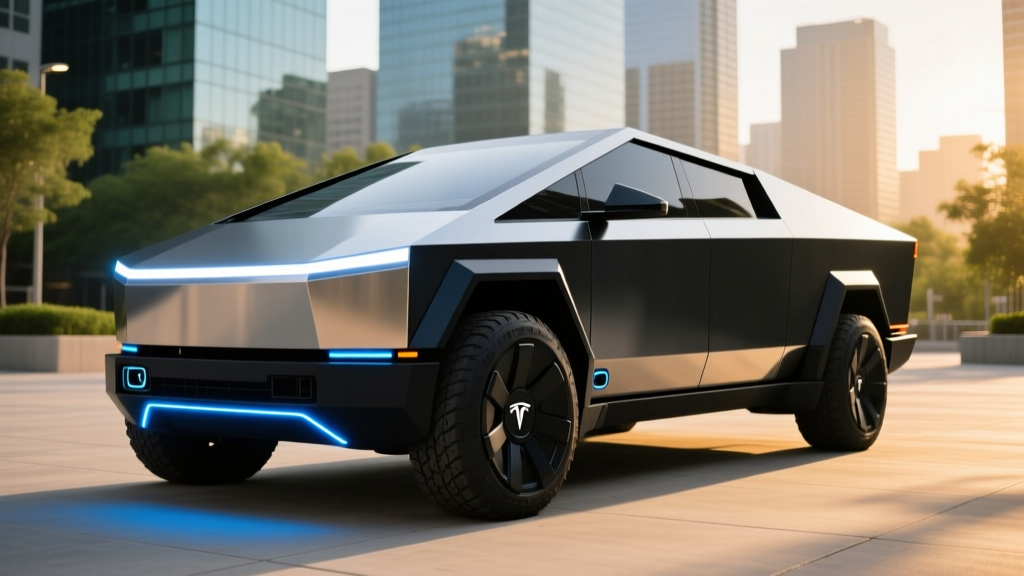
The Cybertruck's unpainted stainless steel exoskeleton is its defining visual trait. Unlike traditional trucks, Tesla does not apply conventional paint at the factory for the base configuration. Here's how the color landscape breaks down for the 2026 model year:
- Raw Stainless Steel (Standard): The default finish. No paint, no clear coat — just cold-rolled 300-series stainless steel with a brushed industrial look. This is the finish that ships on most configurations.
- Satin Stainless Steel: A slightly matte, less reflective treatment available on select trims that gives the panels a softer, more subdued tone.
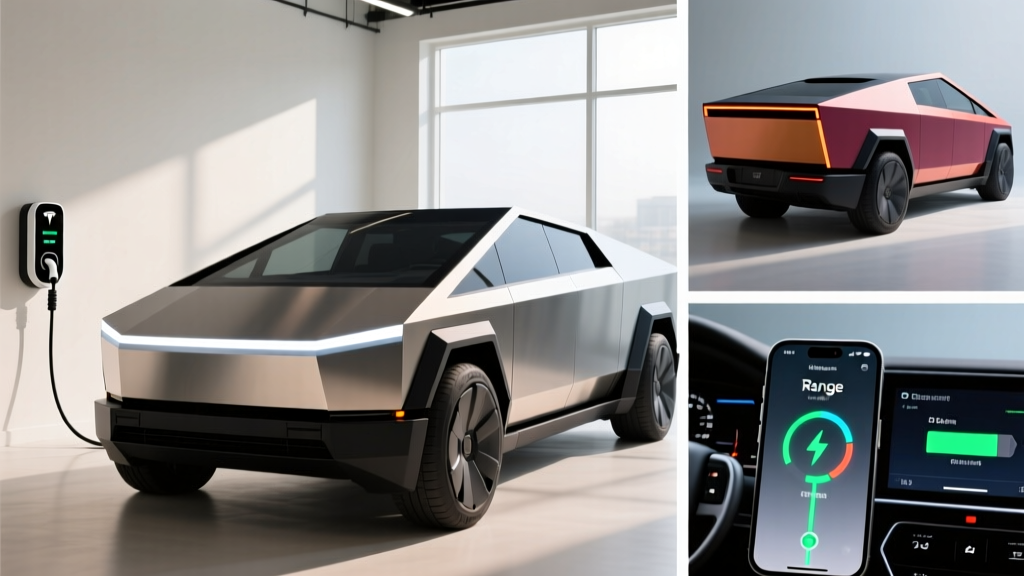
- Factory Color Wraps: Tesla has periodically offered dealer-applied vinyl wraps in colors like Stealth Matte Black, Satin White, and Midnight Cherry. Availability rotates and often carries a $3,000–$5,000 upcharge.
- Aftermarket Wraps and PPF: The overwhelming majority of Cybertruck owners who want color opt for aftermarket paint protection film (PPF) or vinyl wraps. Expect to pay $4,000–$8,000 for a full-body wrap from a reputable shop.
The stainless steel body resists minor dents and UV fading, but it shows fingerprints, water spots, and fine scratches readily. Many owners treat a ceramic coating or PPF as essential from day one — budget $2,000–$5,000 for quality protection.
Range, Efficiency, and Real-World Expectations
The Cybertruck's angular, brick-like aerodynamics (a drag coefficient around 0.335) and 6,800+ lb curb weight work against highway efficiency. Here's what the EPA says versus what you'll actually experience:
- Dual Motor AWD: EPA 340 miles | Real-world highway (75 mph): ~270–290 miles | Cold weather (below 32°F): ~230–260 miles
- Cyberbeast (Tri-Motor): EPA 320 miles | Real-world highway (75 mph): ~250–275 miles | Cold weather: ~220–250 miles
Range Extender option (available on select configs): Adds approximately 100+ miles of EPA-rated range via a bed-mounted auxiliary battery pack, bringing total EPA estimates to ~440+ miles for the Dual Motor. Real-world highway with extender: ~350–380 miles.
Efficiency figures from fueleconomy.gov place the Dual Motor at approximately 76 MPGe combined (roughly 44 kWh/100 mi) and the Cyberbeast at approximately 72 MPGe combined (roughly 47 kWh/100 mi). These numbers drop noticeably at sustained highway speeds above 70 mph and when towing — expect 40–50% range loss when pulling a trailer near the 11,000-lb max rating.
Battery Chemistry, Capacity, and Longevity
| Specification | Dual Motor AWD | Cyberbeast (Tri-Motor) |
|---|---|---|
| Battery Chemistry | NMC (Nickel Manganese Cobalt) | NMC |
| Usable Battery Capacity | ~123 kWh | ~123 kWh |
| Horsepower | 600 hp | 845 hp |
| 0–60 mph | 3.9 seconds | 2.6 seconds |
| Drivetrain | Dual Motor AWD | Tri-Motor AWD |
| Max Towing Capacity | 11,000 lbs | 11,000 lbs |
| Payload Capacity | 2,500 lbs | 2,500 lbs |
| Battery Warranty | 8 years / 120,000 miles | 8 years / 120,000 miles |
| Warranty Capacity Threshold | 70% retention | 70% retention |
The Cybertruck uses an NMC lithium-ion battery pack built on Tesla's 4680 cell architecture. NMC chemistry offers higher energy density than LFP (lithium iron phosphate), which is critical for a vehicle this heavy — but it comes with trade-offs. NMC cells degrade slightly faster under repeated DC fast charging to 100% and are more sensitive to sustained high-SoC storage. Tesla recommends daily charging to 80–90% for routine use and 100% only before long trips.
The battery warranty covers 8 years or 120,000 miles, whichever comes first, with a 70% capacity retention threshold. Outside of warranty, a full pack replacement is estimated at $15,000–$25,000 based on current 4680 cell pricing and labor — though this figure should decrease as cell production scales.
Charging Speed: DC Fast Charge and Home Level 2
Charging a 123 kWh battery pack is a significant undertaking. The Cybertruck's 800-volt architecture enables competitive DC fast-charging speeds, but the physics of such a large pack means full charges still take time.
| Charging Level | Max Power | Speed / Time | Connector |
|---|---|---|---|
| Level 1 (120V household) | ~1.4 kW | ~3 miles per hour | NACS (native) |
| Level 2 (240V home) | ~11.5 kW (48A) | ~25–30 miles per hour | NACS (native) |
| DC Fast Charge (Supercharger V4) | Peak ~250 kW | 10–80% in ~30 minutes | NACS (native) |
| DC Fast Charge (CCS adapter) | Up to ~200 kW (varies) | 10–80% in ~35–40 minutes | NACS with CCS adapter |
Charging curve reality: The Cybertruck peaks near 250 kW at low state-of-charge (roughly 5–25% SoC), but the curve tapers significantly above 60%. Expect sustained averages of ~150–170 kW during a typical 10–80% session. That 30-minute 10–80% figure assumes a V4 Supercharger with preconditioning enabled. Without battery preconditioning — which the truck initiates automatically when a Supercharger is set as your navigation destination — cold-weather DC charging can be 30–50% slower.
For home charging, a Level 2 wall connector at 48 amps (11.5 kW) will add roughly 25–30 miles of range per hour, meaning a full overnight charge from 20% to 80% takes approximately 7–8 hours. This is sufficient for most daily driving, but Cybertruck owners with long commutes or frequent towing should consider a 60-amp circuit to maximize Level 2 throughput. Budget $800–$2,500 for a professional Level 2 home installation, depending on panel proximity and local permitting — a 200-amp panel upgrade can add $1,500–$3,000 if your home needs one.
Pricing, Trims, and Federal Tax Credit Eligibility
| Trim | Base MSRP | Est. After §30D Credit | §30D Eligible? |
|---|---|---|---|
| Dual Motor AWD | $79,990 | $72,490* | Potentially — see rules below |
| Cyberbeast (Tri-Motor) | $99,990 | $92,490* | Potentially — see rules below |
| Range Extender Add-on | + ~$16,000 | N/A (add-on) | N/A |
| FSD (Supervised) | + $8,000 | N/A | N/A |
*Estimated after $7,500 point-of-sale transfer. Eligibility is not guaranteed and depends on buyer income, battery sourcing, and MSRP caps. See details below.
The Cybertruck's pricing has been a moving target since its launch. As of the 2026 model year, the Dual Motor AWD starts at $79,990 and the tri-motor Cyberbeast sits at $99,990. These figures are before any options, destination fees, or the Range Extender battery add-on.
Does the Cybertruck Qualify for the $7,500 Federal EV Tax Credit?
This is one of the most searched questions — and the answer requires careful attention to IRS §30D rules. Here's the eligibility checklist:
- MSRP Cap: The Cybertruck is classified as a pickup truck under §30D, which has an $80,000 MSRP cap for trucks/vans/SUVs. The Dual Motor AWD at $79,990 squeaks under this cap. The Cyberbeast at $99,990 exceeds it and is not eligible.
- Buyer Income Cap: Modified adjusted gross income must not exceed $150,000 (single), $225,000 (head of household), or $300,000 (joint filers).
- Battery Sourcing: Critical minerals and battery components must meet escalating domestic-content thresholds that tighten annually. Tesla's 4680 cell supply chain has been progressively shifting to meet these requirements, but sourcing compliance can change — verify current-year eligibility on the IRS qualified vehicles list before purchasing.
- Point-of-Sale Transfer: As of 2024+, eligible buyers can transfer the credit to the dealer at purchase, reducing the purchase price by up to $7,500 at the point of sale rather than waiting for a tax refund.
- Final Assembly: Must be assembled in North America. The Cybertruck is built at Giga Texas, so this requirement is met.
Bottom line: Only the Dual Motor AWD trim qualifies (at $79,990, under the $80,000 truck cap), and only if your income is within limits and the battery sourcing requirements are met for the specific production batch. Always verify on the fueleconomy.gov tax credit tool and consult a tax professional before relying on credit eligibility.
Interior, Cargo, Tech, and Driver Assistance
The Cybertruck cabin is minimalist in true Tesla fashion, anchored by an 18.5-inch front touchscreen and a 9.4-inch rear display for passengers. Materials are vegan leather and hard plastics — durable but not luxurious at this price point.
Cargo and passenger dimensions:
- Bed length: 6 feet (with closed tonneau); extends to ~7 feet with midgate folded
- Bed volume: ~67 cu ft (bed only); ~120 cu ft with midgate down into cabin
- Front trunk (frunk): ~7 cu ft — enough for charging cables and small bags
- Seating: 5 passengers (3-across rear bench)
- Rear legroom: ~38 inches — adequate but not class-leading for a full-size truck
- Vault (bed) lockable storage: The motorized tonneau cover creates a sealed, lockable cargo area — a genuine advantage over open-bed trucks
Standout tech features:
- Steer-by-wire system with variable ratio — eliminates the mechanical connection between steering wheel and rack, enabling extremely tight low-speed maneuvering despite the truck's size
- 48-volt electrical architecture (industry-first for a production light truck), reducing wiring harness weight and enabling higher-power accessories
- Powershare: V2L (vehicle-to-load) capability with 120V and 240V outlets in the bed, capable of outputting up to 11.5 kW — enough to run power tools or back up essential home circuits
- Adaptive air suspension with up to 16 inches of ground clearance in Off-Road mode
- Autopark, Summon, and Enhanced Autopilot features
Tesla Autopilot and FSD (Supervised) are SAE Level 2 driver-assistance systems. The driver must remain fully attentive, keep hands on the steering wheel, and be prepared to take over at any moment. These systems are not self-driving and do not make the Cybertruck an autonomous vehicle. Misuse of Level 2 systems has been linked to serious incidents — always drive as though no assist features are active.
Notable drawbacks:
- Stainless steel panels show smudges, fingerprints, and water spots constantly
- Visibility is compromised by thick A-pillars, the angular roofline, and a small rear window — the digital rearview camera is nearly mandatory
- Steer-by-wire feels disconnected at highway speeds for drivers accustomed to traditional steering — an adjustment period is expected
- Panel gap consistency remains a known concern; some owners report wind noise at speed from imperfect body sealing
- Bed access requires the powered tonneau to retract, which is slower than a simple tailgate drop on conventional trucks
Pros, Cons, and Who Should Buy the Cybertruck
Pros
- Tri-motor Cyberbeast delivers supercar-level 2.6s 0–60 in a 6,800-lb truck
- 11,000-lb towing capacity is competitive with full-size ICE trucks
- V2L Powershare (11.5 kW) makes it a genuine mobile power source for job sites and outages
- Lockable vault-style bed with motorized tonneau is more secure than open beds
- Access to the Tesla Supercharger network — the most reliable DC fast-charging ecosystem in the US
- Stainless steel body resists dents and corrosion better than painted aluminum or steel
- OTA updates continue to add features and improve performance post-purchase
Cons
- Real-world highway range falls 15–25% below EPA estimates — problematic for road trips without planning
- Large 123 kWh battery means long home-charge times and expensive DC sessions
- Cyberbeast trim ($99,990) is ineligible for the §30D federal tax credit
- Stainless steel shows every fingerprint; wraps/PPF are a near-mandatory added expense
- Steer-by-wire and unconventional ergonomics have a steep learning curve
- Rear-seat comfort and legroom lag behind the F-150 Lightning and Rivian R1T
- Build-quality inconsistencies (panel gaps, wind noise) remain reported issues
Who the Cybertruck Suits Best
- Tech-forward truck buyers who want a conversation piece with genuine utility and don't mind the learning curve
- Job-site professionals who can leverage the 11.5 kW V2L output to run tools without a generator
- Tesla ecosystem loyalists already using Powerwall, solar, or Supercharger-dependent road-trip patterns
- Performance enthusiasts who want absurd acceleration in a truck form factor (Cyberbeast)
Who Should Look Elsewhere
- Long-haul road trippers who regularly drive 300+ miles between stops — the Rivian R1T (Dual-Motor, ~352 mi EPA) or the F-150 Lightning (Extended Range, ~320 mi EPA) may offer more predictable route planning
- Family-first truck buyers who prioritize rear-seat comfort and ride quality — the R1T and F-150 Lightning both offer more refined passenger experiences
- Budget-conscious buyers — even with the tax credit, the Dual Motor at ~$72,500 is a premium investment compared to well-equipped ICE half-ton trucks in the $55,000–$65,000 range
Cybertruck vs. Key Competitors: Is It Worth It?
| Spec | Tesla Cybertruck Dual Motor | Ford F-150 Lightning Ext. Range | Rivian R1T Dual-Motor Max |
|---|---|---|---|
| EPA Range | 340 mi | ~320 mi | ~352 mi |
| Battery (kWh) | ~123 kWh (NMC) | ~131 kWh (NMC) | ~149 kWh (NMC) |
| Max DC Charge | ~250 kW | ~150 kW | ~220 kW |
| 10–80% DCFC Time | ~30 min | ~41 min | ~34 min |
| 0–60 mph | 3.9 sec | ~3.8 sec | ~3.5 sec |
| Towing | 11,000 lbs | 10,000 lbs | 11,000 lbs |
| Base MSRP | $79,990 | ~$76,990 | ~$87,000 |
| §30D Credit Eligible | Yes (Dual Motor only)* | Yes* | Yes* |
*Eligibility subject to income, MSRP, and battery sourcing rules per IRS §30D. Verify at time of purchase.
The Cybertruck wins on DC fast-charge speed and Supercharger network access, which matters enormously for road trips. The F-150 Lightning wins on familiarity, dealer service infrastructure, and a more conventional truck experience. The Rivian R1T wins on interior quality, rear-seat comfort, and slightly better EPA range — but at a higher starting price. If your priority is fastest charging + best DC network, the Cybertruck has a real edge. If it's family comfort or traditional truck ergonomics, the Lightning or R1T are stronger picks.
Frequently Asked Questions
What is the real-world range of the Tesla Cybertruck?
The Dual Motor AWD is EPA-rated at 340 miles, but expect 270–290 miles at sustained highway speeds (75 mph) and 230–260 miles in freezing temperatures. The Cyberbeast drops to ~250–275 highway miles real-world. Adding the Range Extender battery brings highway estimates to ~350–380 miles for the Dual Motor.
How fast does the Cybertruck charge at home and on the road?
On a Level 2 home charger (240V, 48A), the Cybertruck adds about 25–30 miles of range per hour, requiring roughly 7–8 hours for a 20–80% charge. At a Tesla V4 Supercharger, it peaks at ~250 kW and charges from 10–80% in approximately 30 minutes with battery preconditioning active. Charging speed tapers significantly above 60% SoC.
How much does the Cybertruck cost after the federal tax credit?
The Dual Motor AWD starts at $79,990 and may qualify for the $7,500 §30D credit (bringing it to ~$72,490) if you meet income limits ($150K single / $300K joint) and the battery sourcing requirements are met. The Cyberbeast at $99,990 exceeds the $80,000 truck MSRP cap and is not eligible. Always verify current eligibility on fueleconomy.gov and the IRS qualified vehicle list.
What Cybertruck colors are available from the factory?
The standard factory finish is raw brushed stainless steel — no paint. Tesla periodically offers dealer-applied wraps in colors like Stealth Matte Black or Satin White for an additional $3,000–$5,000. Most owners who want color opt for aftermarket vinyl wraps or PPF, typically costing $4,000–$8,000.
Is the Cybertruck a good daily driver and commuter vehicle?
For a commute under 100 miles round-trip with reliable home charging, yes — the ride quality, one-pedal driving, and low running costs make it comfortable daily. However, its ~6,800-lb weight, wide footprint, and compromised rear visibility make urban parking and tight garages challenging. Home Level 2 charging is essentially mandatory for daily use; relying on Level 1 (120V) would only recover ~3 miles per hour.
Is the Cybertruck worth buying over the F-150 Lightning or Rivian R1T?
Choose the Cybertruck if you prioritize Supercharger network access, fast DC charging (250 kW peak), V2L output for job-site use, and distinctive design. Choose the F-150 Lightning if you want dealer service, traditional truck ergonomics, and Pro Power Onboard. Choose the Rivian R1T if interior quality, rear-seat comfort, and adventure-oriented features (gear tunnel, camp kitchen) matter most. All three are compelling — the right answer depends on your use case.
Does the Cybertruck's battery degrade quickly?
Tesla warranties the battery for 8 years or 120,000 miles at 70% capacity retention. Based on Tesla's fleet data for NMC packs, most owners see approximately 10–12% degradation over the first 100,000 miles with normal charging habits (daily 80–90%, occasional 100%). Avoiding routine 100% charges and minimizing DC fast-charging frequency will help preserve long-term battery health.