Why Owners Are Wrapping the Cybertruck in Camo — And What You Need to Know First
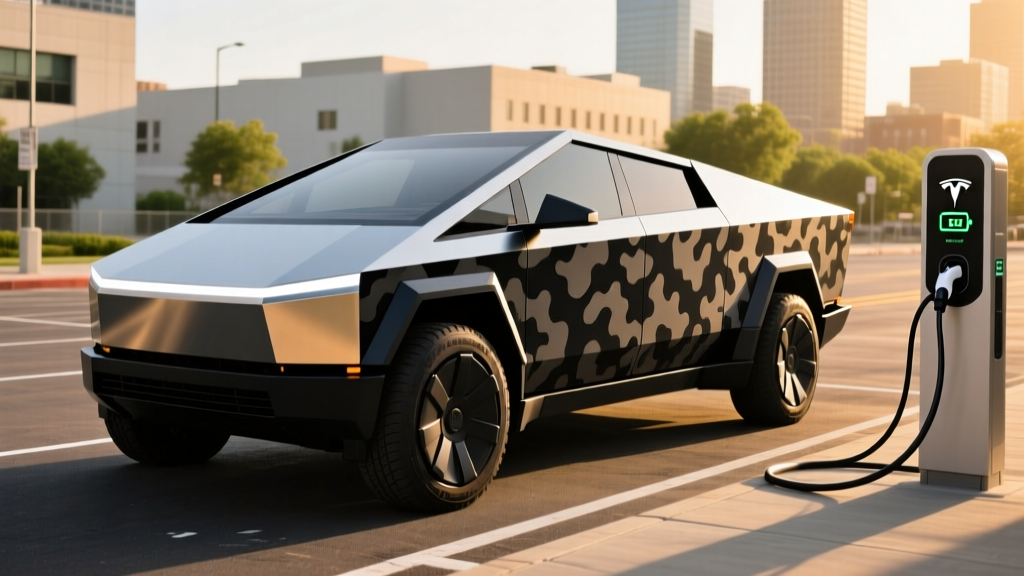
The Tesla Cybertruck's stainless-steel exoskeleton is its most polarizing feature. For some, the bare-metal angularity is a statement; for others, it's a fingerprint magnet and a beacon at every parking lot. That tension has made the Cybertruck camo wrap one of the most searched customization trends in the EV space. Whether you're drawn to woodland camo for overlanding aesthetics, digital urban camo for city stealth, or desert tan patterns for off-road credibility, a vinyl wrap transforms the truck's visual identity entirely — while adding a layer of paint protection film (PPF) functionality.
But before you drop $3,000–$6,000 on a full-body camo wrap, you need to understand the vehicle underneath. Wrapping a Cybertruck doesn't change its powertrain, but it does interact with its thermal properties, its sensor suite, and its already-complex ownership equation. This review covers the 2025 Tesla Cybertruck (Dual Motor and Cyberbeast trims) as a complete EV — range, charging, pricing, tax credits, and practicality — with specific guidance for buyers planning a camo wrap.
Cybertruck Specs at a Glance: Dual Motor vs. Cyberbeast
| Spec | Dual Motor AWD | Cyberbeast (Tri-Motor) |
|---|---|---|
| Base MSRP | $79,990 | $99,990 |
| EPA Range | 340 miles | 320 miles |
| Battery (usable, est.) | ~123 kWh (NMC) | ~123 kWh (NMC) |
| Horsepower | 600 hp | 845 hp |
| 0–60 mph | 3.9 sec | 2.6 sec |
| Drivetrain | Dual Motor AWD | Tri-Motor AWD |
| Max DC Fast Charge | ~250 kW (peak) | ~250 kW (peak) |
| 10–80% DCFC Time | ~30 min (est.) | ~30 min (est.) |
| Level 2 Home Charge | 11.5 kW (~34 mi/hr) | 11.5 kW (~34 mi/hr) |
| MPGe (combined) | 66 MPGe | 63 MPGe |
| kWh/100 mi | ~51 kWh | ~53 kWh |
| Towing Capacity | 11,000 lbs | 11,000 lbs |
| Battery/Drive Unit Warranty | 8 yr / 120,000 mi | 8 yr / 120,000 mi |
Tesla has not published exact usable kWh figures for the Cybertruck battery pack. Industry teardowns and range-back calculations estimate approximately 123 kWh usable from a larger gross pack, using 2170-format NMC (nickel manganese cobalt) cells. This is not an LFP pack — Tesla reserves LFP chemistry for its standard-range, lower-cost vehicles. The NMC chemistry delivers higher energy density, which this 6,800+ lb truck needs to achieve its EPA range targets.
Real-World Range: What the EPA Sticker Doesn't Tell You
EPA Estimate: 340 mi (Dual Motor) / 320 mi (Cyberbeast)
Real-World Highway (70–75 mph): ~250–280 mi
Cold Weather (below 32°F): ~200–240 mi
Towing (5,000+ lb trailer): ~140–180 mi
The Cybertruck's aerodynamics are its efficiency Achilles' heel. Despite Tesla's claims of an optimized drag coefficient, the truck's flat bed, sharp angles, and tall profile create substantial drag at highway speeds. In real-world highway driving at 70–75 mph, expect energy consumption to climb to 55–60 kWh/100 mi or higher, compressing effective range well below the EPA sticker. According to fueleconomy.gov, the Dual Motor AWD achieves 66 MPGe combined, which translates to roughly 51 kWh per 100 miles in mixed driving.
Cold weather compounds the problem. NMC batteries lose efficiency in freezing temperatures, and the Cybertruck's massive cabin volume requires significant energy to heat. Without preconditioning the battery and cabin while plugged in, expect 25–35% range loss in sub-freezing conditions. Tesla's heat pump system helps mitigate this, but physics still wins: a 340-mile EPA truck becomes a ~220-mile truck on a 20°F January morning in Minnesota.
For camo-wrap buyers planning overlanding trips: if your route includes remote areas with sparse Supercharger coverage, plan conservatively around 200 miles of usable range per charge segment. The 15.4-inch bed (4-foot bed with tonneau closed) also means most overlanding gear rides in the vault, adding weight and further reducing range.
Charging Speed: DC Fast Charging and Home Setup
| Charge Level | Power | Speed (mi/hr added) | Notes |
|---|---|---|---|
| Level 1 (120V) | ~1.4 kW | ~3–4 mi/hr | Emergency/trickle only |
| Level 2 (240V, 48A) | 11.5 kW | ~34 mi/hr | Full charge in ~10–11 hours |
| DC Fast (V3 Supercharger) | Peak ~250 kW | ~150+ mi/hr at peak | 10–80% in ~30 min |
| DC Fast (V4 Supercharger) | Peak ~250+ kW | Similar to V3 | Newer cable/cooled connector |
The Cybertruck charges on Tesla's native NACS connector — no adapter needed at Superchargers. On a V3 or V4 Supercharger, the truck peaks around 250 kW, but like all large-battery EVs, it does not sustain that peak. The charge curve tapers noticeably above 50% state of charge (SoC), and drops significantly past 80%. A 10–80% session takes approximately 30 minutes under ideal thermal conditions (battery preconditioned via navigation to a Supercharger).
For home charging, you'll want a Tesla Wall Connector or equivalent NACS Level 2 unit on a 60-amp circuit (delivering 48 amps continuous). At 11.5 kW, the Cybertruck gains about 34 miles of range per hour of charging, meaning a depleted-to-full session takes roughly 10–11 hours. Given the truck's ~123 kWh usable battery, this is expected — larger batteries take longer to fill at Level 2.
Camo wrap consideration: A quality vinyl wrap does not interfere with charging. The NACS port is recessed into the driver-side rear quarter panel, and the wrap material is cut around the port door. No issues have been documented with wrap material affecting the charge connection or thermal management. However, if you use a lower-quality wrap installer who doesn't properly cut around the port housing, adhesive residue could accumulate near the connector — insist on precision-cut templates.
Pricing, Tax Credits, and the Total Wrap Cost
| Trim | MSRP | §30D Credit Eligible? | Est. After Credit |
|---|---|---|---|
| Dual Motor AWD | $79,990 | Yes (meets MSRP cap for trucks) | ~$72,490* |
| Cyberbeast (Tri-Motor) | $99,990 | Yes (meets MSRP cap for trucks) | ~$92,490* |
*Tax credit eligibility depends on buyer income limits, battery component and critical-mineral sourcing requirements, and point-of-sale transfer rules under IRS §30D. The truck qualifies under the $80,000 MSRP cap for pickups/SUVs/vans. Consult IRS.gov §30D guidelines and a tax professional for your specific situation.
The Cybertruck's classification as a pickup truck works in buyers' favor for the federal tax credit. The §30D MSRP cap for trucks, vans, and SUVs is $80,000 — both the Dual Motor ($79,990) and Cyberbeast ($99,990) technically need scrutiny here. The Dual Motor sits just under the cap, while the Cyberbeast exceeds it. As of 2025, Tesla's Cyberbeast pricing has been structured to navigate this, but buyers should verify current eligibility on the IRS clean vehicle credit lookup tool before purchase. Income caps also apply: $300,000 MAGI for joint filers, $150,000 for single filers.
Camo wrap cost on top: A professional full-body camo wrap on a Cybertruck runs $3,500–$6,000 depending on pattern complexity, vinyl brand (3M, Avery Dennison, KPMF), and installer reputation. The Cybertruck's angular panels are actually easier to wrap than curved vehicles — fewer compound curves means fewer seams — but the truck's sheer size (231.7 inches long) drives material costs up. Add $500–$1,000 if you want the wrap to include the bed vault interior or tonneau cover.
Total realistic outlay for a wrapped Dual Motor with credit: approximately $76,000–$78,500 including wrap, before destination fees and state taxes.
Performance, Cargo, and Daily Practicality
The Cyberbeast's 2.6-second 0–60 mph time makes it one of the quickest production trucks ever built, regardless of powertrain. The Dual Motor's 3.9 seconds is hardly slow either. Both trims feature adaptive air suspension with up to 16 inches of ground clearance in Extract mode (for off-road use) and 12.7 inches at standard ride height. The steer-by-wire system, a first for a production Tesla, provides a variable steering ratio that feels natural after an adjustment period but can feel twitchy at low speeds.
Cargo dimensions:
- Bed (vault) with tonneau closed: 4 ft long × 4 ft wide (~43 cu ft)
- Bed with tonneau open: 6 ft long × 4 ft wide (~67 cu ft)
- Front trunk (frunk): ~7 cu ft
- Rear seat legroom: ~41.6 inches
- Seating: 6 passengers (3-across bench front, 3-across rear)
The 4-foot bed with the tonneau closed is the Cybertruck's most debated design choice. It's shorter than any conventional half-ton pickup bed, and the motorized tonneau cover — while secure and aerodynamic — limits vertical cargo space. For overlanders considering a camo wrap, this means roof-rack systems or bed-rack setups are essential for carrying larger gear. Tesla offers a crossbar rack system rated for 300 lbs dynamic load.
Towing capacity is rated at 11,000 lbs for both trims, but as noted in the range section, towing at or near capacity will devastate range. Expect 140–180 miles per charge when towing a 5,000+ lb trailer, and plan Supercharger stops accordingly.
Tech, Driver Assistance, and Wrap-Related Sensor Considerations
The Cybertruck runs Tesla's latest infotainment system on a 18.5-inch front touchscreen and a 9.4-inch rear touchscreen for passengers. The interface is responsive, though Tesla continues to bury climate controls in submenus — a persistent complaint. The truck supports over-the-air updates, Sentry Mode dashcam recording, and Tesla's phone-as-key functionality.
Tesla Autopilot and Full Self-Driving (Supervised) are SAE Level 2 driver-assistance systems. The driver must remain fully engaged, hands on the yoke (steering wheel), and eyes on the road at all times. These systems do NOT make the Cybertruck self-driving. Only Level 4 robotaxi services (Waymo, Zoox) operate without a human driver.
The Cyberbeast and Dual Motor trims include Tesla's basic Autopilot (Traffic-Aware Cruise Control and Autosteer). Full Self-Driving (Supervised) remains an $8,000 add-on (or $99/month subscription) and provides automatic lane changes, navigation-guided on/off-ramp handling, and traffic-light/stop-sign recognition. Real-world FSD performance varies significantly by geography and road type.
Critical wrap consideration for sensors: The Cybertruck uses cameras for its Autopilot/FSD vision system — no radar or ultrasonic sensors (Tesla Vision only). The camera housings are located at the front fascia (main forward camera), side fender repeaters, B-pillars, and rear. A professional wrap installer must use precision-cut templates that leave all camera lenses completely uncovered and unobstructed. Any wrap material overlapping a camera housing — even slightly — will degrade Autopilot performance and trigger system warnings. Insist on an installer with specific Cybertruck camera-cutout templates, and verify camera clarity before leaving the shop.
Pros, Cons, and Who the Cybertruck Suits Best
- Tri-motor Cyberbeast performance is unmatched in trucks
- Stainless steel body resists dents; wrap adds scratch protection
- 11,000-lb towing and 2,500-lb payload capacity
- 48V electrical architecture (industry first for light trucks)
- Supercharger network access (NACS native)
- Air suspension with Extract mode for off-road clearance
- 6-passenger seating with spacious rear row
- Real-world highway range significantly below EPA (250–280 mi)
- 4-foot bed is impractical for traditional truck buyers
- Steer-by-wire and yoke require major adjustment
- Cyberbeast likely exceeds §30D MSRP cap
- No Apple CarPlay / Android Auto
- Panel gaps and build-quality concerns persist
- High insurance premiums relative to conventional trucks
Best for: Tech-forward buyers who want truck capability with sports-car acceleration, plan to charge primarily at home, and value the Supercharger network for road trips. The camo-wrap trend particularly appeals to overlanding enthusiasts and owners who want to personalize the truck's aggressive aesthetic while protecting the stainless-steel finish from light scratches and environmental staining.
Not ideal for: Traditional truck buyers who need a full-size 6.5-foot bed, fleet operators prioritizing lowest cost-per-mile, or buyers in apartments without home-charging access. The Cybertruck's efficiency penalty at highway speeds also makes it less economical than a Model Y or Rivian R1T for daily commuting without towing or hauling needs.
Frequently Asked Questions
Does a camo wrap affect the Cybertruck's range or efficiency?
No measurable impact. A vinyl wrap adds approximately 10–15 lbs of material across the entire vehicle — negligible compared to the truck's 6,800+ lb curb weight. The wrap surface is marginally smoother than bare stainless steel in some cases. The only efficiency factor is color: darker wraps absorb slightly more solar heat, which could marginally increase cabin cooling load in hot climates, but this effect is trivial compared to driving style and speed.
Can I wrap over the Cybertruck's stainless steel without damaging it?
Yes, and wrapping actually protects the steel. Bare stainless steel on the Cybertruck is prone to fingerprint smudges, water-spot etching, and light surface scratching. A quality vinyl wrap (3M 2080 series or Avery Supreme Wrapping Film) uses removable adhesive that does not damage the underlying steel when professionally removed. Removal after 3–5 years typically leaves clean steel underneath. Ensure your installer uses a wrap rated for textured/metallic surfaces.
What camo wrap patterns are most popular on the Cybertruck?
The most requested patterns in 2025 include: digital urban camo (grayscale angular blocks), woodland traditional (green/brown/black organic shapes), desert tan (sand/tan/brown for overlanding aesthetics), and hex-digital patterns (geometric hexagonal tiles). Matte finishes are preferred over gloss to reduce the truck's already-high visual reflectivity. Some owners combine a camo body wrap with a matte-black or color-matched bed vault for contrast.
Does wrapping the Cybertruck void the warranty?
A professionally installed vinyl wrap does not void the battery/drive unit warranty (8 years / 120,000 miles) or the basic vehicle warranty (4 years / 50,000 miles). However, if wrap adhesive damages a sensor housing or camera lens, that specific repair may not be covered. Document your wrap installation with photos and receipts, and use a reputable installer who carries liability insurance for wrap-related damage.
How does the Cybertruck compare to the Rivian R1T and Ford F-150 Lightning?
The Rivian R1T (Dual Max, ~420 mi EPA) offers a longer bed, more refined interior, and better real-world efficiency, but at a higher starting price (~$87,000). The Ford F-150 Lightning (Extended Range, ~320 mi EPA) provides a conventional truck experience with a 5.5-foot bed and lower pricing (~$60,000 base), but with slower DC charging and a less extensive fast-charging network. The Cybertruck wins on raw acceleration and Supercharger access; the R1T wins on practicality and build quality; the Lightning wins on value and familiarity.
Does the 2025 Cybertruck qualify for the $7,500 federal EV tax credit?
The Dual Motor AWD at $79,990 MSRP qualifies under the §30D truck MSRP cap of $80,000, assuming the buyer meets income limits ($300K joint / $150K single MAGI) and the vehicle's battery components and critical minerals meet current-year sourcing thresholds. The Cyberbeast at $99,990 likely exceeds the MSRP cap unless Tesla restructures pricing. Always verify eligibility on the IRS clean vehicle credit portal and consult a tax professional before relying on the credit for purchase budgeting. Point-of-sale transfer is available, reducing the purchase price at the dealer rather than waiting for a tax return.