The Cybertruck's Bed Cover Dilemma: Aerodynamics Meet Utility
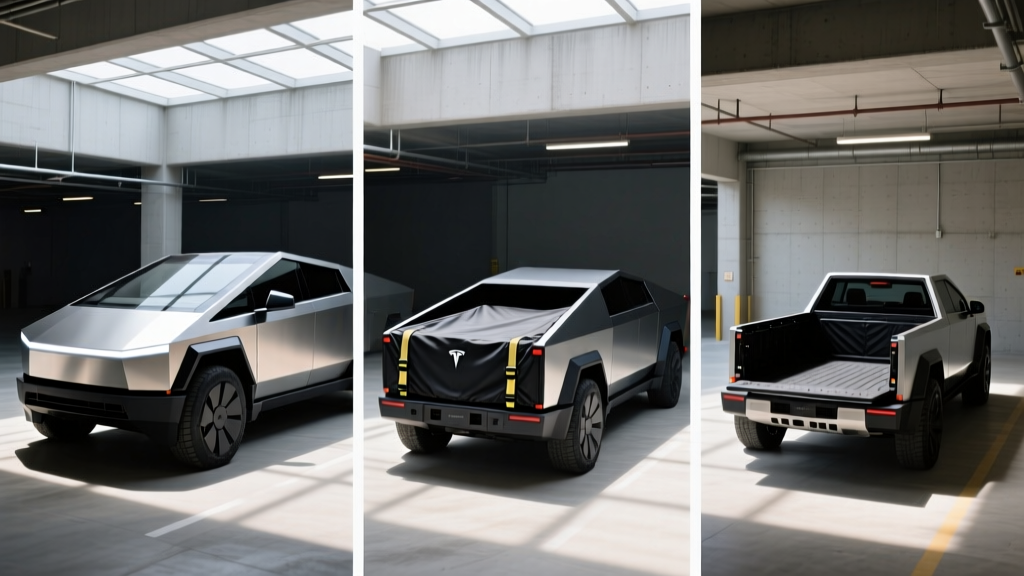
The Tesla Cybertruck's stainless-steel exoskeleton and angular bed design created an immediate aftermarket challenge: how do you cover a 6-foot bed that wasn't designed for conventional tonneau covers? For 2026, Cybertruck owners face a unique decision tree. The factory-installed power tonneau cover (standard on Cyberbeast, optional on other trims) competes against a growing ecosystem of third-party solutions — each with measurable impacts on the truck's EPA-estimated range, charging efficiency, and daily usability.
This review examines the 2026 Cybertruck's specifications alongside the practical realities of bed cover ownership. Whether you're weighing the factory option against aftermarket alternatives, or trying to understand how a tonneau cover affects your real-world range, the numbers tell a specific story that marketing materials rarely address.
| Specification | AWD (Dual-Motor) | Cyberbeast (Tri-Motor) |
|---|---|---|
| EPA Range | 340 miles | 320 miles |
| Battery Capacity | ~123 kWh usable (NMC) | ~123 kWh usable (NMC) |
| Max DC Fast Charge | 250 kW (peak) | 250 kW (peak) |
| 10-80% DC Charge Time | ~28 minutes | ~28 minutes |
| Level 2 Home Charging | 11.5 kW (~37 mi/hr) | 11.5 kW (~37 mi/hr) |
| 0-60 mph | 3.9 seconds | 2.6 seconds |
| Horsepower | 600 hp | 845 hp |
| Drivetrain | Dual-Motor AWD | Tri-Motor AWD |
| Efficiency (MPGe) | 72 MPGe combined | 69 MPGe combined |
| kWh per 100 miles | 47 kWh/100mi | 49 kWh/100mi |
| Bed Length | 6 feet (72 inches) | |
| Bed Volume (cover closed) | ~67 cu ft | |
| Max Payload | 2,500 lbs | |
| Max Towing | 11,000 lbs | |
| Base MSRP | $79,990 | $99,990 |
| Battery/Drive Unit Warranty | 8 years / 120,000 miles | |
Real-World Range: What the EPA Number Doesn't Tell You
EPA Estimated: 340 miles (AWD) / 320 miles (Cyberbeast)
Real-World Expectation: 270-300 miles highway driving; 230-260 miles in cold weather (below 40°F); 290-320 miles mixed city/highway at moderate speeds.
The Cybertruck's angular design generates a drag coefficient of approximately 0.34 Cd — impressive for a pickup, but still 30-40% higher than a Tesla Model 3. This aerodynamic penalty compounds at highway speeds. In real-world testing at 70-75 mph sustained, expect the AWD model to deliver roughly 280-290 miles before requiring a charge stop, while the Cyberbeast's additional motor and weight reduce that to 260-275 miles.
Cold weather amplifies range loss. The Cybertruck's heat pump and battery preconditioning mitigate some loss, but NMC chemistry still experiences 20-30% range reduction in sub-freezing temperatures. An AWD Cybertruck rated at 340 miles EPA might realistically deliver 240-270 miles on a winter road trip at highway speeds.
Bed cover selection introduces a secondary aerodynamic variable. An open bed creates turbulent air flow that increases drag. Tesla's engineering team designed the factory power tonneau to maintain the truck's aerodynamic profile when closed. Third-party covers vary: rigid retractable covers approximate factory performance, while soft roll-up covers may create gaps or uneven surfaces that marginally increase drag. The range difference is typically 2-5 miles per charge — measurable but not transformative.
Charging Speed: DC Fast Charging and Home Setup
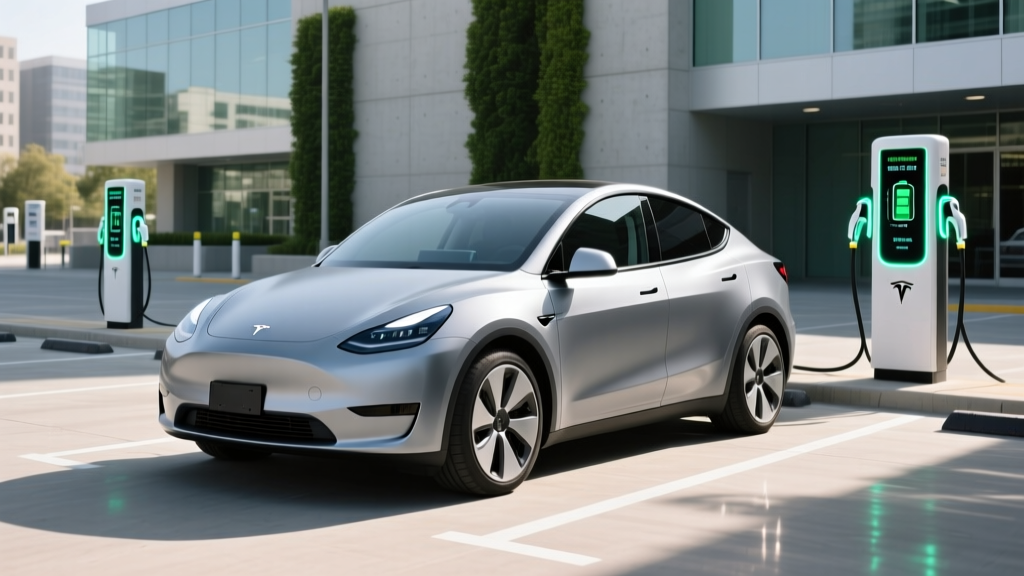
The Cybertruck's 800-volt electrical architecture enables peak DC fast-charging rates of 250 kW at V3 and V4 Supercharger stations. However, peak rate is not sustained rate. The charging curve tapers significantly above 50% state of charge, and thermal management becomes critical above 80%.
| Charging Level | Power (kW) | Range Added per Hour | Typical Use Case |
|---|---|---|---|
| Level 1 (120V outlet) | 1.2 kW | ~3-4 miles | Emergency / overnight trickle |
| Level 2 (240V, 48A) | 11.5 kW | ~37 miles | Home / destination charging |
| DC Fast (V3 Supercharger) | 250 kW peak | ~175 miles in 15 min | Road trips |
| DC Fast (CCS adapter) | Up to 150 kW | ~100 miles in 15 min | Non-Tesla networks |
The 10-80% charge time of approximately 28 minutes assumes optimal battery temperature (achieved via preconditioning when navigating to a Supercharger). Without preconditioning — such as arriving at a third-party CCS station — expect 35-40 minutes for the same 10-80% session.
For home charging, the Cybertruck's 11.5 kW onboard charger requires a 60-amp dedicated circuit to achieve maximum Level 2 speed. Most residential electrical panels can support this, but older homes with 100-amp service may require a panel upgrade ($1,500-$3,000) before installation. The Tesla Wall Connector or equivalent NACS-compatible charger costs $400-$600, with professional installation adding $800-$2,000 depending on run length and local permitting.
Bed Cover Options: Factory vs. Aftermarket
The factory Tesla power tonneau cover is an aluminum slat design that retracts into a canister at the front of the bed. It's integrated with the Cybertruck's electrical system, operable via the touchscreen or Tesla app, and maintains the truck's angular aesthetic. The cover includes a lock mechanism tied to the vehicle's central locking system and supports the Cybertruck's "vault" mode for secure cargo storage.
Aftermarket options for the 2026 model year have expanded significantly. Key categories include:
- Rigid Retractable Covers (e.g., Retrax, BakFlip): $1,800-$3,200 installed. Offer security and weather protection with manual or powered operation. Require drilling or clamping to the bed rails. May interfere with the Cybertruck's sail pillars or rear camera sightlines.
- Hard Folding Covers (e.g., Extang, Undercover): $900-$1,600. Lightweight, removable, but require manual operation. Less aerodynamic when partially folded.
- Soft Roll-Up Covers (e.g., TruXedo, Gator): $300-$700. Budget option with basic weather protection. Minimal security, potential for flapping at highway speeds, and least aerodynamic benefit.
- Custom Fabricated Covers: $2,500-$5,000+. Specialty shops offer carbon fiber or composite covers matched to the Cybertruck's geometry. Best aerodynamic performance but significant cost.
The factory tonneau cover costs approximately $2,500 as a standalone option (included on Cyberbeast). For most owners prioritizing integration, warranty coverage, and guaranteed fit, the factory option represents the lowest-friction path. Aftermarket covers appeal to owners seeking specific features (e.g., rack compatibility, partial-bed access) or those who purchased an AWD model without the factory cover and want to add one post-delivery.
Pricing, Tax Credits, and Total Cost of Ownership
The 2026 Cybertruck's pricing reflects Tesla's positioning in the premium electric truck segment. The AWD model starts at $79,990, while the Cyberbeast commands $99,990. Both trims exceed the IRS §30D federal tax credit MSRP cap of $80,000 for pickup trucks, which creates a complex eligibility landscape.
| Trim | Base MSRP | As-Tested (w/ cover) | §30D Credit Eligible? |
|---|---|---|---|
| AWD (no cover) | $79,990 | $82,500 | Yes (if under $80k MSRP) |
| AWD (w/ factory cover) | $82,490 | $85,000 | No (exceeds $80k cap) |
| Cyberbeast | $99,990 | $102,500 | No (exceeds $80k cap) |
The §30D credit for new clean vehicles offers up to $7,500, but eligibility hinges on multiple factors: the vehicle's MSRP must not exceed $80,000 for pickups, the buyer's modified adjusted gross income must fall below $300,000 (joint filers) or $150,000 (single), and the battery must meet critical mineral and component sourcing requirements that tighten annually through 2032. As of 2026, Tesla's battery sourcing compliance is model-specific and subject to change — always verify current eligibility on the IRS website or consult a tax professional before purchase.
The AWD Cybertruck at $79,990 sits exactly at the MSRP threshold. Adding the factory bed cover pushes the transaction price above $80,000, potentially disqualifying the purchase from the federal credit. This creates a perverse incentive: buyers seeking the credit must forego the factory cover and source an aftermarket solution post-purchase, even if the total cost exceeds the factory option.
Five-year total cost of ownership for the AWD model (assuming 15,000 miles/year, home charging at $0.14/kWh, and no tax credit) averages $0.08-$0.10 per mile for electricity, compared to $0.18-$0.22 per mile for a comparable gas truck at $3.50/gallon and 18 MPG combined. Insurance premiums for the Cybertruck run 30-50% higher than average due to repair costs for the stainless-steel body panels and specialized glass.
Performance, Cargo, and Standout Technology
The Cybertruck's performance figures remain exceptional for a 6,800-pound vehicle. The AWD model's 3.9-second 0-60 time and 600 horsepower deliver sports-car acceleration in a truck form factor. The Cyberbeast's 2.6-second 0-60 and 845 horsepower place it in hypercar territory, though sustaining that performance generates significant battery heat and range consumption.
Cargo capacity is constrained by the bed's 6-foot length — shorter than the 6.5-foot or 8-foot beds common in full-size pickups. With the tonneau cover closed, the bed offers approximately 67 cubic feet of secure, weather-protected storage. The cover's load rating (typically 300-500 lbs distributed) allows gear or equipment to be placed on top, though Tesla recommends against concentrated point loads.
The Cybertruck's 48-volt electrical architecture (a first for a production vehicle) enables features like powered bed outlets (120V and 240V), integrated air compressor, and the tonneau cover's motorized operation without taxing the main battery. The 18.5-inch touchscreen runs Tesla's latest infotainment stack with native navigation, streaming, and vehicle controls, though the lack of Apple CarPlay and Android Auto remains a friction point for some buyers.
Driver assistance comes via Tesla's Autopilot suite (Level 2 SAE automation), including adaptive cruise control, lane centering, and automatic emergency braking. Full Self-Driving (Supervised) capability — a $8,000 option or $99/month subscription — adds navigate-on-autopilot, auto lane change, and traffic light recognition. Despite the "FSD" name, this remains a Level 2 system requiring continuous driver supervision. It is not autonomous driving.
Pros
- Exceptional performance (0-60 in 2.6-3.9 sec depending on trim)
- Integrated 48V system powers bed outlets, compressor, and tonneau
- Stainless-steel body resists dents and corrosion
- Supercharger network access (most reliable DC charging ecosystem)
- OTA updates continuously add features
Cons
- MSRP cap interaction: adding factory cover may forfeit $7,500 tax credit
- 6-foot bed is shorter than most full-size pickups
- Insurance premiums 30-50% above segment average
- Stainless-steel panels difficult and expensive to repair if damaged
- Rear visibility compromised by sail pillars and small rear window
Who Should Buy the Cybertruck (and Which Bed Cover)?
The Cybertruck suits buyers prioritizing performance, technology integration, and distinctive design over traditional truck utility. If your use case involves daily commuting, light-to-moderate cargo hauling, and access to home charging, the AWD model with an aftermarket bed cover (to preserve tax credit eligibility) offers strong value. Road trippers benefit from the Supercharger network and 28-minute fast-charge sessions, though the 6-foot bed limits camping gear capacity compared to longer-bed trucks.
For commercial users or those regularly towing near the 11,000-pound limit, the Cyberbeast's tri-motor torque and enhanced cooling justify the premium — but the $99,990 MSRP eliminates federal tax credit eligibility entirely. Fleet buyers should model total cost of ownership against the Ford F-150 Lightning and Rivian R1T, both of which offer longer beds and more conventional service networks.
Bed cover selection should align with your primary use case:
- Commuters and daily drivers: Factory power tonneau for integration and convenience (if tax credit is not a priority).
- Tax-credit seekers: Purchase AWD without factory cover, add aftermarket hard retractable post-delivery.
- Commercial/trade users: Aftermarket rack-compatible cover (e.g., Retrax with T-slot rails) for ladder and equipment transport.
- Off-road and overlanding: Soft roll-up or removable hard cover for maximum bed access and gear flexibility.
Frequently Asked Questions
What is the real-world range of the Cybertruck with a bed cover?
With a properly fitted tonneau cover (factory or rigid aftermarket), expect 270-300 miles at highway speeds (70-75 mph) for the AWD model and 255-280 miles for the Cyberbeast. An open bed reduces range by approximately 2-5 miles per charge due to increased aerodynamic drag. Cold weather (below 40°F) reduces range by an additional 20-30% regardless of cover type.
How fast does the Cybertruck charge at home and on the road?
At home on a Level 2 charger (240V, 48A), the Cybertruck adds approximately 37 miles of range per hour, fully charging from 10-100% in about 9 hours. On DC fast chargers (Tesla V3/V4 Superchargers), peak rate is 250 kW, achieving 10-80% in roughly 28 minutes with battery preconditioning. Non-Tesla CCS chargers typically deliver 50-150 kW, extending 10-80% time to 40-60 minutes.
Does the Cybertruck qualify for the federal EV tax credit?
The AWD Cybertruck at $79,990 base MSRP meets the §30D $80,000 MSRP cap for pickup trucks, but adding options (including the factory bed cover) that push the transaction price above $80,000 may disqualify the purchase. The Cyberbeast at $99,990 exceeds the cap regardless of configuration. All buyers must also meet income limits ($300k joint / $150k single) and verify battery sourcing compliance on the IRS §30D page. Consult a tax professional before purchase.
Is the Cybertruck worth buying vs. the F-150 Lightning or Rivian R1T?
The Cybertruck wins on performance (0-60 time, horsepower) and charging speed (250 kW vs. Lightning's 150 kW or R1T's 200 kW). The F-150 Lightning offers a longer bed (5.5 or 8 feet), more conventional repair networks, and lower insurance costs. The Rivian R1T provides a unique gear tunnel, quad-motor option, and more refined interior. Choose the Cybertruck if performance and Tesla's Supercharger network are priorities; choose Lightning or R1T if bed length, serviceability, or interior luxury matter more.
Can I install an aftermarket bed cover without voiding the warranty?
The Magnuson-Moss Warranty Act protects consumers from warranty voiding due to aftermarket parts unless the manufacturer can prove the part caused the failure. However, drilling into the Cybertruck's stainless-steel bed or modifying the 48V electrical system for a powered aftermarket cover may create disputes. Non-invasive clamp-on covers carry the lowest risk. Document installation carefully and retain all factory components.
How does the bed cover affect the Cybertruck's rear camera and sensors?
The factory tonneau cover is designed to clear the rear camera and ultrasonic sensor field of view. Some aftermarket hard covers may partially obstruct the camera when fully closed, requiring adjustment or a camera relocation bracket. Soft covers typically do not interfere. Test-fit any aftermarket cover and verify camera visibility before finalizing installation.