2026 Tesla Model 3: The Complete Price and Value Breakdown
If you've been searching cuánto cuesta un Tesla nuevo, the 2026 Tesla Model 3 is the most accessible entry point into the Tesla ecosystem — and one of the most efficient electric sedans on the market. After a significant refresh (internally called "Highland") that debuted for the 2024 model year and carries forward with minor updates into 2026, the Model 3 offers improved ride quality, a quieter cabin, ventilated seats, and a rear touchscreen for passengers. But the real question for buyers is whether the price justifies the package, especially once you factor in federal tax credits, charging costs, and real-world range.
This review covers every 2026 Model 3 variant — the Standard Range RWD, Long Range AWD, and Performance AWD — with exact pricing, EPA range figures, charging speeds, and a clear-eyed look at what it actually costs to own one.
| Spec | Standard Range RWD | Long Range AWD | Performance AWD |
|---|---|---|---|
| Base MSRP | $38,990 | $45,740 | $52,990 |
| EPA Range | 272 mi | 363 mi | 315 mi |
| Battery (usable) | ~57.5 kWh (LFP) | ~75 kWh (NMC) | ~75 kWh (NMC) |
| Drivetrain | Rear-Wheel Drive | Dual-Motor AWD | Dual-Motor AWD |
| Horsepower | 271 hp | 346 hp | 510 hp |
| 0–60 mph | 5.8 sec | 4.2 sec | 2.9 sec |
| MPGe (combined) | 132 MPGe | 130 MPGe | 118 MPGe |
| kWh/100 mi | 25 | 26 | 29 |
| Peak DC Fast Charge | 170 kW | 250 kW | 250 kW |
| 10–80% DC Time | ~28 min | ~22 min | ~22 min |
| Level 2 Home Charge | 11.5 kW (~44 mi/hr) | 11.5 kW (~44 mi/hr) | 11.5 kW (~44 mi/hr) |
| Cargo (trunk + frunk) | 21.0 cu ft + 3.1 cu ft | 21.0 cu ft + 3.1 cu ft | 21.0 cu ft + 3.1 cu ft |
| Rear Legroom | 35.3 in | 35.3 in | 35.3 in |
| Battery Warranty | 8 yr / 100,000 mi | 8 yr / 120,000 mi | 8 yr / 120,000 mi |
Real-World Range: What the EPA Sticker Doesn't Tell You
The EPA numbers are strong, particularly for the Long Range AWD at 363 miles — the highest of any Model 3 variant and among the best in the premium electric sedan segment. But EPA range is tested under controlled conditions that don't reflect sustained highway driving, cold weather, or aggressive acceleration.
EPA Sticker: 363 mi (Long Range AWD)
Mixed driving (city/highway): ~320–340 mi
Sustained highway (75 mph): ~280–310 mi
Cold weather (below 32°F): ~240–280 mi (20–30% reduction)
Note: The Standard Range RWD's LFP battery is more resilient to cold-weather degradation than NMC, but its smaller pack means less absolute range buffer. Expect ~220 mi highway in winter conditions.
Tesla's heat pump, standard on all 2026 Model 3 trims, helps mitigate cold-weather losses by scavenging waste heat from the drivetrain rather than relying solely on resistive cabin heating. On a 300-mile road trip at 70 mph in moderate temperatures (60–80°F), owners consistently report arriving with 30–50 miles of buffer remaining on the Long Range trim — enough to skip a charge stop if traffic cooperates.
For the Standard Range RWD, 272 EPA miles translates to roughly 230–240 real-world highway miles. That's adequate for daily commuting and most single-day road trips, but you'll want to plan charging stops on routes exceeding 200 miles one-way.
Charging Speed and Infrastructure: Where Tesla Still Leads
Charging speed is where the Model 3's trim-level differences become practically significant. The Long Range and Performance trims support peak DC fast charging at 250 kW on Tesla Superchargers (V3 and V4 stalls), while the Standard Range RWD peaks at 170 kW due to its LFP chemistry's lower charge-rate tolerance.
Here's a critical ownership nuance: kW is power (charge rate); kWh is energy (battery capacity). A 250 kW peak does not mean you charge at that rate for the entire session. Like all EVs, the Model 3 follows a charge curve — it pulls maximum power only between roughly 10–50% State of Charge, then progressively tapers to protect battery health. Above 80%, speeds drop dramatically, which is why Tesla and virtually every manufacturer recommend DC fast charging to 80% for daily use and road trips.
| Charge Level | Power | Connector | Miles Added per Hour |
|---|---|---|---|
| Level 1 (120V outlet) | ~1.4 kW | NACS (native) | ~3–4 mi/hr |
| Level 2 (240V home) | 11.5 kW | NACS (native) | ~44 mi/hr |
| DC Fast (Std Range) | Peak 170 kW | NACS (Supercharger) | ~170 mi in 15 min |
| DC Fast (LR / Perf) | Peak 250 kW | NACS (Supercharger) | ~200 mi in 15 min |
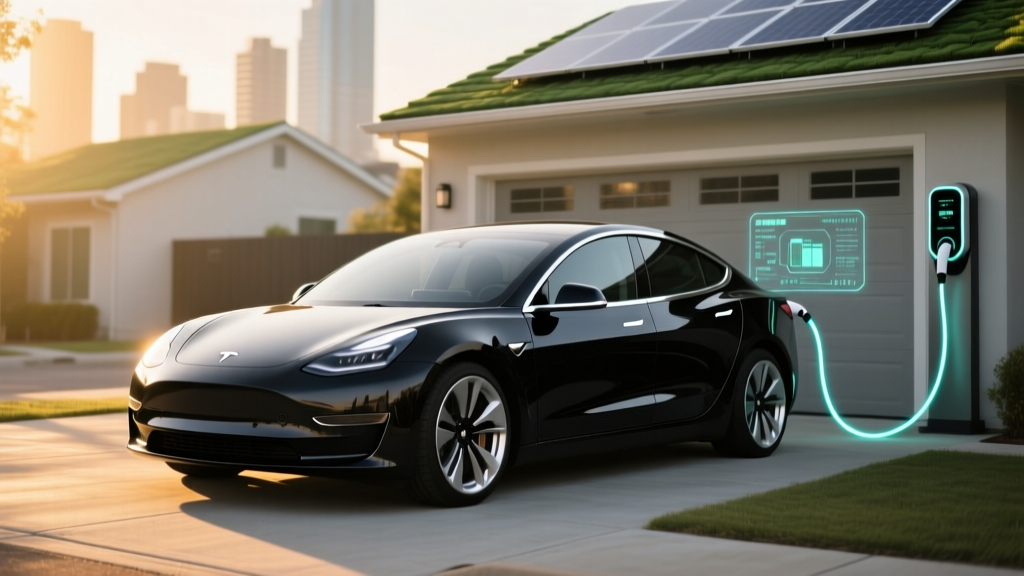
At home on a Level 2 wall connector (Tesla sells one for ~$420, with professional installation typically running $500–$1,500 depending on panel proximity), a full overnight charge easily replenishes even the Long Range's 75 kWh pack. Most owners who charge nightly at home use less than 30% of their battery per day, meaning Level 2 is the primary refueling method — DC fast charging is reserved for road trips.
The Tesla Supercharger network remains the most reliable public DC fast-charging ecosystem in North America, with over 6,500 V3/V4 stalls across the U.S. as of early 2026 (source). Non-Tesla EVs can now access many Supercharger locations via NACS adapters, but Tesla owners still benefit from seamless plug-and-charge integration with no app or RFID card required.
Pricing and Tax Credits: How Much Does a New Tesla Actually Cost?
Breaking down cuánto cuesta un Tesla nuevo requires more than the sticker price. The 2026 Model 3 starts at $38,990 for the Standard Range RWD before destination fees ($1,390) and before any incentives. Here's how the pricing ladder looks with the federal EV tax credit factored in:
| Trim | Base MSRP | + Destination | Est. §30D Credit | Effective Price |
|---|---|---|---|---|
| Standard Range RWD | $38,990 | $1,390 | Up to $7,500* | ~$32,880 |
| Long Range AWD | $45,740 | $1,390 | Up to $7,500* | ~$39,630 |
| Performance AWD | $52,990 | $1,390 | Up to $7,500* | ~$46,880 |
*Critical §30D eligibility caveats: The federal EV tax credit under IRS Section 30D is not guaranteed for every buyer or every vehicle configuration. As of 2026, the following rules apply (IRS source):
- MSRP cap: Sedans must be priced at or below $55,000. The Performance trim at $52,990 qualifies, but adding premium paint, wheels, or FSD can push the transaction price above the cap.
- Income limits: Modified AGI must not exceed $150,000 (single), $225,000 (head of household), or $300,000 (joint filers).
- Battery sourcing: The credit splits into two halves — $3,750 for critical minerals and $3,750 for battery component assembly — each with escalating domestic/FTA-partner sourcing thresholds that tighten annually. Tesla has maintained compliance for U.S.-built Model 3 vehicles, but always verify current eligibility at fueleconomy.gov before purchase.
- Point-of-sale transfer: As of 2024+, you can transfer the credit to the dealer at purchase, reducing your out-of-pocket cost immediately rather than waiting to claim it on your tax return.
Tesla also frequently adjusts pricing — sometimes multiple times per quarter — so treat these numbers as a snapshot. Always confirm current MSRP and credit eligibility on Tesla's configurator and the IRS clean vehicle credit page before committing.
Performance, Ride Quality, and Daily Drivability
The post-Highland Model 3 is a meaningfully better car to drive than the pre-2024 versions. Tesla added frequency-selective dampers, additional acoustic glass, and improved sealing — the result is a cabin that's noticeably quieter at highway speeds and a ride that absorbs sharp pavement imperfections rather than transmitting them to occupants.
Standard Range RWD (271 hp, 5.8 sec 0–60): Adequate for commuting and merging. The single-motor rear-drive layout feels light and nimble around town, and 271 hp is more than most four-cylinder gas sedans produce. This is the value pick.
Long Range AWD (346 hp, 4.2 sec 0–60): The sweet spot. Dual-motor all-wheel drive provides confident traction in rain and light snow, the 363-mile EPA range eliminates most range anxiety, and 4.2 seconds to 60 mph is genuinely quick without being excessive. For most buyers cross-shopping a BMW i4 or Hyundai Ioniq 6, this is the trim to get.
Performance AWD (510 hp, 2.9 sec 0–60): Track-capable with adaptive dampers, larger brakes, and a lowered suspension. It's thrilling but trades roughly 50 miles of range versus the Long Range and pushes close to the §30D MSRP cap. Best for enthusiasts who want a daily-driver sports sedan that happens to be electric.
Regenerative braking remains aggressive and essentially enables one-pedal driving in most scenarios. Tesla removed the user-adjustable regen setting several years ago — you get one strong regen calibration, and most owners adapt within a week.
Interior, Tech, and the Minimalist Cabin Debate
The 2026 Model 3 interior is polarizing by design. There are no physical stalks for turn signals (they're buttons on the steering wheel), no instrument cluster (all info lives on the 15.4-inch center touchscreen), and no physical buttons for climate or media controls. For some buyers, this minimalism feels clean and futuristic. For others, it's a dealbreaker — particularly the steering-wheel turn-signal buttons, which require a learning curve during roundabouts and lane changes.
Standout tech features:
- 8.0-inch rear passenger touchscreen with climate, media, and entertainment controls
- Ventilated front seats (new with Highland refresh)
- Ambient lighting strip across the dashboard
- Tesla Autopilot (basic) included — adaptive cruise + lane centering (SAE Level 2)
- Over-the-air software updates that add features post-purchase
- Sentry Mode dashcam recording and remote cabin preconditioning via app
Tesla's Autopilot (included) and Full Self-Driving Supervised ($8,000 add-on or $99/month) are SAE Level 2 driver-assistance systems. The driver must remain fully engaged, hands on or near the wheel, and eyes on the road at all times. These systems do not make the Model 3 autonomous. Only Level 4 services like Waymo operate without a human driver in geofenced areas. Do not purchase FSD expecting hands-off driving — it requires constant supervision and can make errors at construction zones, unusual intersections, and in poor weather.
Cargo and passenger space: The Model 3 offers 21.0 cubic feet of trunk space plus a 3.1-cubic-foot frunk (front trunk), totaling 24.1 cubic feet. That's competitive with compact gas sedans but less than a Model Y or Ioniq 5 hatchback. Rear legroom at 35.3 inches is adequate for adults under 6 feet tall but tight for taller passengers on long trips. If rear-seat space is a priority, the Model Y or a midsize EV like the Hyundai Ioniq 6 (with 36.0 inches of rear legroom) may be a better fit.
Warranty, Reliability, and Long-Term Ownership
Tesla's warranty coverage is competitive but not class-leading:
- Basic vehicle: 4 years / 50,000 miles
- Battery & drive unit (RWD): 8 years / 100,000 miles
- Battery & drive unit (AWD): 8 years / 120,000 miles
- Capacity retention threshold: 70% of original capacity during the warranty period
The LFP battery in the Standard Range RWD is a longevity advantage. LFP (lithium iron phosphate) chemistry trades energy density for exceptional cycle life — Tesla recommends charging LFP packs to 100% regularly (unlike NMC, which benefits from staying between 20–80% for daily use). Real-world data from high-mileage Tesla fleets suggests LFP packs degrade more slowly and more linearly than NMC, making the Standard Range model a compelling long-term ownership play despite its lower range.
Tesla's service network has expanded but remains thinner than legacy automaker dealer networks in many metro areas. Mobile service handles many software-related and minor hardware issues, but body repair and major drivetrain work may require a trip to a Tesla Service Center, which can mean longer wait times in some regions.
Pros, Cons, and the Verdict
- Best-in-class efficiency (132 MPGe combined for RWD)
- Supercharger network access — most reliable public DC charging in the U.S.
- Strong real-world range (363 mi EPA on Long Range)
- LFP battery option for long-term durability and 100% daily charging
- Seamless OTA updates and app integration
- Qualifies for up to $7,500 federal tax credit (verify eligibility)
- Improved ride and cabin quietness post-Highland refresh
- No physical turn-signal stalks — steep learning curve
- Minimalist interior not for everyone; no instrument cluster
- Rear seat is tight for taller adults
- FSD ($8,000) remains Level 2 — expensive for what it delivers
- Service network still sparse in some regions
- Pricing fluctuates frequently — hard to time a purchase
- No Apple CarPlay or Android Auto
Who Should Buy the 2026 Tesla Model 3?
You commute under 60 miles round-trip, can charge at home, want the lowest entry price (~$32,880 after credit), and value long-term LFP battery durability over maximum range.
🎯 Choose the Model 3 Long Range AWD if:You take regular road trips, live in a region with cold winters, need AWD traction, and want the maximum range buffer (363 mi EPA). This is the best all-around Model 3 for most buyers.
🎯 Choose the Model 3 Performance AWD if:You want sports-sedan acceleration (2.9 sec 0–60) with daily usability and don't mind trading ~50 miles of range for track capability. Watch the MSRP cap carefully — options can push you above §30D eligibility.
🎯 Look elsewhere if:You need spacious rear seating (consider Model Y or Ioniq 5), prefer physical controls and an instrument cluster (BMW i4), or want Apple CarPlay (Hyundai Ioniq 6, most non-Tesla EVs).
Frequently Asked Questions
¿Cuánto cuesta un Tesla nuevo Model 3 en 2026?
The 2026 Tesla Model 3 starts at $38,990 for the Standard Range RWD, $45,740 for the Long Range AWD, and $52,990 for the Performance AWD, before destination fees ($1,390) and before any federal or state incentives. After the maximum $7,500 federal tax credit (if eligible), effective pricing starts around $32,880.
What is the real-world range of the 2026 Model 3?
The Long Range AWD achieves 363 miles EPA, but expect roughly 280–310 miles on sustained highway drives at 75 mph, and 240–280 miles in freezing temperatures. The Standard Range RWD (272 mi EPA) delivers about 220–240 real-world highway miles. City and suburban driving with regenerative braking typically gets you closer to EPA figures.
How fast does the Model 3 charge at home and on the road?
On a Level 2 home charger (11.5 kW), the Model 3 adds approximately 44 miles of range per hour — a full overnight charge covers any daily driving. On DC fast chargers, the Long Range and Performance peak at 250 kW (10–80% in ~22 minutes), while the Standard Range peaks at 170 kW (10–80% in ~28 minutes). Charging slows significantly above 80%.
Does the 2026 Model 3 qualify for the $7,500 federal tax credit?
Most Model 3 configurations qualify for up to $7,500 under IRS §30D, but eligibility depends on your income (must be under $150K single / $300K joint), the vehicle's MSRP (must not exceed $55,000 for sedans), and battery sourcing requirements. The credit can be transferred at point of sale to reduce your purchase price immediately. Always verify current eligibility at fueleconomy.gov and consult a tax professional.
Is the Tesla Model 3 worth it versus the Hyundai Ioniq 6 or BMW i4?
The Model 3 Long Range wins on efficiency (132 MPGe), charging infrastructure (Supercharger network), and over-the-air updates. The Hyundai Ioniq 6 offers more rear-seat room, physical controls, Apple CarPlay, and 800V ultra-fast charging (10–80% in ~18 minutes on 350 kW chargers). The BMW i4 provides a more traditional luxury interior with an instrument cluster and superior build quality but costs significantly more. For most buyers prioritizing range, efficiency, and charging convenience, the Model 3 Long Range remains the benchmark — but test-drive all three before deciding.
How long will the Model 3 battery last?
Tesla warranties the battery for 8 years and 100,000–120,000 miles (depending on trim) against degradation below 70% capacity. Real-world data from high-mileage Teslas suggests NMC packs retain roughly 85–90% capacity at 100,000 miles, while LFP packs in the Standard Range model may retain even more due to the chemistry's superior cycle life. Full battery replacement outside of warranty currently costs between $12,000–$16,000 depending on the pack, though most owners never need one.
Sources: Tesla Model 3 official specs, fueleconomy.gov EPA data, IRS §30D Clean Vehicle Credit. Pricing and credit eligibility reflect 2026 model year data and are subject to change. Verify all figures before purchase.