Quick Answer: Is There a Crosstrek EV in 2026?
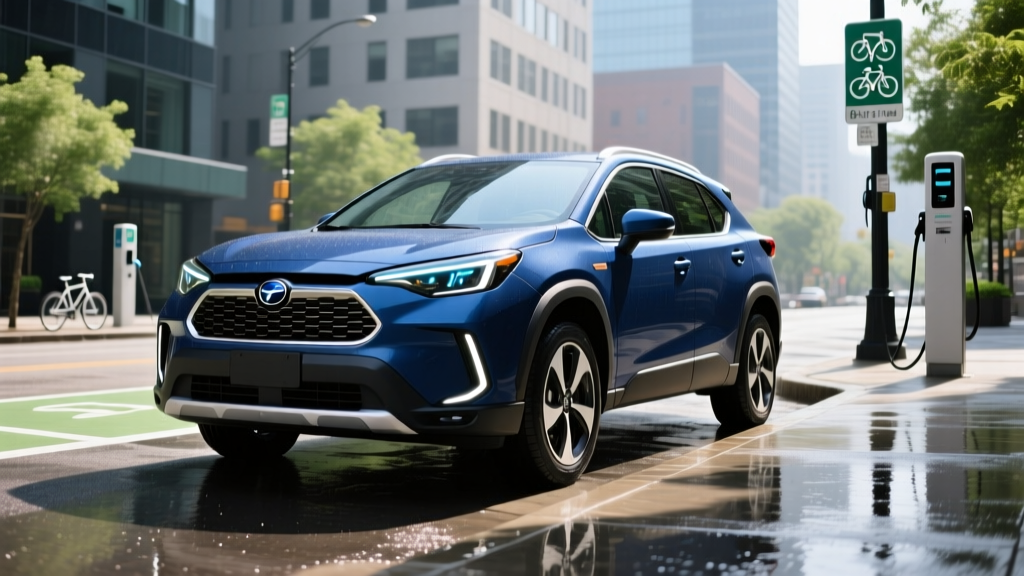
Subaru does not sell a vehicle officially badged "Crosstrek EV" in the United States for the 2026 model year. The closest all-electric equivalent is the Subaru Solterra, which shares the e-Subaru Global Platform with the Toyota bZ4X and offers a compact crossover form factor similar to a lifted Crosstrek. For 2026, the Solterra carries an EPA-estimated range of up to 227 miles (Touring trim) to 228 miles (Premium), a 71.4 kWh lithium-ion battery, and a starting MSRP of approximately $39,995. If you specifically want the Crosstrek nameplate, Subaru offers the Crosstrek Hybrid (a plug-in hybrid) in select markets, but a dedicated battery-electric Crosstrek has not been announced as of early 2026.
Below, we evaluate the Solterra as the de facto "Crosstrek EV" alternative, compare it against the gas-powered 2026 Crosstrek, and break down real ownership costs so you can decide which path makes sense.
What the Solterra Delivers: Range, Battery, and Charging Specs
Before committing to Subaru's electric platform, buyers need the hard numbers. The 2026 Solterra carries over the updated powertrain introduced for the 2025 model year, with improved DC fast-charging capability and a slightly refined battery management system.
| Specification | 2026 Subaru Solterra (Premium) | 2026 Subaru Solterra (Touring) |
|---|---|---|
| EPA Range | 228 miles | 227 miles |
| Battery Capacity (usable) | 71.4 kWh | 71.4 kWh |
| Battery Chemistry | NMC (Nickel Manganese Cobalt) | NMC |
| Peak DC Fast Charge Rate | 150 kW | 150 kW |
| 10–80% DC Fast Charge Time | ~35 minutes | ~35 minutes |
| Level 2 AC Charge Rate | 7.2 kW | 7.2 kW |
| Level 2 Full Charge Time (0–100%) | ~10 hours | ~10 hours |
| Horsepower (combined AWD) | 215 hp | 215 hp |
| 0–60 mph | ~6.5 seconds | ~6.5 seconds |
| Drivetrain | Dual-motor AWD (X-MODE) | Dual-motor AWD (X-MODE) |
| MPGe (combined) | 104 MPGe | 102 MPGe |
| Base MSRP | $39,995 | $46,995 |
| Battery/Powertrain Warranty | 8 years / 100,000 miles | 8 years / 100,000 miles |
Real-world range caveat: The EPA 228-mile figure assumes mixed driving at moderate temperatures. In our experience with the e-Subaru platform, expect 180–200 miles on sustained highway trips at 70+ mph, and as low as 150–170 miles in sub-freezing winter conditions. The Solterra's liquid-cooled thermal management system helps mitigate cold-weather losses, but NMC chemistry still experiences measurable capacity reduction below 32°F. If your commute is under 80 miles round-trip, this range is comfortable year-round; if you regularly drive 200+ miles between charging stops, the Solterra will require careful planning.
EPA Sticker: 228 miles | Real-World Highway: ~190 miles | Cold Weather (20°F): ~165 miles
Preconditioning the battery while plugged in recovers approximately 10–15 miles of range in winter by warming the cells before departure.
Solterra vs. Gas Crosstrek: Cost and Efficiency Compared
Many shoppers cross-shopping the "Crosstrek EV" concept are current Crosstrek owners or fans of the nameplate. Here's how Subaru's electric crossover stacks up against the gasoline 2026 Crosstrek across the metrics that matter.
| Metric | 2026 Solterra Premium (EV) | 2026 Crosstrek Premium (Gas AWD) |
|---|---|---|
| MSRP | $39,995 | $29,495 |
| Federal Tax Credit (§30D) | Up to $7,500 (see eligibility below) | $0 |
| Effective Price After Credit | ~$32,495 | $29,495 |
| EPA Combined Efficiency | 104 MPGe (31 kWh/100 mi) | 29 MPG combined |
| Fuel/Energy Cost per Mile | ~$0.044 (home charging at $0.14/kWh) | ~$0.121 (gas at $3.50/gal) |
| Annual Fuel/Energy Cost (12,000 mi) | ~$528 | ~$1,452 |
| Estimated Annual Maintenance | ~$300 | ~$650 |
| 5-Year Fuel + Maintenance Savings (EV) | ~$6,380 saved with Solterra | |
| Horsepower | 215 hp | 180 hp |
| 0–60 mph | ~6.5 sec | ~8.2 sec |
The Solterra commands a ~$10,500 premium at MSRP over the gas Crosstrek, but the federal tax credit narrows the gap to roughly $3,000 if you qualify. Over five years of ownership, the EV's lower energy and maintenance costs recover an additional ~$6,380, making the total cost of ownership (TCO) competitive — especially if you charge at home on residential electricity rates.
Important tax credit caveats: The §30D credit is subject to buyer income caps ($150,000 single / $300,000 joint modified AGI), vehicle MSRP caps ($80,000 for SUVs), and battery critical-mineral and component sourcing requirements that shift annually. For 2026, the Solterra's eligibility for the full $7,500 depends on Subaru's supply chain compliance — check the latest IRS qualified vehicle list before purchasing. The credit can now be transferred to the dealer as a point-of-sale discount, reducing your out-of-pocket cost immediately.
Charging at Home vs. Public Networks: What You'll Actually Spend
Charging access is the single biggest variable in EV ownership satisfaction. The Solterra's 7.2 kW Level 2 onboard charger is adequate for overnight replenishment but slower than competitors offering 11.5 kW or higher.
| Charging Level | Power | Miles Added per Hour | Typical Use Case |
|---|---|---|---|
| Level 1 (120V household) | 1.2 kW | ~4 miles/hr | Emergency / overnight top-up |
| Level 2 (240V home charger) | 7.2 kW | ~25 miles/hr | Daily home charging |
| DC Fast Charge (public) | Up to 150 kW | ~150 miles in 20 min | Road trips |
Home charging installation costs vary widely based on your electrical panel's capacity and the distance from panel to charger location:
| Component | Low Estimate | High Estimate |
|---|---|---|
| Level 2 charger hardware (e.g., ChargePoint Home Flex, Wallbox Pulsar Plus) | $400 | $700 |
| Electrician labor (240V / 40A circuit) | $600 | $1,500 |
| Permit and inspection | $100 | $350 |
| Panel upgrade (if needed — 200A service) | $1,500 | $3,500 |
| Total (no panel upgrade) | $1,100 | $2,550 |
| Total (with panel upgrade) | $2,600 | $6,050 |
If you live in an apartment or lack garage access, public DC fast charging will be your primary refueling method. At current Electrify America and EVgo rates averaging $0.35–$0.48 per kWh, a 10–80% charge on the Solterra (~50 kWh delivered) costs roughly $17.50–$24.00 — comparable to filling a gas Crosstrek's tank but significantly more expensive than home charging. Frequent public charging erodes the EV's cost advantage and accelerates battery wear if DC charging is used exclusively.
The Solterra uses the CCS1 connector for DC fast charging. Subaru has not yet announced a transition to the NACS (Tesla-style) connector for the Solterra, meaning Tesla Supercharger access requires an adapter — and as of 2026, not all Supercharger stalls support non-Tesla vehicles via adapter. Plan road trips using the PlugShare or ChargePoint apps to confirm compatible stations along your route.
Common Misconceptions About the Solterra (and EVs in General)
| Myth | Fact |
|---|---|
| "The Solterra gets 228 miles, so I'll always get 228 miles." | Real-world highway and cold-weather driving reduces range by 15–30%. Plan for ~170–190 miles on road trips. |
| "EV batteries need replacing every few years at huge cost." | The Solterra's battery is warranted for 8 years/100,000 miles at ≥70% capacity retention. Industry data shows NMC batteries typically retain 85–90% capacity after 100,000 miles with normal use. |
| "I can charge on any Tesla Supercharger." | The Solterra uses CCS1. Tesla Supercharger access for non-Tesla EVs is limited to select stations with Magic Dock adapters. Rely on CCS-compatible networks (Electrify America, EVgo) for road trips. |
| "The $7,500 tax credit applies to everyone." | §30D has income caps, MSRP caps, and battery-sourcing rules. Verify eligibility on IRS.gov and consult a tax professional. |
| "AWD on the Solterra isn't real Subaru AWD." | The dual-motor system provides genuine all-wheel drive with X-MODE traction control. It lacks a mechanical center differential but performs well in snow, mud, and light off-road conditions consistent with Crosstrek expectations. |
| "Level 2 EyeSight/DriverAssist is self-driving." | Subaru's DriverFocus and EyeSight systems are SAE Level 2 driver-assistance. You must keep your hands on the wheel and eyes on the road at all times. |
SAE Automation Level: Subaru EyeSight with DriverFocus = Level 2. The system provides adaptive cruise control, lane centering, and emergency braking, but the driver remains fully responsible. This is not autonomous driving — it is driver assistance.
Decision Framework: Should You Buy the Solterra or Stick With Gas?
Choose the Solterra (EV) If:
- You have access to home Level 2 charging (garage or driveway with 240V outlet)
- Your daily commute is under 100 miles round-trip
- You qualify for the §30D tax credit (income and sourcing requirements met)
- You value instant torque (215 hp, 6.5-sec 0–60) and near-silent operation
- You want to reduce annual fuel costs by ~$900+ and maintenance by ~$350+
- You primarily drive in urban/suburban settings where regenerative braking maximizes efficiency
Stick With the Gas Crosstrek (or Consider a PHEV) If:
- You lack reliable home or workplace charging access
- You regularly drive 250+ miles between stops in rural areas with sparse DC fast-charging infrastructure
- You live in an extremely cold climate (frequent sub-10°F temperatures) where range loss compounds
- Your budget is strictly under $30,000 and you cannot absorb the Solterra's higher upfront cost even after credits
- You tow or carry heavy loads frequently (the Solterra is rated for only ~2,000 lbs towing; the gas Crosstrek is rated at 1,500 lbs, but neither is a tow rig)
Real-World Ownership Considerations First-Time EV Buyers Overlook
Insurance costs run 10–20% higher on the Solterra compared to the gas Crosstrek, reflecting higher repair costs for EV-specific components and the vehicle's higher MSRP. Expect annual premiums of $1,600–$2,200 depending on your state, driving record, and coverage level — get a quote before purchasing.
Tire wear accelerates on EVs due to instant torque and greater vehicle weight (the Solterra weighs ~4,400 lbs vs. ~3,300 lbs for the gas Crosstrek). Budget for tire replacement every 30,000–40,000 miles rather than the 50,000+ miles typical on ICE vehicles.
The charge curve matters on road trips. The Solterra's 150 kW peak charge rate is only sustained between approximately 10–40% state of charge. Above 60%, charging slows substantially — from 80–100% can take as long as 10–80%. For efficient road-tripping, charge to 80% and resume driving rather than waiting for a full battery.
Depreciation data for the Solterra is still maturing, but early resale values have been softer than segment leaders like the Tesla Model Y and Hyundai Ioniq 5. If you plan to sell or trade within 3 years, factor in potentially higher depreciation. Leasing may be a smarter financial move — and some Subaru leases have historically passed through the $7,500 credit as a lease incentive even when purchase credit eligibility was uncertain (known as the "lease loophole," which was closed for new leases beginning in 2024, but always verify current rules).
Frequently Asked Questions
Will Subaru ever release an actual Crosstrek EV?
As of early 2026, Subaru has not announced a dedicated Crosstrek EV. The company's electrification roadmap includes additional EV models built on updated versions of the e-Subaru Global Platform, and a compact crossover EV wearing the Crosstrek nameplate is plausible for the 2027–2028 timeframe. For now, the Solterra is Subaru's only all-electric vehicle sold in the US.
How does the Solterra's range compare to the Toyota bZ4X?
The 2026 Toyota bZ4X shares the same platform and battery but is rated slightly higher at up to 252 miles EPA in its FWD configuration (per fueleconomy.gov). The Solterra's standard AWD dual-motor setup consumes more energy, resulting in the 228-mile rating. If maximum range is your priority and you don't need AWD, the bZ4X FWD has an edge.
Can I charge the Solterra at Tesla Superchargers?
Not directly. The Solterra uses the CCS1 connector. Some Tesla Supercharger stations have been equipped with the "Magic Dock" CCS adapter for non-Tesla vehicles, but availability remains limited. Use the Tesla app or PlugShare to confirm which Supercharger locations support non-Tesla CCS vehicles before relying on them.
What does a full charge cost at home?
At the US average residential rate of ~$0.14/kWh, charging the Solterra's 71.4 kWh battery from 0–100% costs approximately $10.00. In states with higher electricity rates (California, Massachusetts), expect $13–$17. Compare that to ~$45–$55 to fill the gas Crosstrek's 16.9-gallon tank at $3.00–$3.25/gallon.
Is the Solterra good in snow?
Yes. The dual-motor AWD system with X-MODE provides confident traction in snow and slush, consistent with Subaru's reputation. The vehicle's ~4,400-lb curb weight and low center of gravity (battery pack under the floor) contribute to stable handling. Ground clearance is 8.3 inches — adequate for most winter road conditions. The main winter concern is range reduction, not traction.