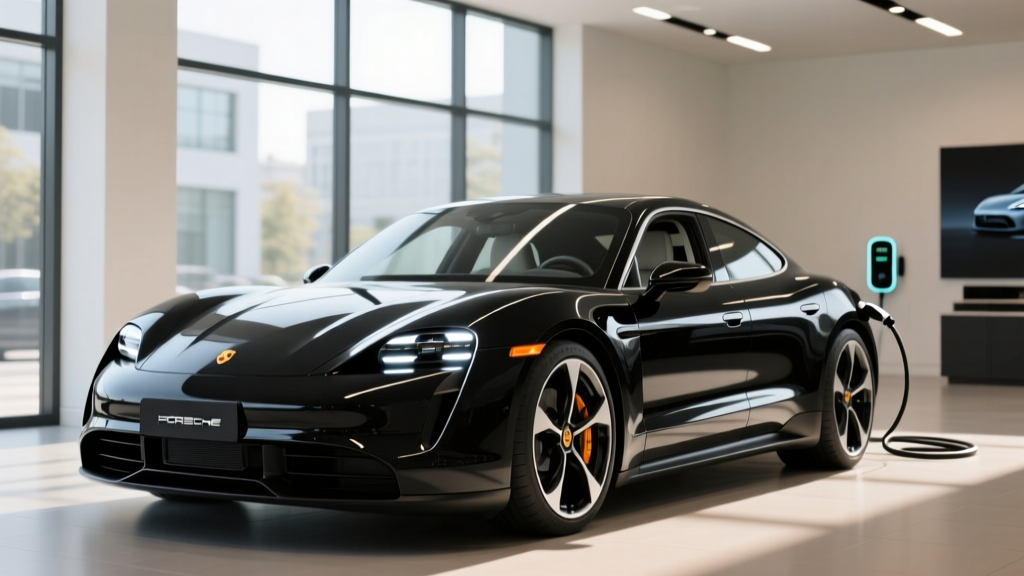
The used luxury EV market is flooded with depreciated performance sedans, but few hold their engineering edge like the Porsche Taycan. If you've been searching for a CPO Porsche Taycan, you're likely weighing the appeal of Stuttgart build quality against the realities of battery degradation, charging infrastructure, and the fine print of Porsche's Approved Certified Pre-Owned program. This guide breaks down exactly what you're getting — from real-world range to 800-volt charging architecture — so you can buy with data, not just badge prestige.
Why the CPO Porsche Taycan Deserves Your Shortlist
The Taycan was Porsche's first all-electric production car, launching for the 2020 model year on the bespoke J1 platform. Unlike many EVs adapted from ICE architectures, the Taycan was engineered from day one around an 800-volt electrical system — a decision that still gives it a charging-speed advantage over most 400V competitors. By 2025, Porsche introduced a substantial refresh (internally dubbed the J1 II) with larger battery options, faster charging, and updated powertrains. A 2026 CPO purchase will primarily surface 2022–2024 pre-refresh models and early 2025 refresh examples, depending on inventory.
The CPO route is particularly attractive here. A new Taycan starts above $92,000 and can crest $190,000 for a Turbo GT. Certified pre-owned examples typically run 15–30% below original MSRP, and Porsche's CPO warranty extends coverage meaningfully beyond the original factory terms. But not every used Taycan is a smart buy — battery health, software generation, and trim selection matter enormously.
Real-World Range and Efficiency: Beyond the EPA Sticker
EPA range estimates for the Taycan lineup have historically been conservative — a pattern that continued through the pre-refresh models. Porsche tends to under-promise and over-deliver on range, which is the opposite of some competitors. Here's what the numbers look like across the most common CPO trims:
| Trim / Battery | Battery (kWh Gross / Usable) | EPA Range (mi) | MPGe (Combined) | kWh/100 mi |
|---|---|---|---|---|
| Taycan RWD (79.2 kWh Perf. Battery) | 79.2 / 71.0 | 225 | 84 | 40 |
| Taycan RWD (93.4 kWh Perf. Battery Plus) | 93.4 / 83.7 | 246 | 83 | 41 |
| Taycan 4S (93.4 kWh) | 93.4 / 83.7 | 227 | 79 | 43 |
| Taycan GTS (93.4 kWh) | 93.4 / 83.7 | 227 | 79 | 43 |
| Taycan Turbo (93.4 kWh) | 93.4 / 83.7 | 212 | 73 | 46 |
| Taycan Turbo S (93.4 kWh) | 93.4 / 83.7 | 201 | 68 | 49 |
| Taycan Cross Turismo 4S (93.4 kWh) | 93.4 / 83.7 | 215 | 76 | 44 |
All pre-refresh Taycans use NMC (nickel-manganese-cobalt) lithium-ion cells supplied primarily by LG Energy Solution. The battery pack features liquid thermal management with active cooling and heating — critical for both longevity and sustained charging performance. The 2025 refresh introduced an upgraded NMC pack with higher energy density, pushing the 4S to an EPA-estimated 318 miles, but those examples are just now entering CPO inventories at a premium.
Charging Speed: The 800-Volt Advantage in Practice
This is where the Taycan's J1 platform earns its keep. The 800V architecture allows significantly higher charge power at lower current, reducing heat generation and enabling sustained fast-charging performance that 400V rivals struggle to match.
| Charging Method | Max Power | Speed / Time | Connector |
|---|---|---|---|
| DC Fast Charge (Peak) | 270 kW (93.4 kWh pack) | 10–80% in ~22.5 min | CCS1 (NACS adapter avail.) |
| DC Fast Charge (79.2 kWh pack) | 225 kW | 10–80% in ~22.5 min | CCS1 |
| Level 2 Home (Onboard Charger) | 9.6 kW (std) / 19.2 kW (optional) | ~33 mi/hr (9.6 kW) / ~66 mi/hr (19.2 kW) | J1772 / NACS (2025+) |
| Level 1 (120V Outlet) | 1.4 kW | ~4 mi/hr | Standard household |
Charging curve reality: The Taycan peaks at 270 kW briefly, typically between 10–30% State of Charge. From 30–60%, it sustains roughly 170–200 kW. Above 80%, power tapers sharply to protect the cells — expect 50 kW or less. This is why the 10–80% metric matters: the last 20% can add 15–20 minutes. Always precondition the battery before a DC fast-charge session by entering your charging stop into the navigation system; the Taycan will actively warm or cool the pack to optimize charge acceptance.
For home charging, the optional 19.2 kW onboard charger is a significant upgrade if your electrical panel supports a 100-amp dedicated circuit (240V). Most CPO buyers will have the standard 9.6 kW charger, which still replenishes the 83.7 kWh usable pack in roughly 9 hours — sufficient for overnight charging. Note that pre-2025 Taycans use the CCS1 connector; Porsche offers a NACS adapter for Tesla Supercharger access, and by 2026, most public networks have expanded CCS compatibility substantially.
Performance and Drivetrain: What the Numbers Actually Feel Like
Every Taycan variant delivers sports-car acceleration, but the spread across trims is significant. All models except the base RWD use a dual-motor all-wheel-drive layout with a two-speed transmission on the rear axle (first gear for launch, second for efficiency at speed) and a single-speed front motor.
| Trim | Drivetrain | Horsepower (Overboost) | 0–60 mph (sec) | Top Speed (mph) |
|---|---|---|---|---|
| Taycan RWD (79.2 kWh) | Rear-Wheel Drive | 402 hp | 5.1 | 143 |
| Taycan RWD (93.4 kWh) | Rear-Wheel Drive | 462 hp | 4.8 | 143 |
| Taycan 4S | Dual-Motor AWD | 562 hp | 3.8 | 155 |
| Taycan GTS | Dual-Motor AWD | 590 hp | 3.5 | 155 |
| Taycan Turbo | Dual-Motor AWD | 670 hp | 3.0 | 161 |
| Taycan Turbo S | Dual-Motor AWD | 750 hp | 2.4 | 162 |
The two-speed rear transmission is a defining technical choice. It enables brutal launch-G without sacrificing top-end efficiency — something single-speed EVs compromise on. In practice, the 4S with 562 hp and a 3.8-second 0–60 is the sweet spot for most buyers: thrilling without being absurd, and far less expensive on the CPO market than the Turbo variants.
Regenerative braking on the Taycan is notably weaker than one-pedal-driving EVs like the Tesla Model S or Hyundai Ioniq 5. Porsche deliberately chose a coasting-oriented philosophy — lift off the accelerator and the car glides rather than decelerating aggressively. Maximum regen recovery is about 290 kW during hard braking, but you'll use the brake pedal more than in most EVs. This is a feature or a flaw depending on your preference; test-drive accordingly.
CPO Warranty, Battery Health, and What to Inspect
Porsche's Approved Certified Pre-Owned program adds a meaningful layer of protection, but it's not identical to the original new-vehicle warranty. Here's the breakdown:
| Coverage Type | Original New-Vehicle | CPO Extension | Total CPO Coverage |
|---|---|---|---|
| Limited Warranty | 4 yr / 50,000 mi | +2 yr / unlimited mi (from in-service date) | Up to 6 yr from original in-service |
| Battery (HV) Warranty | 8 yr / 100,000 mi | No additional CPO extension | 8 yr / 100,000 mi (from new) |
| Powertrain | 4 yr / 50,000 mi | Included in CPO limited extension | Up to 6 yr from original in-service |
| Roadside Assistance | 4 yr / 50,000 mi | Extended through CPO term | Matches CPO coverage |
Critical battery note: Porsche warrants the high-voltage battery against capacity loss below 70% of original capacity for 8 years or 100,000 miles. This is consistent with industry norms but worth verifying on any CPO candidate. Request a battery health report from the dealer — Porsche diagnostics can pull State of Health (SoH) data showing current capacity relative to new. A 2022 model with 30,000 miles should show 93–97% SoH; anything below 90% warrants scrutiny and could indicate frequent DC fast-charging abuse or thermal stress.
Pre-purchase inspection priorities for a CPO Taycan:
- Battery SoH report — demand printout from Porsche PIWIS diagnostic system
- Software update status — ensure the latest Porsche Communication Management (PCM) and battery management system (BMS) firmware is installed; early 2020–2021 models had software-related range and charging bugs addressed in updates
- 12V auxiliary battery condition — like many EVs, the Taycan's 12V battery can fail prematurely if the car sat uncharged for extended periods
- Air suspension function — standard on 4S and above; check for uneven ride height or compressor noise
- Charging port and cable condition — inspect CCS inlet pins for heat damage or corrosion
Pricing, Trims, and Federal Tax Credit Eligibility
CPO Taycan pricing varies heavily by model year, mileage, and trim. Based on 2026 market data, here's what to expect:
| Trim | Original MSRP (approx.) | CPO Price Range | Typical Mileage |
|---|---|---|---|
| Taycan RWD (93.4 kWh, 2022–2023) | $90,000–$98,000 | $62,000–$74,000 | 15,000–35,000 mi |
| Taycan 4S (2022–2023) | $107,000–$120,000 | $72,000–$90,000 | 15,000–40,000 mi |
| Taycan GTS (2022–2023) | $136,000–$148,000 | $88,000–$108,000 | 10,000–30,000 mi |
| Taycan Turbo (2022–2023) | $152,000–$168,000 | $95,000–$120,000 | 10,000–30,000 mi |
| Taycan Turbo S (2022–2023) | $187,000–$197,000 | $115,000–$145,000 | 8,000–25,000 mi |
Federal Tax Credit: Does a CPO Taycan Qualify?
Under IRS §30D rules, the $7,500 federal tax credit applies to new clean vehicles only. A CPO Taycan does not qualify for the new-vehicle credit. However, the Used Clean Vehicle Credit (§25E) offers up to $4,000 (or 30% of the sale price, whichever is less) for eligible pre-owned EVs purchased from a dealer. Key requirements:
- Sale price must be $25,000 or less — this effectively disqualifies nearly every CPO Taycan, as even base models exceed this cap
- Buyer AGI limits: $75,000 single / $112,500 head of household / $150,000 joint
- Vehicle must be at least 2 model years old
- Must be purchased from a licensed dealer (not private party)
Bottom line: Virtually no CPO Taycan will qualify for any federal EV tax credit due to the $25,000 used-vehicle price cap. Budget accordingly — the price you see is the price you pay, minus any applicable state or local incentives (check state incentive databases for your jurisdiction).
Interior, Cargo, and Daily Livability
The Taycan's interior is a study in Porsche minimalism — mostly screens, very few physical buttons, and the fit-and-finish you'd expect at this price point. The dual-screen dashboard (10.9-inch central display plus an 8.4-inch haptic climate/touchscreen below) is standard; a passenger-side 10.9-inch display was optional on pre-refresh models. The curved 16.8-inch digital instrument cluster is configurable and legible in direct sunlight.
Space is where the Taycan reveals its sports-car priorities:
- Front legroom: 41.2 inches — generous for most adults
- Rear legroom: 32.7 inches — tight for anyone over 5'10"; this is a four-seat car in practice (optional fifth seat is rarely equipped)
- Trunk (sedan): 14.3 cu ft rear + 2.9 cu ft frunk = 17.2 cu ft total
- Cross Turismo cargo: 15.7 cu ft rear (up to 42.8 cu ft with seats folded) + 2.9 cu ft frunk — meaningfully more practical
The Cross Turismo wagon variant is the pragmatic CPO pick if you need cargo flexibility or regularly carry rear-seat passengers. The slightly raised ride height and standard all-wheel-drive also make it more capable on unpaved roads, though ground clearance remains modest at 5.7 inches (up to 7.1 inches with air suspension raised).
Notable tech features include Porsche InnoDrive (adaptive cruise with predictive speed adjustment using navigation and road-sign data), Surround View cameras, and Night Vision Assist with pedestrian detection. Apple CarPlay is wireless; Android Auto was added for the 2022 model year. The Taycan lacks Tesla-style over-the-air software updates — most firmware changes require a dealer visit, which is a genuine drawback for a 2026 ownership experience.
Pros
- 800V architecture delivers class-leading sustained DC fast-charge speeds
- Driving dynamics and steering feel that no Tesla or Lucid matches
- Build quality, materials, and cabin quietness are exceptional
- Conservative EPA ratings mean real-world range often exceeds the sticker
- Two-speed rear gearbox enables repeatable hard launches without overheating
- CPO warranty extends limited coverage up to 6 years
Cons
- Rear seat space is cramped compared to Model S, Lucid Air, or Mercedes EQS
- No over-the-air updates; software improvements require dealer visits
- Regen braking is weak — not a true one-pedal-driving experience
- No federal tax credit eligibility at CPO price points
- Optional equipment packages (Premium, Sport Chrono, 19.2 kW charger) significantly raised original MSRP — verify what's included
- Insurance premiums run 20–40% above comparable ICE Porsche models
Who Should Buy a CPO Porsche Taycan?
The CPO Taycan is ideal for the performance-oriented driver who values handling precision and build quality over maximum range or interior volume. If your daily commute is under 80 miles round-trip and you have access to Level 2 home charging, the Taycan's 200–250 real-world miles are more than adequate. It's also a strong fit for buyers upgrading from a Porsche Panamera or 911 who want electrification without sacrificing driving engagement.
It's not the right choice if you need a family hauler (the Model S or Rivian R1S serve that role better), if you frequently drive 300+ mile highway routes in cold climates (range becomes a genuine constraint), or if you prioritize cutting-edge infotainment and OTA updates (Tesla remains ahead here). The Taycan is a driver's EV — buy it for the chassis, not the spreadsheet.
CPO Taycan vs. Key Competitors
| Attribute | Porsche Taycan 4S | Tesla Model S LR | Lucid Air Pure | Mercedes EQS 450+ |
|---|---|---|---|---|
| CPO Price (2022–2023) | $72K–$90K | $55K–$70K | $58K–$72K | $60K–$78K |
| EPA Range | 227 mi | 405 mi | 419 mi | 350 mi |
| 0–60 mph | 3.8 sec | 3.1 sec | 5.2 sec (RWD) | 5.9 sec |
| Max DC Charge | 270 kW | 250 kW | 300 kW | 200 kW |
| Rear Legroom | 32.7 in | 35.4 in | 37.6 in | 41.4 in |
| Build Quality | Excellent | Good (variable) | Very Good | Very Good |
| OTA Updates | No | Yes | Yes | Limited |
The Taycan wins on driving dynamics and build quality but concedes range and interior space to every competitor listed. If range is your top priority, a CPO Model S Long Range or Lucid Air Pure offers nearly double the miles per charge. If rear-seat comfort matters, the EQS is in another league. But if you want the car that makes you look forward to the on-ramp, the Taycan is still the answer.
Frequently Asked Questions
What is the real-world range of a CPO Porsche Taycan?
Expect 240–280 miles in moderate city/suburban driving from a 93.4 kWh model, and 200–230 miles at sustained highway speeds. In cold weather (below freezing), plan for 160–180 miles. The 79.2 kWh Performance Battery models deliver roughly 15–20% less. Always check the specific car's battery SoH before purchase.
How fast does the Taycan charge at home and on the road?
On DC fast charging, the 93.4 kWh pack peaks at 270 kW and charges from 10–80% in approximately 22.5 minutes. At home on a Level 2 (240V) connection, the standard 9.6 kW onboard charger adds roughly 33 miles per hour — a full overnight charge in about 9 hours. The optional 19.2 kW charger cuts that to roughly 4.5 hours but requires a 100-amp circuit.
Does a CPO Porsche Taycan qualify for any federal EV tax credit?
Not the $7,500 new-vehicle credit. The used-vehicle credit (§25E) caps at $4,000 for vehicles priced at $25,000 or below — well under any CPO Taycan's market price. You will not receive a federal tax credit on this purchase. Check your state's incentive programs for possible local rebates.
Is a CPO Taycan worth buying vs. a new Tesla Model S or Lucid Air?
If driving dynamics, build quality, and brand prestige are your priorities, yes — the Taycan delivers a driving experience neither competitor matches. If range, rear-seat space, or software features matter more, the Model S and Lucid Air are stronger choices. The CPO discount makes the Taycan financially competitive with new mid-tier EVs, but you're trading range and tech for chassis excellence.
What are the biggest risks of buying a used Taycan?
The primary concerns are battery health (request a SoH report), software update status (early models had BMS bugs), and the lack of OTA updates meaning any firmware improvements require dealer visits. Also verify that the optional 19.2 kW onboard charger is equipped if you want fastest home charging — it was a $1,680 option and not standard. Insurance costs are notably higher than ICE Porsches, so get quotes before committing.
How long will the Taycan battery last?
Porsche's 8-year/100,000-mile battery warranty guarantees at least 70% capacity retention. Real-world data from early 2020–2021 Taycans suggests NMC packs in the J1 platform degrade slowly — most examples show 93–97% SoH at 30,000–50,000 miles. With proper care (avoiding frequent 100% charges, minimizing DC fast-charging in extreme heat, using preconditioning), the battery should provide reliable service well beyond 150,000 miles. Full replacement cost, if ever needed outside warranty, is estimated at $20,000–$28,000 based on current Porsche parts pricing.