The Real Cost to Lease a Rivian in 2026
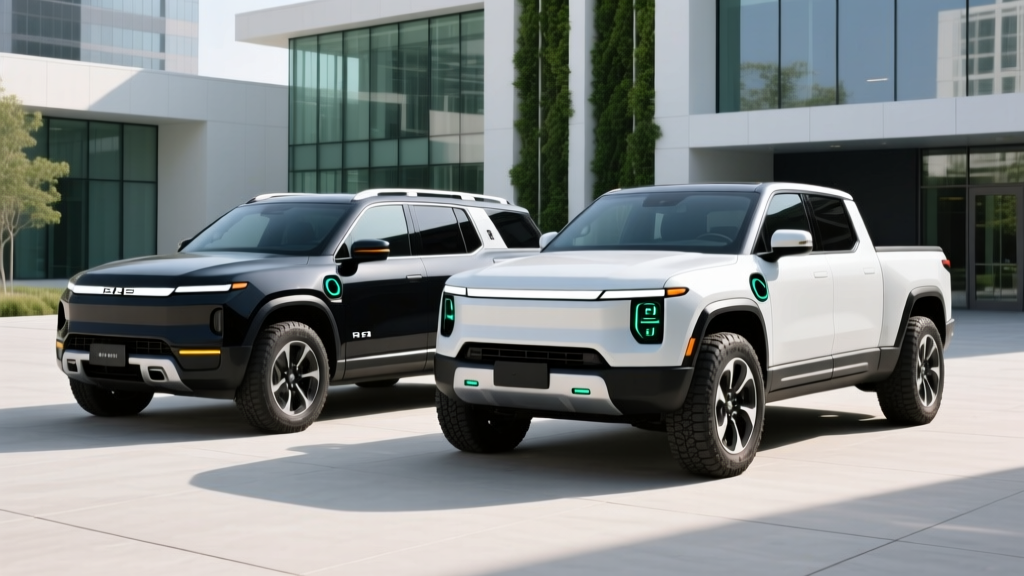
Rivian's second-generation R1T pickup and R1S SUV arrived for the 2025 model year with a heavily revised platform: a new Enduro drive unit, LFP (lithium iron phosphate) Standard battery chemistry, faster DC charging, and lower starting prices. For 2026, those updates carry over, and leasing has emerged as one of the most capital-efficient ways to get into either vehicle — especially because the federal §30D tax credit can often be applied as a lease incentive, bypassing the income and battery-sourcing restrictions that complicate a direct purchase.
But "cost to lease a Rivian" is not a single number. Monthly payments depend on trim, battery pack, negotiated cap cost, residual values, money factor, and whether the dealer or Rivian themselves passes through the $7,500 federal credit. This guide dissects the actual math, the specs that matter, and how the R1T and R1S compare to competitors like the Tesla Cybertruck, Ford F-150 Lightning, and Hyundai Ioniq 5-based three-row SUVs.
Rivian R1T and R1S: 2026 Spec Overview
Before we get to lease payments, here are the hard numbers that determine what you're actually leasing. Rivian offers three battery sizes across the R1T and R1S for 2026, and the chemistry choice matters for longevity, charging habits, and usable capacity.
| Spec | R1T (Pickup) | R1S (SUV) |
|---|---|---|
| EPA Range (Standard, ~92 kWh usable LFP) | 342 mi | 330 mi |
| EPA Range (Large, ~109 kWh NMC) | 390 mi | 370 mi |
| EPA Range (Max, ~141 kWh NMC) | 420 mi | 400 mi |
| Battery Chemistry (Standard) | LFP (Lithium Iron Phosphate) | |
| Battery Chemistry (Large / Max) | NMC (Nickel Manganese Cobalt) | |
| Peak DC Fast Charge | 220 kW (Standard LFP) / 300 kW (Max NMC) | |
| 10–80% DC Charge Time | ~21 min (Large NMC) / ~25 min (Standard LFP) | |
| Level 2 Home Charge Rate | 11.5 kW (~25 mi/hr added) | |
| 0–60 mph (Dual-Motor) | 4.5 sec | 4.5 sec |
| 0–60 mph (Tri-Motor Performance) | 2.9 sec | 2.9 sec |
| Horsepower (Dual / Tri) | 533 hp / 850+ hp | |
| MPGe (Dual-Motor Standard) | 73 MPGe combined | 71 MPGe combined |
| Efficiency (kWh/100 mi) | 46 kWh/100mi | 48 kWh/100mi |
| Towing Capacity | 11,000 lb | 7,700 lb |
| Cargo Volume (bed / frunk or rear + frunk) | 54 cu ft bed + 11 cu ft frunk | 104 cu ft (rear seats folded) + 11 cu ft frunk |
| Ground Clearance (max adjustable) | 14.4 in | |
| Battery/Powertrain Warranty | 8 years / 175,000 miles (70% capacity retention) | |
| Base MSRP (Dual-Motor Standard) | $69,900 | $74,900 |
| As-Tested Typical (Tri-Motor Max) | $104,000+ | $109,000+ |
Sources: Rivian R1T specs, fueleconomy.gov for EPA data.
Real-World Range: What the EPA Sticker Doesn't Tell You
Rivian's thermal management system is robust — the heat pump is standard and preconditioning for DC charging works well via the navigation-based battery prep. Still, LFP chemistry in the Standard pack is more tolerant of daily 100% charging (Rivian actually recommends periodic full charges to recalibrate the BMS), while NMC Large and Max packs are best kept at 80–90% for daily use and 100% only for road trips.
Charging Speed: DC Fast, Level 2, and the Curve That Matters
Peak kW is a headline number; the charge curve is what you actually live with. Rivian's second-gen architecture moved to a 400V system optimized for sustained charging rather than a short peak spike.
| Level | Power | Miles Added per Hour | Notes |
|---|---|---|---|
| Level 1 (120V, 12A) | ~1.4 kW | ~3 mi/hr | Emergency / trickle only |
| Level 2 (240V, 48A) | 11.5 kW | ~25 mi/hr | Full overnight charge in ~9–12 hrs |
| DC Fast (Standard LFP) | Peak 220 kW | — | 10–80% in ~25 min; curve tapers above 70% |
| DC Fast (Large NMC) | Peak 300 kW | — | 10–80% in ~21 min; strong curve to 60%, taper after |
| DC Fast (Max NMC) | Peak 300 kW | — | 10–80% in ~24 min; larger pack absorbs longer |
| Tesla Supercharger (NACS) | Up to 250 kW (V3 stalls) | — | Native NACS port on 2025+ models; adapter for legacy CCS stations included |
On a road trip, the practical metric is how long you're stopped. With the Large NMC pack, a 10–80% session takes roughly 21 minutes at a capable 350-kW Electrify America or Tesla V4 stall. The LFP Standard pack charges slightly slower to peak but holds its curve more linearly — the real-world gap is smaller than the spec sheet suggests.
At home, a 48-amp Level 2 wall connector on a 60-amp circuit is the sweet spot. Budget $800–$1,500 for the EVSE and $1,200–$3,500 for electrician labor depending on panel proximity and whether a 200-amp service upgrade is needed. Rivian sells its own Wall Connector, but any J1772/NACS Level 2 unit at 48A will work.
Lease Pricing: What You'll Actually Pay Per Month
Rivian does not lease through traditional dealer networks — it sells and leases direct. As of early 2026, Rivian's in-house leasing program is available in most states, and the structure matters:
- Lease terms: Typically 24, 36, or 39 months.
- Mileage allowances: 10,000 or 12,000 miles/year standard; 15,000 available at higher payment.
- Residual values: Set by Rivian's captive finance arm; R1T residuals have held relatively well (55–60% at 36 months for Dual-Motor trims), while R1S residuals are slightly higher due to SUV demand.
- Money factor: Variable by credit tier; top-tier buyers (740+ FICO) have seen rates equivalent to ~5.5–6.5% APR in recent quarters, but this fluctuates with the Fed funds rate.
Estimated Monthly Lease Payments (36 months, 12k mi/yr, $0 down before incentives)
| Model / Trim | MSRP | Est. Monthly (Before Credit) | $7,500 Credit Applied? | Est. Monthly (After Credit) |
|---|---|---|---|---|
| R1T Dual-Motor Standard | $69,900 | ~$850–$950 | Yes, as cap-cost reduction | ~$650–$750 |
| R1T Dual-Motor Large | $75,900 | ~$950–$1,050 | Yes | ~$740–$840 |
| R1T Tri-Motor Max | $104,000 | ~$1,350–$1,500 | Often no (MSRP cap exceeded for trucks) | ~$1,350–$1,500 |
| R1S Dual-Motor Standard | $74,900 | ~$900–$1,000 | Yes | ~$700–$800 |
| R1S Tri-Motor Max | $109,000 | ~$1,400–$1,600 | Often no | ~$1,400–$1,600 |
Note: These are estimates based on typical money factors and residuals as of Q1 2026. Actual payments vary by state taxes, fees, credit tier, and negotiated cap cost. Always confirm with Rivian's configurator or a lease broker.
The §30D Tax Credit Loophole: Why Leasing Can Beat Buying
Here's the critical advantage of leasing a Rivian versus buying one outright: under the IRS §30D rules, the $7,500 federal EV tax credit is subject to buyer income caps ($150k single / $300k joint), MSRP caps ($80,000 for trucks like the R1T, $80,000 for SUVs/vans like the R1S), and strict battery-sourcing / critical-mineral requirements that shift annually.
However, when a vehicle is leased, the leasing company (the lessor) is technically the buyer. The lessor can claim the credit under §45W (commercial clean vehicle credit) and pass it through as a cap-cost reduction — effectively a $7,500 discount on the lease. This bypasses the buyer income cap and, in many cases, the MSRP cap as well, because the lessor's eligibility is evaluated differently.
Practical impact: A buyer earning $350,000 jointly who would be ineligible for the credit on a purchase can still receive the $7,500 lease incentive. The R1T Dual-Motor Standard at $69,900 MSRP clears the $80k truck cap either way. The R1T Dual-Motor Large at $75,900 also clears it. But Tri-Motor Max trims above $100k generally won't see the credit on a purchase — yet may still see it passed through on a lease depending on Rivian's captive finance structure at the time.
Who Should Lease a Rivian (and Who Shouldn't)
Lease a Rivian If...
- You want the $7,500 credit but exceed the income cap for a purchase
- You upgrade vehicles every 3 years and don't want depreciation risk
- You want to test EV ownership before committing to a buy
- You drive under 12,000 miles/year (lease mileage limits)
- You value Rivian's over-the-air updates and want the latest hardware cycle
Buy (or Skip) If...
- You drive 20,000+ miles/year (lease overage fees add up fast)
- You plan to tow frequently and keep the truck 7+ years
- You want to modify the vehicle (lift kits, wraps, aftermarket wheels)
- You qualify for the credit on a purchase and plan to hold long-term
- You want to build equity and avoid perpetual payments
Use-Case Fit
Daily commuter / family hauler: The R1S Dual-Motor Standard is the sweet spot — 330 miles EPA, three rows, 11-cu-ft frunk for groceries, and ~$700/month after credit pass-through. Air suspension gives a car-like ride on pavement.
Adventure / off-road / towing: The R1T with the Large or Max pack is the play. 11,000-lb towing, 14.4 inches of ground clearance, the gear tunnel (lockable, 11 cu ft behind the cab), and the available camp kitchen make it the most capable electric truck for overlanding. Towing range is the honest limitation — expect 180–220 miles with a heavy trailer before needing to stop.
Road-tripper: The Max pack's 420-mile EPA rating (R1T) is genuinely useful, and the NACS port opens Tesla Superchargers. On a 1,000-mile trip, you'll stop roughly 3 times for 20 minutes each — comparable to a gas stop cadence if you're eating and stretching anyway.
How the Rivian R1T and R1S Stack Up Against Competitors
| Spec | Rivian R1T Dual-Motor | Ford F-150 Lightning (Ext Range) | Tesla Cybertruck AWD | Chevy Silverado EV 4WT |
|---|---|---|---|---|
| Base MSRP | $69,900 | $79,995 | $79,990 | $73,800 |
| EPA Range | 342 mi | 320 mi | 340 mi | 390 mi |
| Peak DC Charge | 220–300 kW | 150 kW | 250 kW | 200+ kW |
| 0–60 mph | 4.5 sec | ~5.0 sec | 4.1 sec | ~5.4 sec |
| Towing | 11,000 lb | 10,000 lb | 11,000 lb | 10,000 lb |
| NACS Native | Yes (2025+) | No (adapter) | Yes | No (adapter) |
The Rivian's advantage is the combination of off-road capability, build quality, and software polish. The F-150 Lightning is more practical for traditional truck buyers who need a work site vehicle and dealer-service network. The Cybertruck undercuts on price for the AWD trim but has polarizing styling and a stainless-steel body that's difficult to repair. The Silverado EV offers the longest range but is larger, less agile, and geared more toward fleet/commercial use.
Standout Tech and Notable Drawbacks
What Rivian does well:
- Rivian Driver+: A Level 2 ADAS system with hands-on-wheel monitoring. It's competent for highway cruising and lane centering, but it is not autonomous driving — you must remain engaged. It doesn't yet match Tesla Autopilot or GM Super Cruise in hands-free capability.
- Over-the-air updates: Rivian pushes meaningful updates (new drive modes, efficiency improvements, UI changes) roughly quarterly. The Gen 2 hardware is substantially faster than Gen 1.
- Software UX: The 15.6-inch center display is one of the best in the segment — responsive, well-organized, with native trip planning that integrates charging stops.
- Camp kitchen and gear tunnel: The R1T's optional slide-out camp kitchen ($5,000 when available) and the lockable gear tunnel are genuinely unique features no competitor matches.
- NACS port: Native Tesla Supercharger access without an adapter is a meaningful road-trip advantage as of 2025.
Where it falls short:
- Service network: Rivian has expanded its service centers, but coverage is still thin in the Mountain West and rural South. Mobile service handles many issues, but body repair after a collision can mean weeks of wait time.
- Insurance costs: Rivian insurance premiums run 15–30% higher than comparable gas trucks, driven by repair costs and parts availability. Get a quote before signing.
- No hands-free driving: Unlike Ford BlueCruise or GM Super Cruise, Rivian Driver+ requires hands on the wheel at all times.
- Third-row space (R1S): The R1S third row fits children or short-trip adults. It's tighter than a Ford Explorer or Kia EV9 third row.
- Price at the top end: Tri-Motor Max builds cross $100,000 quickly, putting them in luxury-SUV territory where brand prestige matters to some buyers.
Frequently Asked Questions
What is the real-world range of a Rivian R1T or R1S?
The EPA rates the R1T Dual-Motor Standard at 342 miles and the R1S at 330 miles. In real-world highway driving at 70–75 mph, expect 280–300 miles. In cold weather (below freezing), plan for 230–260 miles. The Max pack extends these figures proportionally, but towing cuts range by 40–50% regardless of pack size.
How fast does a Rivian charge at home and on the road?
At home on a 48-amp Level 2 charger, you'll add about 25 miles per hour — a full charge from 10% takes roughly 9–12 hours depending on pack size. On a DC fast charger, the Large NMC pack peaks at 300 kW and hits 10–80% in about 21 minutes. The Standard LFP pack peaks at 220 kW and takes about 25 minutes for the same session.
How much does a Rivian cost after tax credits?
On a purchase, the R1T Dual-Motor Standard at $69,900 qualifies for the full $7,500 §30D credit (assuming you meet income caps), bringing the effective price to ~$62,400 before state incentives. On a lease, the $7,500 is often passed through as a cap-cost reduction, lowering monthly payments by roughly $200–$210/month over 36 months — and this can work even if you exceed the income cap.
Does the Rivian R1T or R1S qualify for the federal EV tax credit?
Yes, both the R1T and R1S are eligible for up to $7,500 under §30D for qualifying buyers on a purchase, subject to income limits ($150k single / $300k joint), MSRP caps ($80,000 for trucks and SUVs), and battery-sourcing requirements. On a lease, the credit is typically passed through by the lessor, often bypassing the income and sometimes the MSRP restriction. Confirm current eligibility at fueleconomy.gov and with Rivian directly.
Is leasing a Rivian worth it versus buying or choosing a competitor?
Leasing makes strong financial sense if you exceed the income cap for a purchase credit, plan to drive under 12,000 miles/year, and want to avoid depreciation risk on a $70,000+ vehicle. The R1T remains the most well-rounded electric pickup for adventure use, and the R1S is one of the few three-row electric SUVs with genuine off-road capability. If you need a work truck with a massive dealer network, the F-150 Lightning is more practical. If range-per-dollar is paramount, the Silverado EV or a Hyundai Ioniq 5 may be better fits. But for build quality, software, and all-terrain versatility, the Rivian earns its premium.
What's the battery warranty, and should I worry about degradation?
Rivian covers the battery and drive units for 8 years or 175,000 miles, whichever comes first, with a capacity-retention threshold of 70%. The LFP Standard pack is particularly robust — LFP chemistry typically degrades more slowly than NMC and tolerates daily 100% charges. Real-world data from Gen 1 Rivians (2022–2024) shows approximately 5–8% degradation over the first 50,000 miles, which is in line with industry norms. On a 36-month lease, degradation is effectively not your concern.